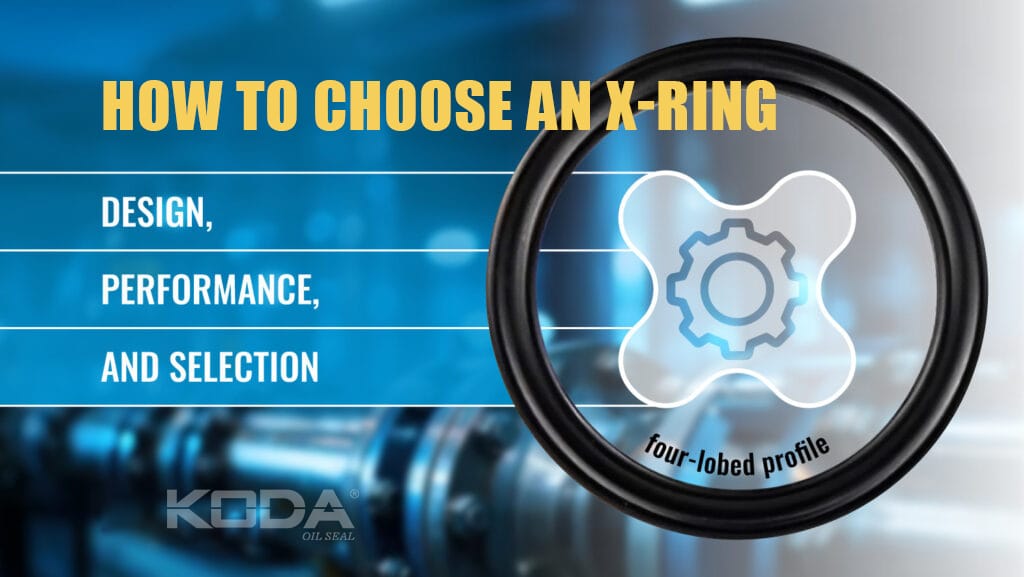
Selecting the right X-Ring is one of the most important decisions in sealing system design. While many engineers automatically choose standard O-rings, modern applications increasingly demand higher sealing performance, reduced friction, longer service life, and improved resistance to dynamic operating conditions. This is where X-Rings, also known as Quad Rings®, offer significant advantages. Their unique four-lobed profile provides superior sealing efficiency compared to traditional round cross-section seals, making them ideal for hydraulic systems, pneumatic equipment, automotive components, industrial machinery, and aerospace applications.
This comprehensive guide explains how to choose the right X-Ring based on design requirements, operating conditions, material compatibility, sealing performance, and industry-specific applications. Whether you are designing a new system or upgrading an existing seal configuration, understanding the engineering principles behind X-Rings can help improve reliability, reduce maintenance costs, and maximize equipment lifespan.
For industrial and automotive sealing applications, premium-quality X-Ring solutions provide enhanced sealing performance under both static and dynamic operating conditions.
What Is an X-Ring?

An X-Ring is a specialized elastomer sealing element featuring a four-lobed cross-sectional profile rather than the circular profile of a conventional O-ring. The distinctive X-shaped geometry creates multiple sealing points, improving sealing reliability and reducing friction.
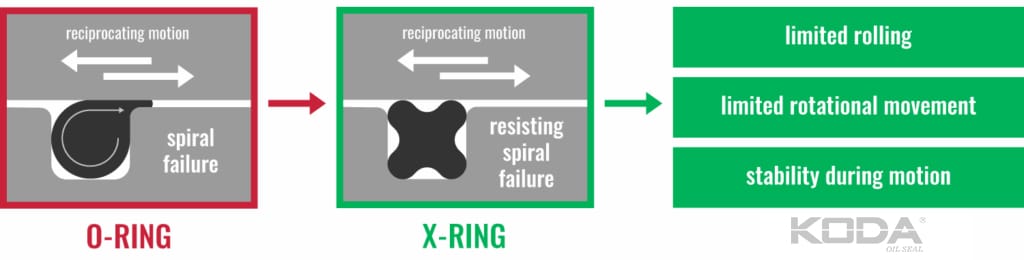
Unlike traditional O-rings that typically create two sealing surfaces, X-Rings generate four contact points, distributing sealing force more effectively while minimizing twisting and rolling during movement.
Key Characteristics of X-Rings:
✔ Four-lobed sealing profile
✔ Lower friction than O-rings
✔ Reduced seal twisting
✔ Improved lubricant retention
✔ Enhanced sealing stability
✔ Longer service life
Why Engineers Are Replacing Traditional O-Rings with X-Rings
For decades, O-rings have dominated sealing applications because of their simplicity and affordability. However, modern machinery often operates at higher speeds, pressures, and temperatures than ever before.
Under dynamic conditions, conventional O-rings may experience rolling, twisting, uneven wear, and accelerated degradation. X-Rings address these issues through their advanced geometric design.
Major advantages over standard O-rings include:
• Reduced friction during reciprocating motion
• Better resistance to spiral failure
• Improved sealing under low pressure
• Longer maintenance intervals
• Lower operating temperatures
As industries focus increasingly on efficiency and reliability, the demand for advanced X-Ring sealing solutions continues to grow worldwide.
Understanding X-Ring Design Performance
Before selecting an X-Ring, it is essential to understand how its geometry influences sealing behavior.
Multiple Sealing Contact Points
The four-lobed profile creates multiple sealing lines instead of a single compression zone. This design distributes pressure more evenly and improves sealing effectiveness under varying operating conditions.
Lubrication Reservoir Effect
The grooves formed between the lobes act as miniature lubricant reservoirs. These pockets help retain lubrication, reducing friction and wear during operation.
Reduced Rolling and Twisting
Unlike traditional O-rings, X-Rings resist rotational movement within the groove. This minimizes twisting and prevents premature seal failure.
Lower Friction Performance
Because less contact surface area touches the mating components, friction levels are significantly reduced, making X-Rings particularly effective in dynamic systems.
Performance Benefits:
✔ Improved dynamic sealing
✔ Lower energy consumption
✔ Extended equipment lifespan
✔ Reduced wear rates
✔ Better pressure retention
Step 1: Identify the Application Type
The first step in choosing an X-Ring is understanding the operating environment.
Static Sealing Applications
Static applications involve little or no movement between sealing surfaces. Examples include flanges, valve covers, hydraulic manifolds, and pressure vessels.
X-Rings provide excellent static sealing performance while offering additional safety margins against leakage.
Dynamic Sealing Applications
Dynamic applications involve movement between components and require more advanced sealing capabilities.
Examples include:
• Hydraulic cylinders
• Pneumatic actuators
• Pumps
• Rotary shafts
• Automotive systems
For dynamic applications, X-Rings typically outperform conventional O-rings due to lower friction and improved stability.
Step 2: Evaluate Operating Pressure
Pressure is one of the most critical factors when selecting a seal.
X-Rings perform exceptionally well in both low-pressure and high-pressure systems because their geometry creates multiple sealing barriers.
Pressure Selection Guidelines:
• Low-pressure systems: Standard X-Rings perform well
• Medium-pressure systems: Enhanced elastomer compounds recommended
• High-pressure systems: Consider backup rings for extrusion resistance
Proper groove design becomes increasingly important as system pressure increases.
Step 3: Consider Operating Temperature
Temperature directly affects elastomer flexibility, compression set resistance, and long-term sealing performance.
Low Temperature Applications
Cold environments require materials that maintain elasticity without becoming brittle.
High Temperature Applications
Elevated temperatures accelerate material aging and can cause seal hardening.
Typical Material Temperature Ranges:
NBR: -40°C to +120°C
FKM: -20°C to +200°C
Silicone: -60°C to +230°C
HNBR: -40°C to +150°C
EPDM: -50°C to +150°C
Step 4: Select the Correct Material
Material compatibility often determines whether a seal succeeds or fails in service.
NBR (Nitrile Rubber)
NBR remains the most commonly used X-Ring material because of its excellent resistance to petroleum-based oils and fuels.
FKM (Viton®)
FKM offers exceptional resistance to heat, chemicals, and aggressive fluids, making it ideal for demanding industrial environments.
EPDM
EPDM performs well in water, steam, and weather-resistant applications but is not suitable for petroleum oils.
Silicone
Silicone materials provide excellent flexibility across extreme temperature ranges.
Choosing the correct X-Ring material significantly improves reliability and reduces maintenance costs.
Step 5: Analyze Media Compatibility
Different fluids interact differently with elastomer materials. Chemical compatibility must always be verified before selecting a seal.
Common media include:
• Hydraulic oil
• Engine oil
• Fuel
• Water
• Steam
• Refrigerants
• Chemicals
• Solvents
Material swelling, hardening, or cracking can occur if compatibility is overlooked.
Step 6: Groove Design and Installation Considerations
Even the highest-quality X-Ring will fail if installed in an improperly designed groove.
Compression Ratio
Proper squeeze ensures effective sealing while minimizing excessive wear.
Surface Finish
Smooth sealing surfaces improve contact consistency and reduce leakage risk.
Stretch and Compression Limits
Overstretching or excessive compression can significantly shorten service life.
Installation Best Practices:
✔ Lubricate before installation
✔ Avoid sharp edges
✔ Use proper installation tools
✔ Verify groove dimensions
✔ Inspect for twisting
Industry Applications of X-Rings
Automotive Industry
Used in fuel systems, transmissions, power steering systems, and hydraulic components.
Hydraulic Equipment
Ideal for cylinders, pumps, and valves requiring reliable dynamic sealing.
Pneumatic Systems
Lower friction characteristics improve actuator efficiency and response time.
Food Processing Equipment
Specialized compounds are available for FDA-compliant sealing applications.
Aerospace Applications
Advanced X-Ring materials provide reliable sealing under extreme pressure and temperature conditions.
Modern industries increasingly rely on high-performance X-Ring technology to enhance equipment efficiency and reduce downtime.
Common X-Ring Selection Mistakes to Avoid
Even experienced engineers occasionally make sealing selection errors.
Most common mistakes include:
• Choosing material based only on cost
• Ignoring temperature limits
• Overlooking chemical compatibility
• Incorrect groove dimensions
• Failing to consider dynamic movement
• Selecting improper hardness ratings
Avoiding these mistakes can dramatically improve sealing performance and service life.
Future Trends in X-Ring Technology
As industries pursue greater efficiency, sealing technology continues to evolve. New material formulations and precision manufacturing techniques are enabling X-Rings to perform in increasingly demanding environments.
Emerging innovations include:
• Low-friction advanced compounds
• Nano-enhanced elastomers
• Environmentally friendly materials
• Smart condition-monitoring seals
• High-pressure extrusion-resistant designs
These developments position X-Rings as one of the most effective sealing technologies for future industrial applications.
Frequently Asked Questions
1. What is the main advantage of an X-Ring compared to an O-ring?
X-Rings provide four sealing contact points, lower friction, reduced twisting, and improved sealing performance in dynamic applications.
2. Are X-Rings suitable for hydraulic systems?
Yes. X-Rings are widely used in hydraulic cylinders, valves, and pumps because of their excellent pressure retention and wear resistance.
3. Which material is best for high-temperature X-Rings?
FKM and silicone compounds are commonly selected for elevated temperature applications due to their excellent thermal stability.
4. Can X-Rings be used in dynamic sealing applications?
Absolutely. Their low-friction design makes them particularly effective in reciprocating and rotary motion systems.
5. How do I choose the correct X-Ring?
Evaluate operating pressure, temperature, media compatibility, motion type, groove design, and material properties to ensure optimal sealing performance.