
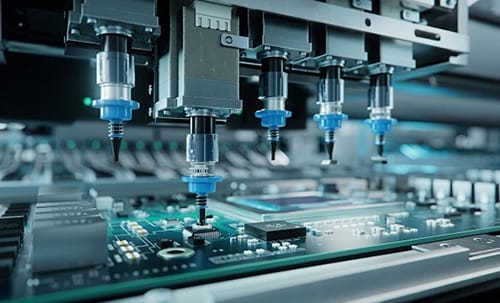
In the electronic components industry, reliability is measured at the micro level. Devices are becoming smaller, more powerful, and more sensitive to environmental stress such as heat, vibration, dust, moisture, and electromagnetic interference. In this highly precise environment, sealing systems play a silent but critical role in ensuring long-term stability and performance.
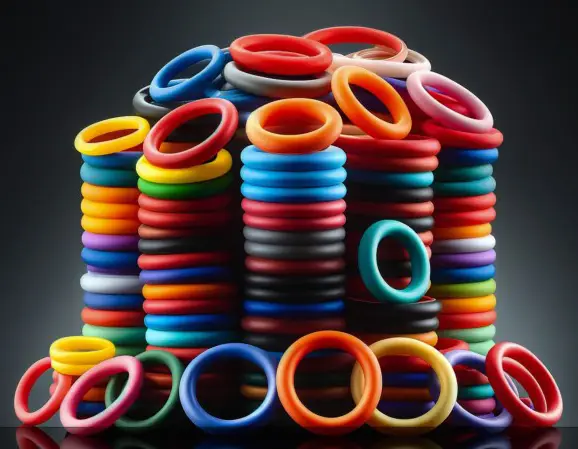
From semiconductor manufacturing equipment to consumer electronics, automotive ECUs, sensors, and battery systems, elastomer sealing components such as O-rings are essential for protecting sensitive internal electronics from environmental and mechanical failure.
Why O-Rings Matter in Electronic Component Systems
Unlike heavy industrial systems, electronics require sealing solutions that combine compact geometry, chemical stability, electrical insulation, and long-term dimensional accuracy.
O-rings in electronics are used to:

- Prevent dust and moisture ingress (IP protection levels)
- Protect sensitive circuit boards from condensation
- Maintain pressure balance in sealed enclosures
- Support thermal stability in battery systems
- Ensure reliability in sensors and control modules
- Extend service life of compact electronic devices
Even microscopic leakage in electronic housings can lead to corrosion, signal interference, or complete system failure.
📊 Industry Insight: Studies in electronic manufacturing show that over 30% of field failures in sealed electronic devices are linked to insufficient environmental sealing performance rather than circuit defects.
Key Requirements for Electronic-Grade O-Rings
Electronic applications demand extremely stable elastomer performance under compact and often thermally active environments.
- Excellent compression set resistance
- Stable dielectric insulation properties
- Low outgassing characteristics
- High temperature resistance (especially in battery systems)
- Dust and moisture sealing (IP67–IP69K levels)
- Long-term dimensional stability
⚙️ Engineering Note: In electronics, sealing failure is often not sudden but progressive—starting from micro-leakage, leading to corrosion, and eventually complete system malfunction.
Applications of O-Rings in Electronic Industry

Semiconductor Manufacturing Equipment
Used in vacuum chambers, wafer processing systems, and chemical delivery units.
Consumer Electronics
Smartphones, wearable devices, cameras, and portable electronics rely on miniature sealing systems.
Automotive Electronics (ECU Systems)
Protect control units from vibration, heat, and moisture exposure.
Battery & Energy Storage Systems
Ensure gas sealing, thermal stability, and safety in lithium battery packs.
Industrial Sensors & IoT Devices
Maintain environmental sealing in outdoor and industrial monitoring systems.
How O-Rings Protect Electronic Components
O-rings create a compression seal between housing components, preventing external contaminants from entering sensitive internal spaces.
In electronic systems, O-rings must resist:
- Thermal cycling from electronic heat generation
- Continuous vibration in automotive and industrial systems
- Humidity and condensation exposure
- UV and environmental aging
- Chemical exposure from cleaning agents or industrial environments
High-performance O-rings ensure stable sealing performance even in compact electronic assemblies with tight dimensional constraints.
Material Selection for Electronic Applications
Different electronic environments require different elastomer properties.
| Material | Key Properties | Electronic Use Case |
| Silicone (VMQ) | High purity, thermal stability | Consumer electronics & sensors |
| EPDM | Excellent moisture resistance | Outdoor enclosures |
| FKM | High chemical & heat resistance | Battery systems & ECU housings |
| HNBR | Mechanical durability | High-vibration environments |
Factory Testing for Electronic O-Rings
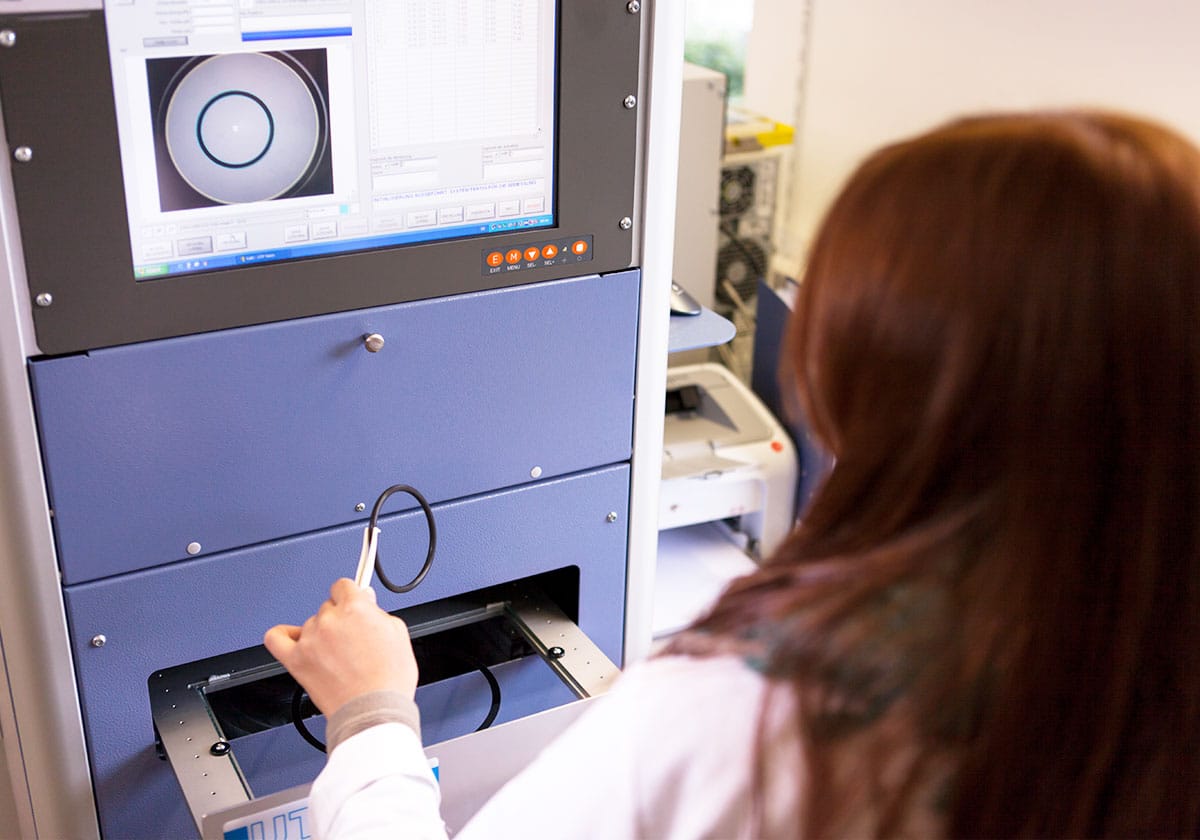
O-rings used in electronics undergo precision testing due to strict reliability requirements.
| Test Type | Purpose |
| Humidity Resistance Test | Evaluate moisture protection capability |
| Thermal Cycling Test | Simulate device heating and cooling cycles |
| Compression Set Test | Measure long-term elasticity retention |
| Outgassing Test | Ensure no contamination of sensitive electronics |
| IP Rating Leak Test | Verify enclosure sealing performance |
Factory Performance Data: Electronic Housing Sealing Test
A controlled engineering evaluation was conducted on silicone O-rings used in sealed electronic sensor housings.
| Parameter | Result |
| Test Cycles | 5.4 million cycles |
| Temperature Range | -40°C to 150°C |
| Humidity Exposure | 95% RH continuous |
| Leakage | No measurable leakage |
| Compression Set | 8.4% |
The results demonstrate stable performance in harsh electronic operating environments.
Service Life Behavior in Electronic Applications
Estimated Service Life:
- 25°C → 10–15 years
- 50°C → 7–10 years
- 80°C → 5–7 years
- 100°C → 3–5 years
- 120°C → 2–4 years
Customer Case Study: ECU Moisture Failure in Automotive Electronics
🏭 Industry: Automotive Electronic Control Units (ECU)
Problem: Field failures occurred due to moisture ingress into ECU housings, leading to corrosion and intermittent signal failure.
Root Causes:
- Low-grade sealing material with poor compression recovery
- Inconsistent housing groove tolerances
- High humidity exposure during operation
Solution:
- Upgraded to high-grade silicone O-rings
- Improved enclosure design for IP67 compliance
- Added thermal compensation sealing structure
Results:
- Failure rate reduced by 95%
- Moisture ingress eliminated in testing
- Service reliability significantly improved
Failure Mechanisms in Electronic Sealing Systems
Compression Set
Loss of elasticity reduces sealing force over time.
Thermal Aging
Heat from electronic components accelerates material degradation.
Moisture Ingress
Seal degradation allows humidity penetration into sensitive circuits.
Outgassing
Volatile compounds may contaminate optical or semiconductor components.
Mechanical Stress
Vibration and assembly stress cause micro-cracks or deformation.
Frequently Asked Questions
1. Why are O-rings important in electronics?
They protect sensitive components from moisture, dust, and environmental damage.
2. Which material is best for electronic O-rings?
Silicone, EPDM, and FKM are commonly used depending on environment requirements.
3. Can O-rings prevent moisture damage in electronics?
Yes, properly designed O-rings help achieve IP-rated sealing performance.
4. What causes O-ring failure in electronic devices?
Thermal aging, compression set, and environmental exposure are common causes.
5. How long do electronic O-rings last?
Typically 2 to 15 years depending on operating temperature and environment.