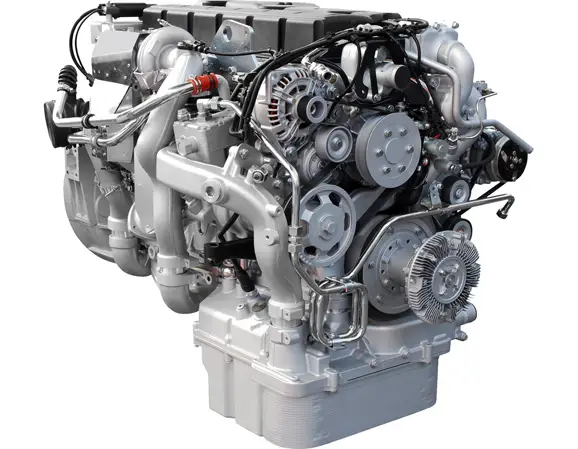
Lip seals are widely used in rotating and moving mechanical systems to control lubricant leakage and limit the entry of contaminants. Found in automotive engines, gearboxes, pumps, electric motors, agricultural machinery, and industrial equipment, these components help protect bearings, shafts, and other critical parts from premature wear.
Although a lip seal may appear to be a simple rubber component, its performance depends on the interaction between lip geometry, material properties, shaft condition, lubrication, temperature, speed, and pressure. Selecting a seal based only on its dimensions or material name can lead to leakage, excessive friction, or early failure.
Engineering takeaway: A reliable lip seal must create a stable sealing interface without generating excessive friction or heat. Material selection, shaft design, lubrication, and installation should be evaluated together.
What Is a Lip Seal?
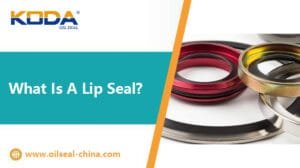
A lip seal is a sealing component that uses one or more flexible lips to control the passage of fluids or contaminants between components that move relative to one another. In rotary applications, the sealing lip typically contacts a rotating shaft while the seal body is retained in a stationary housing.
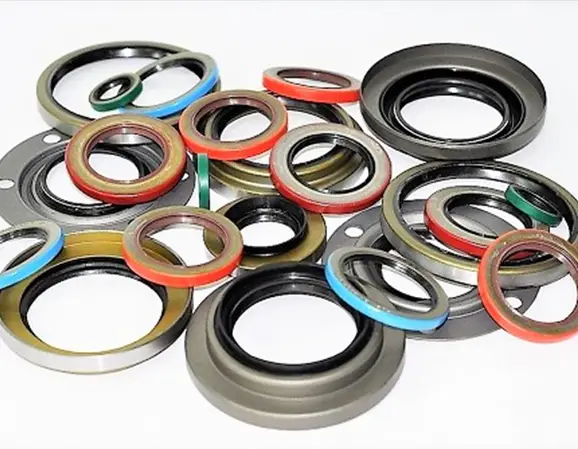
The term “lip seal” covers several designs. A conventional radial shaft oil seal retains lubricant around a rotating shaft, while an axial lip seal such as a V-ring seals against a face perpendicular to the shaft axis. Other lip-type designs may be used for reciprocating motion or specialized sealing arrangements.
Main functions of lip seals
- Lubricant retention: Helps keep oil or grease inside a housing, gearbox, bearing assembly, or other lubricated system.
- Contamination exclusion: Helps prevent dust, water, mud, and other external contaminants from entering the equipment.
- Media separation: Maintains a barrier between fluids or between a fluid and the surrounding environment.
- Component protection: Helps preserve lubrication and reduce contamination-related wear in bearings, shafts, and rotating assemblies.
Lip seals are not universally suitable for every pressure, speed, or fluid condition. The appropriate design depends on the operating environment and the required sealing function.
How Does a Lip Seal Work?
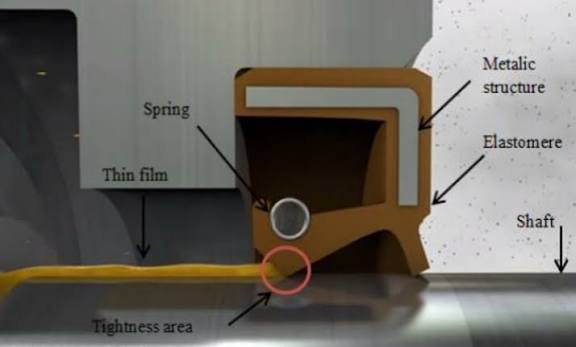
A conventional radial lip seal operates through controlled contact between a flexible sealing edge and the shaft surface. The seal is installed in a housing bore, and the lip is positioned against the shaft to form a dynamic sealing interface.
Lip contact and radial force
The elastomeric lip is designed with an interference fit against the shaft. The lip’s elastic deformation creates radial contact force. Some designs include a garter spring to help maintain the required contact force as the seal operates.
Too little contact force may allow leakage, while excessive contact force can increase friction, temperature, and wear. The objective is to maintain adequate sealing contact without imposing unnecessary friction on the shaft.
The role of the lubricant film
In a properly designed and lubricated rotary lip seal, a very thin fluid film may form at the contact interface. This film helps reduce friction and wear while the lip continues to control leakage.
The sealing interface is therefore not simply a dry rubber edge pressed tightly against metal. Surface finish, lip geometry, lubricant properties, shaft speed, and temperature all influence the behavior of the contact zone.
Hydrodynamic effects
Some rotary lip seals incorporate specialized lip geometry or microscopic surface features that help manage fluid movement at the sealing interface. These features can support lubricant return toward the sealed side under the intended direction of rotation.
Performance depends on the specific design and operating conditions. A seal intended for one direction of rotation should not automatically be assumed suitable for reverse rotation.
Primary and auxiliary lips
A double-lip design may include a primary lip for lubricant retention and a secondary lip for additional contamination protection. The secondary lip can increase friction and may require suitable lubrication, depending on the design.
Practical point: Adding more lips does not automatically improve performance. Additional contact can increase friction and heat, so the number and function of the lips should match the actual contamination and lubrication conditions.
Main Types of Lip Seals
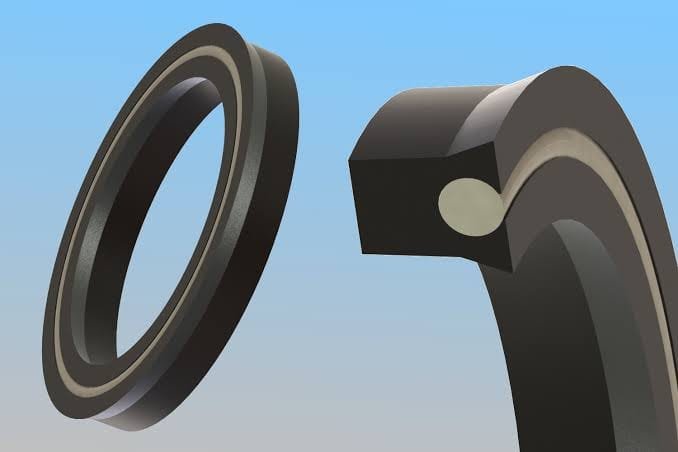
Lip seals can be classified by their geometry, direction of sealing, movement, and auxiliary features. Understanding the differences helps prevent the selection of a seal that fits physically but cannot perform reliably in the application.
Single-lip radial shaft seal
A single-lip radial shaft seal uses one primary sealing lip to retain lubricant or separate media around a rotating shaft. It is commonly used in gearboxes, pumps, motors, and automotive assemblies.
This design is often suitable where the primary requirement is fluid retention and external contamination is limited or controlled by other components.
Double-lip radial shaft seal
A double-lip seal typically combines a primary sealing lip with an auxiliary dust lip. The primary lip retains lubricant, while the secondary lip helps reduce the entry of external contaminants.
Double-lip designs may be useful in environments exposed to dust, splash water, or road debris. However, the auxiliary lip’s friction and lubrication requirements should be considered during selection.
Spring-loaded lip seal
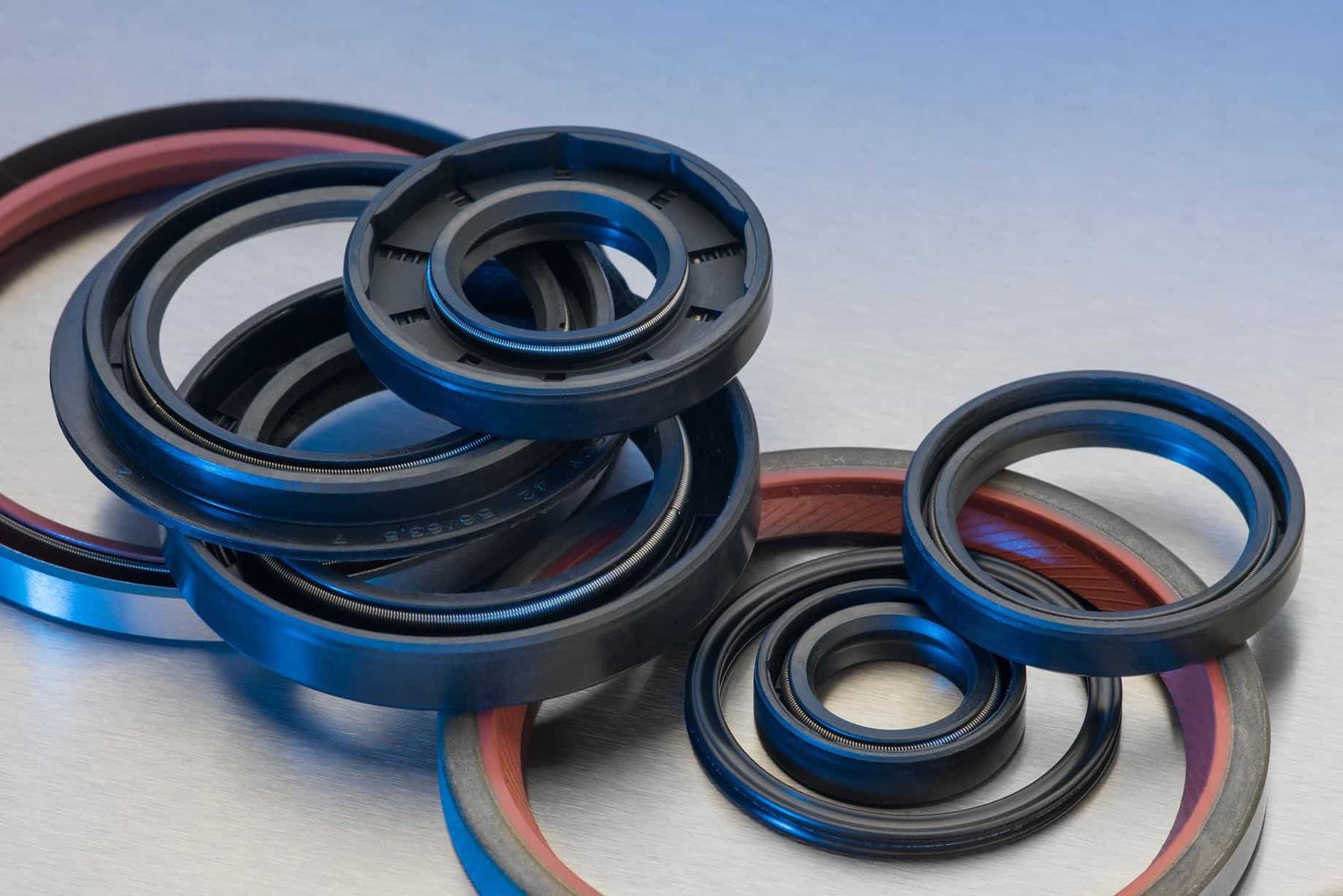
A spring-loaded radial lip seal uses a garter spring positioned near the primary sealing edge. The spring supplements the elastomer’s radial force and helps maintain contact under the intended operating conditions.
Spring-loaded designs are widely used in rotary shaft sealing applications where consistent lip contact is required. The spring does not eliminate the need for proper shaft finish, lubrication, alignment, or temperature control.
V-ring seal
A V-ring is an axial elastomeric seal that is generally mounted on a shaft and seals against a surface perpendicular to the shaft axis. It is commonly used as a secondary contamination barrier rather than as a direct replacement for a conventional radial oil seal.
V-rings can help protect bearings and other assemblies from dust, splash water, and external contaminants. Their performance depends on mounting stretch, counterface condition, speed, and operating environment.
PTFE rotary lip seal
PTFE-based rotary lip seals use a low-friction sealing material and may incorporate specialized lip profiles, energizing elements, or metal housings. They are considered for applications requiring particular chemical resistance, friction characteristics, or operating conditions.
PTFE seals have different elastic recovery and installation behavior from conventional elastomeric seals. Their design and fitting instructions must be followed carefully.
Custom lip seals and molded profiles
Custom lip seals may be molded or extruded for specialized housings, nonstandard dimensions, unusual sealing surfaces, or specific environmental requirements. Custom designs should be based on a drawing, sample, or verified dimensional specification.
| Seal type | Primary function | Key selection factors |
|---|---|---|
| Single-lip radial seal | Retain lubricant around a rotating shaft | Fluid, speed, shaft finish, lip material |
| Double-lip radial seal | Fluid retention with added contamination protection | Dust, moisture, friction, auxiliary-lip lubrication |
| Spring-loaded seal | Maintain lip contact through spring-assisted loading | Speed, temperature, fluid, shaft condition |
| V-ring | Axial sealing and external contamination exclusion | Mounting stretch, counterface, speed, exposure |
| PTFE rotary seal | Specialized low-friction or chemical-resistant sealing | Pressure, speed, installation, shaft finish |
Lip Seal Materials: How to Choose the Right Compound
Material selection affects temperature capability, fluid compatibility, wear resistance, elasticity, and service life. The best material depends on the complete operating environment rather than one isolated property.
NBR (Nitrile Butadiene Rubber)
NBR is widely used in conventional oil seals because many compounds provide good resistance to petroleum-based oils and useful mechanical properties at a practical cost.
Its limitations include restricted temperature performance in many standard grades and variable compatibility with certain fuels, additives, and chemicals. Low-temperature flexibility also depends on the compound formulation.
FKM (Fluoroelastomer)
FKM is commonly selected for applications requiring improved heat resistance and compatibility with many oils, fuels, and chemicals. It may be suitable for demanding engine, pump, and industrial sealing applications.
FKM is not compatible with every chemical or fluid. The exact compound grade, operating temperature, and fluid formulation must be checked before use.
HNBR (Hydrogenated Nitrile Butadiene Rubber)
HNBR can provide improved heat-aging and mechanical properties compared with many conventional NBR compounds. It is used in selected automotive, oilfield, and industrial applications where the operating environment requires enhanced performance.
EPDM (Ethylene Propylene Diene Monomer)
EPDM is often suitable for outdoor environments, ozone exposure, hot water, steam, and many polar fluids. It is generally not a preferred material for sealing petroleum-based oils and many hydrocarbon fuels.
Silicone (VMQ)
Silicone offers useful temperature flexibility and weathering resistance in selected applications. However, its tear strength, abrasion resistance, and compatibility with many oils and fuels may limit its use in certain dynamic rotary sealing systems.
PTFE
PTFE provides low friction and broad chemical resistance. It is often considered for specialized rotary sealing applications, but its limited elastic recovery means that profile design, energizing mechanisms, and installation are especially important.
| Material | Potential strengths | Important limitations |
|---|---|---|
| NBR | Many petroleum oils, mechanical performance, cost efficiency | Temperature and chemical limits vary by compound |
| FKM | Heat resistance and compatibility with many oils and fuels | Not universal for all fluids or low-temperature conditions |
| HNBR | Improved heat aging and mechanical performance in suitable grades | Compound-specific compatibility and temperature limits |
| EPDM | Weathering, ozone, water, steam, selected polar fluids | Generally unsuitable for petroleum oils and hydrocarbon fuels |
| Silicone | Temperature flexibility and weathering resistance | Tear, abrasion, and fluid compatibility limitations in some uses |
| PTFE | Low friction and broad chemical resistance | Different elastic behavior and installation requirements |
Note: The table provides a qualitative comparison. Actual operating limits depend on the specific compound, seal design, fluid, pressure, speed, and exposure duration.
Common Applications of Lip Seals
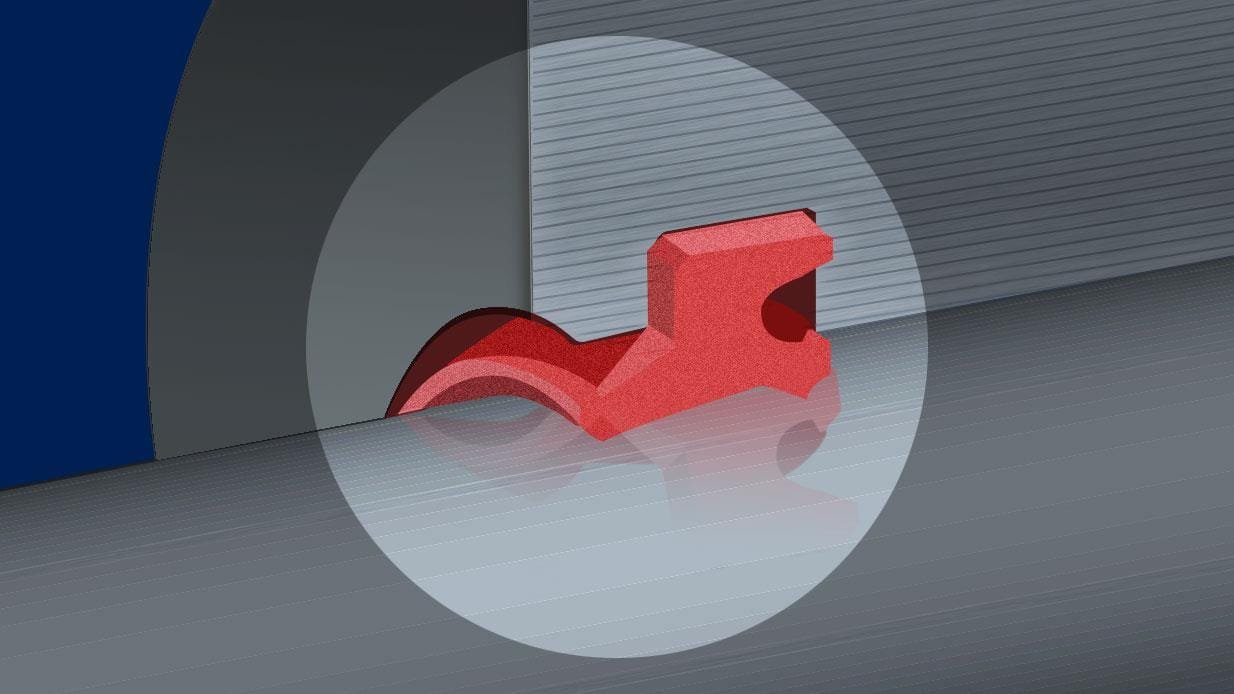
Automotive systems
Lip seals are used in engines, transmissions, differentials, wheel hubs, and other rotating assemblies. They help retain lubricants and protect components from contamination.
Automotive applications may involve heat, vibration, lubricant additives, variable speeds, and limited installation space. Correct part identification and material compatibility are essential.
Pumps and compressors
Pumps and compressors use shaft seals to control lubricant leakage and protect rotating components. Selection should account for shaft speed, pressure, fluid chemistry, lubrication, shaft finish, and alignment.
Electric motors and gearboxes
Electric motors and gearboxes commonly use radial shaft seals to retain grease or oil and reduce contamination entry. Shaft runout, heat, housing tolerances, and lubricant behavior can influence service life.
Agricultural and construction equipment
Machinery operating in mud, dust, water, and vibration may require additional contamination protection. Depending on the assembly, double-lip seals, V-rings, cassette seals, or other specialized designs may be considered.
Industrial production equipment
Conveyors, machine tools, paper-processing equipment, and other industrial systems may use lip seals to protect bearings and retain lubricants. The correct design depends on the speed, load, contamination, and maintenance environment.
How to Select the Right Lip Seal
A reliable selection process begins with the operating conditions and proceeds through seal geometry, material, dimensions, and validation.
Step 1: Define the sealing function
Determine whether the seal must retain oil, grease, or another fluid, exclude contaminants, separate media, or perform more than one function. Identify whether the motion is rotary, oscillating, reciprocating, or static.
Step 2: Identify the operating medium
Record the exact fluid, lubricant, chemical composition, additives, and potential contaminants. Compatibility should be checked against the actual medium rather than a broad category such as “oil.”
Step 3: Establish the operating conditions
Document continuous and peak temperature, shaft speed, pressure, direction of rotation, duty cycle, vibration, and exposure to dust or water. Include startup and shutdown conditions where relevant.
Step 4: Confirm shaft and housing dimensions
For a conventional radial shaft seal, verify shaft diameter, housing bore, seal width, installation depth, and relevant tolerances. Check the housing fit and the shaft’s surface condition.
Step 5: Review shaft finish and runout
Shaft roughness, hardness, lead, runout, and alignment can affect lip wear and leakage. Follow the seal manufacturer’s recommended shaft specifications rather than relying on a generic finish value.
Step 6: Select the lip design and material
Choose the lip configuration and compound based on the complete application. Consider whether an auxiliary dust lip, spring-loaded design, specialized profile, or alternative sealing technology is required.
Step 7: Validate the design
For critical applications, validate the seal under representative speed, temperature, pressure, lubrication, and contamination conditions. Use actual operating data and service history to guide the final selection.
Selection principle: A lip seal should be specified as a complete system: seal profile + material + shaft + housing + lubricant + operating conditions.
Lip Seal Installation: Best Practices
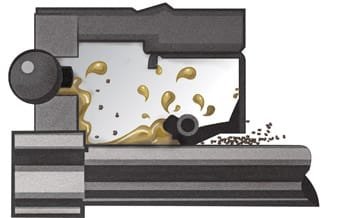
Correct installation protects the sealing edge and helps maintain the intended lip contact. Even a well-designed seal can leak if it is damaged, tilted, or installed on an unsuitable shaft surface.
- Inspect the shaft and housing: Check for burrs, corrosion, scoring, sharp edges, and dimensional damage.
- Clean the assembly: Remove dirt, metal particles, old sealant, and other contaminants.
- Verify seal orientation: Confirm which side faces the lubricant and which side faces the external environment.
- Use suitable installation tools: Apply even pressure to the seal’s designated installation surface and avoid loading the flexible lip directly.
- Protect the lip during fitting: Use an appropriate sleeve or guide when passing over threads, keyways, splines, or sharp edges.
- Lubricate as specified: Use a compatible lubricant when required by the seal manufacturer’s instructions.
- Install at the correct depth: Ensure the seal is seated squarely and positioned according to the drawing or service procedure.
- Check the assembly before startup: Verify shaft alignment, lubrication, and freedom from interference.
Installation warning: Do not assume every lip seal should be installed dry or lubricated with the same substance. Follow the manufacturer’s instructions for the specific material and seal design.
Common Lip Seal Failure Modes and Troubleshooting
When a lip seal leaks or wears prematurely, replacing it with another seal of the same size may not solve the problem. A systematic inspection should consider the seal, shaft, housing, lubricant, and operating conditions.
| Failure symptom | Possible cause | Recommended checks |
|---|---|---|
| Leakage immediately after installation | Damaged lip, incorrect orientation, wrong size, tilted installation | Part number, lip condition, installation depth, seating alignment |
| Groove or wear track on the shaft | Long-term lip contact, unsuitable shaft finish, contamination | Shaft surface, hardness, wear depth, contamination sources |
| Hard or cracked lip | Thermal aging, chemical attack, excessive frictional heat | Temperature history, lubricant compatibility, material grade |
| Swollen or softened elastomer | Fluid incompatibility or excessive swelling | Fluid chemistry, temperature, compound formulation |
| Excessive heat near the lip | Excessive contact force, poor lubrication, high speed, misalignment | Shaft speed, lip design, lubricant supply, runout |
| Dust or water entering the assembly | Unsuitable contamination protection, damaged auxiliary lip | Seal profile, exposure conditions, installation, external barrier |
| Uneven lip wear | Shaft runout, eccentricity, misalignment, shaft defects | Alignment, shaft movement, bearing condition, surface geometry |
How to investigate a failed lip seal
- Record the equipment operating conditions and the location of leakage.
- Photograph the seal before cleaning or removing deposits.
- Inspect the sealing lip, spring, case, and any auxiliary lips.
- Measure the shaft and housing and check for wear or damage.
- Verify the lubricant, temperature, speed, pressure, and contamination conditions.
- Compare the failure evidence with the original seal specification and installation procedure.
Documenting the failure mechanism helps determine whether the solution requires a different material, a revised lip profile, shaft repair, improved contamination protection, or a change in installation practice.
How to Extend Lip Seal Service Life
- Maintain shaft quality: Keep the sealing track within the specified surface and dimensional requirements.
- Control friction and temperature: Verify lubrication, shaft speed, and lip contact conditions.
- Choose a compatible material: Confirm fluid resistance and temperature capability for the actual compound.
- Prevent contamination: Use an appropriate auxiliary seal or external protection when the environment requires it.
- Ensure correct installation: Use the correct tools, orientation, and installation depth.
- Monitor equipment condition: Investigate leakage, unusual temperature, vibration, or abnormal wear before damage spreads.
- Replace damaged components: Correct shaft or housing defects rather than installing a new seal over an unsuitable surface.
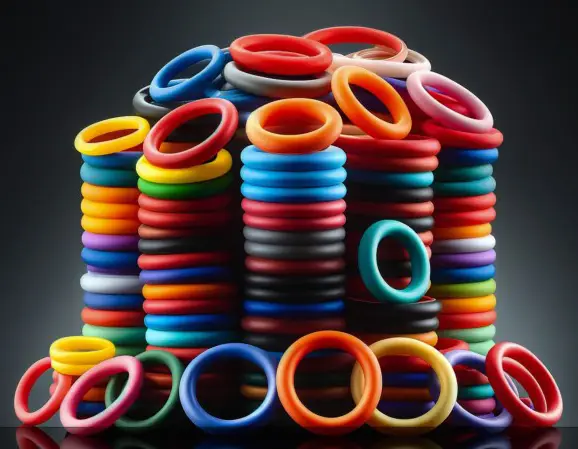
Lip Seal vs. O-Ring: What Is the Difference?
Lip seals and O-rings are both used for sealing, but their geometry and operating principles differ.
| Feature | Lip seal | O-ring |
|---|---|---|
| Geometry | One or more flexible sealing lips | Typically a circular elastomeric cross-section |
| Common use | Rotary shaft sealing and selected moving interfaces | Static sealing and selected dynamic applications |
| Sealing mechanism | Controlled lip contact with the mating surface | Compression within a gland |
| Key design factors | Lip geometry, shaft finish, speed, lubrication | Squeeze, gland fill, extrusion gap, material compatibility |
These components are not direct substitutes. The correct choice depends on the sealing interface, movement, pressure, and system design.
Lip Seal Selection Checklist
- ☐ Seal type and required sealing function
- ☐ Shaft diameter and housing bore
- ☐ Seal width, installation depth, and profile
- ☐ Operating fluid and chemical compatibility
- ☐ Minimum, continuous, and peak temperature
- ☐ Shaft speed and direction of rotation
- ☐ Pressure, pressure fluctuations, and lubrication
- ☐ Shaft surface finish, hardness, and runout
- ☐ Contamination exposure and auxiliary sealing needs
- ☐ Material family and exact compound grade
- ☐ Installation procedure and required tooling
- ☐ Expected service life and inspection requirements
Frequently Asked Questions
What is the main purpose of a lip seal?
A lip seal helps retain fluids, exclude contaminants, or separate media at a moving interface. In rotary applications, it commonly seals between a rotating shaft and a stationary housing.
What is the difference between a lip seal and an oil seal?
An oil seal is commonly a type of radial shaft lip seal designed to retain oil or grease and help exclude contaminants. The term “lip seal” is broader and includes other sealing designs and applications.
What is a double-lip seal used for?
A double-lip seal often combines a primary fluid-retaining lip with a secondary lip that helps reduce contamination entry. Its suitability depends on the contamination level, friction, lubrication, and operating conditions.
Can a lip seal be used for high-speed applications?
Some lip seals are designed for high-speed operation, but suitability depends on the seal profile, material, shaft finish, lubrication, temperature, and manufacturer-rated operating limits. Speed alone is not enough to determine suitability.
Why does a lip seal leak after replacement?
Possible causes include incorrect dimensions, damaged lips, improper orientation, installation at the wrong depth, shaft wear, misalignment, incompatible lubricant, or unsuitable operating conditions.
Which material is best for a lip seal?
There is no single material that suits every application. NBR, FKM, HNBR, EPDM, silicone, and PTFE-based designs each have different properties. Select the material according to the actual fluid, temperature, movement, and service requirements.
How can I choose the correct replacement lip seal?
Start with the original part number or technical drawing, then verify dimensions, profile, material, shaft condition, and operating requirements. Do not rely on nominal dimensions alone.
Conclusion: Reliable Lip Sealing Starts with Correct Design and Application Matching
Lip seals are essential components in many rotary and moving systems. Their ability to retain lubricant and protect equipment depends on the relationship between sealing geometry, material properties, shaft condition, lubrication, and installation quality.
Choosing a seal by size or material name alone can overlook important factors such as shaft runout, lip contact, contamination exposure, and fluid compatibility. A structured selection and failure-analysis process helps reduce leakage, avoid repeated replacements, and improve equipment reliability.
Looking for a lip seal for your application?
Prepare the shaft and housing dimensions, operating medium, temperature, speed, pressure, and required sealing function. A drawing, original part number, or verified sample can help determine the appropriate profile and material.
For custom or bulk supply, confirm the technical specification, sample approval, and inspection requirements before production.