
What is a TCN pressure oil seal?
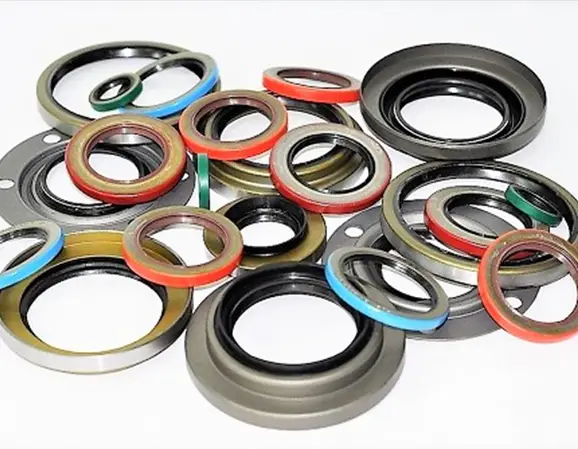
The TCN oil seal is specifically engineered for rotary shaft applications where the sealing interface is subjected to internal pressure. While conventional rotary shaft seals are generally intended for non-pressurized or splash-lubricated systems, the TCN profile is designed to provide reliable sealing performance in environments where pressure resistance is required.
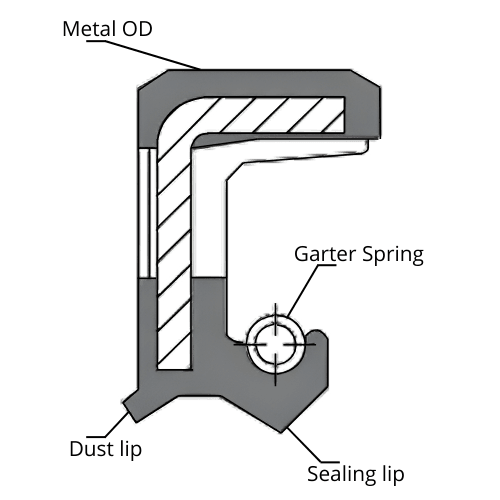
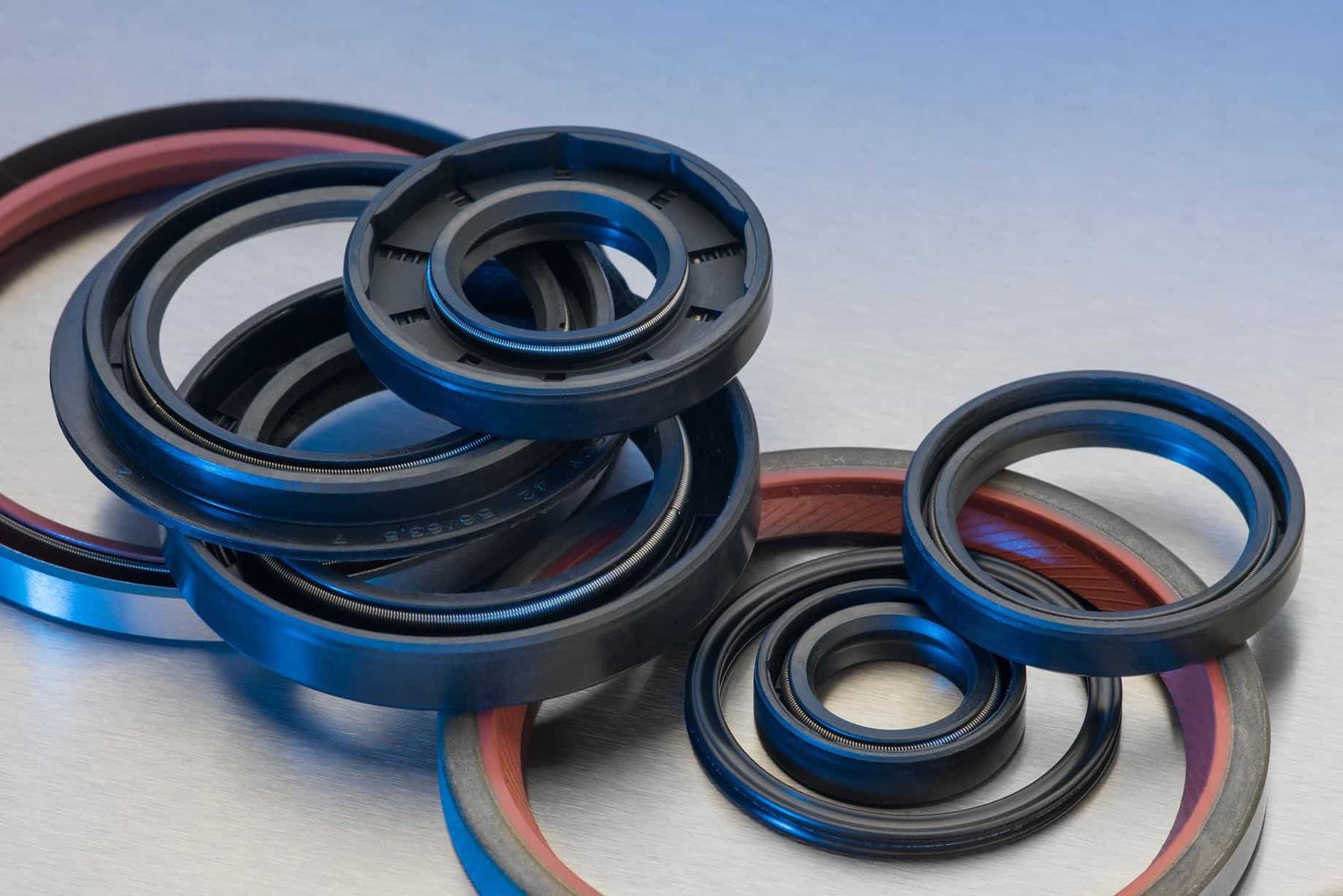
A key feature of the TCN design is its spring-energized primary sealing lip, which incorporates a shorter and more rigid lip geometry than standard TC-type seals. This construction helps maintain consistent sealing contact with the shaft and improves resistance to deformation when exposed to elevated pressure levels. As a result, the sealing lip remains stable under both radial and axial loading conditions, supporting reliable lubricant retention throughout operation.
In addition to the primary sealing element, the TCN profile includes an auxiliary dust lip positioned on the air side of the seal. Although this secondary lip is not intended to withstand internal pressure, it serves as an effective barrier against dust, moisture, and other external contaminants that could otherwise reach the primary sealing interface and accelerate wear.
The outer diameter is fully coated with elastomer material, creating a dependable static seal between the oil seal and the housing bore. This elastomer-covered design also helps compensate for minor housing irregularities, improves vibration damping, and reduces the likelihood of fretting corrosion developing between the seal body and the housing during long-term service.
Combining pressure-capable sealing performance with contamination protection and reliable housing retention, the TCN oil seal is a suitable choice for demanding rotary shaft applications where standard pressure-free seal designs may not provide sufficient performance.
How does a TCN pressure oil seal work?
The ability of a TCN oil seal to withstand internal pressure is primarily derived from its specialized sealing lip design. Unlike conventional rotary shaft seals, the TCN profile incorporates a compact sealing lip reinforced by a precision garter spring. This combination helps maintain a consistent sealing interface with the shaft, even when pressure levels within the system increase.
By improving lip stability and contact control, the design supports reliable sealing performance across a range of lubricants, including both high-viscosity oils and lighter fluid media. Under carefully controlled operating conditions, TCN seals may also be applied in certain gas-sealing applications, provided that factors such as pressure level, shaft speed, operating temperature, and frictional heat remain within acceptable limits.
The seal’s elastomer-covered outer diameter further enhances its versatility by providing effective static sealing between the seal body and the housing bore. This feature is particularly beneficial in applications where housing integrity is critical, such as aluminum casings, split housing constructions, hydraulic pumps, hydraulic motors, and refurbished equipment where minor dimensional variations may be present.
Through the combination of pressure-resistant lip geometry, spring-assisted sealing force, and reliable housing retention, the TCN oil seal offers an effective solution for rotary shaft systems operating under more demanding sealing conditions than those typically handled by standard oil seal profiles.
TCN vs TC oil seal
Although TC and TCN oil seals share a similar rotary shaft seal configuration, they are intended for different sealing requirements. The TC profile is generally selected for applications operating without internal pressure, such as splash-lubricated systems and conventional oil-retention duties. In contrast, the TCN oil seal is specifically engineered for environments where the sealing interface is exposed to pressure and additional lip stability is required.
The primary distinction lies in the design of the main sealing lip. TCN seals feature a more compact, pressure-resistant lip geometry supported by a garter spring, enabling the sealing edge to maintain consistent contact with the shaft when pressure levels rise. This enhanced stability helps reduce the risk of lip distortion and supports reliable sealing performance under more demanding operating conditions.
Both profiles incorporate a secondary dust lip on the air side of the seal. Its purpose is to limit the ingress of dirt, dust, moisture, and other contaminants that could negatively affect the primary sealing area. However, this auxiliary lip serves only as a contamination barrier and is not designed to withstand or retain internal pressure.
For applications where pressure loading is expected, the TCN profile generally provides a more suitable solution than a standard TC seal, while still offering the additional protection benefits associated with a dual-lip sealing design.
| Oil seal type | Use this type when… |
|---|---|
| TC oil seal | The application is pressure-free or splash-lubricated and a standard rotary shaft oil seal is sufficient. |
| TCN pressure oil seal | The application involves internal pressure and requires a pressure-loadable sealing lip. |
When to choose a TCN pressure oil seal
A TCN oil seal should be considered whenever a sealing system is required to operate under internal pressure or when the equipment manufacturer specifies a pressure-capable rotary shaft seal. Its reinforced sealing lip design makes it particularly suitable for applications where maintaining lubricant containment under varying pressure conditions is essential.
TCN profiles are widely used throughout hydraulic and fluid power systems, including hydraulic pumps, hydraulic motors, gear pumps, vane pumps, orbital motors, compact hydraulic assemblies, power units, and mobile equipment. They are also found in industrial transmissions, drive systems, and other rotating machinery where pressure may develop within the housing as a result of thermal expansion, restricted ventilation, or the use of low-viscosity lubricants.
Selecting the correct TCN seal requires careful evaluation of several operating and dimensional factors. Shaft diameter, housing bore dimensions, seal width, operating temperature, system pressure, shaft speed, fluid characteristics, and material compatibility should all be taken into account during the selection process. Matching these parameters correctly helps ensure reliable sealing performance and long service life.
It is important to note that pressure capability and rotational speed are closely related. As shaft speed increases, the maximum allowable operating pressure generally decreases due to additional heat generation and dynamic loading on the sealing lip. For this reason, pressure and speed ratings should always be verified against the manufacturer’s performance guidelines before a TCN oil seal is specified for an application.
TCN pressure oil seal applications
TCN oil seals are designed for rotary shaft applications that require greater pressure resistance than can typically be achieved with a conventional TC seal. Their pressure-capable sealing lip construction allows them to operate effectively in systems where internal pressure, lubricant retention, and sealing stability are critical performance requirements. When selected and applied within the recommended operating parameters, TCN seals provide reliable sealing performance across a broad range of hydraulic and industrial equipment.
Typical applications include:
Hydraulic pumps
Hydraulic motors
Gear pumps
Vane pumps
Orbital motors
Compact hydraulic power units
Hydraulic power packs
Mobile hydraulic equipment
Industrial transmissions and drive systems where localized pressure build-up may occur
Refurbished pumps and motors utilizing aluminum housings or split housing constructions
These applications often experience pressure fluctuations, thermal expansion effects, or restricted venting conditions that place higher demands on the sealing system. The TCN profile is specifically developed to address these challenges while maintaining dependable shaft sealing performance in a compact design.
TCN oil seal materials
The performance of a TCN oil seal is heavily influenced by the material from which it is manufactured, as the elastomer compound must be compatible with the operating fluid, temperature range, and surrounding environmental conditions. Selecting the appropriate material is essential for achieving reliable sealing performance and maximizing service life.
NBR is widely used in standard applications involving mineral oils, lubricating greases, and conventional hydraulic fluids due to its balanced combination of durability, flexibility, and cost-effectiveness. For systems operating at elevated temperatures or exposed to more aggressive chemicals, FKM (Viton®) is often the preferred choice because of its superior resistance to heat, oxidation, and chemical attack.
Depending on the specific demands of the application, alternative elastomer compounds such as HNBR, ACM, CR, EPDM, and VMQ (Silicone) may also be selected. These materials offer varying levels of resistance to temperature extremes, environmental exposure, specialized media, and mechanical stress, allowing the seal to be optimized for particular operating conditions.
In addition to the elastomer components, the garter spring and reinforcement elements can be manufactured from stainless steel when enhanced corrosion resistance is required. This option is particularly beneficial in applications exposed to moisture, aggressive chemicals, or other environments that may accelerate corrosion of standard metal components.
| Material | Typical temperature range | Key properties |
|---|---|---|
| NBR (Nitrile Rubber) | -30 °C to +100 °C | Good wear resistance, suitable for mineral oils and greases, cost-effective. Recommended maximum of 80 °C with synthetic oils. |
| FKM / Viton | -20 °C to +180 °C | Excellent heat resistance and chemical resistance. Suitable for synthetic oils and more demanding media. |
| HNBR | -30 °C to +150 °C | Improved mechanical strength, pressure resistance and wear resistance compared with NBR. |
| ACM | -20 °C to +150 °C | Good resistance to hot oils and oxidation, with moderate low-temperature performance. |
| CR | -30 °C to +120 °C | Balanced oil and weather resistance with moderate mechanical properties. |
| EPDM | -40 °C to +150 °C | Excellent resistance to water, steam and brake fluids. Not suitable for mineral oils. |
| Silicone | -60 °C to +200 °C | Very wide temperature range and good low-temperature flexibility, but limited wear resistance and pressure capability. |
Selecting the right TCN oil seal size
Choosing an appropriate TCN oil seal requires more than simply matching dimensions. While shaft diameter, housing bore size, and seal width are fundamental selection criteria, the operating environment must also be carefully evaluated. Factors such as system pressure, shaft speed, operating temperature, lubricant type, media compatibility, and heat generation all play a significant role in determining whether a TCN pressure seal is suitable for a particular application.
To achieve consistent sealing performance, both the shaft and housing should comply with recommended manufacturing standards. The shaft is typically specified according to ISO h11 tolerances and should feature adequate hardness together with a lead-free, torsion-free running surface. A surface finish within Ra 0.2–0.8 µm is generally recommended to promote stable lip contact and minimize wear during operation.
The housing bore is commonly manufactured to ISO H8 tolerances to ensure proper seal retention and effective static sealing. For optimal installation conditions, bore surface roughness is usually maintained within Ra 1.6–6.3 µm, allowing the elastomer-coated outer diameter to create a dependable seal against the housing while reducing the risk of leakage or movement.
When selecting a TCN oil seal, dimensional specifications and material options should always be matched to the operating requirements of the equipment. Selection tools or product filters can simplify this process by narrowing the available options according to inside diameter, outside diameter, width, and elastomer type. If a required size, material grade, or configuration is not readily available, consulting a sealing specialist can help identify a suitable alternative or custom solution.
Pressure and speed limits
The pressure capability of a TCN oil seal is closely linked to its operating speed. At relatively low shaft speeds, the seal can withstand internal pressures of several bar while maintaining effective sealing performance. However, as rotational speed increases, the maximum allowable pressure is typically reduced due to higher frictional loads and increased heat generation at the sealing interface.
For this reason, seal selection should be based on a complete evaluation of operating conditions rather than pressure alone. Factors such as shaft diameter, rotational speed, and system pressure must be considered together to ensure the TCN profile operates within its recommended performance range and delivers reliable long-term sealing performance.
| Rotational speed | Shaft Ø 20 mm | Shaft Ø 40 mm | Shaft Ø 80 mm |
|---|---|---|---|
| 0 rpm | 10.0 bar | 8.5 bar | 7.0 bar |
| 500 rpm | 10.0 bar | 8.5 bar | 5.0 bar |
| 1000 rpm | 5.5 bar | 4.5 bar | 3.0 bar |
| 2000 rpm | 3.0 bar | 2.5 bar | 1.5 bar |
| 3000 rpm | 2.0 bar | 1.5 bar | 0.3 bar |
| 4000 rpm | 1.2 bar | 0.5 bar | 0.0 bar |
| 5000 rpm | 0.7 bar | 0.0 bar | – |
| 6000 rpm | 0.0 bar | – | – |
TCN oil seal references and equivalents
Equivalent TCN oil seals are often marketed under different part numbers, profile codes, or designation systems depending on the manufacturer or supplier. Understanding these alternative references can simplify maintenance, repair, and replacement processes, particularly when working with legacy equipment, mixed-brand inventories, or discontinued product ranges.
Common cross-reference designations associated with the TCN profile include WASY, OS-N11, TR-U, RST-D, GAP, BAB SL, 827 SK, DGSP, BABSL, CF, TCV / TCN, and KAS-P. These identifiers may vary between manufacturers while referring to sealing solutions with comparable design characteristics and operating capabilities.
When selecting an equivalent replacement, it is important to verify more than just the reference number. Critical factors such as shaft diameter, housing bore dimensions, seal width, elastomer material, operating temperature, pressure level, shaft speed, and media compatibility should all be reviewed to ensure the replacement seal meets the requirements of the application and delivers reliable long-term performance.
| Manufacturer / supplier | Reference for comparable high pressure oil seal |
|---|---|
| Dichtomatik | WASY |
| Anyseals | OS-N11 |
| B+S | TR-U |
| Eriks | RST-D |
| FP Paris | GAP |
| FST | BAB SL |
| Goetze | 827 SK |
| Kaco | DGSP |
| Kramp | BABSL |
| Stefa | CF |
| Taiwan / NOK | TCV / TCN |
| Vota | BAB SL |
| Kimman | KAS-P |
Need help choosing a TCN pressure oil seal?
Selecting the correct TCN oil seal requires careful consideration of application requirements and operating conditions. If you are uncertain about the appropriate seal dimensions, material compound, or pressure capability for your equipment, our technical team can assist in identifying the most suitable solution.
To provide an accurate recommendation, simply supply the key application details, including shaft diameter, housing bore size, seal width, operating medium, temperature range, system pressure, and shaft speed. Based on this information, we can evaluate the available options and recommend a TCN pressure oil seal that matches your performance and reliability requirements.
Need Assistance Selecting a TCN Oil Seal?
Our sealing specialists are available to help with product selection, material recommendations, cross-reference inquiries, and application-specific sealing solutions. Contact us today for expert guidance on choosing the right TCN oil seal for your equipment.