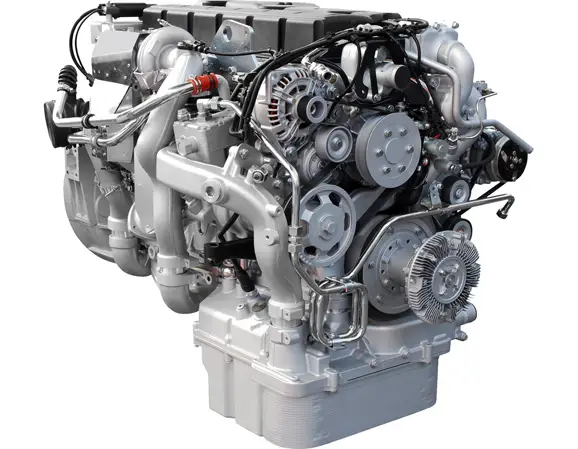
HYUNDAI/KIA Oil Seal
Categories
Auto Oil Seal
- Auto Oil Seal
- TOYOTA Oil Seal
- Nissan/Honda oil seal
- Isuzu Oil Seal
- MITSUBISHI/FUSO Oil Seal
- SUZUKI Oil Seal
- HYUNDAI/KIA Oil Seal
- HINO Oil Seal
- Ford / Chevrolet Oil Seal
- Peugeot Oil Seal
- VW/Iveco Oil Seal
- PEUGEOT Oil Seal
- LADA Oil Seal
- Caterpillar Oil Seal
- HYUNDAI Oil Seal
- MAZDA Oil seals
- BENZ Oil Seal
- VOLVO Oil Seal
- BPW Oil Seal
- MAN oil Seals
- RENAULT Oil Seals
- SCANIA Oil Seal
- FORD Oil Seal
- MACK Oil Seal
- DAF Oil Seals
- PERKINS Oil Seal
Motorcycle Oil Seal
Agricultural Machine Oil Seal
Construction Machinery Oil Seal
Truck Wheel Hub Oil Seal
Cassette Wheel Hub Oil Seal
Power Steering Oil Seal and Kit
Hydraulic Pump Oil Seal
JCB SEAL KIT
Concrete Mixer Gearbox Oil Seal
Wheel Cylinder Brake Cup Seal
Engine Valve Cover Gasket
Bonded Seals
End Cover Cap Seals
Speak with a Product Expert
Please contact our professional sales team to discuss your application needs. We have dedicated staff available to answer your calls Monday through Friday, from 8:30 AM to 6:00 PM Beijing time.
New Customers:
+86 18730921709
Existing/Repeat Customers:
Email:sales@kodaseal.com
NEWS
What is the difference between an oil gasket and an oil seal?
What Is A Lip Seal?
Seal-High-Temperature-A-Comprehensive-Guide
EPDM Rubber: Meaning, Benefits & Applications
HYUNDAI/KIA Oil Seal
Hyundai and Kia vehicles use oil seals throughout their engines, transmissions, drivetrains, and wheel-end assemblies. These components help retain lubricants, prevent fluid leakage, and protect rotating or moving parts from dust, water, and other contaminants. Selecting the correct replacement seal is essential for maintaining lubrication, reducing component wear, and avoiding repeated repairs.
If you have questions about HYUNDAI/KIA Oil Seal, please contact us!
However, finding a suitable Hyundai or Kia oil seal involves more than matching a vehicle brand or comparing a few dimensions. The correct part depends on the original equipment number, installation location, shaft and housing geometry, sealing-lip design, operating fluid, temperature, and movement conditions.
Key selection principle: Confirm the OEM part number and application first, then verify the seal dimensions, profile, material, and operating requirements. A seal that looks similar may still have a different lip geometry or installation depth.
SHOW MORE
What Are Hyundai and Kia Oil Seals?
Hyundai and Kia oil seals are rotary or other application-specific sealing components used in vehicle assemblies to control the movement of lubricants and prevent unwanted contamination. Many automotive oil seals are radial shaft seals installed between a stationary housing and a rotating shaft.
A conventional radial oil seal commonly consists of an elastomeric sealing element, a reinforcing case, and a sealing lip. Depending on the design, it may also include a garter spring, auxiliary dust lip, or other features intended to improve sealing stability and contamination protection.
Main functions of automotive oil seals
- Lubricant retention: Helps prevent engine oil, transmission fluid, or gear oil from escaping through rotating interfaces.
- Contamination exclusion: Reduces the entry of dust, water, road debris, and other contaminants where the design includes suitable protection.
- Component protection: Helps maintain lubrication around bearings, shafts, gears, and other moving parts.
- Leakage control: Supports stable operation and helps reduce fluid loss when correctly selected and installed.
Not every seal used in a Hyundai or Kia vehicle is an oil seal in the narrow radial-shaft sense. Some applications use specialized PTFE seals, valve stem seals, static gaskets, or integrated sealing assemblies. The part should therefore be identified by its actual function and location.
Where Are Oil Seals Used in Hyundai and Kia Vehicles?
Oil seals are installed at multiple points across the powertrain and drivetrain. Their operating conditions can differ substantially, so the seal used in one location should not automatically be substituted for another.
Engine crankshaft oil seals
Crankshaft oil seals help retain engine oil where the crankshaft passes through the engine housing. Depending on the engine design, seals may be installed at the front or rear of the crankshaft.
Front crankshaft seals may operate near timing components, pulleys, and other rotating parts. Rear crankshaft seals are located near the engine-to-transmission interface. Leakage from either location can contaminate adjacent components and may require substantial disassembly to repair.
Camshaft oil seals
Camshaft seals help retain engine oil around the camshaft where it exits the cylinder head or related housing. Their performance depends on correct dimensions, shaft surface condition, oil compatibility, and installation alignment.
Before replacing a camshaft seal, inspect the shaft contact area and surrounding components. A worn shaft surface or excessive shaft movement can cause a new seal to leak prematurely.
Transmission and gearbox oil seals
Transmission oil seals help retain transmission fluid or lubricant around shafts and rotating interfaces. Depending on the transmission architecture, seals may be used at input shafts, output shafts, selector shafts, and other interfaces.
Automatic and manual transmissions may use different fluid formulations, operating temperatures, shaft speeds, and seal designs. A replacement must be compatible with the specified transmission fluid and installation geometry.
Differential and axle shaft oil seals
Differential and axle seals help retain gear oil while limiting the entry of water and road contaminants. These seals may be exposed to dust, mud, vibration, temperature changes, and shaft movement.
Correct installation depth and shaft condition are important. A seal installed at the wrong depth may contact a worn area or interfere with nearby components.
Wheel hub and wheel-end seals
Wheel-end sealing systems are designed to retain lubricant and protect bearings from external contaminants. Depending on the vehicle and assembly, the sealing arrangement may include conventional lip seals or more specialized designs.
When replacing a wheel hub seal, verify the exact assembly, bearing configuration, dimensions, and installation procedure. Wheel-end seals should not be selected solely by vehicle brand or nominal diameter.
Other sealing locations
Additional sealing components may be found in steering systems, auxiliary equipment, hydraulic assemblies, and other vehicle systems. Their material and design requirements depend on the working fluid, pressure, temperature, and motion.
Common Hyundai and Kia Oil Seal Types
Automotive oil seals are available in different structural profiles. The profile code used by a supplier may describe a particular design, but naming conventions can vary between manufacturers. Always confirm the drawing and functional features rather than assuming that two profile codes are interchangeable.
| Seal design | Typical characteristics | Selection considerations |
|---|---|---|
| Single-lip radial seal | Primary sealing lip for lubricant retention | Fluid, shaft speed, lip material, shaft finish |
| Seal with auxiliary dust lip | Additional barrier against external contaminants | Dust, mud, water exposure, friction, lubrication |
| Spring-loaded lip seal | Spring helps maintain radial lip contact | Shaft speed, lip load, fluid retention, wear |
| Metal-cased oil seal | Metal case supports positioning and housing retention | Housing fit, corrosion, installation tooling |
| Specialized PTFE seal | Low-friction sealing design for selected applications | Installation method, shaft finish, running-in requirements |
How to Identify the Correct Hyundai or Kia Oil Seal
Correct identification is one of the most important steps when sourcing replacement automotive oil seals. A reliable process uses multiple identifiers instead of relying on a single measurement.
Start with the OEM part number
The original equipment manufacturer (OEM) part number is usually the most useful starting point. It helps identify the intended component and may lead to superseded or replacement part numbers.
However, a part number should be checked against the exact vehicle configuration. Model year, engine code, transmission type, drivetrain, production date, and market specification may affect fitment.
Fitment reminder: Do not assume that a part fits every Hyundai or Kia vehicle simply because the brand name appears in a product listing. Confirm the part number and application using a reliable catalog or the vehicle’s service information.
Verify the dimensions
Many radial oil seals are described using three principal dimensions:
- Inner diameter (ID): The nominal shaft diameter.
- Outer diameter (OD): The nominal housing bore diameter.
- Width or height (W): The axial thickness of the seal.
A common dimension format is ID × OD × width, expressed in millimeters. Some seals have stepped, extended, or irregular profiles, so their dimensions may require additional measurements or a technical drawing.
When measuring a removed seal, remember that wear, deformation, compression, and damage can affect the observed dimensions. Use the original part number and the mating component dimensions whenever possible.
Inspect the sealing profile
Two seals with identical ID, OD, and width may still differ in lip arrangement, case structure, spring design, dust-exclusion features, or installation depth. These differences can affect leakage control, friction, and service life.
Compare the cross-section, lip orientation, case construction, and any auxiliary features before approving a substitute.
Confirm the operating medium and temperature
Determine whether the seal contacts engine oil, transmission fluid, gear oil, grease, hydraulic fluid, or another medium. Also identify the continuous and peak temperatures, shaft speed, pressure, and external contamination conditions.
Material selection should be based on the actual fluid and operating environment—not simply on the vehicle model.
Hyundai and Kia Oil Seal Size and Part Number Reference
The following examples illustrate how oil seal listings may combine part numbers, profile types, and dimensions. They are reference examples only, not a universal vehicle fitment chart. Verify each number against the relevant OEM catalog or supplier documentation before ordering.
| Brand / reference | Seal type | Listed dimensions (mm) | Verification note |
|---|---|---|---|
| Hyundai / 4G36 reference | HTCR | 44 × 65 × 11 | Confirm exact application and profile. |
| Hyundai reference | TCR | 37 × 50 × 6 | Verify shaft and housing dimensions. |
| Kia / 21421-22001 | HTCR | 35 × 48 × 8 | Confirm part number and sealing location. |
| Kia / 21421-35011 | HTCR | 37 × 50 × 6 | Do not infer vehicle fitment from dimensions alone. |
| Kia / K150-633-065 | KC | 52 × 68 × 7/13 | Check the stepped profile and full drawing. |
| Kia / 1-09652-128-0 | TB | 70 × 95 × 13 | Confirm OEM cross-reference and installation location. |
These sample references are drawn from a supplier’s Hyundai and Kia oil seal listing. They should be treated as catalog examples, not as verified vehicle-specific interchange data.
Choosing the Right Oil Seal Material
Oil seal materials must withstand the working fluid, temperature, mechanical stress, and expected service life. The material family is only the starting point; the exact compound formulation and seal design determine the actual performance.
NBR (Nitrile Butadiene Rubber)
NBR is widely used in automotive oil seals because many NBR compounds offer useful resistance to petroleum-based oils and good mechanical properties at a practical cost.
Its limitations include restricted high-temperature performance in conventional grades and variable resistance to certain fuels, additives, and chemicals. Low-temperature flexibility also depends on the specific formulation.
FKM (Fluoroelastomer)
FKM is commonly considered for applications requiring improved heat resistance and compatibility with many oils, fuels, and chemicals. It is used in selected engine and industrial sealing applications where the service environment exceeds the capability of conventional elastomers.
FKM is not universally compatible with every fluid. Confirm the exact compound grade, low-temperature requirements, and chemical exposure before specifying it.
HNBR (Hydrogenated Nitrile Butadiene Rubber)
HNBR can provide improved heat aging and mechanical performance compared with many conventional NBR formulations. It may be suitable for demanding automotive and industrial applications, depending on the compound and fluid.
6.4 PTFE and specialized materials
PTFE-based sealing designs may be used where low friction, chemical resistance, or specific operating conditions require an alternative to conventional elastomers. These designs may have different installation requirements and should not be treated as direct drop-in replacements without verification.
| Material | Potential advantages | Important checks |
|---|---|---|
| NBR | Oil resistance, mechanical performance, cost efficiency | Temperature, fluid additives, low-temperature flexibility |
| FKM | Heat resistance and compatibility with many oils and fuels | Exact fluid, compound grade, low-temperature behavior |
| HNBR | Improved heat aging and mechanical properties in suitable grades | Fluid compatibility, temperature, dynamic wear |
| PTFE | Low friction and broad chemical resistance | Seal geometry, shaft finish, installation and running-in |
Common Causes of Hyundai and Kia Oil Seal Leakage
Oil leakage does not always mean the seal material is defective. The root cause may be related to the shaft, housing, installation method, lubrication, or operating conditions.
Worn or damaged shaft surface
A shaft with grooves, corrosion, scoring, or an unsuitable surface finish can damage the sealing lip or prevent stable contact. Replacing the seal without correcting the shaft condition may result in recurring leakage.
Incorrect installation
Tilting, twisting, cutting, or deforming a seal during installation can compromise the sealing lip. Incorrect installation depth may also place the lip on a damaged area or interfere with adjacent components.
Excessive temperature
Heat can accelerate material aging, increase wear, and reduce the seal’s ability to recover after compression. Verify actual operating temperature and confirm that the compound is suitable for sustained exposure.
Wrong material or fluid incompatibility
A seal exposed to an incompatible lubricant may swell, soften, harden, or lose mechanical strength. The correct material must be chosen for the actual fluid formulation and temperature.
Excessive shaft runout or misalignment
Runout, eccentricity, or misalignment can cause uneven lip contact and accelerated wear. Check shaft movement and alignment when a replacement seal leaks repeatedly.
Pressure and lubrication problems
Unexpected pressure buildup, inadequate lubrication, or an unsuitable sealing design can lead to leakage or lip damage. Confirm the operating pressure and lubrication conditions before selecting a replacement.
| Observed symptom | Possible cause | Recommended inspection |
|---|---|---|
| Leakage immediately after replacement | Installation damage, incorrect part, wrong depth | Part number, lip condition, alignment, seating depth |
| Repeated leakage at the same location | Shaft wear, runout, housing damage | Shaft surface, dimensions, concentricity, housing bore |
| Hard or cracked sealing lip | Thermal aging or incompatible fluid | Temperature history, lubricant, material grade |
| Swollen or softened seal | Fluid incompatibility | Fluid specification, compound compatibility |
| Uneven wear around the lip | Misalignment, runout, poor shaft condition | Shaft alignment, runout, surface finish |
Oil Seal Replacement and Installation Guidelines
Correct installation helps preserve sealing performance and reduce the risk of premature leakage. Always follow the vehicle manufacturer’s service procedure for the specific assembly.
- Confirm the replacement part: Match the OEM reference, dimensions, profile, and material requirements.
- Prepare the work area: Keep dirt and debris away from the shaft, housing, and sealing components.
- Remove the old seal carefully: Avoid damaging the shaft, housing bore, or nearby components.
- Inspect mating surfaces: Check for grooves, corrosion, burrs, scoring, and abnormal wear.
- Use compatible assembly lubricant: Lubricate the sealing lip when required by the manufacturer’s instructions.
- Install squarely: Use the correct driver or installation tool to prevent tilting and damage.
- Verify installation depth: Ensure the seal is seated at the specified position and orientation.
- Reassemble and test: Follow the prescribed torque and commissioning procedures, then inspect for leakage.
Important: Do not force a seal into place by striking the sealing lip or using an improvised tool. The correct installation method depends on the seal construction and the vehicle assembly.
How to Source Hyundai and Kia Oil Seals for OEM and Aftermarket Supply
For distributors, repair networks, and industrial buyers, sourcing the correct oil seal requires reliable identification, consistent quality, and clear documentation.
Use a verified cross-reference
Build a cross-reference record that connects the OEM part number with the seal dimensions, profile, material, and verified application. If a number has been superseded, document the replacement reference and its source.
Confirm drawing and tolerance requirements
For custom or replacement production, provide a technical drawing or a verified sample. Confirm critical dimensions, tolerances, sealing-lip geometry, case material, and any required surface treatment.
Specify the compound
Identify the required material family and, where necessary, the exact compound grade. For demanding applications, request supporting material data and compatibility information.
Review quality documentation
Depending on the application, buyers may request dimensional inspection reports, material identification, batch traceability, certificates of conformity, or validation records. Confirm which documents are available and applicable to the supplied product.
Evaluate supply consistency
For recurring orders, confirm that the approved drawing, compound, manufacturing process, and inspection criteria remain consistent. Any material or design change should be reviewed before implementation.
Hyundai and Kia Oil Seal Ordering Checklist
- ☐ Vehicle brand, model, model year, and market
- ☐ Engine code or transmission type, if applicable
- ☐ OEM part number and any superseded number
- ☐ Installation location: crankshaft, camshaft, transmission, axle, wheel hub, etc.
- ☐ Inner diameter, outer diameter, and width
- ☐ Seal profile, lip arrangement, and case construction
- ☐ Working fluid and operating temperature
- ☐ Shaft speed, pressure, and contamination conditions
- ☐ Material family and compound requirements
- ☐ Drawing, sample, or reference photograph
- ☐ Required inspection and quality documents
- ☐ Order quantity, packaging, and delivery requirements
Frequently Asked Questions
How do I find the correct Hyundai oil seal?
Start with the OEM part number and confirm the vehicle configuration and sealing location. Then verify the dimensions, profile, and material requirements using a reliable parts catalog or technical drawing.
Can Hyundai and Kia oil seals be interchangeable?
Some parts may share dimensions or cross-reference numbers, but interchangeability should never be assumed from brand names alone. Verify the OEM number, application, dimensions, sealing profile, and operating requirements.
What do oil seal dimensions such as 35 × 48 × 8 mean?
For a conventional radial shaft seal, the format commonly represents inner diameter × outer diameter × width in millimeters. Special profiles may require additional dimensions, so confirm the supplier’s dimension convention.
Which material is suitable for Hyundai and Kia engine oil seals?
NBR and FKM are common options for selected automotive oil-seal applications, while HNBR and specialized materials may be used for specific requirements. The correct choice depends on oil chemistry, temperature, speed, and the original specification.
Why does a new oil seal leak after installation?
Possible causes include an incorrect part, installation damage, incorrect seating depth, a worn shaft, housing damage, misalignment, fluid incompatibility, or excessive temperature. Inspect the entire sealing system before replacing the seal again.
Can I replace an oil seal using dimensions alone?
Dimensions are useful for identification but are not sufficient for confirming interchangeability. The lip design, case construction, material, installation depth, and intended application must also match.
What information is needed for a bulk oil seal quotation?
Provide the OEM part number, dimensions, seal type, material requirements, quantity, and application details. A drawing or verified sample can help resolve uncertainty when the part number is unavailable.
Conclusion: Accurate Identification Is the Foundation of Reliable Oil Seal Replacement
Hyundai and Kia oil seals perform important functions in engines, transmissions, axles, wheel hubs, and other vehicle systems. Reliable replacement depends on more than matching a brand name or nominal dimensions. OEM identification, sealing geometry, material compatibility, shaft condition, and correct installation all influence sealing performance.
For repair shops and parts distributors, a structured identification process helps reduce ordering errors and repeat repairs. For OEM and industrial buyers, verified drawings, compound specifications, and consistent quality documentation support dependable sourcing.
Looking for Hyundai or Kia oil seals?
Share the OEM part number, seal dimensions, application, and required material. If the original number is unavailable, provide a drawing or clear photographs with measurements so the replacement can be evaluated.
For custom or bulk supply, confirm the technical specification, sample approval, and inspection requirements before production.
 Valve Seal
Valve Stem Seal 4.8/10.8×24×15.9
- Valve Seal
Valve Stem Seal 4.8/9.7×26.5×17.5
- Valve Seal
Valve Stem Seal 5.9/11.8×5.4/31.6×19.4
- Valve Seal
Valve Stem Seal 12/16×20.6×15.1
- Valve Seal
Valve Stem Seal 13.93×23×5.5
- Valve Seal
Valve Stem Seal 5.85/12.02×14×15.4