
Understanding Elastomer Seal Failures
Elastomer seals, including O-rings, are critical components in modern engineering systems, ensuring leak-proof performance across industries such as automotive, aerospace, oil & gas, and manufacturing. However, these seals are highly susceptible to degradation mechanisms like thermal aging and chemical attack. Accurately diagnosing the root cause of failure is essential to improving reliability and extending service life. This article explores how thermal aging differs from chemical attack, how to identify each, and how to prevent premature failure in Elastomer Seal applications.
⚠️ Critical Insight: Misdiagnosing seal failure can lead to repeated equipment downtime and increased maintenance costs.
What is Thermal Aging in Elastomers?
Thermal aging refers to the gradual degradation of elastomer materials due to prolonged exposure to elevated temperatures. Over time, heat accelerates chemical reactions within the polymer structure, leading to changes in mechanical and physical properties.
Key Effects of Thermal Aging
- Loss of elasticity and flexibility
- Increased hardness (embrittlement)
- Surface cracking
- Compression set increase
🔥 Important: Thermal aging is often irreversible and progressively worsens with continuous heat exposure.
Common Causes of Thermal Aging
Thermal degradation typically occurs in environments where temperatures exceed the material’s rated limits. Poor material selection or inadequate cooling systems can accelerate this process in Elastomer Seal applications.
What is Chemical Attack?
Chemical attack occurs when an elastomer reacts with external substances such as oils, fuels, solvents, acids, or gases. These interactions can alter the molecular structure of the material, leading to swelling, softening, or even dissolution.
Signs of Chemical Degradation
- Swelling or volume increase
- Softening or tackiness
- Discoloration
- Loss of tensile strength
🧪 Warning: Chemical attack can occur rapidly depending on the aggressiveness of the fluid and the compatibility of the material.
Typical Sources of Chemical Exposure
Industrial fluids, hydraulic oils, cleaning agents, and environmental contaminants are common sources of chemical attack. Choosing the right material for Elastomer Seal systems is essential to mitigate these risks.
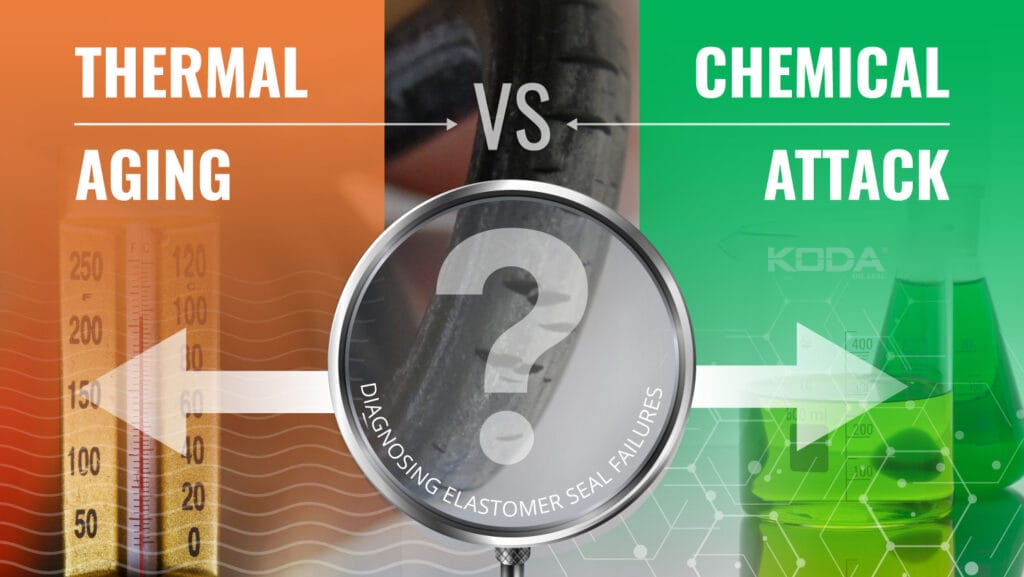
Thermal Aging vs Chemical Attack: Key Differences
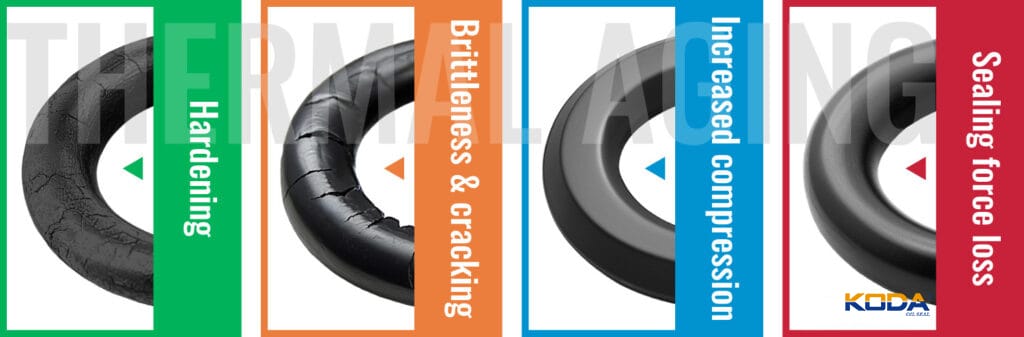
Although both mechanisms lead to seal failure, they exhibit distinct characteristics that can help engineers identify the root cause.
Physical Appearance Comparison
- Thermal Aging: Hard, brittle, cracked surfaces
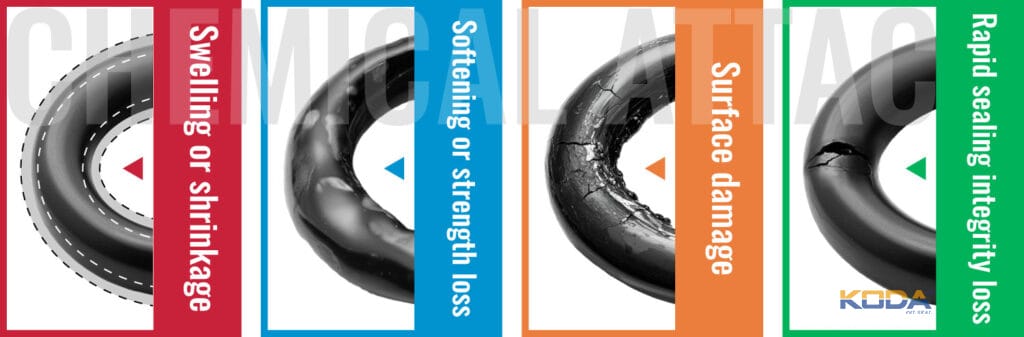
- Chemical Attack: Swollen, soft, sticky surfaces
Performance Impact
- Thermal Aging: Reduced elasticity and sealing force
- Chemical Attack: Loss of structural integrity and dimensional stability
🔍 Diagnostic Tip: Always compare failed seals with unused samples to identify changes in hardness, size, and texture.
Diagnostic Methods for Seal Failures
Proper diagnosis requires a combination of visual inspection, physical testing, and chemical analysis.
Visual Inspection
Examine the seal for cracks, discoloration, swelling, or deformation. These clues often provide the first indication of failure type.
Hardness Testing
Measure the hardness of the failed seal and compare it with original specifications. Increased hardness suggests thermal aging, while decreased hardness indicates chemical attack.
Dimensional Analysis
Check for changes in size or volume. Swelling is a clear sign of chemical incompatibility in Elastomer Seal materials.
Laboratory Testing
Advanced techniques such as FTIR spectroscopy or thermal analysis can provide deeper insights into material degradation mechanisms.
Material Selection and Prevention Strategies
Preventing seal failure begins with selecting the appropriate material for the operating environment.
Choosing Heat-Resistant Materials
- FKM (Viton) for high-temperature applications
- Silicone for extreme temperature flexibility
Selecting Chemically Resistant Elastomers
✅ Best Practice: Always consult compatibility charts and test materials before full deployment in Elastomer Seal systems.
Operational Factors Affecting Seal Life
Beyond material selection, operational conditions significantly influence seal longevity.
Temperature Control
Maintaining temperatures within the recommended range prevents accelerated thermal degradation.
Chemical Exposure Management
Limiting exposure to incompatible chemicals and using protective coatings can reduce degradation risks.
Proper Installation
Incorrect installation can introduce stress points, making seals more vulnerable to both thermal and chemical damage.
Real-World Failure Scenarios
Understanding real-world examples helps illustrate the importance of accurate diagnosis.
Case 1: Overheated Hydraulic System
A hydraulic seal exposed to excessive heat became brittle and cracked, indicating thermal aging due to inadequate cooling.
Case 2: Chemical Exposure in Fuel Systems
An O-ring in a fuel system swelled and softened after prolonged exposure to incompatible fuel additives, demonstrating chemical attack.
📌 Lesson Learned: Accurate failure analysis prevents repeated issues and reduces operational downtime.
FAQ: Thermal Aging vs Chemical Attack: Diagnosing Elastomer Seal Failures
1. How can I tell if an O-ring failed due to heat?
Look for signs like hardening, brittleness, and surface cracking, which are typical of thermal aging.
2. What indicates chemical attack on an elastomer seal?
Swelling, softening, and discoloration are strong indicators of chemical degradation.
3. Can thermal aging and chemical attack occur together?
Yes, in some environments both mechanisms can act simultaneously, complicating diagnosis.
4. How can I prevent elastomer seal failure?
Select compatible materials, control operating conditions, and follow proper installation procedures.
5. Why is material compatibility so important?
Compatibility ensures that the seal maintains its physical properties and performs reliably under specific conditions.