Vulcanized O-Ring
Vulcanized O-Rings for Large Diameter and Custom Sealing Applications
When Standard O-Rings Are Not Available
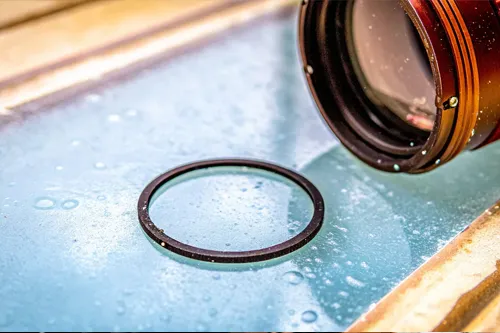
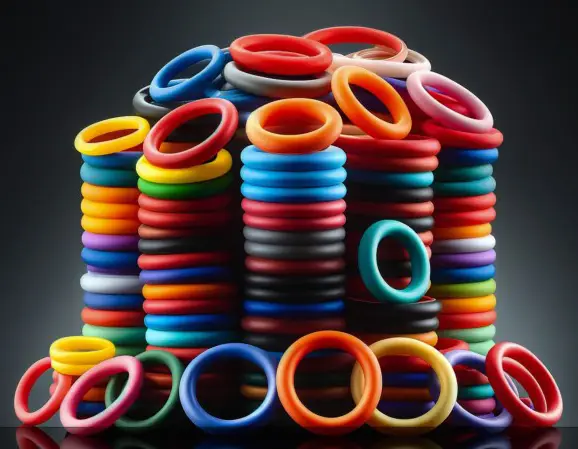
Finding the correct O-ring becomes challenging when equipment requires a non-standard diameter, oversized sealing groove, or prototype design. Ordering a custom mold often increases tooling costs and extends lead times.A vulcanized O-ring provides a practical alternative. It is manufactured by cutting precision elastomer cord to a specified length and permanently joining the ends through a controlled vulcanization process. The result is a custom-sized sealing ring that can be produced quickly without dedicated tooling.
Why Choose a Vulcanized O-Ring?
Fast Production for Custom Sizes
For maintenance projects, large industrial equipment, and low-volume production runs, waiting weeks for a custom molded O-ring is often not practical.
Vulcanized O-rings can be manufactured to virtually any inside diameter, allowing engineers to obtain a sealing solution without investing in expensive molds.
Cost-Effective Alternative to Custom Molding
Custom molded seals are often the best solution for high-volume production. However, for prototypes, replacement parts, and oversized dimensions, vulcanized O-rings significantly reduce development costs while maintaining reliable sealing performance.
Suitable for Large Diameter Applications
Many industries require sealing diameters that exceed standard AS568 or metric O-ring sizes. Vulcanized rings are commonly selected for:
- Water treatment systems
- Industrial tanks and vessels
- Large pipe flanges
- Renewable energy equipment
- HVAC systems
- Food processing machinery
- Heavy-duty industrial machinery
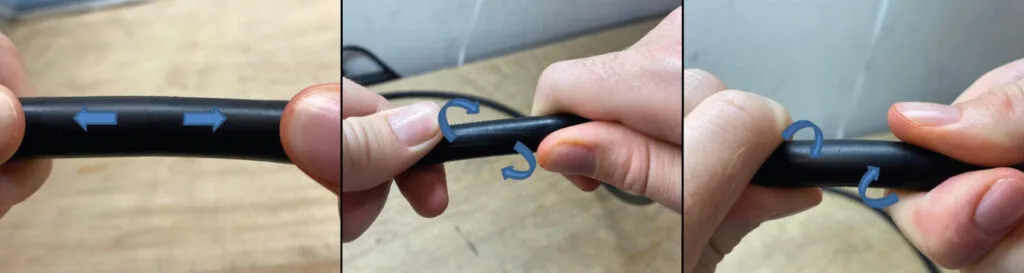
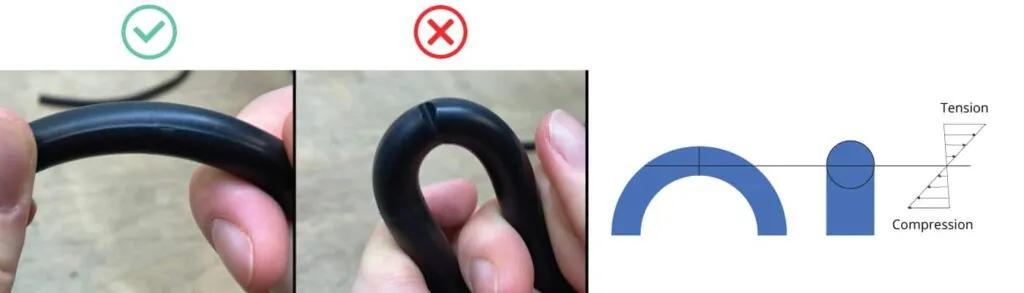
By selecting premium adhesive materials and employing professional vulcanizing machines and precision molds, KODA precisely controls vulcanization temperature and curing time, enabling joints to achieve vulcanization performance far exceeding established technical specifications. Meanwhile, mature and sophisticated production processes are the core key, directly determining the final quality level of the finished product. KODA implements a 100% full inspection process on every O-ring leaving the factory, rigorously verifying the compliance of every process standard to ensure that every product delivered to you consistently achieves the expected performance. Below is our comprehensive inspection standard process for vulcanized O-rings.
Available Profiles and Materials
To meet different sealing requirements, vulcanized rings can be produced in multiple profile configurations:
- Round O-Ring Cord
- Square Ring Cord
- X-Ring Cord
- Custom Extruded Profiles
Common elastomer materials include:
| Material | Typical Advantages |
|---|---|
| NBR | Excellent oil resistance and economical cost |
| FKM/Viton® | High-temperature and chemical resistance |
| EPDM | Water, steam and weather resistance |
| Silicone | Wide temperature range and flexibility |
| HNBR | Enhanced wear and heat resistance |
| Fluorosilicone | Fuel and chemical compatibility |
These material options allow engineers to match sealing performance with operating temperature, media compatibility, and service life requirements.
Understanding Joint Design
The strength of a vulcanized O-ring depends heavily on the quality of the joint.
Two common joining methods are:
Straight (Butt) Joint
A 90° cut creates a simple connection point and is suitable for many static sealing applications.
Angled (Bevel/Scarf) Joint
A 45° angled cut increases bonding surface area and can improve tensile performance at the joint. Many manufacturers prefer this method when higher joint integrity is required.
Static vs Dynamic Applications
One of the most important considerations is application type.
Recommended
✔ Static face seals
✔ Flange sealing
✔ Tank covers
✔ Inspection doors
✔ Enclosures and housings
Not Recommended
✘ High-speed rotary shafts
✘ Reciprocating dynamic seals
✘ Applications with continuous flexing at the joint
For dynamic applications, a fully molded O-ring is generally the preferred solution because it eliminates the presence of a bonded joint.
Quality Factors That Affect Seal Reliability
Not all vulcanized O-rings perform the same. Buyers should evaluate:
Cord Dimensional Accuracy
Consistent cross-section dimensions help maintain uniform compression around the sealing groove.
Joint Integrity
A properly vulcanized bond should exhibit good appearance, strong adhesion, and minimal flash.
Material Consistency
The cord material should meet the same compound requirements as molded sealing products.
Inspection Procedures
Professional manufacturers typically inspect finished rings and perform periodic tensile testing to verify joint strength and process stability.
Custom Vulcanized O-Ring Manufacturing Service
Whether you require a single prototype or recurring production volumes, custom vulcanized O-rings offer an efficient sealing solution when standard sizes are unavailable.
By combining precision-cut cord stock, controlled vulcanization technology, and rigorous quality inspection, custom rings can provide dependable sealing performance while reducing lead time and tooling expenses.
For large-diameter seals, special groove dimensions, or non-standard equipment, vulcanized O-rings remain one of the most practical and economical sealing options available today.
Vulcanization ability
More than several thousand kinds of inventory
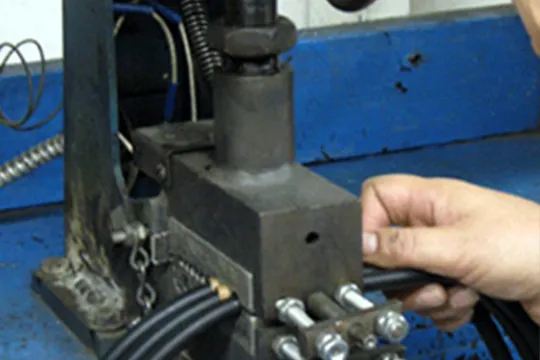
We can produce custom profile molds
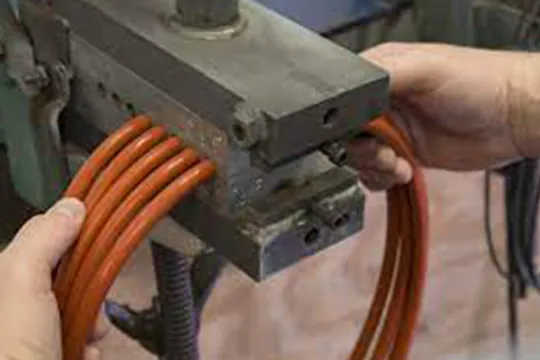
Daily production capacity exceeds 2,000 sulfide rings
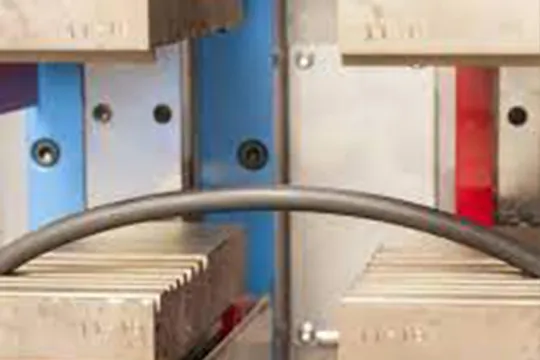
Vulcanized O-ring testing