SUZUKI Oil Seal
Categories
Auto Oil Seal
- Auto Oil Seal
- TOYOTA Oil Seal
- Nissan/Honda oil seal
- Isuzu Oil Seal
- MITSUBISHI/FUSO Oil Seal
- SUZUKI Oil Seal
- HYUNDAI/KIA Oil Seal
- HINO Oil Seal
- Ford / Chevrolet Oil Seal
- Peugeot Oil Seal
- VW/Iveco Oil Seal
- PEUGEOT Oil Seal
- LADA Oil Seal
- Caterpillar Oil Seal
- HYUNDAI Oil Seal
- MAZDA Oil seals
- BENZ Oil Seal
- VOLVO Oil Seal
- BPW Oil Seal
- MAN oil Seals
- RENAULT Oil Seals
- SCANIA Oil Seal
- FORD Oil Seal
- MACK Oil Seal
- DAF Oil Seals
- PERKINS Oil Seal
Motorcycle Oil Seal
Agricultural Machine Oil Seal
Construction Machinery Oil Seal
Truck Wheel Hub Oil Seal
Cassette Wheel Hub Oil Seal
Power Steering Oil Seal and Kit
Hydraulic Pump Oil Seal
JCB SEAL KIT
Concrete Mixer Gearbox Oil Seal
Wheel Cylinder Brake Cup Seal
Engine Valve Cover Gasket
Bonded Seals
End Cover Cap Seals
Speak with a Product Expert
Please contact our professional sales team to discuss your application needs. We have dedicated staff available to answer your calls Monday through Friday, from 8:30 AM to 6:00 PM Beijing time.
New Customers:
+86 18730921709
Existing/Repeat Customers:
Email:sales@kodaseal.com
NEWS
What is the difference between an oil gasket and an oil seal?
What Is A Lip Seal?
Seal-High-Temperature-A-Comprehensive-Guide
EPDM Rubber: Meaning, Benefits & Applications
SUZUKI Oil Seal
Choosing the right Suzuki oil seal is not simply a matter of matching a rubber ring to a hole. A rotary shaft seal has to control lubricant leakage while maintaining a controlled sealing interface against a rotating shaft. The correct result depends on the seal dimensions, shaft condition, housing design, elastomer, lip configuration, operating temperature, lubricant, speed, and installation method.
For this reason, an effective Suzuki oil seal selection process should combine OEM part-number identification, dimensional verification, application analysis, and installation inspection. This is particularly important when replacing seals on older Suzuki vehicles or equipment where several part numbers may appear similar but have different dimensions or sealing functions.
If you have questions about car sealing, please contact us!
🔧 Engineering takeaway: Do not select a Suzuki oil seal from vehicle name alone. Confirm the OEM reference, shaft diameter, housing diameter, seal width, sealing direction, and operating conditions before ordering.………
SHOW MORE
What Is a Suzuki Oil Seal?
A Suzuki oil seal is a rotary shaft lip seal designed to retain lubricants around rotating components while helping prevent dust, dirt, water, and other contaminants from entering the assembly. Depending on the application, the seal may be installed around a crankshaft, camshaft, transmission shaft, differential, axle, drive shaft, or another rotating component.
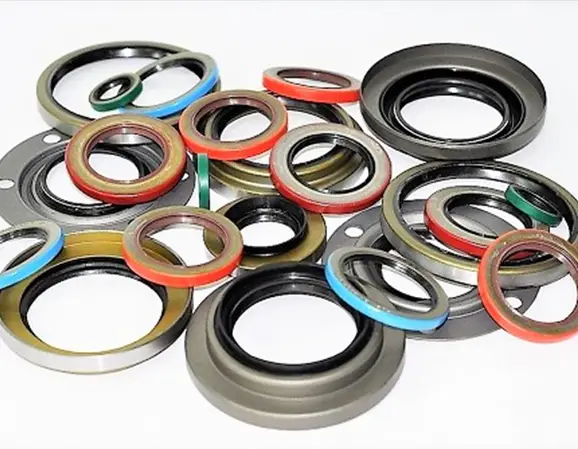
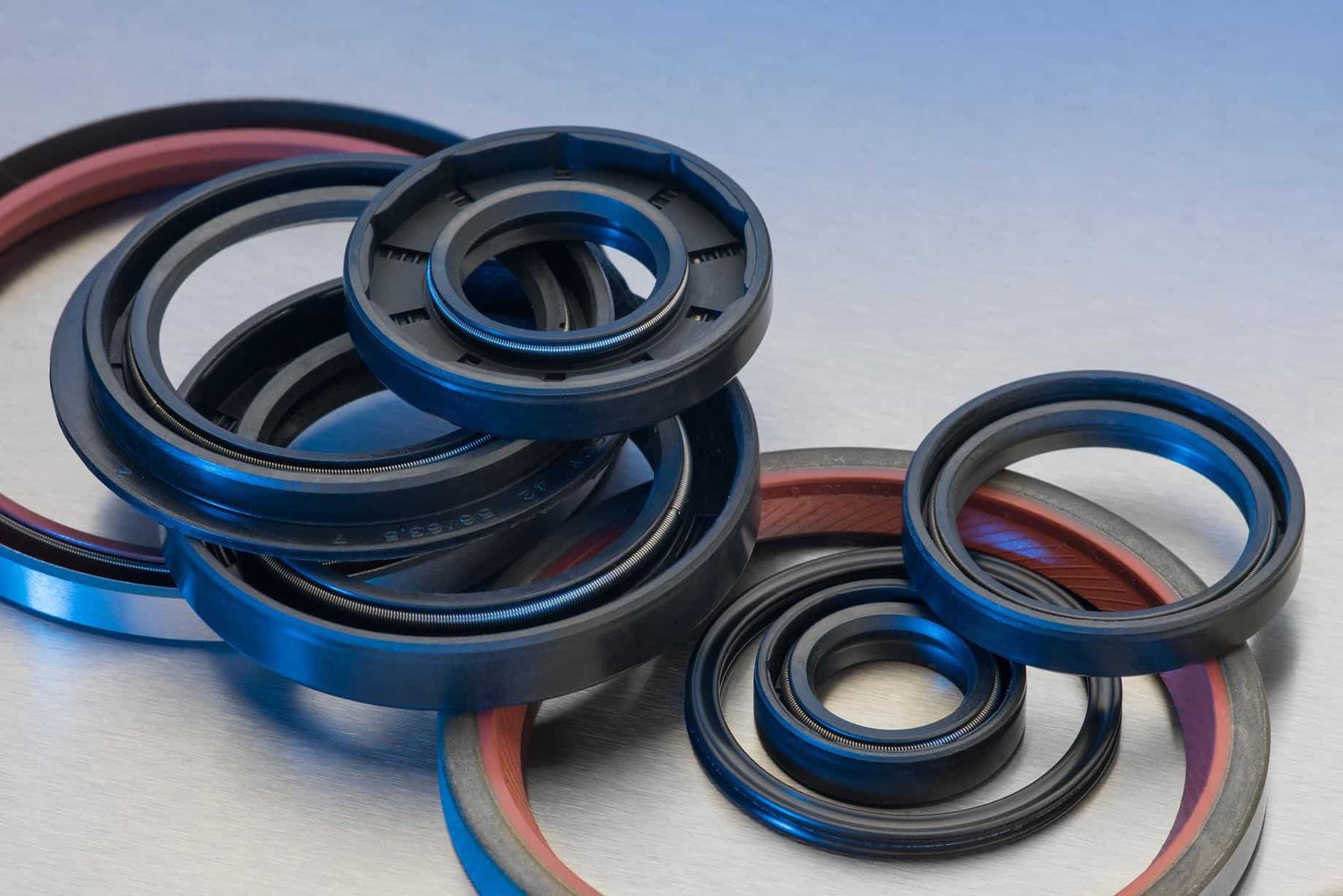
A typical oil seal contains an elastomeric sealing lip, a reinforcing metal case, and often a garter spring. The lip creates the primary sealing interface with the rotating shaft, while the case provides structural support and the spring helps maintain radial lip contact as the seal operates.
The sealing mechanism is more sophisticated than simply creating a tight interference fit. During shaft rotation, a controlled lubricant film can form at the lip-to-shaft interface. If the lip pressure, surface condition, lubricant, temperature, or shaft speed is unsuitable, friction and heat can increase and leakage may develop.
Why this matters:
An oil seal can have the correct nominal dimensions and still fail prematurely if the shaft surface is worn, the seal is installed at the wrong depth, the lip is damaged, or the lubricant is incompatible with the elastomer.
Suzuki Oil Seal Applications
Suzuki oil seals are used across several mechanical systems. The exact seal construction depends on the location, shaft speed, lubricant, temperature, contamination level, and available installation space.
| Application | Primary Function | Common Failure Symptoms |
|---|---|---|
| Crankshaft seal | Retains engine oil around the rotating crankshaft | Oil leakage around front or rear crankshaft area |
| Camshaft seal | Controls oil around the camshaft | Oil accumulation near timing components |
| Transmission seal | Retains transmission lubricant | Gear-oil leakage around shaft or housing |
| Differential seal | Retains differential lubricant | Oil around axle or differential housing |
| Drive shaft seal | Seals rotating shaft interfaces | Oil or grease leakage and contamination ingress |
Suzuki Oil Seal OEM Number and Size Cross Reference
One of the most useful ways to identify a replacement Suzuki oil seal is to combine the OEM part number with the physical dimensions. A product listing based only on a vehicle model can create ambiguity because the same vehicle family may use different engines, transmissions, production periods, or driveline configurations.
Suzuki oil seal dimensions are commonly expressed in a format such as 35 × 54 × 9.5 mm. In a conventional radial shaft seal, these values generally represent the shaft diameter, housing diameter, and seal width. However, special profiles can contain additional dimensional information, so a four- or five-value designation should not automatically be interpreted as a standard three-dimensional seal.
Example of catalog identification
A Suzuki application may be identified using a combination of vehicle/engine information, OEM reference, aftermarket cross-reference, and physical size. For example, the catalog data includes references such as 09283-32002 with a 32 × 47 × 8 mm size and 09283-60005 with a 60 × 80 × 8 mm size.
These examples demonstrate why a dimensional check is valuable. A visually similar seal can have a different outside diameter, width, lip geometry, or spring configuration and therefore may not provide the intended interference or sealing performance.
How to Read an Oil Seal Size
| First dimension | Usually corresponds to the shaft diameter |
| Second dimension | Usually corresponds to the housing or bore diameter |
| Third dimension | Usually corresponds to seal width |
| Additional dimensions | May identify special lip, dust-lip, flange, or installation geometry |
Always verify the manufacturer’s dimensional drawing when a seal has a non-standard profile. ISO 6194-1 covers nominal dimensions and tolerances for rotary shaft lip-type seals incorporating elastomeric sealing elements, making dimensional control an important part of seal identification.
Why Matching the OEM Number Alone Is Not Always Enough
An OEM number is an excellent starting point, but a professional replacement process should not stop there. When servicing older equipment, imported vehicles, aftermarket assemblies, or modified drivetrains, the installed component may not always correspond to the original configuration.
Before purchasing a Suzuki oil seal, confirm:
- OEM or original part number
- Engine and transmission code where applicable
- Actual shaft diameter
- Actual housing/bore diameter
- Seal width and installation depth
- Primary lip and dust-lip configuration
- Spring-loaded or non-spring-loaded construction
- Rubber compound or elastomer family
- Lubricant type
- Maximum shaft speed and operating temperature
Suzuki Oil Seal Materials: NBR, FKM and Other Elastomers
Material selection is one of the most important differences between an ordinary replacement seal and an application-engineered seal. The same dimensional profile can sometimes be produced using different elastomer compounds, but the resulting temperature, chemical resistance, low-temperature flexibility, and service life may differ substantially.
| Material | Typical Strengths | Selection Consideration |
|---|---|---|
| NBR | Good resistance to many petroleum-based oils and good mechanical properties | Check temperature, ozone exposure and specific fluid compatibility |
| FKM | High-temperature and chemical resistance for demanding environments | Compound must still be matched to the actual fluid and temperature |
| Silicone | Wide temperature capability and good flexibility | Mechanical and wear requirements must be evaluated carefully |
| HNBR | Improved temperature, mechanical and environmental performance compared with conventional NBR | Use when standard NBR performance is insufficient |
Material should never be selected from a generic temperature chart alone. Lubricant chemistry, additives, pressure, speed, shaft condition and actual thermal exposure can change seal performance significantly.
Common Suzuki Oil Seal Failure Causes
Replacing a leaking seal without investigating the reason for the original failure can result in another leak shortly after installation. The following problems are especially important during Suzuki oil seal replacement.
1. Worn Shaft Surface
A rotary lip continuously contacts the shaft. Over time, a groove can develop in the sealing track. Installing a new seal over the same worn area may produce only a temporary improvement because the new lip follows the existing shaft damage.
2. Incorrect Installation Depth
A replacement seal does not always need to sit at exactly the same axial position as the old seal, but changing the sealing track can be useful when a shaft groove exists. The available housing geometry must be checked before changing the installation position.
3. Damaged Sealing Lip
A sharp shaft edge, keyway, spline, burr, or dry installation can cut or deform the lip. The sealing element should be protected during assembly, and an installation sleeve may be necessary when the shaft contains edges that could catch the lip.
4. Seal Installed at an Angle
A cocked seal can create uneven lip pressure and accelerated wear. The seal should be driven evenly and squarely into the housing using an appropriate installation tool.
5. Wrong Lubricant or Excessive Temperature
Elastomer compatibility depends on the actual lubricant formulation, not simply the word “oil.” Additives and elevated temperature can change swelling, hardness, compression behavior and chemical resistance.
Diagnostic rule:
If a new Suzuki oil seal begins leaking soon after replacement, inspect the shaft sealing track and installation condition before assuming that the replacement seal itself is defective.
How to Install a Suzuki Oil Seal Correctly
Proper installation is part of the sealing design. KODA’s seal installation guidance recommends checking seal dimensions, shaft and bore condition, using suitable installation tools, avoiding seal cocking, protecting sharp shaft edges, and pre-lubricating the sealing element when appropriate.
- Clean the housing and shaft thoroughly.
- Inspect the shaft for grooves, burrs, corrosion and excessive wear.
- Check the new seal for cuts, deformation or damage.
- Confirm the sealing lip direction before installation.
- Lubricate the lip with a compatible lubricant where required.
- Protect the lip from keyways, splines and sharp shaft edges.
- Use a suitable driver that contacts the correct installation area.
- Press the seal in evenly without cocking it.
- Verify the final installation position.
- After assembly, inspect for leakage during initial operation.
ISO 6194-3 specifically addresses storage, handling and installation of rotary shaft lip-type seals. This reinforces an important engineering point: seal performance depends not only on the component itself, but also on how the component is handled and installed.
How to Choose the Right Suzuki Oil Seal for Replacement
A reliable selection process can be reduced to five stages:
01 — Identify
Confirm OEM number, application and engine/transmission configuration.
02 — Measure
Verify shaft diameter, housing diameter and seal width.
03 — Match
Match lip design, material and sealing function.
04 — Inspect
Check shaft wear, housing condition and contamination.
05 — Install
Use correct tools, lubrication and installation depth.
Suzuki Oil Seal Cross-Reference: What Buyers Should Check
For aftermarket procurement, a cross-reference table is most useful when it contains more than one identification method. A professional Suzuki oil seal database should ideally provide:
- Suzuki OEM part number
- Application or component location
- Engine or model information
- Equivalent aftermarket reference where applicable
- Inside diameter
- Outside diameter
- Width
- Special profile dimensions
- Material
- Lip configuration
- Availability and packaging information
This structure helps purchasing teams reduce errors when several seals have similar names but different dimensions. It is also more useful for international buyers who may search using an OEM number rather than a vehicle description.
Suzuki Oil Seal vs. Generic Oil Seal
A generic oil seal may have the same nominal dimensions as a Suzuki replacement part, but dimensional similarity alone does not guarantee equivalent performance. Lip geometry, rubber formulation, spring design, case construction, interference, surface finish requirements and operating conditions all influence service life.
For a low-risk replacement, dimensional compatibility may be the primary concern. For an engine, transmission, differential or high-speed rotating assembly, however, buyers should also confirm the seal material and design specification.
When Should a Suzuki Oil Seal Be Replaced?
There is no single mileage interval that applies to every oil seal. Replacement timing depends on temperature, shaft speed, lubricant, contamination, elastomer aging, shaft condition and operating hours.
Common replacement indicators include visible oil leakage, persistent oil contamination around the shaft, hardened or cracked rubber, damaged lips, abnormal wear tracks, or leakage discovered during component overhaul.
When a major assembly is already disassembled and the seal is inexpensive relative to the labor required to access it, replacing the seal during the repair can often reduce the risk of repeated disassembly. The decision should nevertheless consider the actual condition and service requirements of the equipment.
Suzuki Oil Seal Purchasing Checklist
Before sending an RFQ, prepare the following information:
✓ Suzuki OEM part number
✓ Vehicle/model or equipment application
✓ Engine, transmission or axle code if available
✓ Seal dimensions
✓ Photos of the old seal and shaft
✓ Operating lubricant
✓ Temperature range
✓ Shaft speed
✓ Required quantity and packaging
Frequently Asked Questions About Suzuki Oil Seals
Can I choose a Suzuki oil seal only by size?
Size is essential, but it should not be the only criterion for demanding applications. Confirm the seal profile, material, lubricant compatibility, speed, temperature and installation requirements.
What does a size such as 32 × 47 × 8 mm mean?
For a conventional rotary shaft seal, the three dimensions generally indicate shaft diameter, housing diameter and seal width. Always verify the manufacturer’s drawing when the seal has a special configuration.
Why does a new Suzuki oil seal leak immediately?
Common causes include a damaged sealing lip, incorrect installation, shaft grooves, contamination, excessive shaft runout, incorrect seal direction, incompatible lubricant, or a dimensional mismatch.
Should I replace the shaft when replacing an oil seal?
Not necessarily. If the shaft sealing track is within acceptable condition, a seal replacement may be sufficient. A deep wear groove, corrosion, excessive runout or other surface damage may require shaft repair or replacement.
Is NBR suitable for every Suzuki oil seal application?
No. NBR is widely used for oil-sealing applications, but material suitability depends on the lubricant, temperature, speed, environmental exposure and required service life. FKM, HNBR, silicone or other compounds may be more appropriate for specific operating conditions.
A More Reliable Way to Source Suzuki Oil Seals
A Suzuki oil seal should be treated as an engineered sealing component rather than a simple replacement rubber part. The best purchasing process connects the original reference number with actual dimensions, application conditions and installation requirements.
For routine replacement, an OEM number and dimensional cross-reference may be enough to identify the correct component. For larger OEM programs, aftermarket distribution, fleet maintenance or demanding operating conditions, the supplier should also be able to discuss elastomer selection, lip configuration, dimensional tolerances, shaft condition and quality-control requirements.
A well-structured Suzuki oil seal catalog therefore does more than list part numbers. It gives engineers, maintenance technicians and purchasing teams the information needed to select the correct seal, identify potential failure causes and reduce repeat leakage.
For OEM or aftermarket sourcing:
When requesting a quotation for Suzuki oil seals, provide the OEM number together with the application and dimensions whenever possible. If the original seal is available, photographs of the seal markings, sealing lips and cross-section can further reduce identification errors.
 TG oil seal
Oil Seal TG 25X52X7
- TG oil seal
Oil Seal TG 30X42X7
- TG oil seal
Oil Seal TG 24X37X7
- TG oil seal
Oil Seal TG 24X38X7
- TG oil seal
Oil Seal TG 25X42X7
- TG oil seal
Oil Seal TG 25X40X7
- TG oil seal
Oil Seal TG 15X26X7
- TG oil seal
Oil Seal 12X30X15-TG
- TG oil seal
Oil Seal 20X42X10-TG-OEM-740.102924