Ford / Chevrolet Oil Seal
Categories
Auto Oil Seal
- Auto Oil Seal
- TOYOTA Oil Seal
- Nissan/Honda oil seal
- Isuzu Oil Seal
- MITSUBISHI/FUSO Oil Seal
- SUZUKI Oil Seal
- HYUNDAI/KIA Oil Seal
- HINO Oil Seal
- Ford / Chevrolet Oil Seal
- Peugeot Oil Seal
- VW/Iveco Oil Seal
- PEUGEOT Oil Seal
- LADA Oil Seal
- Caterpillar Oil Seal
- HYUNDAI Oil Seal
- MAZDA Oil seals
- BENZ Oil Seal
- VOLVO Oil Seal
- BPW Oil Seal
- MAN oil Seals
- RENAULT Oil Seals
- SCANIA Oil Seal
- FORD Oil Seal
- MACK Oil Seal
- DAF Oil Seals
- PERKINS Oil Seal
Motorcycle Oil Seal
Agricultural Machine Oil Seal
Construction Machinery Oil Seal
Truck Wheel Hub Oil Seal
Cassette Wheel Hub Oil Seal
Power Steering Oil Seal and Kit
Hydraulic Pump Oil Seal
JCB SEAL KIT
Concrete Mixer Gearbox Oil Seal
Wheel Cylinder Brake Cup Seal
Engine Valve Cover Gasket
Bonded Seals
End Cover Cap Seals
Speak with a Product Expert
Please contact our professional sales team to discuss your application needs. We have dedicated staff available to answer your calls Monday through Friday, from 8:30 AM to 6:00 PM Beijing time.
New Customers:
+86 18730921709
Existing/Repeat Customers:
Email:sales@kodaseal.com
NEWS
What is the difference between an oil gasket and an oil seal?
What Is A Lip Seal?
Seal-High-Temperature-A-Comprehensive-Guide
EPDM Rubber: Meaning, Benefits & Applications
Ford / Chevrolet Oil Seal
Oil leakage around an engine, transmission, axle, or wheel hub is often traced to a worn or incorrectly installed seal. For Ford and Chevrolet vehicles, however, selecting a replacement oil seal is not simply a matter of finding a rubber ring with the same outside diameter. The seal must match the shaft, housing, installation position, lubricant, temperature, rotational speed, and sealing profile.
Ford oil seals and Chevrolet oil seals are used across a wide range of automotive applications, including crankshafts, camshafts, transmissions, differentials, axle shafts, and wheel-end assemblies. Different engines and vehicle configurations can use substantially different seal dimensions even when the vehicle brand is the same.
If you have questions about Ford / Chevrolet Oil Seal, please contact us!
This guide explains how automotive oil seals work, which Ford and Chevrolet applications commonly use them, how to identify the correct replacement, and how to diagnose recurring leakage before installing another seal.
Quick Selection Rule
Do not select a Ford or Chevrolet oil seal from vehicle brand alone. Confirm the part number, shaft diameter, housing bore, seal width, sealing profile, installation position, and operating conditions before ordering.
SHOW MORE
What Is a Ford or Chevrolet Oil Seal?
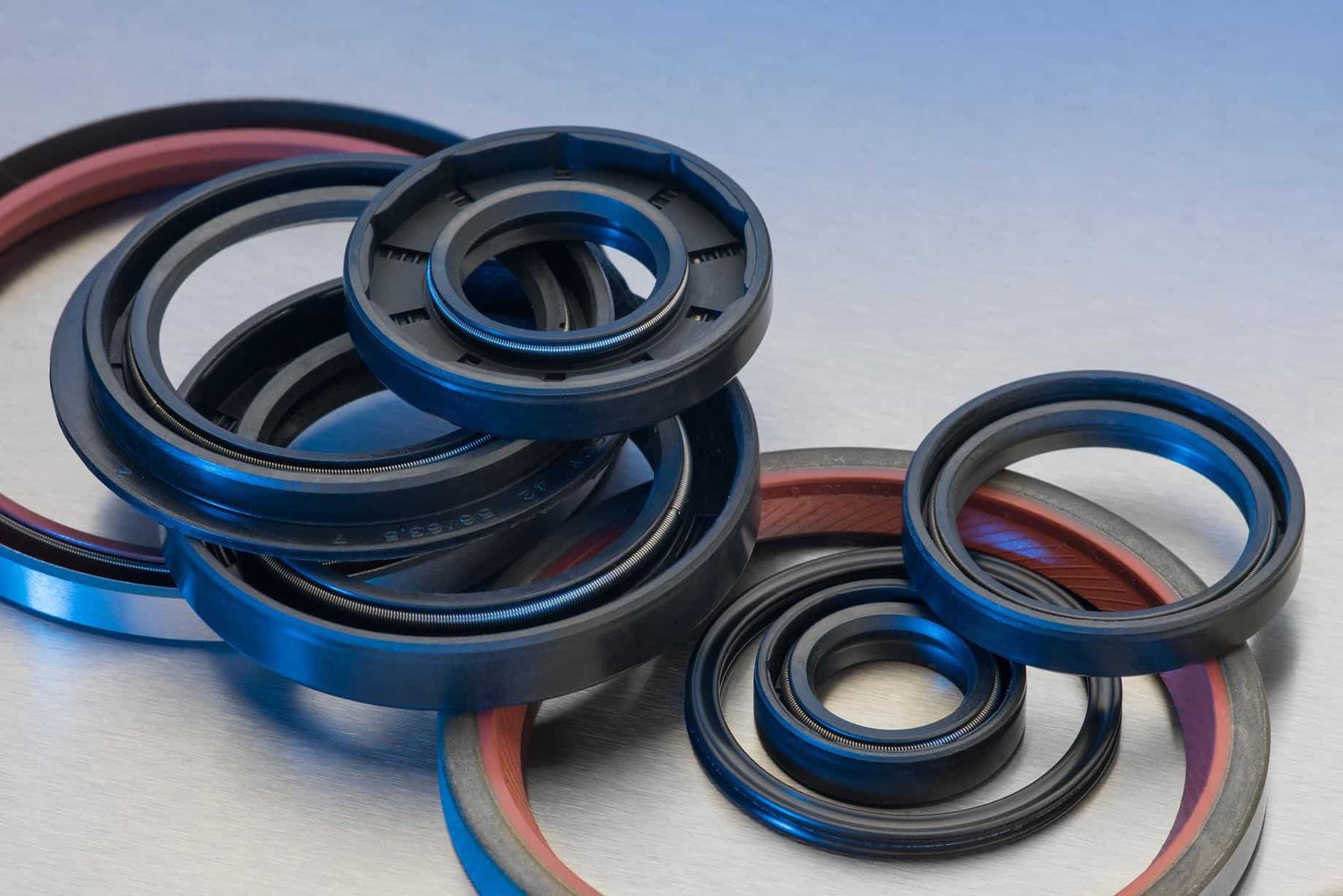
An automotive oil seal is a sealing component designed to retain lubricating oil or grease around a shaft or other mechanical interface while helping prevent contaminants from entering the protected assembly.
In conventional rotary applications, the oil seal uses a flexible sealing lip that runs against a rotating shaft. Many designs also incorporate a reinforcing metal case and a garter spring. The lip must maintain controlled contact with the shaft while allowing rotation without excessive friction and heat.
Oil seals can be found in engines, transmissions, differentials, axles, wheel hubs, steering systems, pumps, and other rotating assemblies. The exact design depends on the mechanical system rather than simply the vehicle manufacturer.
Why Oil Seals Matter in Automotive Systems
- Retain lubricants: Reduce oil or grease leakage from rotating assemblies.
- Exclude contaminants: Help protect bearings, shafts, gears, and other components from dust, dirt, and moisture.
- Maintain lubrication: Help preserve the lubricant required for bearings and rotating components.
- Control operating conditions: A correctly designed seal helps maintain the intended lubrication environment around the shaft.
The sealing interface is a system rather than an isolated rubber component. Shaft condition, bearing movement, housing geometry, lubricant, speed, temperature, and installation quality can all influence service life.
Common Ford and Chevrolet Oil Seal Applications
Ford and Chevrolet vehicles use oil seals in many different locations. The installation position is one of the most important pieces of information when identifying a replacement.
Crankshaft Front Oil Seal
The front crankshaft seal is installed around the front portion of the crankshaft and helps prevent engine oil from escaping around the rotating shaft.
Depending on the engine architecture, the seal may be located behind a timing cover, front cover, harmonic balancer, or another component. The replacement must match the shaft and housing dimensions as well as the required sealing profile.
Examples listed for Ford applications include seals around dimensions such as 48 × 65 × 9.5 mm, while other engine configurations use different dimensions. Chevrolet applications also vary considerably by engine family. These dimensions should therefore be treated as application-specific references rather than universal Ford or Chevrolet sizes.
Crankshaft Rear Oil Seal
The rear crankshaft seal operates at the opposite end of the crankshaft, typically near the flywheel or flexplate and transmission interface.
A rear crankshaft oil leak can be difficult to diagnose because oil may migrate along the engine or transmission housing before becoming visible. Before replacing the seal, inspect the surrounding area and rule out other possible sources.
Ford and Chevrolet applications can use significantly different rear-seal dimensions. For example, product listings on the reference catalog include a Chevrolet rear crankshaft seal measuring 104 × 128 × 11.5 mm, while another Chevrolet application uses 77 × 98 × 7.5/15 mm. This illustrates why engine and part-number verification are essential.
Camshaft Oil Seals
Camshaft seals control oil leakage around rotating camshaft interfaces. They are typically smaller than many crankshaft seals, but their sealing requirements can still be demanding because of shaft speed, temperature, lubricant exposure, and available installation space.
A Ford application listed in the reference catalog uses a 38 × 52 × 6 mm camshaft oil seal for a 1.4 L Fiesta application. Such dimensions are application-specific and should be verified against the exact engine configuration before ordering.
Axle Shaft Oil Seals
Axle seals are used to retain gear oil and help protect axle components from external contamination. They operate in a different environment from engine crankshaft seals and may encounter dirt, water, road debris, and variations in temperature.
For this reason, the correct axle seal may require an auxiliary dust lip, multiple sealing elements, or another specialized profile depending on the axle design.
Wheel Hub and Wheel-End Seals
Wheel-end seals are particularly important because they must maintain lubricant retention while protecting bearings from contaminants. Some wheel-end systems use conventional radial seals, while others use more complex unitized or multi-lip designs.
When replacing a wheel seal, inspect the spindle or shaft sealing surface at the same time. Installing a new seal against a badly worn or grooved running surface can result in another leak even when the replacement seal is dimensionally correct.
Ford Oil Seals vs. Chevrolet Oil Seals
Ford and Chevrolet oil seals perform similar mechanical functions, but there is no universal Ford or Chevrolet oil seal specification. The actual design depends on the vehicle platform, engine, transmission, axle, production configuration, and installation location.
| Application | Ford | Chevrolet | Key Verification |
|---|---|---|---|
| Front crankshaft | Multiple engine-specific profiles | Multiple engine-specific profiles | Engine + part number + dimensions |
| Rear crankshaft | Engine and production dependent | Engine and production dependent | Engine configuration + seal profile |
| Camshaft | Engine-specific | Engine-specific | Shaft diameter + housing + application |
| Axle / differential | Axle-specific | Axle-specific | Axle model + shaft + housing |
| Wheel hub | Hub and bearing configuration dependent | Hub and bearing configuration dependent | Hub dimensions + seal design |
Do Not Cross-Match by Brand Alone
A Ford seal and Chevrolet seal may have similar dimensions, but dimensional similarity does not automatically establish interchangeability. Verify the complete application and sealing geometry.
How to Read Automotive Oil Seal Dimensions
Most conventional rotary shaft seals are described using three basic dimensions:
d × D × b
Shaft diameter × Housing bore diameter × Seal width
- Inner diameter (d): Nominal diameter of the shaft at the sealing interface.
- Outer diameter (D): Nominal diameter of the housing bore.
- Width (b): Axial width of the seal body.
ISO 6194-1:2007 specifies nominal dimensions and tolerances for rotary shaft lip-type seals with elastomeric sealing elements and also addresses relevant shaft and housing dimensions. The standard remains current following its 2023 review.
However, a three-number dimension is not always enough to identify an automotive oil seal. Some products have stepped widths, auxiliary lips, special cases, flanges, dust lips, integrated sleeves, or application-specific geometries.
Example: 55 × 72 × 8.5 mm
In a conventional radial seal notation, this would normally indicate approximately:
- 55 mm nominal shaft diameter
- 72 mm nominal housing diameter
- 8.5 mm nominal seal width
The reference Ford/Chevrolet catalog lists a 55 × 72 × 8.5 mm front crankshaft seal associated with several Chevrolet engine applications. The listed part references include 12585673, 12550565, and 12561244. This should be treated as a catalog application reference, not as evidence that every 55 × 72 × 8.5 mm seal fits those engines.
Why the Same Size Does Not Always Mean the Same Oil Seal
One of the most common purchasing mistakes is assuming that identical dimensions guarantee interchangeability.
Two seals can have the same nominal inner, outer, and width dimensions but use different:
- Sealing lip geometry
- Elastomer compounds
- Garter spring configurations
- Dust-lip arrangements
- Metal-case construction
- Pressure capability
- Installation depth requirements
- Rotational-speed capability
The operating environment is equally important. Parker’s rotary seal design guidance notes that the contact lip is intended to operate with a thin lubricant film. If the oil film is inadequate, friction and heat can increase significantly, accelerating lip wear.
Therefore, a dimensional match should be treated as the beginning of the selection process rather than the final approval.
Common Materials for Ford and Chevrolet Oil Seals
Automotive oil seals are manufactured from different elastomer families depending on the lubricant, temperature, speed, and application.
| Material | Typical Strengths | Important Limitations |
|---|---|---|
| NBR | Good general resistance to many petroleum-based oils; commonly used for automotive seals. | Temperature and chemical resistance depend on the specific compound. |
| HNBR | Improved heat, aging, and mechanical performance compared with many conventional NBR compounds. | Higher material cost and application-specific compatibility requirements. |
| FKM | High-temperature capability and resistance to many oils and chemicals. | Low-temperature performance and compatibility must be checked for the specific application. |
| ACM | Used in selected automotive oil-sealing applications involving heat and lubricating oils. | Not suitable for every fluid or low-temperature environment. |
| Silicone | Useful in selected high- and low-temperature applications. | Mechanical and wear properties may make it unsuitable for certain high-speed shaft interfaces. |
Material should follow the application. A higher-priced or higher-temperature elastomer is not automatically a better replacement if it does not match the lubricant, shaft speed, temperature range, or sealing design.
Why Ford and Chevrolet Oil Seals Leak
When a new oil seal leaks shortly after installation, the seal itself is not necessarily the root cause. Rotary sealing performance depends on the complete mechanical system.
Worn Shaft Surface
A rotating shaft can develop a wear groove where the original sealing lip has operated for an extended period. Installing a new seal in exactly the same position may place its lip over the damaged track.
Excessive Shaft Runout
If the shaft moves excessively relative to the seal, the lip may lose consistent contact around the circumference. Check bearings, shaft alignment, and runout when repeated seal failures occur.
Incorrect Seal Installation
A seal installed at an angle, driven to the wrong depth, or damaged during installation can leak immediately or develop premature wear.
Wrong Seal Orientation
Many conventional oil seals have a primary sealing lip that must face the retained lubricant. Specialized profiles may have different installation requirements, so orientation should always be verified from the seal drawing or service instructions.
Incorrect Lubrication
The sealing lip requires suitable lubrication. Parker’s engineering guidance explains that the contact lip is designed to run on a thin oil film; inadequate lubrication can increase friction and accelerate seal failure.
Contamination
Dirt, dust, metal particles, and moisture can damage the sealing lip or shaft surface. In wheel and axle applications, contamination protection can be particularly important.
Incorrect Material
If the elastomer is incompatible with the lubricant or temperature environment, it may harden, soften, swell, crack, or lose its mechanical properties.
Ford and Chevrolet Oil Seal Installation Guide
Correct installation is just as important as selecting the correct part.
Step 1: Clean the Housing
Remove dirt, old seal residue, corrosion, and debris from the housing bore. Do not damage the bore while cleaning it.
Step 2: Inspect the Shaft
Look for scoring, grooves, corrosion, burrs, and abnormal wear. If the shaft sealing track is severely damaged, installing another seal without addressing the shaft may not solve the problem.
Step 3: Confirm Orientation
Check the seal drawing or applicable service instructions. Do not assume that every lip seal is installed in exactly the same orientation.
Step 4: Protect the Lip
When the seal passes over splines, keyways, threads, or sharp edges, use an appropriate sleeve or protective method to prevent the lip from being cut or rolled.
Step 5: Install Squarely
Use a suitable installation tool and apply force evenly to the appropriate driving surface. Avoid striking the flexible sealing lip directly.
Step 6: Verify the Assembly
After installation, check for seal distortion, displacement, or visible damage. Verify that the shaft rotates correctly and that the assembly contains the correct lubricant.
Installation Warning
Never force a seal into a damaged housing or over a sharp shaft edge without appropriate protection. A small cut in the sealing lip may not be visible during installation but can produce leakage after the vehicle returns to service.
Ford and Chevrolet Oil Seal Replacement: What Information Do You Need?
For a more accurate replacement search, provide as much of the following information as possible:
- Ford or Chevrolet vehicle model
- Production year
- Engine model or displacement
- Transmission or axle model where applicable
- Installation location
- Original OEM part number
- Inner diameter
- Outer diameter
- Seal width
- Seal profile or photographs
- Material requirement
- Operating lubricant
- Temperature and rotational speed
If the original seal is available, take clear photographs of both sides and record all visible markings before removing it. If the seal has been destroyed during removal, measurements should be taken from the shaft and housing rather than relying only on the damaged seal.
Example Ford Oil Seal Applications
The reference Ford/Chevrolet catalog contains a range of application examples. A few are shown below to illustrate how automotive seal information is typically presented.
| Reference | Dimensions | Application Listed | Seal Type |
|---|---|---|---|
| C3AZ-6700-A / B6AZ-6700-B | 48 × 65 × 9.5 mm | Ford 4.2 L application listed in catalog | Crankshaft front seal |
| 3S7Q-6700-AD | 50 × 90 × 8.5/13.5 mm | Ford automotive application | Crankshaft front seal |
| 3S4Z-6700-AA | 37 × 50 × 8 mm | Ford Duratec 2.0 L / 2.3 L listing | Crankshaft front seal |
| XS6E-6700BA | 39.95 × 62 × 7.4 mm | Ford Zetec application listed in catalog | Crankshaft front seal |
| 6M5G-6K292-BA | 38 × 52 × 6 mm | Ford Fiesta 1.4 L listing | Camshaft oil seal |
The references and dimensions above are examples from the source catalog and should not be treated as universal fitment specifications. Verify the current application, part number, dimensions, and technical requirements before ordering.
Example Chevrolet Oil Seal Applications
Chevrolet applications also cover a wide range of engine and vehicle configurations. The following examples demonstrate why the engine and part reference should always be confirmed.
| Reference | Dimensions | Application Listed | Seal Type |
|---|---|---|---|
| 12585673 / 12550565 | 55 × 72 × 8.5 mm | Chevrolet 4.8 L / 5.3 L / 5.7 L applications listed | Crankshaft front seal |
| 12580743 | 59 × 76 × 8.5 mm | Chevrolet Avalanche 2500 8.1 L V8 listing | Crankshaft front seal |
| 12581717 / 24577096 | 104 × 128 × 11.5 mm | Chevrolet 4.2 L L6 application listed | Crankshaft rear seal |
| 55555805 | 77 × 98 × 7.5/15 mm | Chevrolet Sonic / Cruze 1.6 L / 1.8 L listing | Crankshaft rear seal |
These examples are provided for reference only. Vehicle compatibility must be confirmed against the exact engine, production configuration, OEM reference, and seal specification.
How to Diagnose an Oil Leak Before Replacing the Seal
Replacing an oil seal without identifying the actual source of the leak can result in repeated repairs. A practical diagnostic sequence is:
- Clean the surrounding area. Remove old oil and contamination so that a fresh leak can be located.
- Identify the highest wet point. Oil can travel downward or around housings, so the lowest visible point is not necessarily the leak source.
- Check the shaft area. Inspect the seal lip, shaft surface, and surrounding housing.
- Check bearings and alignment. Excessive shaft movement can cause a new seal to fail prematurely.
- Verify lubricant level and condition. Overfilling, incorrect lubricant, contamination, or abnormal temperature can influence sealing performance.
- Confirm the replacement specification. Compare the old and new seal dimensions, profile, material, and part number.
Ford & Chevrolet Oil Seal Supplier Selection
For distributors, repair shops, importers, and fleet maintenance operations, product identification is only one part of supplier evaluation.
A useful technical quotation should specify the requested part number, dimensions, material, application, quantity, packaging, and any required inspection or documentation. For custom seals, a drawing or physical sample can significantly reduce the risk of manufacturing the wrong profile.
For suppliers producing non-standard or replacement seals, engineering support is particularly useful when the original seal is obsolete, unavailable, or difficult to identify. A supplier should be able to discuss dimensions, material selection, sealing profile, and manufacturing requirements rather than relying solely on a generic cross-reference.
Recommended RFQ Information
- OEM or aftermarket part number
- Ford or Chevrolet vehicle and engine information
- Installation position
- Seal dimensions
- Material requirement
- Operating lubricant
- Temperature and rotational speed
- Required quantity
- Technical drawing or sample
- Packaging and labeling requirements
Frequently Asked Questions About Ford and Chevrolet Oil Seals
How do I find the correct Ford oil seal?
Start with the exact engine and installation position, then verify the original part number and the seal dimensions. Where possible, compare the shaft and housing dimensions with the seal drawing before ordering.
How do I find the correct Chevrolet oil seal?
Use the vehicle and engine information together with the OEM or aftermarket reference. Confirm the shaft diameter, housing bore, width, profile, and material instead of selecting solely by vehicle brand.
Can I use a different brand oil seal if the dimensions match?
Potentially, but dimensional matching alone is not sufficient. The sealing profile, elastomer, shaft compatibility, operating speed, temperature, and application requirements should also be verified.
Why does a new crankshaft oil seal leak?
Possible causes include shaft wear, installation damage, incorrect orientation, incorrect seal dimensions, excessive runout, bearing problems, unsuitable lubricant, or an incorrect material.
Is FKM always better than NBR for an automotive oil seal?
No. FKM can provide advantages in certain high-temperature and chemical environments, but material selection must match the actual lubricant, temperature, low-temperature requirements, speed, and sealing design. A more expensive material is not automatically the correct material.
What should I do if the original oil seal size is difficult to measure?
Use the original part number, vehicle and engine information, shaft diameter, housing bore, and photographs together. If the original seal is badly damaged, measuring the shaft and housing is generally more reliable than measuring a distorted seal.
Conclusion: Selecting the Right Ford or Chevrolet Oil Seal
Ford and Chevrolet oil seals cover a broad range of automotive applications, from crankshaft and camshaft sealing to axle and wheel-end protection. Because each application has different dimensional and operating requirements, there is no single universal oil seal for a vehicle brand.
The most reliable selection process combines part number, vehicle application, seal dimensions, profile, material, lubricant, temperature, shaft condition, and installation requirements.
If an oil seal has failed repeatedly, do not simply install another identical seal. Inspect the shaft, housing, bearing condition, alignment, lubrication, and contamination environment. In many cases, solving the underlying mechanical problem is more important than changing the seal material.
Need a Ford or Chevrolet Oil Seal?
For replacement, wholesale, or custom automotive oil seal requirements, provide the OEM reference, dimensions, vehicle or engine information, installation position, and required quantity.
For a technical quotation: A drawing, original sample, or clear photographs can help verify the sealing profile and reduce the risk of selecting an incorrect replacement.
 DLI oil seal
DLI hydraulic dust wiper oil seal 53.97×73.025×9.52
- DLI oil seal
DLI hydraulic dust wiper oil seal 53.97×69.85×9.52
- DLI oil seal
DLI hydraulic dust wiper oil seal 50.80×68.22×9.52
- DLI oil seal
DLI hydraulic dust wiper oil seal 50.80×66.67×6.35
- DLI oil seal
DLI hydraulic dust wiper oil seal 50.80×60.32×7.93
- DLI oil seal
DLI hydraulic dust wiper oil seal 50.80×63.50×6.35
- DLI oil seal
DLI hydraulic dust wiper oil seal 50.80×60.32×6.35
- DLI oil seal
DLI hydraulic dust wiper oil seal 47.62×65.07×9.52
- DLI oil seal
DLI hydraulic dust wiper oil seal 47.62×60.32×7.93