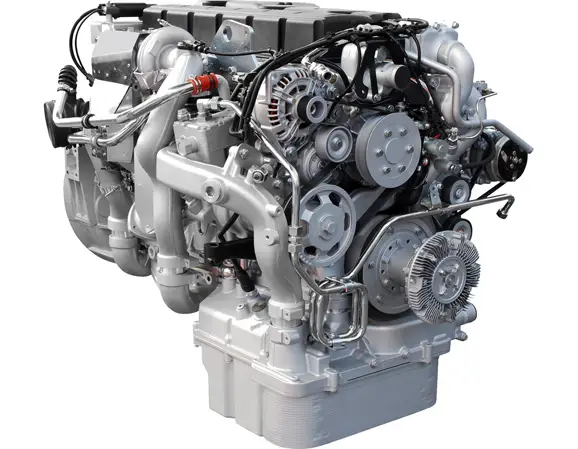
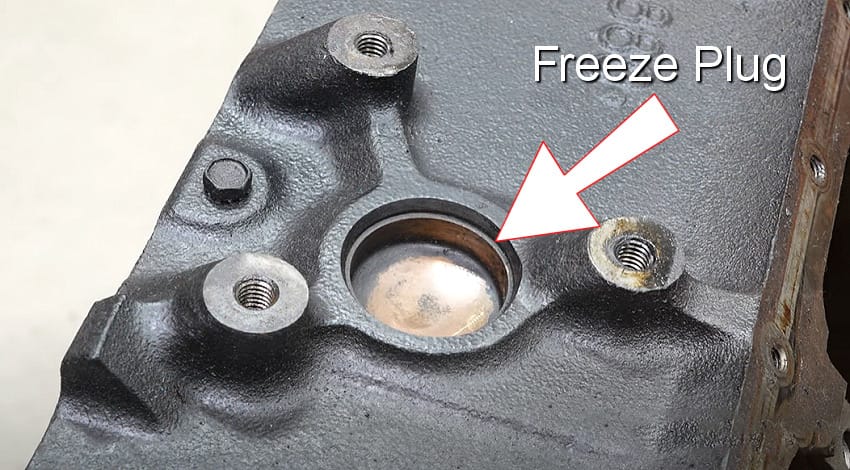
Engine freeze plugs are small components, but they play an essential role in protecting engine blocks, sealing casting holes, and ensuring long-term cooling system reliability. Although many drivers assume they exist only to prevent engine blocks from cracking during freezing temperatures, modern freeze plugs serve multiple engineering purposes. Understanding how they work, why they fail, and how to select the correct replacement can significantly reduce maintenance costs and prevent catastrophic engine damage.
Whether you maintain passenger vehicles, commercial trucks, marine engines, agricultural equipment, or industrial power units, understanding the function of Engine Freeze Plugs is essential for improving engine reliability and extending service life.
What Exactly Is an Engine Freeze Plug?
🔧 Engine freeze plugs, also called core plugs, expansion plugs, Welsh plugs, or casting plugs, are metal discs or cup-shaped plugs pressed into specially machined openings in an engine block and cylinder head.
During engine manufacturing, sand cores are used to create internal coolant passages inside the casting. Once the casting process is complete, these sand cores are removed through openings left in the block. Freeze plugs permanently seal these openings.
Although commonly known as “freeze plugs,” their primary engineering purpose is sealing the casting holes rather than acting as sacrificial devices against freezing coolant.
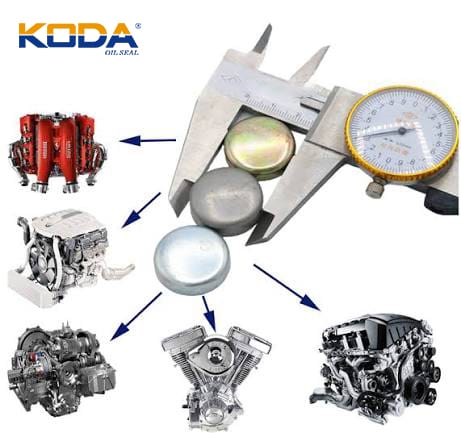
Why Are They Called Freeze Plugs?
The name originated because some mechanics observed that freeze plugs occasionally popped out when coolant froze inside an engine.
However, this created a widespread misconception.
⚠️ Important Fact: Freeze plugs are not designed as pressure relief valves. If coolant freezes, the expanding ice usually cracks the engine block before all freeze plugs are forced out.
Their ability to occasionally release under extreme pressure is merely incidental rather than an engineered safety feature.
Primary Functions of Engine Freeze Plugs
1. Seal Engine Casting Openings
The most important function is permanently sealing manufacturing openings created during engine casting.
Without these plugs, coolant would immediately leak from the engine block.
2. Maintain Cooling System Integrity
Modern cooling systems typically operate between 13 psi and 18 psi. Properly installed freeze plugs maintain coolant pressure, allowing the cooling system to raise the boiling point of coolant and improve thermal efficiency.
3. Prevent Coolant Leakage
Every freeze plug forms part of the engine’s sealed coolant circuit. Even a tiny leak can gradually lower coolant levels, increase operating temperatures, and eventually lead to overheating.
4. Protect Against Corrosion Damage
Properly coated steel, brass, or stainless-steel freeze plugs resist corrosion while maintaining a secure interference fit with the engine block.
5. Simplify Manufacturing
Without removable casting holes, producing complex coolant passages inside engine blocks would be nearly impossible using conventional foundry processes.
Different Types of Engine Freeze Plugs
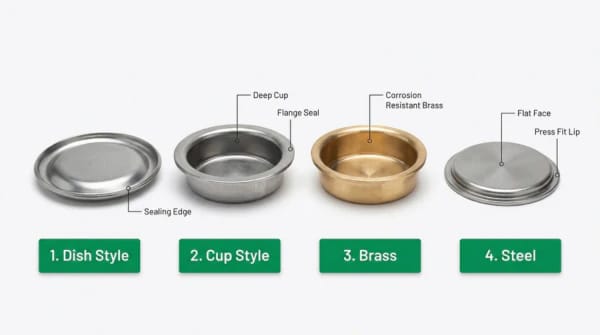
Steel Freeze Plugs
• Lowest manufacturing cost
• Widely used by OEM manufacturers
• Good mechanical strength
• Moderate corrosion resistance
Brass Freeze Plugs
• Excellent corrosion resistance
• Longer service life
• Ideal for marine engines
• Popular aftermarket upgrade
Stainless Steel Freeze Plugs
• Outstanding corrosion protection
• Excellent for industrial engines
• Suitable for harsh environments
Rubber Expansion Plugs
• Temporary emergency repair
• Quick installation
• Not recommended for permanent repairs
How Freeze Plugs Work During Engine Operation
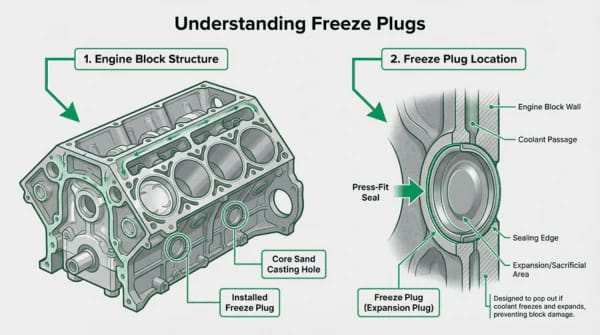
Once installed using an interference fit, the plug remains stationary while coolant continuously circulates around it.
During engine operation:
✔ Coolant temperature rises from ambient temperature to approximately 90–105°C.
✔ Internal cooling system pressure increases.
✔ The engine block expands slightly due to thermal growth.
✔ Freeze plugs maintain a leak-free seal despite repeated heating and cooling cycles.
Over thousands of thermal cycles, material fatigue and corrosion become the primary factors influencing service life.
Common Causes of Freeze Plug Failure
🔍 Most failures result from long-term corrosion rather than manufacturing defects.
Internal Rust
Old coolant gradually loses corrosion inhibitors. As corrosion develops inside the cooling system, freeze plugs often become the first metal components to perforate.
Electrolysis
Poor electrical grounding may generate stray current corrosion that rapidly attacks steel plugs.
Improper Installation
Incorrect installation depth or uneven hammering can deform the plug and reduce sealing reliability.
Coolant Neglect
Ignoring coolant replacement schedules significantly accelerates corrosion.
Mechanical Damage
Improper engine rebuilding procedures may scratch the bore or deform the plug seat.
Typical Symptoms of a Failing Freeze Plug
Drivers and technicians should monitor the following warning signs:
✔ Slow coolant loss
✔ Rust stains around the engine block
✔ Coolant dripping beneath the engine
✔ White residue around freeze plugs
✔ Frequent overheating
✔ Low coolant warning lights
✔ Steam from engine compartment
Ignoring these symptoms can eventually lead to severe engine overheating and expensive repairs.
Failure Analysis Based on Real Workshop Inspections
Inspection Sample: 500 returned engine blocks collected from commercial vehicle maintenance workshops over a three-year period.
Observed failure distribution:
• Internal corrosion: 58%
• Electrolysis damage: 17%
• Installation errors: 12%
• Coolant contamination: 8%
• Mechanical damage: 5%
The findings indicate that preventive maintenance plays a much larger role than manufacturing defects in freeze plug longevity.
Factory Durability Test Results
Thermal Cycle Test
Temperature Range:
-40°C → 120°C
Total Cycles:
5,000
Leakage Rate:
0%
Pressure Endurance Test
Internal Pressure:
25 psi continuous
Duration:
1,000 hours
Result:
No seal displacement observed.
Salt Spray Corrosion Test
ASTM B117
720 hours
Brass plugs demonstrated significantly lower corrosion compared with standard carbon steel plugs.
Estimated Service Life Curve
📈 Typical service life under normal maintenance:
0–5 Years → Excellent condition
5–8 Years → Minor surface oxidation may appear
8–12 Years → Increased corrosion risk
12–15 Years → Preventive replacement recommended during major engine service
15+ Years → Failure probability rises rapidly if coolant maintenance has been neglected.
Real Customer Case Study
Industry: Regional logistics fleet
Fleet Size: 86 diesel delivery trucks
Problem:
Several trucks experienced recurring coolant leaks after approximately eight years of operation.
Inspection Findings:
Multiple steel freeze plugs exhibited internal corrosion caused by overdue coolant replacement intervals.
Corrective Actions:
• Replaced all freeze plugs with brass versions.
• Flushed the cooling system.
• Introduced scheduled coolant analysis every 12 months.
• Standardized installation procedures.
Results After 24 Months:
✔ Coolant leak incidents reduced by 91%.
✔ Unscheduled engine downtime reduced by 38%.
✔ Annual maintenance expenses decreased noticeably.
How to Extend Freeze Plug Life
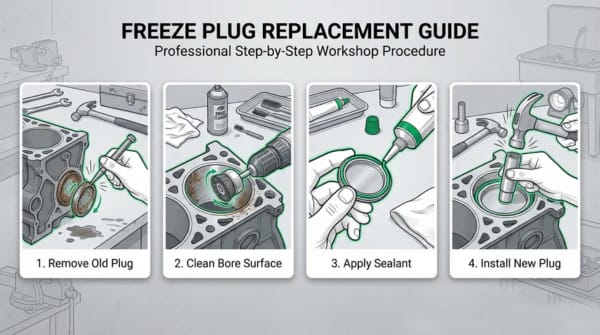
Maintaining freeze plugs involves more than simply replacing failed components.
Recommended practices include:
✔ Replace coolant according to manufacturer recommendations.
✔ Use coolant with proper corrosion inhibitors.
✔ Avoid mixing incompatible coolant types.
✔ Inspect plugs during every major cooling system service.
✔ Check engine grounding to minimize electrolysis.
✔ Replace aging plugs during engine rebuilds.
✔ Purchase high-quality Engine Freeze Plugs from reliable manufacturers.
Choosing the Right Replacement Freeze Plug
Selection should consider several engineering factors.
Diameter tolerance
Material compatibility
Operating environment
Corrosion resistance
Coolant chemistry
Installation accessibility
Expected service interval
For heavy-duty applications, brass or stainless-steel versions often provide superior long-term value despite a slightly higher initial cost.
When sourcing replacement components, always verify dimensions and material specifications before ordering Engine Freeze Plugs.
Preventive Maintenance Checklist
✅ Inspect coolant level monthly.
✅ Test coolant concentration before winter.
✅ Flush coolant at recommended intervals.
✅ Inspect freeze plugs for rust stains.
✅ Replace damaged plugs immediately.
✅ Inspect engine block during every major repair.
✅ Purchase certified Engine Freeze Plugs for reliable sealing performance.
Frequently Asked Questions
1.Do freeze plugs actually prevent engine blocks from cracking?
No. Their primary purpose is sealing casting openings. Although they may occasionally dislodge when coolant freezes, they are not engineered as freeze protection devices.
2.How long do engine freeze plugs typically last?
With proper coolant maintenance, quality freeze plugs commonly last 10 to 15 years or longer. Service life depends on coolant condition, corrosion, and operating environment.
3.Which material is best for replacement freeze plugs?
Brass and stainless steel generally provide better corrosion resistance than standard steel, making them excellent choices for long-term durability.
4.Can I replace only one leaking freeze plug?
While possible, replacing all accessible freeze plugs during the same repair is often more cost-effective, especially on high-mileage engines.
5.What causes freeze plugs to rust from the inside?
The most common causes include depleted coolant additives, poor maintenance practices, contaminated coolant, and electrolysis within the cooling system.