The oil and gas industry places extraordinary demands on sealing materials. Equipment must operate reliably under high pressures, aggressive hydrocarbons, corrosive chemicals, extreme temperatures, and continuous mechanical stress. A single seal failure can lead to costly downtime, environmental incidents, production losses, and safety risks. As a result, selecting the correct elastomer for sealing applications is a critical engineering decision. Among all sealing materials used throughout drilling, refining, transportation, and production facilities, Nitrile (NBR) and Viton® (FKM) O-rings remain two of the most trusted solutions.
Although both materials are widely used in petroleum environments, their performance characteristics differ significantly. Understanding the strengths, limitations, and ideal applications of each material enables engineers to maximize reliability while controlling maintenance and operating costs. This guide explores the unique role of Nitrile and Viton O-rings in modern oil and gas operations and provides practical insights for selecting the right seal for demanding applications.
⛽ Industry Perspective: Proper O-ring material selection can increase equipment reliability, reduce maintenance intervals, and significantly lower total lifecycle costs in oilfield operations.
The Importance of O-Rings in Oil and Gas Operations
Every stage of oil and gas production relies on sealing technology. From exploration and drilling to transportation and refining, O-rings serve as the first line of defense against fluid leakage and contamination.
Common applications include:
- Hydraulic control systems
- Downhole drilling equipment
- Pipeline valves
- Pressure vessels
- Compressors and pumps
- Refinery processing units
- Fuel transfer systems
- Offshore platform equipment
The effectiveness of these systems often depends on the quality and material composition of the sealing elements. High-performance O-rings help maintain pressure integrity while preventing costly failures.
Understanding Nitrile (NBR) O-Rings
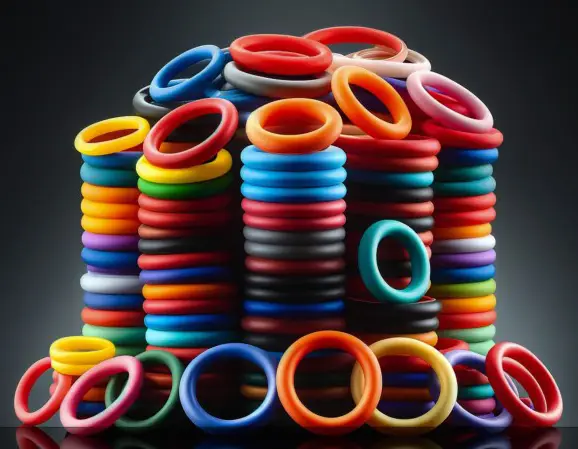
Nitrile rubber, commonly known as NBR or Buna-N, is one of the most frequently specified elastomers in the petroleum industry. It is manufactured through the copolymerization of acrylonitrile and butadiene, creating a material that offers excellent resistance to petroleum-based fluids.
Key Properties of NBR O-Rings
NBR provides a highly attractive balance of performance and affordability. This combination explains its widespread use throughout oilfield equipment.
- Excellent resistance to mineral oils and fuels
- Strong abrasion resistance
- Good tensile strength
- Reliable compression set characteristics
- Wide availability
- Cost-effective sealing solution
🔧 Engineering Advantage: NBR is often the preferred material for standard petroleum applications because it delivers dependable sealing performance at a competitive cost.
Typical Temperature Range
Most standard NBR compounds operate effectively between -40°C and +120°C. Specialized formulations may extend performance beyond these limits, but NBR generally performs best in moderate-temperature environments.
Understanding Viton® (FKM) O-Rings
Viton, classified under the FKM family of fluorocarbon elastomers, is widely recognized as a premium sealing material. It was specifically developed to withstand aggressive chemicals, elevated temperatures, and severe industrial environments.
The fluorinated molecular structure provides outstanding chemical stability, making Viton one of the most durable elastomers available for petroleum processing and oilfield applications.
Premium-grade O-rings made from Viton are frequently selected for critical equipment where maintenance access is limited or failure consequences are significant.
Key Properties of Viton O-Rings
- Excellent hydrocarbon resistance
- Outstanding high-temperature performance
- Exceptional chemical compatibility
- Superior aging resistance
- Low compression set
- Extended operational lifespan
🔥 High-Performance Solution: Viton is often chosen when sealing systems are exposed to aggressive chemicals, elevated temperatures, and extended service intervals.
Typical Temperature Range
Most Viton compounds operate continuously from -20°C to +200°C, making them ideal for refinery processes, compressor systems, and high-temperature production equipment.
Why Material Selection Matters in Oil and Gas
Oilfield equipment operates in conditions far more severe than many industrial applications. Selecting the wrong elastomer can result in swelling, hardening, cracking, extrusion, chemical degradation, or catastrophic seal failure.
Factors influencing O-ring performance include:
- Operating temperature
- Pressure levels
- Chemical exposure
- Hydrocarbon concentration
- Gas permeation
- Mechanical cycling
- Maintenance intervals
- Environmental conditions
Understanding these variables helps engineers determine whether NBR or Viton provides the best long-term solution.
NBR vs Viton: Detailed Performance Comparison
Oil and Fuel Resistance
Both materials offer excellent compatibility with petroleum products. NBR performs exceptionally well in standard oil applications, while Viton demonstrates broader resistance across a wider range of hydrocarbons and additives.
Heat Resistance
Viton significantly outperforms NBR in elevated temperature environments. Equipment operating above 120°C generally benefits from Viton’s superior thermal stability.
Chemical Compatibility
Refinery chemicals, solvents, and aggressive processing fluids often require Viton’s enhanced chemical resistance. NBR may experience degradation when exposed to certain chemicals for extended periods.
Compression Set Performance
Viton generally retains elasticity longer under continuous compression, helping maintain sealing force over extended service periods.
Cost Efficiency
NBR remains substantially less expensive than Viton, making it attractive for high-volume applications where premium performance is unnecessary.
💡 Selection Strategy: Choose NBR when cost-effectiveness and petroleum compatibility are priorities. Choose Viton when temperature, chemical resistance, and long-term durability are critical.
Applications of NBR O-Rings in Oil and Gas
Hydraulic Equipment
Hydraulic systems used in drilling rigs and production facilities frequently utilize NBR seals because of their compatibility with petroleum-based hydraulic fluids.
Fuel Transfer Systems
NBR performs exceptionally well in fuel pumps, transfer stations, storage tanks, and dispensing equipment.
Pipeline Components
Valve assemblies, couplings, and monitoring devices often rely on NBR O-rings for dependable sealing performance.
General Production Equipment
Many upstream production systems operate within temperature ranges that make NBR an ideal sealing choice.
Applications of Viton O-Rings in Oil and Gas
Refinery Processing Systems
Refineries expose seals to elevated temperatures and aggressive chemicals, making Viton one of the most commonly specified materials.
Gas Compression Equipment
Compressors generate substantial heat and pressure, conditions where Viton excels.
Offshore Production Platforms
Offshore systems demand maximum reliability due to difficult maintenance access and harsh environmental conditions.
Chemical Injection Systems
Specialized chemical processing equipment frequently requires Viton’s superior chemical resistance.
In these critical applications, premium O-rings often contribute directly to improved operational reliability and safety.
Challenges Unique to Oilfield Sealing Systems
Oilfield sealing environments are becoming increasingly demanding as exploration expands into deeper reservoirs and more extreme operating conditions.
- High-pressure drilling systems
- Deepwater exploration equipment
- Enhanced oil recovery operations
- Sour gas environments
- Thermal recovery systems
- Aggressive chemical additives
These evolving challenges require careful evaluation of elastomer performance characteristics before specifying sealing materials.
🌍 Industry Trend: As extraction environments become more demanding, the importance of advanced elastomer technology continues to increase across the oil and gas sector.
Installation Best Practices for Oilfield O-Rings
Proper installation remains essential regardless of material selection.
- Inspect all sealing surfaces.
- Confirm dimensional accuracy.
- Use compatible lubricants.
- Avoid twisting during assembly.
- Protect against sharp edges.
- Follow manufacturer specifications.
- Conduct post-installation inspections.
Many premature seal failures occur because installation procedures are overlooked rather than because of material deficiencies.
Maintenance Strategies for Extended Service Life
Preventive maintenance programs help maximize O-ring performance and minimize equipment downtime.
Regular Inspection Programs
Monitor seals for hardening, cracking, swelling, or leakage signs.
Monitor Operating Conditions
Unexpected changes in temperature, pressure, or fluid composition can accelerate seal degradation.
Scheduled Replacement
Critical equipment often benefits from proactive seal replacement during planned maintenance intervals.
Proper Storage
Store spare O-rings in cool, dry environments away from UV exposure and ozone sources.
Implementing these practices significantly improves the lifespan of O-rings used throughout oilfield infrastructure.
Future Developments in Oil and Gas O-Ring Technology

The future of oilfield sealing technology is being shaped by increasing demands for reliability, sustainability, and operational efficiency. Advanced FKM compounds, HNBR materials, and specialty elastomers are being developed to withstand increasingly severe operating conditions.
Digital monitoring systems are also enabling predictive maintenance strategies that optimize seal replacement schedules and reduce unplanned downtime. These innovations are expected to improve equipment performance while lowering operational costs.
Despite ongoing advancements, NBR and Viton remain foundational materials because of their proven track records and extensive compatibility with oilfield applications.
Conclusion
Nitrile and Viton O-rings each offer unique advantages for the oil and gas industry. NBR provides exceptional value, excellent oil resistance, and reliable sealing performance across a wide range of applications. Viton delivers superior chemical compatibility, enhanced thermal stability, and extended service life for the industry’s most demanding environments.
Selecting the appropriate material requires a comprehensive evaluation of operating temperatures, chemical exposure, pressure requirements, maintenance objectives, and equipment criticality. By matching material performance to application demands, operators can significantly improve reliability, reduce maintenance costs, and maximize asset productivity.
Frequently Asked Questions
1. Which O-ring material is more commonly used in oilfield equipment?
NBR is generally the most widely used material because of its excellent petroleum resistance and cost-effectiveness.
2. When should Viton O-rings be selected over NBR?
Viton is recommended when applications involve high temperatures, aggressive chemicals, or extended maintenance intervals.
3. Are Viton O-rings suitable for offshore applications?
Yes. Viton’s durability, chemical resistance, and long service life make it highly suitable for offshore equipment.
4. Can NBR O-rings handle crude oil exposure?
Yes. NBR offers excellent compatibility with many petroleum oils, fuels, and hydraulic fluids commonly encountered in oilfield operations.
5. How can oil and gas operators extend O-ring service life?
Proper material selection, correct installation, regular inspections, preventive maintenance, and operating within design limits are the most effective ways to maximize O-ring longevity.