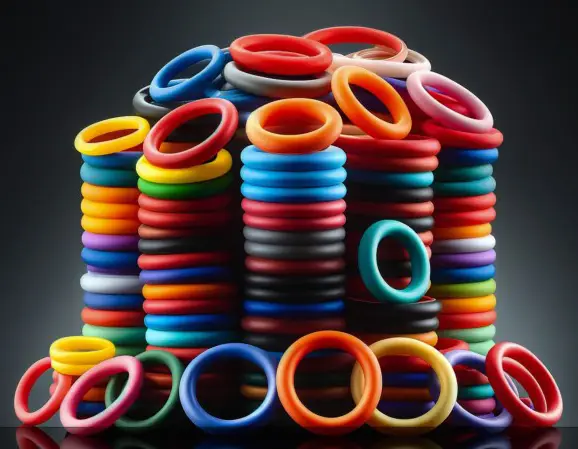
High-performance FFKM O-rings are widely recognized as the ultimate sealing solution for the most demanding industrial environments. Designed to withstand aggressive chemicals, ultra-high temperatures, plasma exposure, and vacuum systems, FFKM materials deliver outstanding sealing reliability in industries where standard elastomers fail. From semiconductor manufacturing to aerospace engineering, these advanced seals play a critical role in ensuring equipment safety, operational stability, and long service life.
What Are High-Performance FFKM O-Rings?
FFKM stands for perfluoroelastomer, a premium elastomer family combining the elasticity of rubber with the chemical resistance of PTFE. Compared with traditional rubber materials such as NBR, EPDM, or even FKM, FFKM offers significantly higher resistance to heat, chemicals, and plasma corrosion.
Industries operating in extreme conditions rely on FFKM O-Rings because they maintain sealing integrity even under temperatures exceeding 300°C and exposure to highly aggressive media.
✅ Key Characteristics of FFKM Materials:
● Exceptional chemical compatibility
● Superior thermal stability
● Excellent compression set resistance
● Low outgassing performance
● Long-term sealing reliability in critical systems
Why Industries Choose FFKM O-Rings
Modern industrial systems demand sealing materials capable of surviving increasingly harsh operational conditions. Equipment downtime caused by seal failure can result in expensive maintenance costs, production losses, and safety risks. High-performance FFKM seals help reduce these risks through unmatched durability and stability.
Outstanding Chemical Resistance
One of the most important advantages of FFKM is its ability to resist nearly all chemicals, including strong acids, ketones, esters, amines, fuels, solvents, and oxidizers. In chemical processing plants, seals are constantly exposed to aggressive fluids that can rapidly degrade conventional elastomers.
Unlike standard rubber materials,FFKM O-Rings retain their mechanical properties and sealing efficiency even after prolonged exposure to harsh chemicals.
Extreme Temperature Capability
FFKM materials are engineered to operate continuously at temperatures ranging from -20°C to over 320°C depending on the compound formulation. This makes them ideal for applications involving thermal cycling, steam sterilization, or high-temperature process equipment.
🔥 High-temperature sealing performance is especially critical in:
● Semiconductor plasma chambers
● Aerospace engines
● Oil and gas drilling systems
● Pharmaceutical sterilization equipment
● Chemical reactors
Exceptional Plasma Resistance
Semiconductor manufacturing environments expose seals to aggressive plasma gases and reactive chemicals. FFKM compounds are specifically developed to minimize particle generation and resist plasma erosion, helping improve wafer yield and contamination control.
This is one reason why premium semiconductor equipment manufacturers rely heavily on FFKM O-Rings for vacuum and plasma applications.
Main Applications of High-Performance FFKM O-Rings
Semiconductor Industry
The semiconductor sector demands ultra-clean sealing materials with excellent plasma resistance and minimal contamination risk. FFKM seals are widely used in:
✔ Dry etching systems
✔ CVD and PVD chambers
✔ Vacuum transfer systems
✔ Plasma processing tools
✔ Wafer fabrication equipment
Their low outgassing characteristics help maintain ultra-high purity environments essential for semiconductor production.
Chemical Processing Industry
Chemical plants operate with corrosive fluids, acids, and solvents that can quickly destroy ordinary elastomers. FFKM provides excellent long-term resistance against aggressive process media while reducing maintenance frequency.
Applications include pumps, valves, compressors, mixers, pipelines, and mechanical seals operating under aggressive conditions.
Pharmaceutical and Biotechnology
In pharmaceutical production, cleanliness and sterilization compatibility are essential. FFKM compounds resist repeated steam sterilization cycles and maintain sealing integrity during CIP and SIP procedures.
Their resistance to contamination and extractables makes them suitable for high-purity applications requiring strict regulatory compliance.
Oil and Gas Industry
Oilfield environments expose seals to high pressure, corrosive gases, hydrocarbons, and extreme temperatures. FFKM seals help maintain system integrity in downhole drilling tools, valves, and refinery equipment.
⚠ Critical advantages in oil and gas applications:
● Resistance to sour gas exposure
● Stability under thermal cycling
● Long operational lifespan
● Reduced maintenance shutdowns
FFKM vs Other Elastomer Materials
FFKM vs FKM
FKM materials offer good chemical and heat resistance, but they cannot match the extreme performance of FFKM. While FKM performs well in many industrial applications, it may fail under aggressive chemical exposure or ultra-high temperatures.
FFKM provides broader chemical compatibility, better thermal resistance, and longer service life in demanding environments.
FFKM vs EPDM
EPDM performs well in water and steam applications but lacks resistance to oils and hydrocarbons. FFKM provides a much wider chemical resistance range and superior thermal performance.
FFKM vs PTFE
PTFE offers excellent chemical resistance but lacks elasticity. FFKM combines PTFE-like chemical resistance with rubber flexibility, enabling superior sealing performance under dynamic conditions.
How to Select the Right FFKM O-Ring
Choosing the correct FFKM compound requires careful evaluation of application conditions. Different formulations are optimized for specific environments such as plasma resistance, steam resistance, or chemical compatibility.
Key Selection Factors
📌 Consider the following factors before selecting a seal:
● Operating temperature range
● Chemical exposure conditions
● Pressure requirements
● Vacuum compatibility
● Compression set resistance
● Regulatory compliance requirements
Working with experienced sealing manufacturers ensures proper material selection and longer operational reliability.
For highly demanding industrial systems, engineers often prefer specialized FFKM O-Rings designed specifically for semiconductor, chemical, or aerospace applications.
Advantages of Using High-Quality FFKM Compounds

Longer Service Life
Although FFKM seals are more expensive than standard elastomers, their extended lifespan often results in lower total operating costs. Reduced maintenance frequency and minimized downtime provide significant long-term savings.
Reduced Equipment Failure
Seal failure is one of the leading causes of equipment leakage and shutdowns. High-quality FFKM compounds help improve operational reliability and reduce unplanned maintenance.
Enhanced Safety
In hazardous environments involving toxic chemicals or high-pressure systems, reliable sealing performance is essential for worker safety and environmental protection.
Storage and Maintenance Recommendations
Proper storage helps maintain the performance and lifespan of FFKM seals before installation.
📦 Recommended Storage Conditions:
● Store in cool and dry environments
● Avoid direct sunlight exposure
● Keep away from ozone sources
● Prevent unnecessary deformation during storage
● Use clean packaging materials
During installation, avoid sharp tools and ensure sealing grooves are properly cleaned to prevent surface damage.
Future Trends in FFKM Sealing Technology
As industrial systems become more advanced, the demand for ultra-high-performance sealing materials continues to grow. Semiconductor miniaturization, renewable energy technologies, and advanced aerospace systems all require seals capable of operating under increasingly harsh conditions.
Manufacturers are continuously developing next-generation FFKM O-Rings with improved plasma resistance, lower particle generation, and enhanced thermal stability.
Emerging technologies such as hydrogen energy systems and advanced battery manufacturing are also expected to drive future demand for high-performance perfluoroelastomer sealing solutions.

FAQ About High-Performance FFKM O-Rings
1. What makes FFKM O-rings different from standard rubber seals?
FFKM O-rings provide significantly better resistance to chemicals, extreme temperatures, and plasma environments compared with conventional elastomers such as NBR, EPDM, or FKM.
2. What temperature range can FFKM seals handle?
Depending on the specific compound, FFKM seals can typically operate between -20°C and over 320°C while maintaining sealing performance.
3. Are FFKM O-rings suitable for semiconductor applications?
Yes. FFKM materials are widely used in semiconductor equipment because of their excellent plasma resistance, low outgassing, and low particle generation characteristics.
4. Why are FFKM seals more expensive?
FFKM materials involve advanced fluorinated polymer technology and complex manufacturing processes. However, their long service life and reduced maintenance costs often justify the higher initial investment.
5. How do I choose the correct FFKM compound?
Selection depends on operating temperature, chemical exposure, pressure conditions, vacuum requirements, and industry-specific standards. Consulting an experienced sealing supplier is highly recommended.