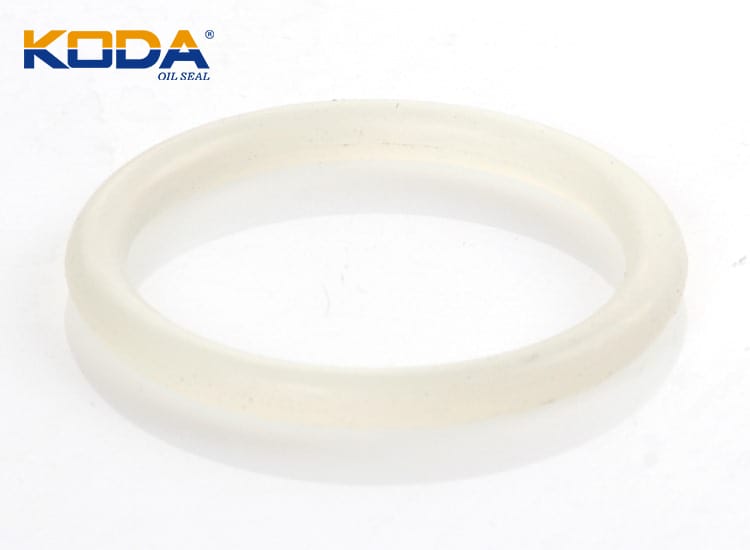
Key Benefits of Urethane O-Rings
Exceptional Abrasion Resistance
One of the primary reasons engineers choose polyurethane is its outstanding resistance to wear.
In hydraulic and pneumatic systems, seal failure often occurs because of friction and surface contact rather than chemical attack. Polyurethane compounds can significantly outperform many conventional elastomers in these conditions, helping extend maintenance intervals and reduce replacement frequency.
Excellent High-Pressure Performance
Polyurethane O-rings exhibit high tensile strength and excellent extrusion resistance, making them suitable for:
- Hydraulic cylinders
- Mobile hydraulic equipment
- Construction machinery
- Injection molding machines
- Industrial presses
When pressure levels increase, polyurethane is less likely to deform or extrude into sealing gaps compared with softer elastomer materials.
Strong Tear and Impact Resistance
Unlike many rubber materials that can be damaged during installation or operation, polyurethane provides excellent resistance to:
✓ Tearing
✓ Cutting
✓ Mechanical shock
✓ Repetitive loading
This durability is particularly beneficial in demanding industrial environments.
Temperature Range
| Property | Typical Value |
|---|
| Low Temperature | -40°C |
| Continuous Temperature | +90°C |
| Maximum Intermittent Temperature | +120°C |
| Hardness Range | 70–95 Shore A |
While polyurethane offers superior mechanical performance, it generally does not provide the high-temperature resistance of FKM or silicone-based materials.
Chemical Compatibility
Recommended Media
Polyurethane O-rings typically perform well with:
✓ Hydraulic oils
✓ Petroleum-based lubricants
✓ Greases
✓ Aliphatic hydrocarbons
✓ Water (limited applications)
✓ Pneumatic lubricants
Not Recommended For
Polyurethane may not be suitable for:
✗ Strong acids
✗ Concentrated alkalis
✗ Aromatic solvents
✗ Ketones
✗ Hot water and steam
✗ Brake fluids containing glycol
Before material selection, compatibility testing is recommended for aggressive chemical environments.
How to Choose the Right Polyurethane O-Ring
When specifying a polyurethane seal, evaluate the following factors:
Operating Pressure
Polyurethane performs particularly well in high-pressure systems where extrusion resistance is critical.
Dynamic or Static Sealing
PU compounds excel in dynamic applications involving reciprocating movement, vibration, or repeated mechanical loading.
Temperature Conditions
For continuous temperatures above 100°C, alternative materials such as HNBR or FKM should be considered.
Fluid Compatibility
Always verify compatibility with hydraulic fluids, lubricants, and process media before final material selection.