
FKM 0-Rings
What Are Viton® (FKM) O-Rings?
Viton® O-rings, commonly referred to as FKM O-rings or fluorocarbon O-rings, are premium sealing components engineered for applications involving elevated temperatures, aggressive chemicals, fuels, and industrial fluids.FKM is the ASTM designation for fluoroelastomer materials, while Viton® is a registered trademark originally developed by Chemours. In industrial sealing applications, the terms FKM and Viton are often used interchangeably.
Compared with conventional elastomers such as NBR, FKM offers significantly improved resistance to:
- High temperatures
- Petroleum fuels
- Synthetic lubricants
- Ozone exposure
- Oxidation
- Aggressive chemicals
These advantages make FKM one of the most widely specified sealing materials in aerospace, automotive, oil & gas, chemical processing, and industrial manufacturing.
Why Engineers Choose FKM O-Rings
In demanding operating environments, standard elastomers often fail because of thermal degradation, chemical attack, or compression set.
FKM was developed specifically to address these challenges.
Key Advantages
✓ Excellent heat resistance
✓ Outstanding fuel resistance
✓ Superior chemical compatibility
✓ Low compression set
✓ Excellent ozone resistance
✓ Long service life
✓ Low gas permeability
✓ Suitable for vacuum systems
Its combination of chemical stability and thermal durability has made FKM one of the most important elastomer technologies used in modern sealing applications.
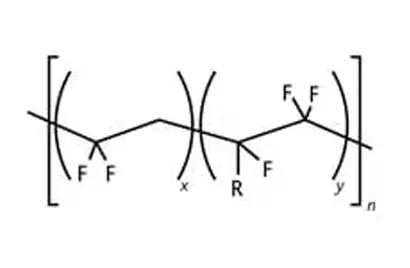
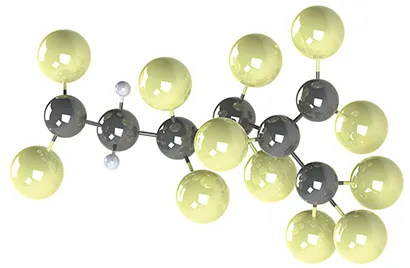
Understanding FKM Polymer Technology
Not all FKM compounds perform the same.
Their characteristics are influenced by:
- Fluorine content
- Polymer structure
- Cure system
- Additive package
- Operating environment
As fluorine content increases, chemical resistance generally improves, although low-temperature flexibility may decrease. Modern specialty grades can balance both requirements.
Low Fluorine FKM
Typical Fluorine Content:
Approximately 65%
Advantages:
- Better low-temperature flexibility
- Improved dynamic sealing performance
Applications:
- Automotive systems
- Hydraulic equipment
- General industrial sealing
Medium Fluorine FKM
Typical Fluorine Content:
66%–68%
Advantages:
- Balanced temperature and chemical resistance
- Broad industrial compatibility
Applications:
- Pumps
- Compressors
- Gearboxes
- Process equipment
High Fluorine FKM
Typical Fluorine Content:
70%+
Advantages:
- Maximum fuel resistance
- Improved solvent resistance
- Reduced permeation
Applications:
- Aerospace systems
- Petrochemical equipment
- Fuel handling systems
Temperature Range of FKM O-Rings
One of the main reasons engineers upgrade from NBR to FKM is temperature capability.
Standard Operating Range
-20°C to +220°C
Premium Compounds
Up to +230°C
Short-Term Exposure
Certain formulations can tolerate temperatures approaching +240°C or higher for limited periods.
This performance far exceeds standard NBR materials, which are typically limited to approximately +120°C.
Chemical Compatibility of FKM O-Rings
FKM is widely recognized for its broad chemical resistance profile.
Excellent Compatibility
FKM performs exceptionally well with:
- Gasoline
- Diesel fuel
- Jet fuel
- Synthetic oils
- Hydraulic fluids
- Mineral oils
- Aromatic hydrocarbons
- Chlorinated hydrocarbons
- Vacuum environments
Limited Compatibility
FKM is generally not recommended for prolonged exposure to:
- Hot water
- Steam (unless specialty grades)
- Ketones
- Amines
- Certain brake fluids
- Strong alkalis
Material compatibility should always be verified before final specification.
| AS568 Series | O-Ring Cross-Section | Gland Depth (D) | Squeeze | Gland Width (W) | Gap (H) | Gland Corner Radii | ||||||
|---|---|---|---|---|---|---|---|---|---|---|---|---|
| Nominal | TOL (+/-) | Actual | Percent | Nominal | TOL (+/-) | w/ 1 Backup Ring | w/ 2 Backup Rings | MAX | R1 | R2 | ||
| -0XX | 0.070 | 0.003 | .050-0.052 | .015-.023 | 22%-32% | 0.095 | 0.002 | 0.140 | 0.207 | 0.002 | 0.007 | 0.005 |
| -1XX | 0.103 | 0.004 | .081-.083 | .017-.025 | 17%-24% | 0.142 | 0.003 | 0.173 | 0.240 | 0.002 | 0.007 | 0.005 |
| -2XX | 0.139 | 0.004 | .111-.113 | .022-.032 | 16%-23% | 0.189 | 0.003 | 0.210 | 0.277 | 0.002 | 0.017 | 0.005 |
| -3XX | 0.210 | 0.005 | .170-.173 | .032-.045 | 15%-21% | 0.283 | 0.003 | 0.313 | 0.412 | 0.003 | 0.027 | 0.005 |
| -4XX | 0.275 | 0.006 | .226-.229 | .040-.055 | 15%-20% | 0.377 | 0.003 | 0.410 | 0.540 | 0.003 | 0.027 | 0.005 |
Bisphenol-Cured vs Peroxide-Cured FKM
One of the most overlooked aspects of FKM selection is the curing system.
The cure technology directly affects long-term sealing performance.
Bisphenol-Cured FKM
Common Types:
- Type A
- Type B
- Type F
Advantages:
- Excellent compression set resistance
- Fast curing characteristics
- Good hydrocarbon resistance
Recommended For:
- Oil sealing
- Fuel systems
- Industrial machinery
KODA O-Ring identifies bisphenol-cured compounds as offering excellent compression set resistance and processing characteristics.
Peroxide-Cured FKM
Common Types:
- GLT
- GFLT
- ETP
Advantages:
- Better resistance to acids
- Improved steam resistance
- Enhanced biodiesel compatibility
- Superior chemical stability
Recommended For:
- Chemical processing
- Oil & gas
- Aggressive industrial environments
Peroxide-cured grades provide enhanced resistance to steam, organic acids, mineral acids, and aggressive biodiesel formulations.
Explanation of the differences in fluid resistance properties of different types of fluororubber
| Fluid | A | B | F | GLT | GFLT | ETP |
|---|---|---|---|---|---|---|
| Hydrocarbon Automotive, Aviation Fluid | Excellent | Excellent | Excellent | Excellent | Excellent | Excellent |
| Aliphatic Hydrocarbon Process Fluids | Excellent | Excellent | Excellent | Very Good | Excellent | Excellent |
| Aqueous Fluids: Water, Steam, Mineral Acids | Good | Very Good | Very Good | Excellent | Excellent | Excellent |
| Oxygenated Automotive Fuels | Not Recommended | Very Good | Excellent | Not Recommended | Excellent | Excellent |
| Reciprocating Engine Lubricating Oils (SG-SH Grade) | Not Recommended | Very Good | Very Good | Excellent | Excellent | Excellent |
| Amines, High pH Caustics | Not Recommended | Not Recommended | Not Recommended | Good | Good | Excellent |
| Low Molecular Weight Carbonyls | Not Recommended | Not Recommended | Not Recommended | Not Recommended | Not Recommended | Excellent |
| Reciprocating Engine Lubricating Oils (SE-SF Grade) | Very Good | Excellent | Excellent | Excellent | Excellent | Excellent |
| Aromatic Hydrocarbon Process Fluids | Very Good | Very Good | Excellent | Very Good | Excellent | Excellent |
Recommended Hardness Selection
70 Shore A
Most commonly specified.
Suitable for:
- Static sealing
- Hydraulic systems
- Fuel applications
75 Shore A
Widely used in industrial equipment.
Provides a balance between flexibility and extrusion resistance.
90 Shore A
Recommended for:
- High-pressure sealing
- Extrusion-prone applications
- Severe mechanical loads
Higher durometer compounds generally improve extrusion resistance but require better surface finishes and groove control.
How to Select the Right FKM O-Ring
Before requesting a quotation, gather the following information:
Fluid or Chemical
Examples:
- Fuel
- Hydraulic oil
- Solvent
- Acid
Temperature Range
Specify both minimum and maximum operating temperatures.
Pressure Conditions
Determine whether backup rings are required.
Static or Dynamic Service
Dynamic applications require additional wear considerations.
O-Ring Dimensions
Provide:
- Inside Diameter (ID)
- Cross Section (CS)
Industry Requirements
Consider:
- FDA
- USP Class VI
- Aerospace specifications
- Oil & Gas certifications
Why FKM Remains the Industrial Standard for Harsh Environments
While many elastomers offer excellent performance in specific conditions, FKM remains one of the most versatile high-performance sealing materials available.
Its unique combination of:
- High-temperature capability
- Fuel resistance
- Chemical compatibility
- Low compression set
- Long-term reliability
allows engineers to standardize sealing solutions across multiple applications while reducing maintenance costs and extending equipment service life.