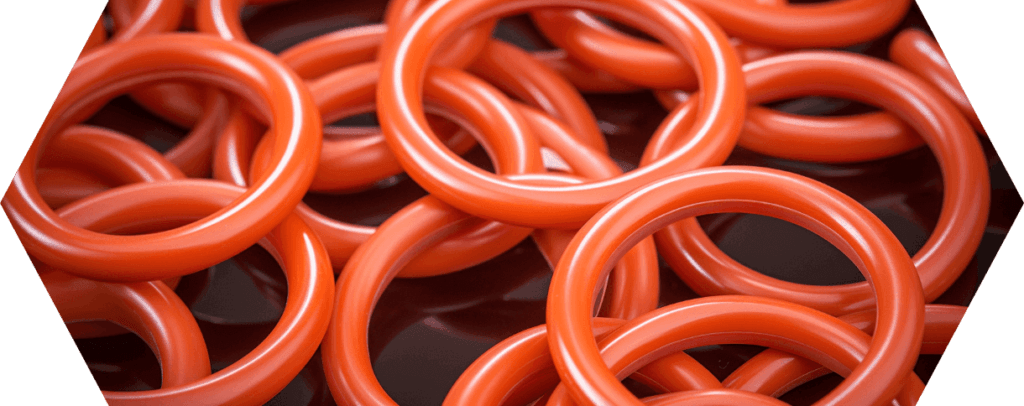
How do you store O-rings long-term?
Long-term storage of O-rings is about slowing down aging mechanisms (oxidation, ozone attack, UV damage, and permanent deformation). If you control those factors, many elastomers can remain usable for years. | criterion | Description |
|---|
| Storage location | Cool, dry place, protected from sunlight |
| positioning | Flat, without tension |
| Environmental conditions | Avoid sharp objects, chemicals and materials that could damage the rubber. |
| examination | Regularly check for cracks or damage. |
REQUEST O-RINGS QUICKLY AND EASILY?
How do you check O-rings for damage?
Checking O-rings for damage is a mix of visual inspection, tactile checks, and (when needed) simple measurements or tests. The goal is to catch any defect that could compromise sealing before installation or after service.
| Type of examination | Description |
|---|
| Visual inspection | Look for cracks, cuts, and signs of wear. |
| Tactile inspection | Feel for irregularities or surface defects |
| Condition assessment | Testing for hardening and discoloration as indicators of chemical damage or aging |
| Recommendation for action | Replacement in case of detected damage to prevent leaks or malfunctions |
How to avoid O-ring aging?
Completely stopping O-ring aging isn’t realistic—elastomers naturally degrade over time—but you can slow it dramatically by controlling the factors that drive it: heat, oxygen/ozone, UV light, chemicals, and mechanical stress.
| factor | Recommendation |
|---|
| UV protection | Dark, airtight containers |
| ozone | Keep away from ozone sources |
| chemicals | No contact with harmful chemicals |
| inspection | Regular inspection for damage or wear |
How do temperatures affect O-ring bearings?
Temperature has a significant impact on the performance of O-rings in bearings or similar bearing applications (e.g., as sealing/support elements around lightly loaded rollers, dampers, or shafts). It affects friction, elasticity, load-carrying capacity, and wear, all of which collectively determine the performance and service life of the O-ring.
| Temperature range | Impact on O-rings |
|---|
| Above +30°C | Accelerated aging, loss of plasticizers |
| Below -15°C | Hardening, cracking possible |
| -15°C to +30°C | Optimal storage conditions |
How do you protect O-rings from UV radiation?
UV light breaks down elastomers at the surface (photo-oxidation), leading to cracking, chalking, and loss of elasticity. Protection is about blocking the light, stabilizing the material, and limiting exposure time.
| Protective measure | Description |
|---|
| Store in a dark place | Avoid direct sunlight |
| UV-blocking containers | Containers that do not allow UV rays to pass through |
| Indoor storage | Minimal UV exposure |
How do you clean O-rings before installation?
Cleaning O-rings before installation is important to remove dust, oils, machining residues, and particles that could cause leaks, wear, or damage during assembly. The key is to clean them gently and with compatible materials so you don’t degrade the elastomer.
| Step | Description |
|---|
| Cleaning agent | Mild cleaner or isopropanol |
| Cleaning process | Wipe gently, do not rub. |
| Wash | Rinse with clean water |
| Drying | Air dry or dry with a lint-free cloth |
| Material compatibility | Choose solvents that will not damage the material |
How do you package O-rings for storage?
Packaging O-rings for storage is about protecting them from light, oxygen/ozone, contamination, and mechanical stress so they retain elasticity and sealing performance over time.
| Packaging method | Aspects to consider |
|---|
| Airtight containers | Protection from environmental influences |
| No stretching | Store O-rings without tension |
| Separating materials | Prevention of adhesion between O-rings |
| Chemically inert | Materials that do not release substances |
How do you control humidity during O-ring storage?
Controlling humidity during O-ring storage is about preventing condensation, moisture absorption, and surface degradation while avoiding overly dry conditions that can accelerate aging for some elastomers. In practice, you aim for a stable, moderate humidity environment.
| measure | Purpose |
|---|
| Airtight containers | Minimizing moisture ingress |
| Silica gel packets | Absorption of excess moisture |
| hygrometer | Monitoring of relative humidity |
How can you recognize wear on O-rings?
Recognizing wear on O-rings means looking for changes in shape, surface condition, and material behavior that indicate the seal is degrading under use. Different wear patterns often point to specific root causes like friction, pressure, temperature, or chemical exposure.
| Wear signs | Testing methods | Follow |
|---|
| cracks | Visual inspection, magnifying glass | Leaks, loss of function |
| Changes in hardness | Hardness test | Reduced elasticity |
| Deformations | Measurement control | Inadequate sealing |
| Material abrasion | Visual inspection | Deterioration of the seal |
How do you determine the expiration date of O-rings?
The expiry date of O-rings is not usually specifically determined, as it depends heavily on storage conditions, material, and application.
However, manufacturers can provide guidelines for storage duration based on the material type, often between 5 and 15 years.
Maintaining optimal storage conditions is crucial to maximize service life. Regular inspections are essential to assess the condition of the O-rings and replace them if they show signs of aging or wear.