

🏭 Modern manufacturing facilities depend on reliable sealing technology to maintain productivity, reduce downtime, and protect critical equipment. Among all sealing solutions, O-rings remain the most widely used sealing component due to their simple design, exceptional versatility, and ability to perform in hydraulic, pneumatic, chemical, automation, and fluid-handling systems. However, selecting the correct O-ring requires a thorough understanding of materials, operating conditions, failure mechanisms, and long-term performance characteristics.
From automotive assembly plants and CNC machining centers to food processing facilities, semiconductor production lines, robotics systems, and heavy industrial machinery, O-rings are found in thousands of applications where leakage prevention is critical. Although they are often viewed as low-cost components, their impact on equipment reliability and operational efficiency is enormous.
Industrial engineers increasingly focus on lifecycle performance rather than initial component cost. As a result, the demand for premium O-rings capable of withstanding extreme temperatures, aggressive chemicals, high pressures, and continuous operation continues to grow across global manufacturing sectors.
The Critical Role of O-Rings in Manufacturing Industry
Every manufacturing process relies on controlled movement of fluids, gases, lubricants, coolants, hydraulic oils, compressed air, or vacuum systems. O-rings serve as the primary barrier that prevents leakage while maintaining operational efficiency.
Without properly functioning O-rings, manufacturers may experience:
- Unexpected machine shutdowns
- Hydraulic pressure loss
- Compressed air leakage
- Product contamination
- Safety hazards
- Environmental compliance issues
- Increased maintenance costs
- Reduced production output
⚙️ Engineering Fact: Studies conducted across automated manufacturing facilities show that sealing-related failures account for approximately 18% to 25% of unplanned maintenance events, with O-ring degradation representing one of the most common root causes.
How O-Rings Function in Industrial Equipment
An O-ring is a toroidal elastomer seal designed to create a positive barrier between mating surfaces. When compressed within a gland, the material deforms and fills microscopic imperfections, preventing fluid or gas leakage.
The sealing effectiveness depends on several engineering variables:
- Compression ratio
- Material hardness
- Operating pressure
- Temperature range
- Surface finish quality
- Chemical compatibility
- Dynamic or static application requirements
Properly selected O-rings can maintain reliable sealing performance for millions of operating cycles in demanding manufacturing environments.
Major Manufacturing Applications for O-Rings
Hydraulic Machinery
Hydraulic cylinders, pumps, valves, manifolds, and presses rely heavily on O-rings to maintain pressure and prevent fluid leakage.
Pneumatic Systems
Compressed air systems require leak-free operation to maximize energy efficiency and maintain production consistency.
Industrial Automation
Robots, actuators, and automated assembly systems use O-rings in precision motion-control applications.
Food Processing Equipment
Food-grade O-rings provide sealing in pumps, mixers, fillers, and packaging equipment.
Chemical Manufacturing
Specialized compounds withstand aggressive chemicals and process fluids.
Semiconductor Production
Vacuum chambers and ultra-clean process equipment rely on high-performance sealing technologies.
Selecting the Right O-Ring Material
Material selection directly affects reliability, lifespan, and maintenance requirements.
| Material | Temperature Range | Main Advantages | Typical Industry Use |
| NBR | -40°C to +120°C | Excellent oil resistance | Hydraulic systems |
| FKM | -20°C to +250°C | Heat and chemical resistance | Automation equipment |
| EPDM | -50°C to +150°C | Water and steam resistance | Water treatment systems |
| Silicone | -60°C to +200°C | Temperature stability | Food and medical equipment |
| HNBR | -40°C to +150°C | Mechanical durability | Heavy machinery |
📌 Selection Tip: Material compatibility should always be verified against temperature, pressure, media exposure, cleaning chemicals, and expected service intervals before selecting an O-ring.
Factory Validation Testing for Manufacturing O-Rings
Leading manufacturers perform extensive validation testing before approving O-rings for industrial applications.
| Test Method | Purpose |
| Compression Set Testing | Evaluate long-term elasticity |
| Tensile Strength Testing | Determine mechanical durability |
| Chemical Immersion Testing | Measure chemical resistance |
| Pressure Cycling Testing | Verify fatigue resistance |
| Thermal Aging Testing | Evaluate heat stability |
Factory Test Data from Automated Manufacturing Equipment
An industrial automation customer conducted long-term validation testing on FKM O-rings installed in hydraulic actuators used on a high-speed production line.
| Test Parameter | Result |
| Operating Pressure | 320 Bar |
| Fluid Temperature | 145°C |
| Cycle Count | 4.2 Million Cycles |
| Compression Set | 9.8% |
| Fluid Leakage | Zero Leakage |
The results demonstrated stable sealing performance even under continuous high-cycle manufacturing conditions.
O-Ring Service Life Curve in Manufacturing Environments
Temperature remains the primary factor influencing elastomer aging and service life.
Typical FKM O-Ring Service Life Curve:
- 80°C = 15+ Years
- 100°C = 12 Years
- 120°C = 8 Years
- 150°C = 5 Years
- 180°C = 2-3 Years
Engineers use these lifespan projections when planning preventive maintenance schedules and replacement intervals.
Customer Case Study: Eliminating Hydraulic Leakage on an Automated Assembly Line
🔍 Industry: Automotive Manufacturing
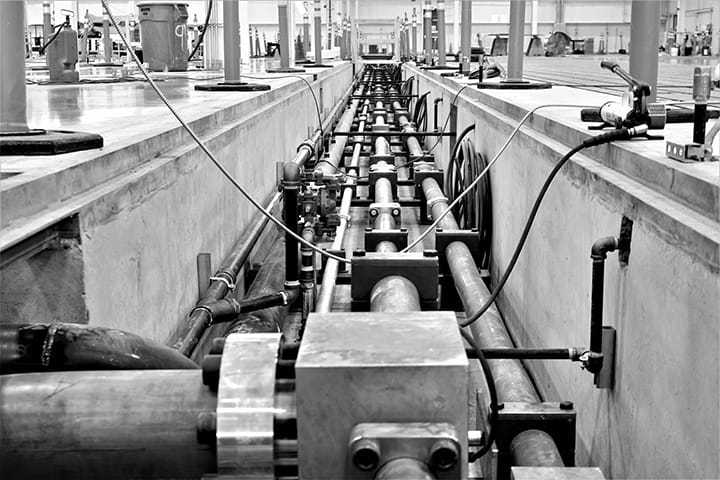
Challenge: A robotic assembly line experienced repeated hydraulic leaks every 8 to 10 months, causing costly production interruptions.
Root Cause Analysis:
- Original NBR O-rings operated above recommended temperatures.
- Compression set exceeded acceptable limits.
- Maintenance intervals were inconsistent.
Engineering Solution:
- Upgrade to premium FKM O-rings.
- Optimize groove dimensions.
- Improve hydraulic cooling performance.
Measured Results After 24 Months:
- Leakage incidents reduced by 96%.
- Production uptime increased by 12%.
- Maintenance costs reduced by 41%.
- Seal replacement intervals doubled.
Common O-Ring Failure Modes in Manufacturing Equipment
Compression Set Failure
Occurs when elastomers lose elastic recovery after prolonged compression.
Chemical Degradation
Incompatible chemicals may cause swelling, cracking, or material softening.
Thermal Aging
Excessive temperatures accelerate polymer breakdown.
Extrusion Damage
High pressure can force material into sealing gaps, causing permanent damage.
Installation Damage
Sharp edges and improper assembly methods frequently damage sealing surfaces.
🔬 Field Failure Analysis Statistics:
- Compression Set: 31%
- Installation Damage: 25%
- Chemical Incompatibility: 19%
- Thermal Degradation: 15%
- Extrusion Damage: 10%
Best Practices for Maximizing O-Ring Reliability
- Select materials based on actual operating conditions.
- Verify media compatibility before installation.
- Control operating temperatures.
- Use proper lubrication during assembly.
- Inspect sealing grooves regularly.
- Implement preventive maintenance schedules.
- Use high-quality O-rings from qualified suppliers.
✅ EEAT Engineering Recommendation: The most successful manufacturing facilities treat O-rings as engineered reliability components rather than commodity parts. Proper selection, validation testing, installation practices, and maintenance planning significantly reduce lifecycle costs and improve production stability.
Frequently Asked Questions
1. Why are O-rings important in manufacturing equipment?
O-rings prevent leakage, maintain pressure integrity, protect equipment from contamination, and improve operational reliability.
2. Which O-ring material is most commonly used in industrial manufacturing?
NBR remains the most common choice for hydraulic systems, while FKM is preferred for higher temperatures and chemical resistance.
3. How long do industrial O-rings typically last?
Service life varies based on operating conditions but can range from several years to more than fifteen years with proper material selection.
4. What is the most common cause of O-ring failure?
Compression set, thermal aging, installation damage, and chemical incompatibility are the most frequently observed failure mechanisms.
5. How can manufacturers reduce O-ring-related downtime?
By selecting appropriate materials, conducting preventive inspections, maintaining proper operating conditions, and using validated high-performance sealing solutions.