
Cleanroom O-Rings
Cleanroom O-Rings
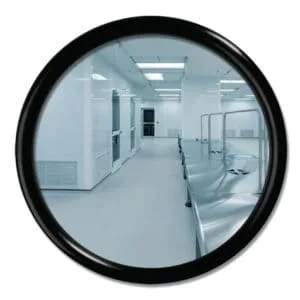
In cleanroom environments, sealing components are not only responsible for preventing leakage — they also play an important role in controlling contamination.Traditional O-rings may release particles, extractable substances, or volatile compounds during operation, which can affect sensitive manufacturing processes. In industries such as semiconductor production, medical equipment, biotechnology, and vacuum systems, even microscopic contamination can reduce product quality and increase production costs.Cleanroom O-Rings are specially manufactured, cleaned, and packaged to minimize particle contamination and provide reliable sealing performance in controlled environments.
What Makes a Cleanroom O-Ring Different?
A cleanroom-grade O-ring is not simply a standard O-ring produced in a cleaner workshop. It requires additional control throughout the manufacturing process.
Low Particle Generation
During semiconductor and precision manufacturing, particles released from sealing materials can become defects on finished products.
Cleanroom O-rings are processed to reduce:
- Surface particles
- Manufacturing residues
- Foreign contamination
- Packaging-related contaminants
This helps maintain cleaner process environments and improves equipment reliability.
Low Outgassing Performance
Vacuum and high-purity applications require sealing materials with minimal gas release.
Outgassing from elastomers can:
- Increase vacuum pump load
- Affect chamber cleanliness
- Introduce unwanted chemical residues
For vacuum equipment and semiconductor tools, low-outgassing materials such as high-purity FFKM, FKM, and specialty elastomers are commonly selected depending on process requirements.
Common Materials for Cleanroom O-Rings
Different cleanroom applications require different sealing materials.
FFKM (Perfluoroelastomer)
Recommended for:
- Semiconductor processing equipment
- Plasma environments
- High-temperature vacuum systems
- Aggressive chemical applications
Advantages:
- Excellent chemical resistance
- Low contamination characteristics
- High-temperature capability
- Long service life in extreme environments
FKM (Viton®)
Recommended for:
- General vacuum systems
- Chemical handling equipment
- Industrial clean applications
Advantages:
- Good heat resistance
- Excellent oil and chemical resistance
- More economical than FFKM
Silicone (VMQ)
Recommended for:
- Medical equipment
- Laboratory instruments
- Low-temperature applications
Advantages:
- Excellent flexibility
- Wide temperature range
- Good cleanliness performance
EPDM
Recommended for:
- Water systems
- Pharmaceutical equipment
- Steam sterilization applications
Advantages:
- Excellent resistance to water and steam
- Good compatibility with cleaning processes
Applications of Cleanroom O-Rings
Cleanroom sealing solutions are widely used in industries where contamination control is critical.
Semiconductor Manufacturing
Used in:
- Vacuum chambers
- Etching equipment
- Deposition systems
- Wafer processing tools
Semiconductor processes require seals that can withstand plasma, chemicals, vacuum conditions, and repeated thermal cycling.
Medical and Pharmaceutical Equipment
Cleanroom O-rings help maintain hygienic and reliable sealing in:
- Drug manufacturing equipment
- Sterilization systems
- Laboratory instruments
- Fluid handling devices
Aerospace and Precision Engineering
Used where reliability, cleanliness, and long service intervals are required.
Cleanroom Processing and Packaging Requirements
For contamination-sensitive applications, manufacturing conditions are as important as the elastomer itself.
Professional cleanroom O-ring production may include:
✔ Controlled manufacturing environment
✔ Specialized cleaning procedures
✔ Particle inspection
✔ Clean packaging
✔ Material traceability documentation
These processes help prevent contamination introduced by the seal itself.
How to Select the Right Cleanroom O-Ring
Choosing the correct cleanroom seal requires more than selecting a “clean” material.
Engineers should evaluate:
1. Operating Environment
Consider:
- Vacuum level
- Temperature range
- Chemical exposure
- Plasma or radiation exposure
2. Cleanliness Requirements
Different applications may require different cleanliness levels, such as:
- General controlled environments
- Semiconductor cleanrooms
- Ultra-high purity systems
3. Seal Performance Requirements
Evaluate:
- Compression set resistance
- Elastic recovery
- Service life
- Installation conditions
Why Cleanroom O-Rings Improve Equipment Reliability
A sealing failure in a normal industrial system may cause leakage. In a clean manufacturing environment, it may also cause:
- Product contamination
- Equipment downtime
- Process interruption
- Increased production costs
Cleanroom O-rings provide a specialized sealing solution by combining material performance with contamination control, helping manufacturers maintain stable and reliable production environments.
For semiconductor, medical, pharmaceutical, and other high-purity industries, selecting the correct cleanroom sealing material is an essential part of process quality management.