Understanding Industrial Valve Sealing Systems
Industrial valves are fundamental components in fluid handling systems across oil & gas, chemical processing, water treatment, mining, power generation, pharmaceutical manufacturing, and food production. Every valve relies on an effective sealing system to prevent internal and external leakage while maintaining pressure integrity, operational safety, and process efficiency.
An effective Valve Sealing solution is never determined by a single sealing material. Engineers evaluate pressure, temperature, media compatibility, shaft movement, installation tolerances, thermal expansion, corrosion resistance, wear characteristics, maintenance intervals, and applicable international standards before selecting an appropriate sealing design.
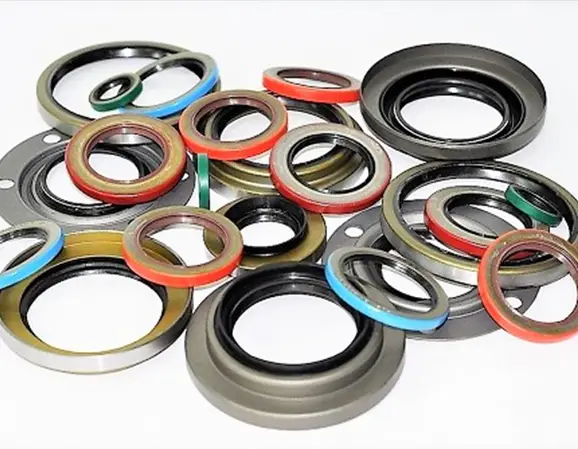
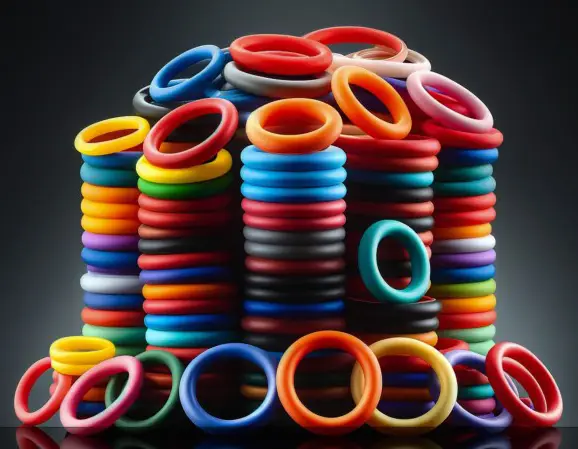
Valve Sealing technologies include elastomer O-rings, PTFE seals, graphite packing, spiral wound gaskets, metal seals, spring-energized seals, bonded seals, lip seals, mechanical seals, and customized composite sealing systems for demanding industrial environments.
✔ Engineering Insight
The best seal is not necessarily the one with the highest temperature rating. The correct seal is the one that matches the complete operating environment, installation method, pressure fluctuations, chemical compatibility, and expected maintenance cycle.
Why Valve Sealing Determines Industrial Success
Leakage is one of the most common causes of production loss in industrial facilities. Even a minor leak may increase maintenance costs, reduce equipment efficiency, contaminate products, create environmental hazards, and expose operators to dangerous chemicals.
Well-designed sealing systems improve:
- ✔ Process reliability
- ✔ Operational safety
- ✔ Energy efficiency
- ✔ Reduced emissions
- ✔ Lower maintenance costs
- ✔ Longer equipment life
- ✔ Stable pressure control
- ✔ Better regulatory compliance
International industries increasingly adopt predictive maintenance strategies where seal condition is monitored before catastrophic failure occurs. This approach minimizes unexpected shutdowns while maximizing equipment availability.
Major Valve Sealing Locations
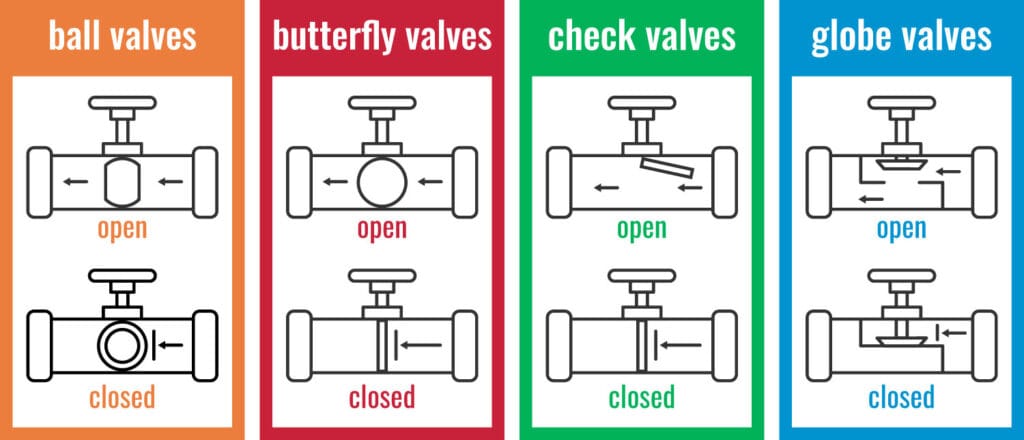
Body Seal
Prevents leakage between valve body components. Common sealing methods include metal gaskets, spiral wound gaskets, PTFE gaskets, and graphite seals.
Stem Seal
The valve stem moves continuously during operation. Stem sealing commonly uses packing rings, O-rings, V-rings, spring-energized seals, or live-loaded packing systems.
Seat Seal
The valve seat controls internal shutoff performance. Soft seats provide excellent sealing for lower temperatures, while metal seats withstand severe service conditions.
Common Valve Sealing Materials
NBR (Nitrile Rubber)
Excellent resistance to petroleum oils and hydraulic fluids. Typical hardness ranges from 70 to 90 Shore A. Standard operating temperatures are approximately -40°C to 120°C depending on formulation.
FKM (Viton® Type Fluoroelastomer)
Offers excellent resistance to fuels, oils, chemicals, and elevated temperatures. Typical service temperatures reach approximately 200°C depending on compound formulation.
EPDM
Excellent for water, steam, glycol, and weather resistance but generally unsuitable for petroleum oils.
PTFE
PTFE provides outstanding chemical resistance, low friction, and service temperatures approaching 260°C. Because PTFE has limited elasticity, spring energizers are often incorporated.
Flexible Graphite
Widely used for high-temperature valves exceeding 450°C. Graphite performs exceptionally well in steam and thermal cycling environments.
Metal Seals
Stainless steel, Inconel®, Monel®, and other alloys are selected where temperatures and pressures exceed elastomer capabilities.
Engineering Properties Used During Material Selection
| Property | Engineering Importance |
|---|---|
| Hardness | Measured using Shore A, Shore D or Rockwell depending on material. |
| Compression Set | Determines recovery after long-term compression. |
| Thermal Conductivity | Metal seals dissipate heat much faster than elastomers. |
| Chemical Resistance | Must match process media to avoid swelling or degradation. |
| Wear Resistance | Critical for dynamic valve stems. |
Relevant ASTM and ISO Standards
Industrial sealing products are frequently designed or tested according to internationally recognized standards. Examples include:
- ASTM D2000 — Classification system for rubber materials
- ASTM D1414 — O-ring dimensional standards
- ASTM D395 — Compression set testing
- ASTM D2240 — Rubber hardness measurement
- ISO 3601 — O-ring dimensions and quality
- ISO 6194 — Rotary shaft lip seals
- ISO 5208 — Industrial valve pressure testing
- API 598 — Valve inspection and pressure testing
- API 622 — Fugitive emission testing for packing
- ISO 15848 — Industrial valve fugitive emissions
Understanding Thermal Conductivity During Valve Sealing
Thermal conductivity influences heat transfer through sealing interfaces. Copper possesses thermal conductivity near 390–400 W/m·K, while stainless steel is much lower, typically around 15–20 W/m·K. Elastomers exhibit extremely low thermal conductivity, often below 0.5 W/m·K.
These differences affect thermal expansion, temperature gradients, and sealing stress under continuous operation.
Annealed Copper Seals and Their Working Principle
Annealed copper sealing washers are softened through controlled heat treatment followed by cooling. Annealing reduces internal stresses, increases ductility, and allows copper to plastically deform under bolt preload.
Why Annealed Copper Works
When properly compressed, the soft copper conforms to microscopic machining marks on mating surfaces, filling tiny surface irregularities and creating a reliable metal-to-metal seal. This principle explains why annealed copper remains widely used in hydraulic systems, fuel systems, and high-temperature threaded fittings.
Corrosion Resistance Considerations
Material compatibility must consider both the process media and external environment.
- Stainless steel resists many corrosive fluids.
- PTFE withstands thousands of chemical compounds.
- FKM performs well with fuels and hydrocarbons.
- EPDM excels in hot water and steam.
- Graphite tolerates high temperatures but may oxidize in specific environments.
- Copper offers excellent thermal conductivity but may react with ammonia-containing chemicals.
Valve Sealing selection should always include a chemical compatibility review before production begins.
Installation Best Practices
Improper installation accounts for a significant percentage of premature seal failures.
- Inspect sealing surfaces carefully.
- Remove burrs and contamination.
- Verify groove dimensions.
- Lubricate compatible elastomer seals when recommended.
- Use calibrated torque tools.
- Tighten flange bolts using cross-pattern sequences.
- Avoid twisting O-rings during installation.
- Protect sealing lips from sharp edges.
Valve Sealing Selection Guide

| Condition | Typical Recommendation |
|---|---|
| High temperature steam | Flexible graphite |
| Aggressive chemicals | PTFE or spring energized PTFE |
| Hydraulic oil | NBR or FKM |
| Ultra-high pressure | Metal seal systems |
Failure Mode Analysis (Industry Example)
Failure Mode Analysis (Illustrative Industry Example)
The following example is provided for engineering education and reflects common industry experience rather than actual customer data.
A refinery gate valve developed stem leakage after eighteen months of operation. Inspection identified hardened elastomer packing, elevated compression set, and thermal aging due to prolonged exposure above the compound’s recommended service temperature.
The maintenance team upgraded to graphite packing with live loading, reducing future leakage during subsequent maintenance intervals.
Case Example (Engineering Experience)
Case Example
The following case represents a generalized engineering scenario rather than a specific customer project.
A chemical processing facility experienced repeated valve maintenance because EPDM seals were installed in hydrocarbon service. After reviewing media compatibility, engineers replaced the sealing system with FKM compounds that matched the process fluid. Maintenance frequency decreased significantly while improving operational reliability.
Laboratory Test Example
Laboratory Test Example
This laboratory example illustrates common engineering verification procedures and does not represent actual factory performance data.
Compression set testing may be conducted according to ASTM D395 by compressing elastomer specimens under controlled temperature and time conditions. Engineers compare permanent deformation among multiple compounds before selecting production materials.
Additional laboratory evaluations commonly include tensile strength, elongation, hardness verification, accelerated aging, chemical immersion, and leak-tightness testing.
Common Causes of Valve Seal Failure
- Incorrect material selection
- Thermal degradation
- Chemical attack
- Improper installation
- Excessive shaft wear
- Pressure spikes
- Seal extrusion
- Insufficient lubrication
- Compression set
- Aging during storage
Routine inspection and predictive maintenance greatly reduce unexpected failures.
Valve Sealing solutions should always be selected using complete engineering data rather than relying solely on temperature or pressure ratings.
Future Trends in Valve Sealing Technology
Industrial sealing continues to evolve with lower-emission packing systems, advanced PTFE composites, engineered thermoplastics, spring-energized seals, finite element analysis, digital condition monitoring, predictive maintenance, and environmentally responsible material development.
Manufacturers increasingly integrate laboratory testing, finite element simulation, and field validation to optimize seal performance before commercial production.
Valve Sealing engineering will continue to play an essential role in improving industrial safety, equipment reliability, environmental protection, and long-term operating efficiency.
Frequently Asked Questions
1. Which material is best for high-temperature valve sealing?
Flexible graphite, metal seals, and certain PTFE-based designs are commonly selected depending on pressure, temperature, and media compatibility.
2. How is valve sealing material selected?
Selection considers operating temperature, pressure, chemical compatibility, hardness, compression set, movement type, applicable ASTM or ISO standards, and maintenance requirements.
3. Why do valve seals fail prematurely?
Typical causes include incorrect material selection, improper installation, thermal aging, chemical degradation, extrusion, excessive wear, and inadequate maintenance.
4. Why are annealed copper seals used?
Annealed copper deforms plastically under bolt load, filling microscopic surface imperfections and creating reliable metal-to-metal sealing for many hydraulic and high-temperature applications.
5. Which international standards are commonly referenced for valve sealing?
Frequently referenced standards include ASTM D2000, ASTM D395, ASTM D2240, ASTM D1414, ISO 3601, ISO 6194, ISO 5208, API 598, API 622, and ISO 15848 depending on the sealing application.