Understanding Compression Set, Stress Relaxation, and Rebound in O-Ring Performance
O-rings are among the most widely used sealing components in hydraulic systems, pneumatic equipment, automotive assemblies, industrial machinery, aerospace equipment, medical devices, food processing systems, and electronic connectors. Their sealing capability depends not only on the material itself but also on several critical mechanical properties that determine long-term sealing reliability. Among these properties, Compression Set, Stress Relaxation, and Elastic Rebound are considered the three most important indicators of sealing durability.
When engineers evaluate an o-ring, they are not simply looking at hardness or tensile strength. They must understand how the material behaves after thousands of hours under compression, elevated temperature, aggressive chemicals, pressure cycling, and repeated installation. A material with excellent tensile strength may still fail if it permanently loses its elasticity.
🔍 Key Engineering Principle
An O-ring provides sealing force because its elastic deformation continuously pushes against the groove and mating surfaces. Anything that reduces this sealing force—including permanent deformation, stress decay, or insufficient rebound—can eventually result in leakage.
How an O-Ring Creates a Reliable Seal
Unlike gaskets that rely primarily on bolt load, an O-ring creates sealing force through elastic compression. During installation, the O-ring is squeezed approximately 15%–30% depending on application design. This initial squeeze creates contact pressure that blocks fluid or gas from escaping.
Once pressure enters the system, internal pressure further energizes the seal by pushing the elastomer against the groove walls. Therefore, maintaining elastic recovery throughout the service life becomes essential.
✔ Factors influencing sealing force include:
- Material hardness (Shore A)
- Compression ratio
- Temperature
- Chemical exposure
- Surface finish
- Groove geometry
- Stress relaxation characteristics
- Compression set resistance
- Elastic rebound capability
What Is Compression Set?
Compression Set measures the permanent deformation remaining after an elastomer has been compressed for a specified time under controlled temperature and then allowed to recover. It represents the material’s ability to return to its original thickness.
Lower Compression Set values indicate better elastic recovery and longer sealing performance. High Compression Set means the O-ring remains flattened after load removal, reducing sealing force.
Typical Industry Standard
Compression Set testing is commonly performed according to ASTM D395 Method B or ISO 815. Test conditions often include 70°C, 100°C, 125°C, 150°C, or higher depending on material application.
Typical Compression Set Performance
| Material | Typical Performance |
|---|---|
| NBR | Good at moderate temperatures |
| FKM | Excellent for high-temperature oil sealing |
| EPDM | Excellent in hot water and steam |
| Silicone | Excellent low-temperature flexibility but moderate compression set |
| FFKM | Outstanding in severe chemical environments |
Understanding Stress Relaxation
Stress Relaxation refers to the gradual reduction of sealing force while the O-ring remains compressed. Unlike Compression Set, the O-ring may appear physically unchanged but no longer provides sufficient sealing pressure.
This phenomenon becomes increasingly significant in static seals operating continuously at elevated temperatures. Polymer molecular chains slowly rearrange over time, causing the contact force against sealing surfaces to decrease.
📌 Engineering Observation
Stress Relaxation often causes leakage long before visible compression set becomes noticeable. Therefore, measuring residual sealing force is critical for long-term sealing evaluations.
Factors Affecting Stress Relaxation
- Continuous operating temperature
- Material formulation
- Cross-link density
- Compression ratio
- Chemical aging
- Exposure time
- Oxidation resistance
Elastic Rebound Explained
Elastic rebound describes how rapidly and completely an O-ring returns to its original geometry after deformation. High rebound enables the seal to compensate for vibration, thermal expansion, pressure fluctuations, and manufacturing tolerances.
Dynamic applications especially depend on excellent rebound because shaft motion continuously changes contact conditions.
⚙ Dynamic Applications
Hydraulic cylinders, pneumatic valves, robotic actuators, pumps, rotating shafts, and quick-connect couplings all require excellent rebound performance.
Relationship Between Hardness and Sealing Performance
O-ring hardness is normally measured using Shore A according to ASTM D2240. Typical industrial hardness ranges from 50 to 90 Shore A.
| Hardness | Typical Application |
|---|---|
| 50-60 Shore A | Low-pressure static sealing |
| 70 Shore A | General industrial standard |
| 80 Shore A | Hydraulic equipment |
| 90 Shore A | High-pressure sealing with backup rings |
Choosing the proper o-ring hardness requires balancing sealing force, extrusion resistance, installation convenience, and rebound capability.
Common Elastomer Materials
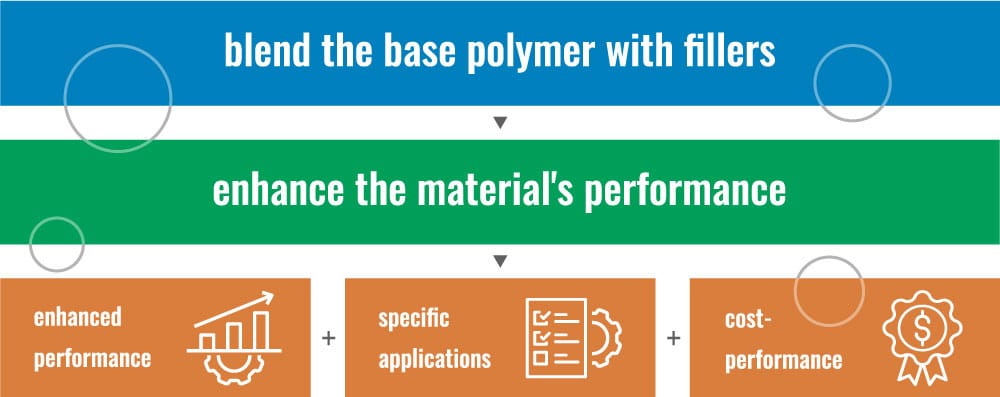
Material selection largely determines compression set, stress relaxation resistance, chemical compatibility, and service temperature.
- NBR: Excellent petroleum oil resistance
- FKM: Superior high-temperature and chemical resistance
- EPDM: Outstanding steam and weather resistance
- Silicone: Exceptional flexibility at low temperatures
- HNBR: Excellent mechanical durability
- FFKM: Premium chemical resistance for semiconductor and aerospace industries
Engineering Standards Commonly Used
- ASTM D395 — Compression Set
- ASTM D2240 — Hardness
- ASTM D412 — Tensile Properties
- ASTM D471 — Fluid Compatibility
- ISO 815 — Compression Set
- ISO 3601 — O-ring Dimensions and Quality Requirements
- ISO 48 — Rubber Hardness
Installation Guidelines
Correct installation significantly improves sealing reliability.
- Avoid twisting during assembly.
- Use compatible lubrication.
- Prevent sharp edge damage.
- Maintain recommended groove dimensions.
- Avoid over-compression.
- Inspect for contamination before installation.
- Replace aged seals during maintenance.
Selecting the proper o-ring together with proper groove design is equally important for long-term sealing reliability.
Failure Mode Analysis (Industry Example)
Failure Mode Analysis (Illustrative Engineering Example)
An industrial hydraulic valve developed leakage after approximately 18 months of continuous operation at elevated temperature. Inspection showed minimal physical damage but significant loss of sealing force.
Engineering analysis indicated stress relaxation caused insufficient contact pressure even though compression set remained within acceptable limits. Replacing the original NBR material with a high-temperature FKM formulation significantly improved long-term sealing stability.
This example represents a typical engineering scenario rather than actual customer testing data.
Laboratory Test Example
Laboratory Test Example (Illustrative Only)
A laboratory may evaluate compression set by compressing standardized O-ring specimens according to ASTM D395 Method B at 125°C for 70 hours. After cooling, specimen thickness is measured and compared with the original dimensions to calculate permanent deformation.
Stress relaxation testing may involve monitoring residual sealing force over several hundred or thousand hours under constant compression. These procedures illustrate standard engineering evaluation methods and do not represent proprietary factory data.
Case Example (Engineering Experience)
Case Example (Industry Experience)
An equipment manufacturer experienced repeated leakage in outdoor hydraulic connectors operating under frequent temperature cycling. Engineering review found that the selected elastomer exhibited acceptable hardness but insufficient rebound at low temperatures. Switching to HNBR improved elastic recovery during thermal cycling while maintaining oil resistance.
This case is intended solely as a representative engineering example and does not describe any identifiable customer or production facility.
Selecting the Right O-Ring for Long Service Life
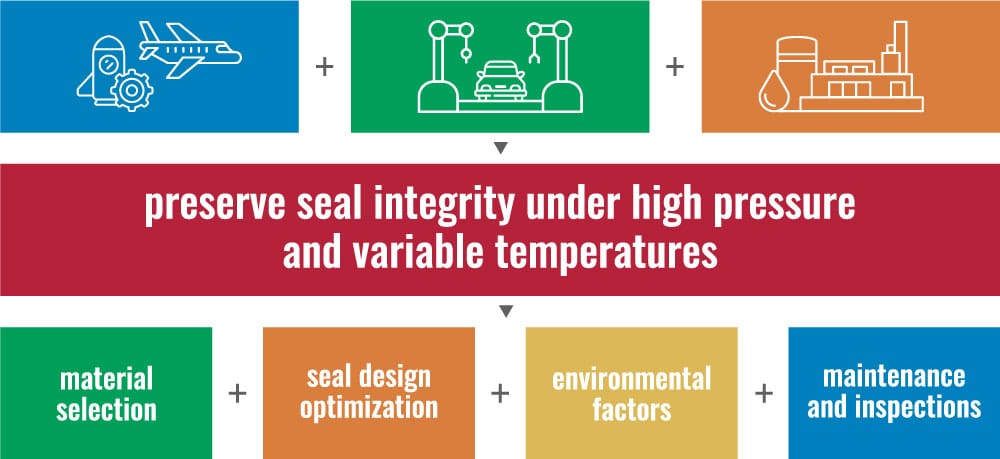
Successful sealing depends on balancing material properties, operating temperature, media compatibility, hardness, groove design, pressure, and long-term mechanical behavior. Compression Set, Stress Relaxation, and Elastic Rebound should always be evaluated together rather than individually.
For demanding industrial applications, engineers should combine standardized laboratory testing with practical field experience when selecting an o-ring capable of delivering reliable long-term sealing performance.
Frequently Asked Questions
1. What is the difference between Compression Set and Stress Relaxation?
Compression Set measures permanent deformation after compression is removed, while Stress Relaxation measures the loss of sealing force during continuous compression.
2. Which O-ring material has the best high-temperature performance?
FKM and FFKM generally provide superior high-temperature resistance, although the optimal choice depends on operating media and application requirements.
3. Why is elastic rebound important?
Elastic rebound allows the O-ring to maintain sealing contact despite vibration, thermal expansion, pressure fluctuations, and mechanical movement.
4. Which international standards are commonly used for O-ring testing?
ASTM D395, ASTM D2240, ASTM D412, ASTM D471, ISO 815, and ISO 3601 are among the most widely recognized standards for evaluating elastomer sealing materials.
5. How can engineers reduce premature O-ring failure?
Select compatible elastomer materials, optimize groove dimensions, maintain proper compression, avoid installation damage, operate within temperature and pressure limits, and verify material performance using recognized ASTM or ISO testing standards.