Modern vehicles are designed to deliver higher fuel economy, lower emissions, and longer service life. While engines, transmissions, and electronic control systems receive much of the attention, sealing technology plays an equally important engineering role. Proper sealing minimizes fluid leakage, maintains optimal lubrication, preserves compression, reduces contamination, and helps every mechanical system operate with maximum efficiency.
Automotive engineers understand that even a minor loss of oil pressure, coolant integrity, hydraulic efficiency, or combustion sealing can gradually reduce vehicle efficiency. High-performance Seals help eliminate these losses while extending component lifespan and lowering maintenance costs.
🚗 Engineering Insight: Fuel efficiency is influenced not only by engine combustion but also by friction reduction, pressure retention, lubricant management, and contamination control—all of which depend heavily on proper sealing systems.
Why Seals Matter in Automotive Fuel Efficiency
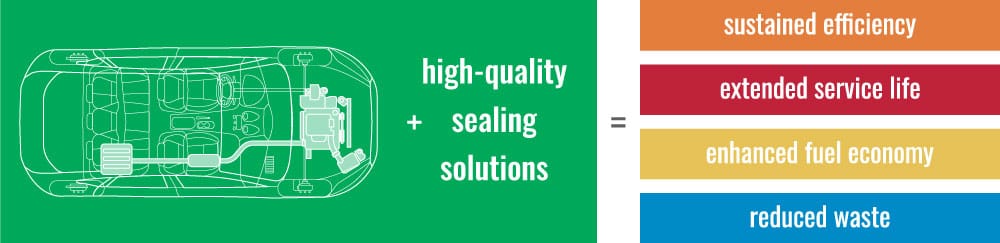
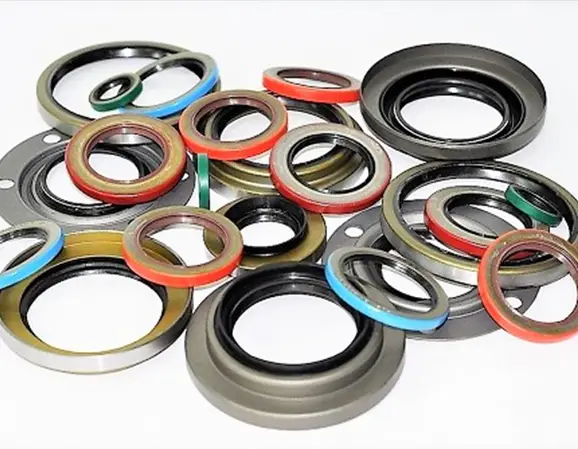
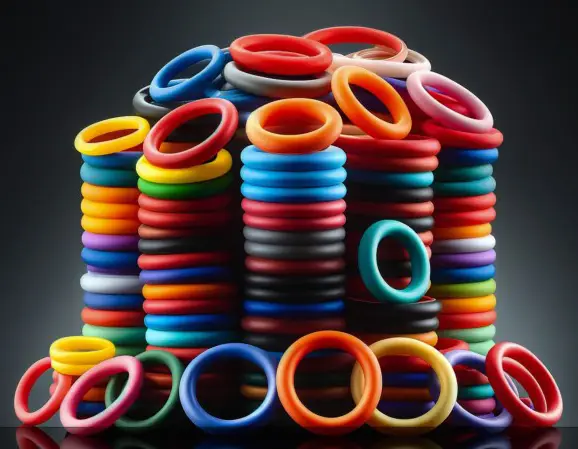
Vehicle efficiency depends on keeping every system operating exactly as engineers intended. Dynamic seals, rotary shaft seals, O-rings, hydraulic seals, gasket materials, and static seals all contribute by preventing unwanted leakage and maintaining internal pressures.
Without reliable sealing:
- Engine oil escapes, reducing lubrication efficiency.
- Coolant leaks increase operating temperature.
- Combustion pressure decreases.
- Transmission fluid contamination increases friction.
- Wheel bearing grease escapes.
- Hydraulic systems require more pumping energy.
Every one of these conditions increases fuel consumption, even if the increase appears relatively small individually.
How Engine Seals Reduce Fuel Consumption
Maintaining Proper Compression
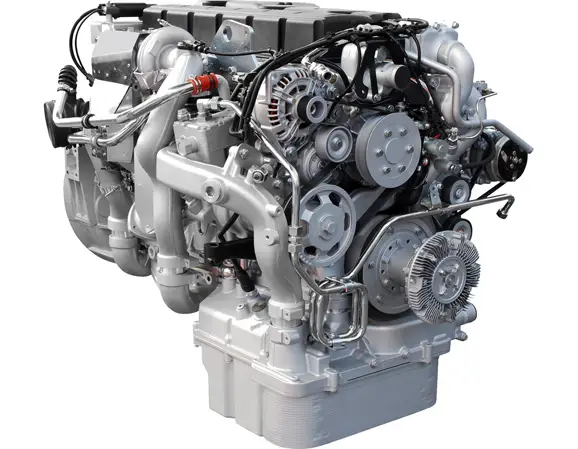
Cylinder compression directly affects thermal efficiency. Head gaskets, valve stem seals, piston ring sealing systems, and injector seals ensure combustion pressure remains inside the combustion chamber.
Loss of compression causes incomplete combustion, reduced engine power, increased throttle demand, and ultimately higher fuel consumption.
🔥 Higher Compression Retention = Better Combustion Efficiency = Lower Fuel Consumption
Reducing Internal Friction
Modern crankshaft seals and camshaft seals prevent lubricant leakage while maintaining an optimized oil film between moving components.
Stable lubrication reduces:
- Boundary friction
- Wear particles
- Metal-to-metal contact
- Heat generation
- Energy losses
Lower friction means less engine power is wasted overcoming mechanical resistance.
Transmission Seals and Powertrain Efficiency
Automatic transmissions rely on hydraulic pressure for gear engagement. Any leakage reduces hydraulic efficiency and forces transmission pumps to work harder.
Proper transmission seals:
- Maintain hydraulic pressure
- Reduce clutch slippage
- Protect transmission fluid
- Prevent contamination
- Improve gear shift precision
These improvements directly reduce drivetrain energy loss.
Many modern automatic transmissions use fluorocarbon (FKM) or hydrogenated nitrile (HNBR) elastomer seals because of their excellent temperature resistance and compatibility with synthetic transmission fluids.
Wheel Bearing Seals Reduce Rolling Resistance
Wheel bearing seals prevent grease leakage while excluding dust, road salt, and water.
When contaminants enter bearings:
- Lubricant deteriorates.
- Bearing friction increases.
- Rolling resistance rises.
- Vehicle efficiency decreases.
Well-designed bearing seals maintain optimal grease viscosity over long service intervals.
Common Automotive Seal Materials
| Material | Temperature | Advantages | Applications |
|---|---|---|---|
| NBR | -40°C to 120°C | Oil resistance | Oil seals |
| HNBR | -40°C to 150°C | Wear resistance | Timing systems |
| FKM | -20°C to 200°C | Chemical resistance | Turbochargers |
| PTFE | Up to 260°C | Ultra-low friction | High-speed shafts |
Engineering Standards Commonly Referenced
Automotive sealing products are frequently designed and validated according to internationally recognized engineering standards. Depending on the application, manufacturers may reference:
- ISO 3601 for O-ring dimensions and tolerances.
- ASTM D2000 for rubber material classification.
- ASTM D2240 for Shore hardness measurement.
- ASTM D471 for fluid compatibility testing.
- ISO 6194 for rotary shaft lip seals.
- ISO 9001 quality management systems.
- IATF 16949 automotive manufacturing quality requirements.
Material hardness commonly ranges from 70 Shore A for general sealing to 90 Shore A for higher-pressure applications.
Thermal Conductivity and Heat Management
Although elastomeric seals are not primary heat transfer components, metallic sealing elements such as copper washers and aluminum crush washers contribute to thermal stability.
Typical thermal conductivity values include:
- Copper: approximately 390–400 W/m·K
- Aluminum: approximately 205 W/m·K
- Steel: approximately 45–60 W/m·K
- Rubber elastomers: approximately 0.15–0.30 W/m·K
Higher thermal conductivity helps dissipate localized heat around injectors, turbochargers, and hydraulic systems.
Corrosion Resistance and Long-Term Efficiency
Corrosion causes surface damage that accelerates seal wear. Engineers often select stainless steel, anodized aluminum, coated steel, brass, or fluoropolymer-coated components for aggressive environments.
Corrosion protection extends sealing life while reducing maintenance frequency.
Annealed Copper Washers and Fuel Efficiency
Annealed copper washers are frequently used beneath fuel injectors, oil drain plugs, and hydraulic fittings.
The annealing process softens copper, allowing the washer to plastically deform and conform to mating surfaces under bolt preload. This deformation fills microscopic machining marks and creates a reliable metal-to-metal seal.
🛠 Engineering Principle: Annealed copper does not rely on elasticity alone. Instead, controlled plastic deformation creates a leak-tight seal capable of withstanding thermal cycling.
Proper Seal Installation Guidelines
Correct installation is essential for achieving maximum efficiency.
- Inspect shaft surface finish.
- Verify housing dimensions.
- Lubricate sealing lips before installation.
- Avoid twisting elastomer seals.
- Use proper installation tools.
- Apply manufacturer-recommended torque values.
- Prevent contamination during assembly.
Even premium seals cannot compensate for poor installation practices.
For additional sealing technologies and engineering resources, visit Seals.
Seal Selection Guide
| Operating Condition | Recommended Material |
|---|---|
| Engine Oil | NBR / HNBR |
| Turbocharger | FKM |
| High Speed Shaft | PTFE |
| Hydraulic Systems | PU / HNBR |
Failure Mode Analysis (Industry Example)
Example Only — Industry Experience
A rotary shaft seal operating under elevated temperatures experienced premature leakage after several thousand operating hours. Inspection identified hardened elastomer lips, shaft wear tracks, and lubricant contamination. Root-cause analysis suggested excessive operating temperature combined with material incompatibility.
Recommended corrective actions included upgrading from NBR to FKM material, improving shaft surface finish, and optimizing lubrication intervals.
Laboratory Test Example
Illustrative Laboratory Example
An engineering laboratory may evaluate sealing performance using standardized leakage, pressure cycling, temperature cycling, and wear tests following applicable ASTM or ISO procedures. Such evaluations compare different elastomer materials under controlled operating conditions. The observations presented here are illustrative engineering examples rather than proprietary customer test data.
Case Example (Engineering Experience)

Representative Industry Case
A fleet maintenance program observed recurring oil leakage around front crankshaft seals on high-mileage commercial vehicles. Engineers reviewed installation procedures, shaft finish, operating temperature, and seal material compatibility. After adopting an upgraded FKM seal with improved installation tooling, leakage frequency decreased substantially during routine maintenance inspections. This example reflects common engineering practice and should not be interpreted as proprietary customer performance data.
Reliable sealing systems continue to support improved vehicle fuel efficiency by maintaining lubrication, reducing friction, preserving combustion pressure, preventing contamination, and extending component life. Advances in elastomer materials, precision manufacturing, and international quality standards ensure that modern automotive seals remain one of the most cost-effective methods for improving vehicle reliability and operational efficiency.
Learn more about advanced automotive Seals, engineering materials, and sealing solutions for modern vehicle systems.
For comprehensive sealing technologies covering engines, transmissions, hydraulic systems, and industrial applications, explore Seals.
Frequently Asked Questions
1. Can worn seals noticeably reduce fuel economy?
Yes. Worn seals may increase friction, allow lubricant leakage, reduce compression, or create hydraulic pressure losses, all of which can contribute to higher fuel consumption.
2. Which seal material is best for high-temperature automotive applications?
FKM and PTFE are commonly selected for high-temperature environments due to their excellent thermal stability and chemical resistance, although the optimal choice depends on the specific operating conditions.
3. Why are annealed copper washers commonly used?
Annealed copper washers deform under controlled bolt preload, filling microscopic surface imperfections and creating a reliable metal sealing interface capable of handling thermal cycling.
4. What standards are commonly used for automotive seals?
Common references include ISO 3601, ISO 6194, ASTM D2000, ASTM D2240, ASTM D471, ISO 9001, and IATF 16949, depending on material selection, dimensional requirements, and manufacturing quality systems.
5. How can proper seal installation improve fuel efficiency?
Correct installation prevents leakage, maintains lubrication, preserves hydraulic pressure, minimizes friction, and ensures long-term sealing performance, allowing vehicle systems to operate at their designed efficiency.