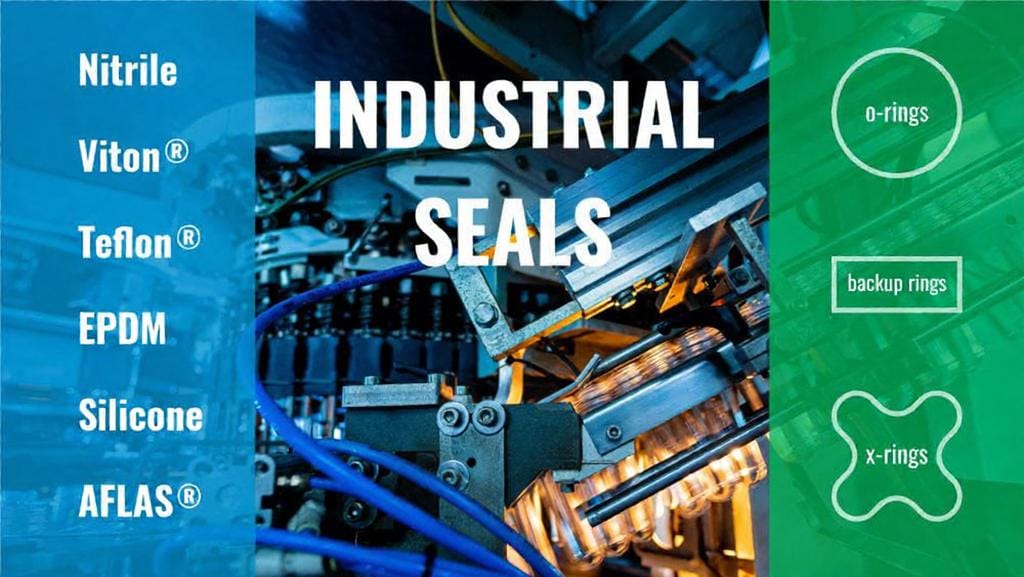
Understanding the Role of Industrial Seals in Modern Engineering
Industrial equipment operates under demanding conditions involving pressure, temperature fluctuations, aggressive chemicals, vibration, and continuous motion. Industrial seals are essential engineered components designed to prevent fluid leakage, block contaminants, maintain pressure, and improve operational reliability. Without properly selected sealing systems, even the most advanced machinery can experience premature wear, safety hazards, environmental contamination, and expensive downtime.
Modern sealing technology covers rotary shaft seals, hydraulic seals, pneumatic seals, O-rings, bonded seals, gasket systems, mechanical seals, backup rings, PTFE sealing components, and customized elastomer solutions. Every sealing application requires careful consideration of operating media, pressure, shaft speed, surface finish, installation method, and environmental exposure.
✅ Professional Insight: Selecting the correct seal is never based on dimensions alone. Engineers must evaluate mechanical loads, thermal expansion, chemical compatibility, lubrication conditions, shaft eccentricity, and maintenance intervals to achieve maximum service life.
Learn more about professional sealing solutions here: Industrial Seals.
What Are Industrial Seals?
Industrial seals are precision components installed between stationary or moving surfaces to control fluid migration, retain lubrication, exclude contaminants, and maintain system efficiency. Their functions extend beyond leak prevention—they also reduce friction, improve equipment reliability, minimize environmental emissions, and support compliance with industrial safety regulations.
Common sealing applications include:
- Hydraulic cylinders
- Gearboxes
- Industrial pumps
- Electric motors
- Compressors
- Construction machinery
- Agricultural equipment
- Marine propulsion systems
- Food processing machinery
- Chemical processing plants
Major Types of Industrial Seals
Rotary Shaft Oil Seals
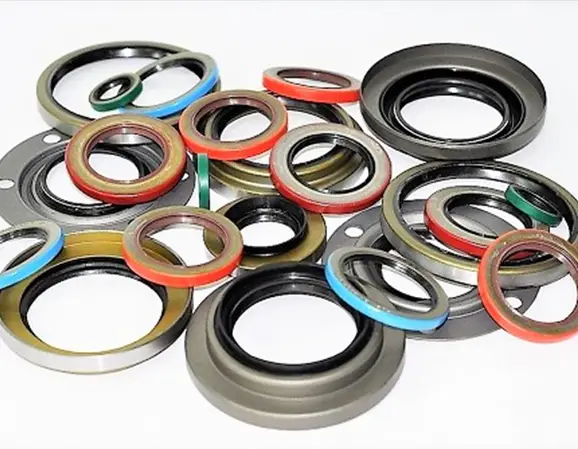
These seals prevent lubricant leakage around rotating shafts while excluding dust, water, and debris. Typical materials include NBR, HNBR, FKM, ACM, PTFE, and silicone.
Hydraulic Seals
Hydraulic seals maintain pressure inside cylinders and valves while minimizing internal leakage. They typically include piston seals, rod seals, guide rings, wear rings, and scraper seals.
O-Rings
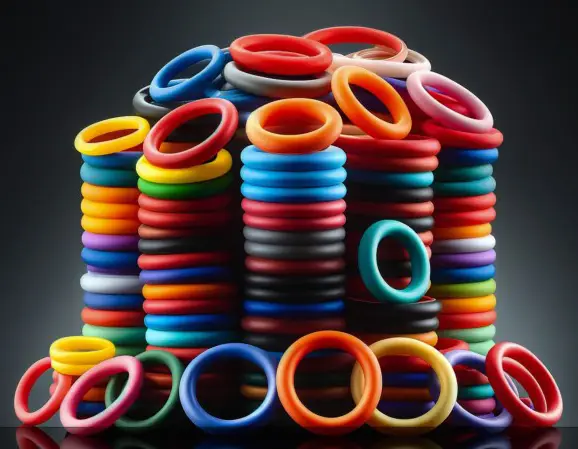
O-rings provide economical static and dynamic sealing. Proper squeeze percentage, groove dimensions, lubrication, and hardness significantly influence sealing performance.
Mechanical Seals
Mechanical seals replace traditional packing in centrifugal pumps, significantly reducing leakage while improving energy efficiency.
PTFE Seals
PTFE offers exceptional chemical resistance, low friction coefficient, and wide temperature capability, making it suitable for chemical plants, semiconductor manufacturing, and pharmaceutical equipment.
Common Materials Used in Industrial Seals
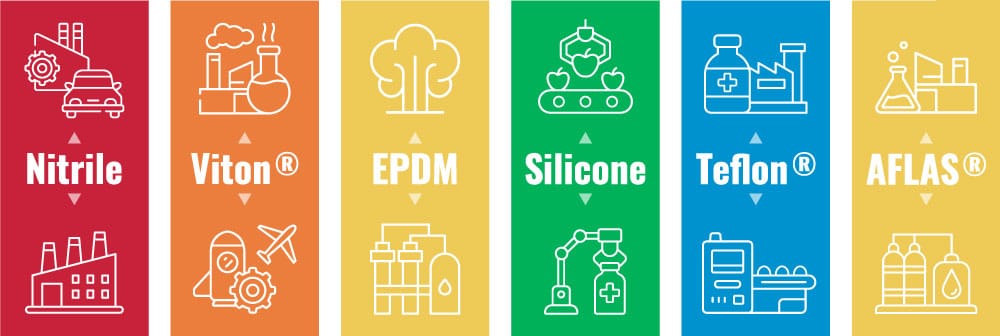
| Material | Typical Temperature | Advantages |
|---|---|---|
| NBR | -40°C to +120°C | Excellent oil resistance and economical |
| FKM | -20°C to +200°C | Outstanding chemical resistance |
| HNBR | -40°C to +150°C | Improved wear and ozone resistance |
| Silicone | -60°C to +200°C | Excellent flexibility at low temperatures |
| PTFE | -200°C to +260°C | Extremely low friction and chemical resistance |
Engineering Properties That Influence Seal Performance
Hardness: Elastomer seals are commonly manufactured between 60–90 Shore A. Rotary oil seals frequently use 70–75 Shore A, while high-pressure hydraulic seals may exceed 90 Shore A depending on design.
Thermal Conductivity: Metallic sealing components dissipate heat efficiently, whereas elastomers act as thermal insulators. Proper lubrication becomes increasingly important as operating temperature rises.
Corrosion Resistance: Stainless steel reinforcement rings improve corrosion resistance in marine and chemical environments. FKM and PTFE outperform conventional NBR when exposed to aggressive chemicals.
📌 Engineering Tip: Material compatibility should always be verified against the actual operating fluid rather than simply selecting a seal based on temperature.
Industry Standards Frequently Referenced
Industrial sealing products are commonly designed or evaluated according to internationally recognized standards, including:
- ISO 6194 — Rotary shaft lip-type seals
- ISO 3601 — O-rings
- ASTM D2000 — Rubber material classification
- ASTM D2240 — Shore hardness testing
- ASTM D471 — Fluid immersion testing
- ASTM D412 — Tensile properties of vulcanized rubber
- ISO 1629 — Rubber designation system
- ISO 286 — Shaft and bore tolerances
Seal Selection Guide
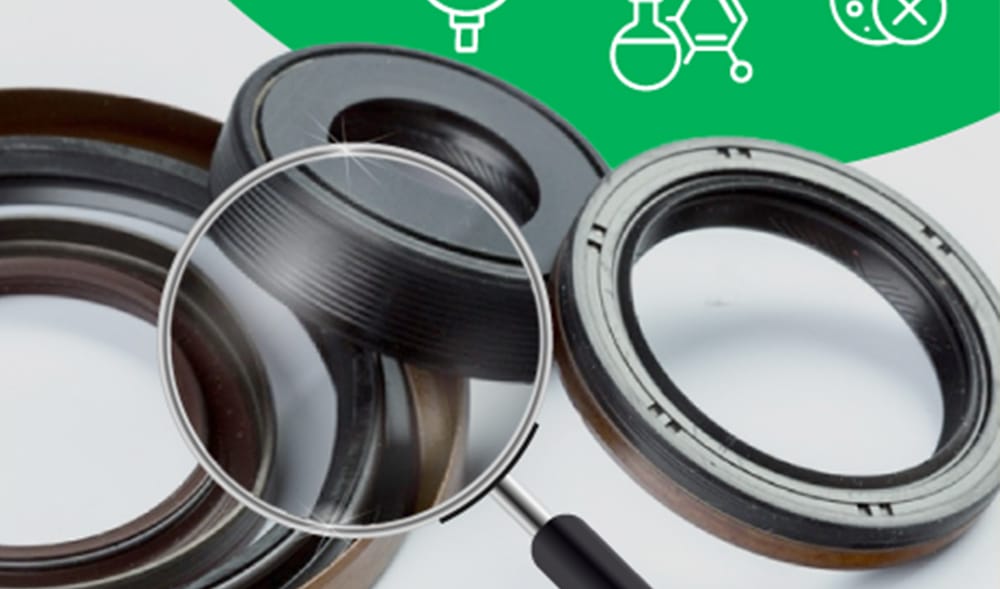
Proper seal selection requires evaluating multiple engineering variables simultaneously.
✔ Operating temperature
✔ Pressure level
✔ Shaft rotational speed
✔ Media compatibility
✔ Surface finish
✔ Shaft hardness
✔ Misalignment tolerance
✔ Installation space
✔ Expected maintenance interval
Additional product information can be found at Industrial Seals.
Installation Best Practices
Incorrect installation remains one of the leading causes of premature seal failure.
- Clean shafts and housings thoroughly.
- Inspect shaft surface finish for scratches.
- Use installation sleeves whenever possible.
- Lubricate seal lips before assembly.
- Avoid twisting elastomer components.
- Press seals evenly using proper tools.
- Confirm shaft concentricity.
- Verify housing dimensions before installation.
Failure Mode Analysis (Industry Experience Example)
The following example represents a typical industry experience rather than actual customer data.
A gearbox developed external oil leakage after approximately one year of operation. Inspection identified excessive shaft runout combined with abrasive contamination. The seal lip exhibited uneven wear while the shaft displayed circumferential scoring.
Root cause analysis indicated:
- Dust ingress exceeded seal exclusion capability.
- Shaft hardness was below recommended levels.
- Installation eccentricity accelerated lip wear.
- Lubricant contamination increased friction.
Recommended corrective actions included installing an auxiliary dust lip, improving shaft hardness, upgrading filtration, and replacing the damaged shaft surface.
Case Example (Engineering Experience)
This case is presented solely as a representative engineering example.
An industrial hydraulic press experienced frequent seal replacement every six months. Engineers reviewed pressure spikes, hydraulic fluid compatibility, and cylinder alignment.
The investigation determined that pressure peaks exceeded original design assumptions. After replacing standard NBR seals with HNBR compounds and optimizing backup ring geometry, maintenance intervals improved significantly under comparable operating conditions.
Laboratory Test Example
The following laboratory procedure is an illustrative example only and does not represent proprietary manufacturer test results.
A laboratory evaluates elastomer compatibility using fluid immersion testing similar to ASTM D471 methodology. Test specimens are immersed in designated oils at controlled temperatures for specified durations. Engineers measure hardness variation, tensile strength retention, elongation, volume change, and visual degradation before recommending material suitability.
Understanding Annealed Copper Washers
Although elastomer seals dominate many industrial systems, annealed copper washers remain important static sealing elements in hydraulic fittings, fuel systems, and high-temperature connections.
Annealing softens copper through controlled heat treatment, increasing ductility and allowing the washer to plastically deform under bolt load. This deformation fills microscopic surface irregularities, creating a reliable metal-to-metal seal.
Copper also provides excellent thermal conductivity (approximately 385–400 W/m·K for pure copper), making annealed copper washers suitable for heat-intensive applications where elastomers may degrade.
Maintenance Recommendations
- Inspect seals during scheduled maintenance.
- Monitor lubricant cleanliness.
- Check shaft wear periodically.
- Replace damaged installation tools.
- Verify housing tolerances.
- Store seals away from UV light and ozone.
- Avoid prolonged compression during storage.
For more information on sealing technologies and product options, please feel free to contact us.
Frequently Asked Questions
1. What is the most common material used for industrial seals?
NBR remains one of the most widely used sealing materials because of its excellent resistance to petroleum-based oils, competitive cost, and broad industrial availability.
2. How do engineers choose the correct seal hardness?
Seal hardness depends on pressure, movement, extrusion risk, and installation design. Most elastomer seals fall between 60 and 90 Shore A, with higher hardness generally improving extrusion resistance.
3. Which international standards are commonly referenced for sealing products?
Frequently referenced standards include ISO 6194, ISO 3601, ASTM D2000, ASTM D2240, ASTM D471, ASTM D412, ISO 1629, and ISO 286.
4. Why do industrial seals fail prematurely?
Typical causes include improper installation, incompatible materials, excessive temperature, contamination, shaft wear, inadequate lubrication, pressure spikes, and misalignment.
5. How can seal service life be extended?
Proper material selection, accurate installation, regular lubrication monitoring, contamination control, shaft inspection, and preventive maintenance significantly improve seal longevity while reducing equipment downtime.