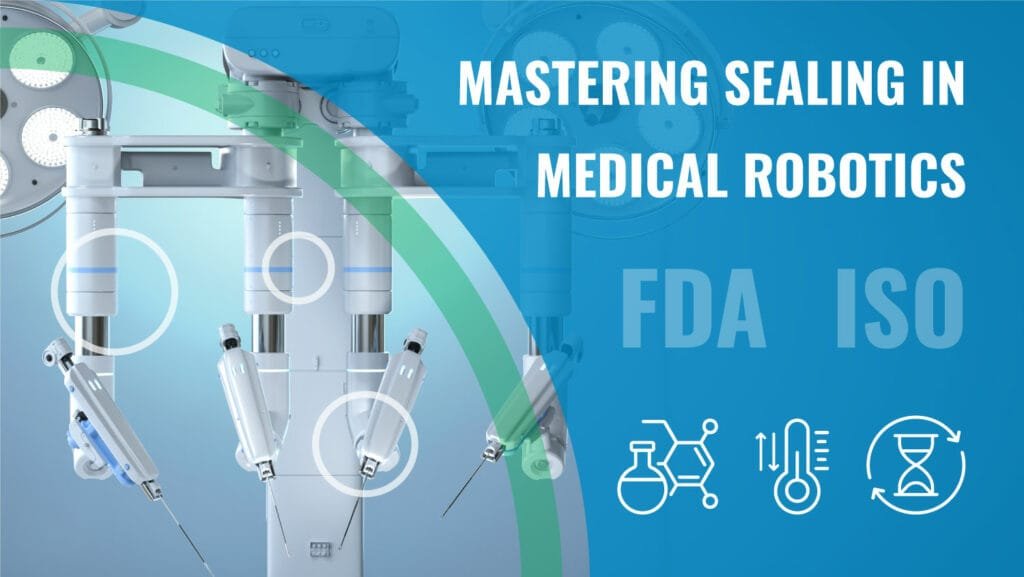
Medical robotics is transforming modern healthcare by enabling minimally invasive surgery, precision diagnostics, laboratory automation, rehabilitation systems, and intelligent patient care. Behind every reliable robotic movement is a complex sealing system that protects critical components from contamination, fluids, sterilization chemicals, pressure fluctuations, and mechanical wear. In medical environments, sealing is no longer simply about preventing leaks—it directly influences patient safety, equipment reliability, sterilization compatibility, and regulatory compliance.
Successful Mastering Sealing in medical robotics requires engineers to understand elastomer materials, sealing geometries, friction characteristics, ISO and ASTM standards, manufacturing tolerances, and long-term aging mechanisms. Every seal must continue performing even after repeated sterilization cycles, aggressive disinfectants, temperature changes, and millions of robotic movements.
📌 Engineering Focus:
Medical robotic sealing combines precision mechanics, materials science, biocompatibility, contamination control, and lifecycle reliability into one integrated design discipline.
Why Sealing Is Critical in Medical Robotics
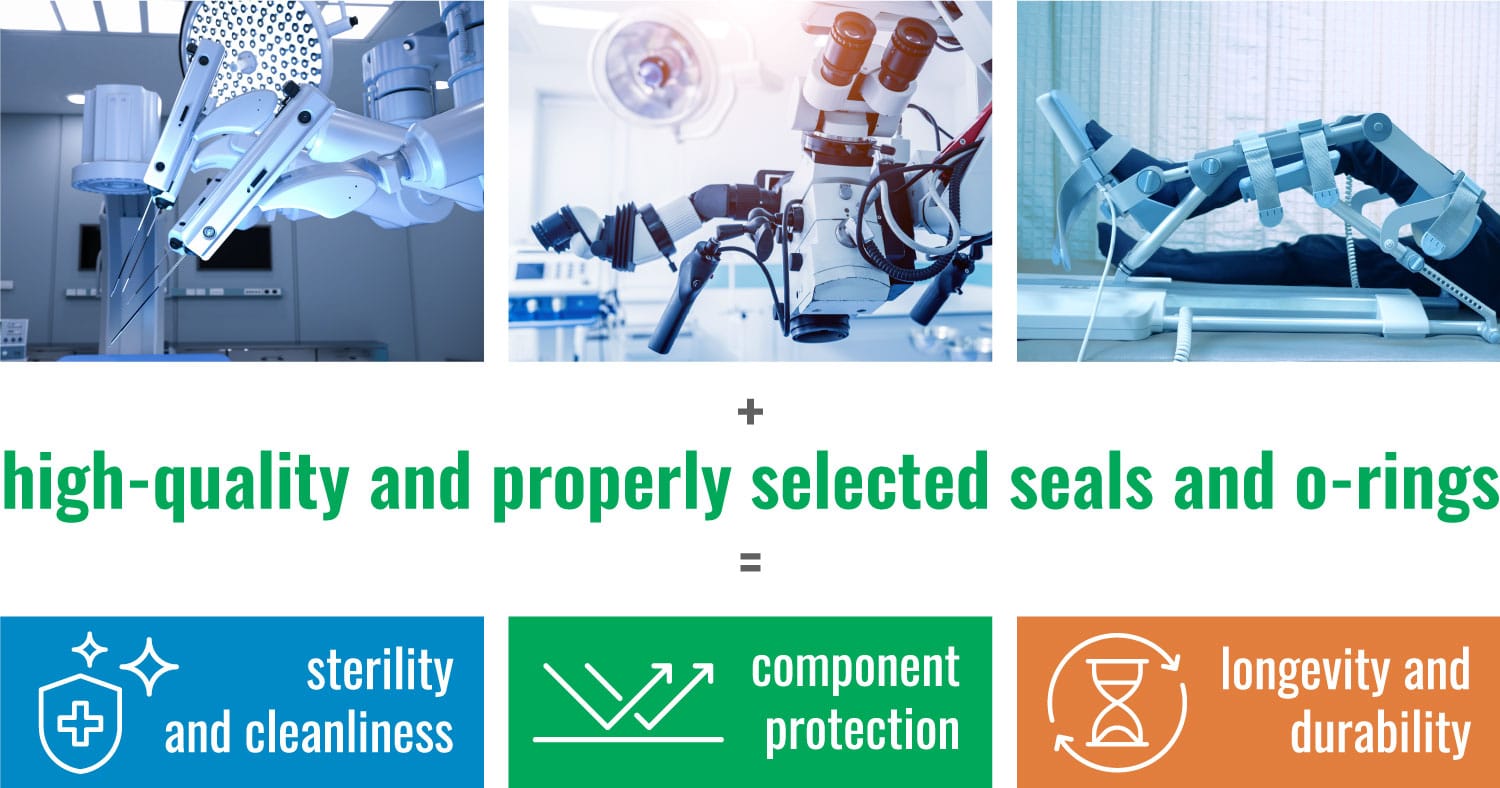
Medical robots operate in environments that differ significantly from industrial automation. Components are exposed to sterilization chemicals, bodily fluids, saline solutions, cleaning agents, humid operating rooms, and strict hygiene requirements. Unlike conventional industrial machines, medical robots often require silent operation, extremely low friction, and exceptional positioning accuracy.
Typical sealing objectives include:
✔ Prevent ingress of bacteria, dust, moisture, and cleaning chemicals
✔ Retain lubricants inside precision bearings and gearboxes
✔ Protect miniature servo motors and encoders
✔ Maintain electrical connector integrity
✔ Reduce friction without sacrificing sealing performance
✔ Support repeated sterilization procedures
✔ Extend equipment service life
Whether designing robotic surgical arms or laboratory automation equipment, engineers continually improve Mastering Sealing techniques to ensure long-term performance.
Common Sealing Components Used in Medical Robots
O-Rings
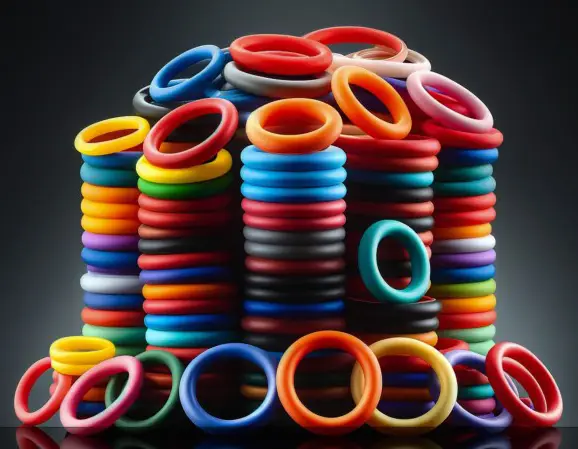
O-rings remain the most widely used sealing solution because of their compact size, excellent sealing capability, and cost efficiency. They are commonly installed in fluid manifolds, pneumatic systems, hydraulic modules, sensor housings, and sterilizable connectors.
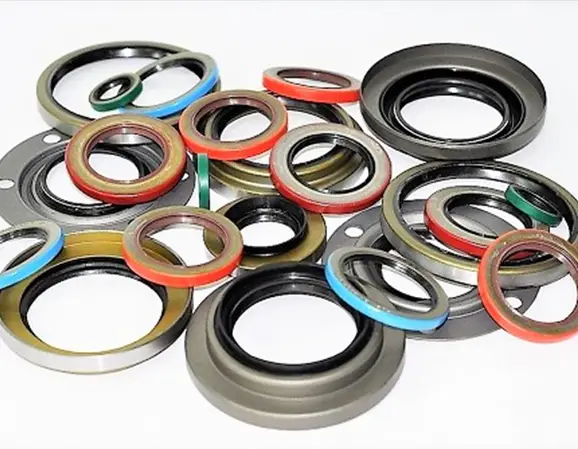
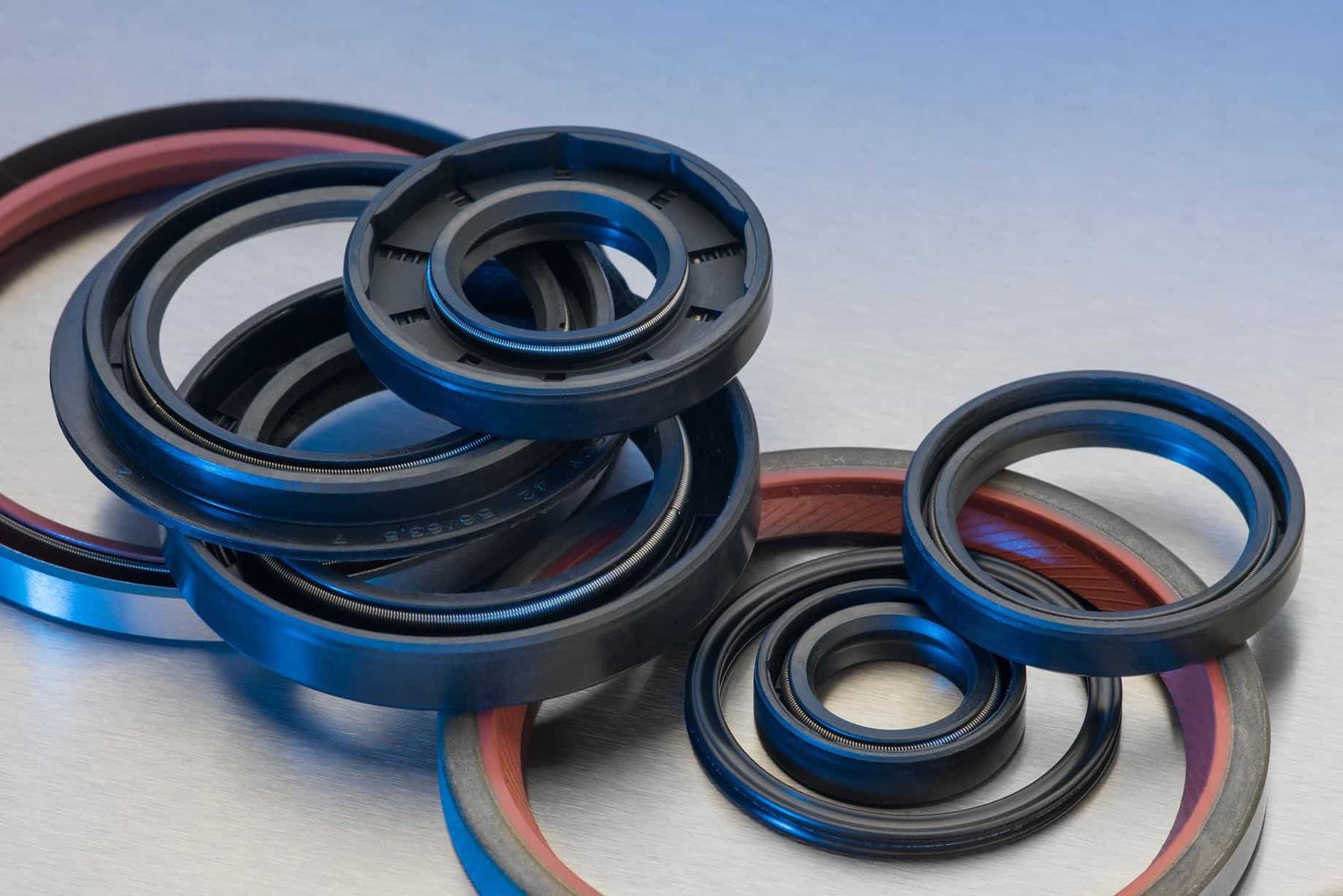
Rotary Shaft Oil Seals
Servo motors, harmonic drives, planetary gearboxes, and rotary joints frequently employ rotary shaft seals to prevent lubricant leakage while blocking contaminants.
Lip Seals
Lip seals provide excellent exclusion of dust, cleaning chemicals, and moisture while maintaining relatively low friction.
PTFE Spring-Energized Seals
PTFE seals deliver outstanding chemical resistance together with ultra-low friction. They are ideal for robotic joints requiring highly accurate positioning.
Gaskets
Flat gaskets are commonly installed between housing interfaces, sterilization chambers, electronic enclosures, and fluid delivery modules.
Material Selection for Medical Robotic Seals
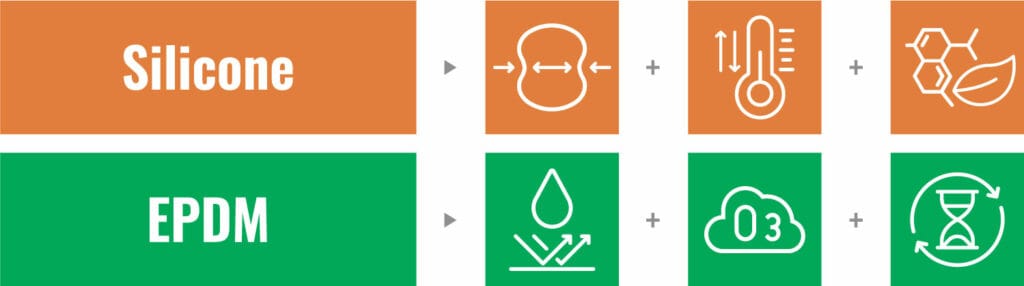
Material selection determines sealing performance more than any other design variable.
| Material | Advantages | Typical Applications |
|---|---|---|
| Silicone (VMQ) | Biocompatibility, flexibility | Medical connectors |
| EPDM | Steam resistance | Autoclave equipment |
| FKM | Chemical resistance | Cleaning chemicals |
| PTFE | Ultra-low friction | Precision joints |
| HNBR | Wear resistance | Dynamic shafts |
Mechanical Properties Engineers Should Evaluate
Important engineering parameters include:
Hardness: Usually 50–90 Shore A depending on sealing geometry.
Compression Set: Lower values indicate better long-term sealing recovery.
Tensile Strength: Influences installation durability.
Elongation at Break: Helps avoid tearing during assembly.
Coefficient of Friction: Critical for precision robotic motion.
Chemical Resistance: Essential for disinfectants and sterilization agents.
Thermal Conductivity and Temperature Performance
Although elastomers generally possess low thermal conductivity, temperature management remains important.
| Material | Approximate Thermal Conductivity |
|---|---|
| PTFE | ≈0.25 W/m·K |
| Silicone | ≈0.20 W/m·K |
| EPDM | ≈0.25 W/m·K |
Medical robots may experience temperatures from refrigerated laboratory conditions to autoclave sterilization above 120°C. Material compatibility with the expected temperature range is therefore essential.
Corrosion Resistance in Healthcare Environments
Seals frequently contact stainless steel housings, aluminum components, titanium parts, saline solutions, hydrogen peroxide, alcohol-based disinfectants, and enzymatic cleaners.
Good corrosion resistance depends on selecting compatible sealing materials and preventing galvanic interactions where metallic sealing elements are present.
Relevant ASTM and ISO Standards
ISO 3601 — O-ring dimensions and quality grades
ISO 6194 — Rotary shaft lip seals
ISO 10993 — Biological evaluation of medical devices
ISO 13485 — Medical device quality management
ASTM D2000 — Rubber material classification
ASTM D395 — Compression set testing
ASTM D2240 — Shore hardness measurement
Annealed Copper Gaskets in Medical Equipment
Although elastomeric seals dominate medical robotics, annealed copper washers occasionally appear in specialized high-pressure fluid systems and vacuum assemblies.
Annealing softens copper by heating followed by controlled cooling. This process reduces hardness while increasing ductility, allowing the washer to plastically deform and fill microscopic surface imperfections under bolt load.
Typical thermal conductivity of copper is approximately 390–400 W/m·K, making it highly effective for heat transfer applications compared with elastomeric materials.
Proper Installation Practices
Reliable sealing begins with proper installation.
🔧 Clean grooves thoroughly.
🔧 Remove machining burrs.
🔧 Lubricate compatible elastomers when recommended.
🔧 Avoid twisting O-rings.
🔧 Maintain correct compression.
🔧 Verify shaft surface finish.
🔧 Inspect after assembly.
Seal Selection Guide
Engineers should evaluate:
Operating Pressure
Temperature Range
Sterilization Method
Motion Type
Chemical Exposure
Expected Service Life
Maintenance Schedule
Applying these engineering principles supports Mastering Sealing throughout the equipment lifecycle.
Failure Mode Analysis (Industry Example)
Example Only: The following represents common engineering experience rather than data from any specific manufacturer or customer.
Failure Mode: Compression set after repeated sterilization.
Root Cause: Continuous exposure to elevated temperatures reduced elastic recovery.
Result: Minor fluid leakage around actuator housing.
Corrective Action: Replace material with higher temperature resistance and optimize groove compression.
Laboratory Test Example
Illustrative Laboratory Example
An engineering laboratory evaluates candidate sealing materials by exposing specimens to repeated sterilization cycles followed by compression set testing according to ASTM D395. Hardness is measured using ASTM D2240 before and after aging. Leakage performance is assessed under representative operating pressure while recording dimensional stability and visual changes. These procedures illustrate typical qualification methods and are not intended to represent proprietary manufacturer data.
Case Example (Engineering Experience)
Illustrative Case Example
A robotic surgical positioning module experienced gradual increases in joint friction after numerous cleaning cycles. Engineering investigation identified lubricant contamination caused by seal degradation rather than gearbox wear. After switching to a chemically resistant PTFE-based sealing solution and refining installation tolerances, joint movement returned to expected performance levels. This example reflects common engineering practice and does not describe any specific customer project.
Future Trends
Emerging medical robots demand smarter sealing technologies, including low-particle elastomers, self-lubricating composites, advanced fluoropolymers, miniature sealing systems, antimicrobial surface treatments, and predictive maintenance supported by sensor integration.
As robotics continues advancing, engineers will keep Mastering Sealing technologies to improve reliability, patient safety, equipment longevity, and healthcare efficiency.
Frequently Asked Questions
1. Which sealing material is most common in medical robotics?
Silicone, EPDM, PTFE, FKM, and HNBR are among the most commonly selected materials, with the optimal choice depending on sterilization methods, chemicals, temperature, and mechanical movement.
2. Why is low friction important for robotic seals?
Low friction improves positioning accuracy, reduces motor load, minimizes wear, and extends the operating life of precision robotic joints.
3. Which standards are frequently referenced?
ISO 3601, ISO 6194, ISO 10993, ISO 13485, ASTM D2000, ASTM D395, and ASTM D2240 are among the most commonly referenced engineering standards.
4. Can annealed copper washers replace elastomer seals?
Not generally. Annealed copper washers are suitable for certain static, high-pressure, or thermal sealing applications, while elastomer seals are preferred for dynamic sealing in most medical robotic systems.
5. What is the most common sealing failure in medical robotics?
Compression set, chemical degradation, installation damage, excessive friction, contamination ingress, and material incompatibility are among the most frequently encountered failure mechanisms during long-term operation.