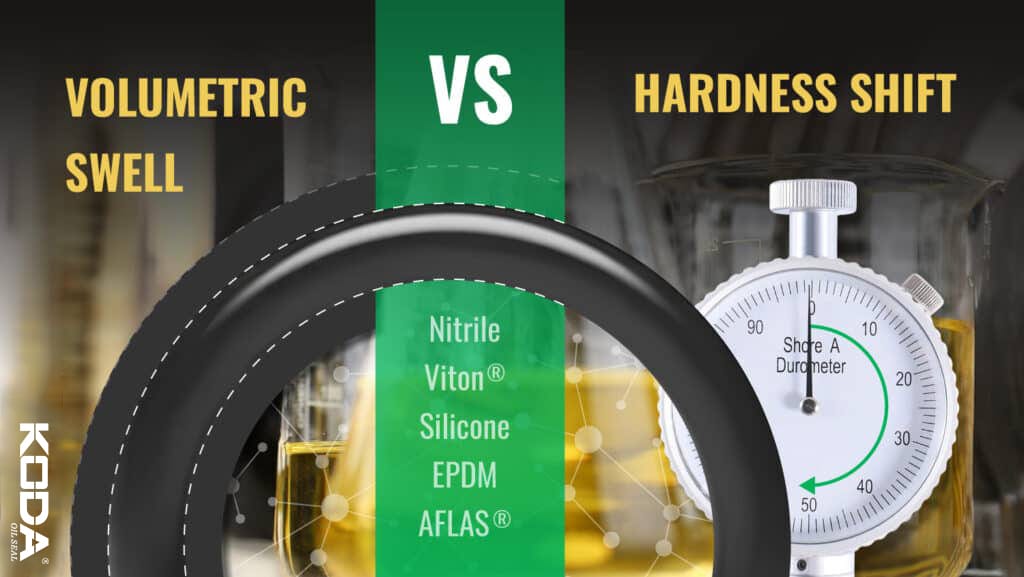
Understanding Volumetric Swell vs. Hardness Shift in O-Ring Elastomers
In sealing applications, O-rings are widely used due to their reliability and versatility. However, two critical performance factors—volumetric swell and hardness shift—often determine whether an elastomer will succeed or fail in real-world conditions. Understanding how these properties interact is essential for engineers, procurement specialists, and maintenance professionals.
What Is Volumetric Swell in O-Rings?
Volumetric swell refers to the increase in volume of an elastomer when it is exposed to fluids such as oils, fuels, or chemicals. This happens because the material absorbs the surrounding medium, causing expansion at the molecular level.
Key Insight: Controlled swell can improve sealing performance by enhancing contact pressure, but excessive swelling leads to deformation, extrusion, or failure.
For deeper material understanding, refer to Elastomers, which explains how different rubber compounds react under chemical exposure.
Causes of Volumetric Swell
Several factors influence swelling behavior:
- Chemical compatibility between elastomer and fluid
- Temperature (higher temperatures accelerate absorption)
- Crosslink density of the rubber
- Exposure duration
Important: Elastomers like NBR tend to swell in hydrocarbons, while FKM offers superior resistance.
What Is Hardness Shift in Elastomers?
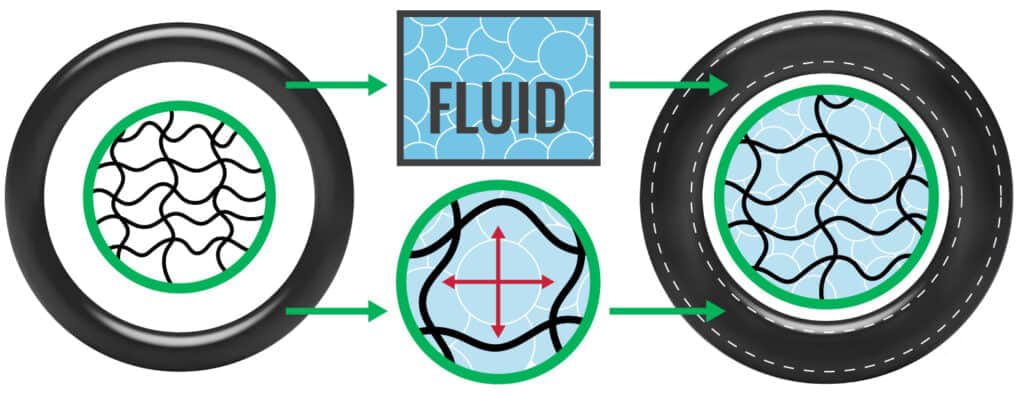
Hardness shift describes the change in Shore hardness of an elastomer after exposure to environmental conditions such as heat, chemicals, or aging.
This change can be:
- Softening – due to plasticization or fluid absorption
- Hardening – caused by oxidation or additional crosslinking
Critical Note: Even a small hardness shift can significantly impact sealing efficiency and compression set.
Measurement of Hardness Shift
Hardness is typically measured using Shore A durometers. A shift of ±5 points may already indicate material instability in critical systems.
Relationship Between Swell and Hardness
Volumetric swell and hardness shift are closely linked. When an elastomer absorbs fluid:
- It often softens due to increased molecular mobility
- Excessive swelling leads to loss of mechanical strength
Engineering Perspective: Optimal O-ring performance requires a balance—moderate swell for sealing, minimal hardness loss for durability.
More insights into material behavior can be explored through Elastomers, which provides a comprehensive overview of elastomer science.
When Swell Is Beneficial
In some cases, slight swelling improves sealing by:
- Increasing contact pressure
- Compensating for tolerances
- Enhancing leak prevention
When It Becomes Dangerous
Excessive swelling can:
- Cause extrusion in high-pressure systems
- Lead to permanent deformation
- Reduce lifespan dramatically
Material Comparison: Swell vs. Hardness Behavior
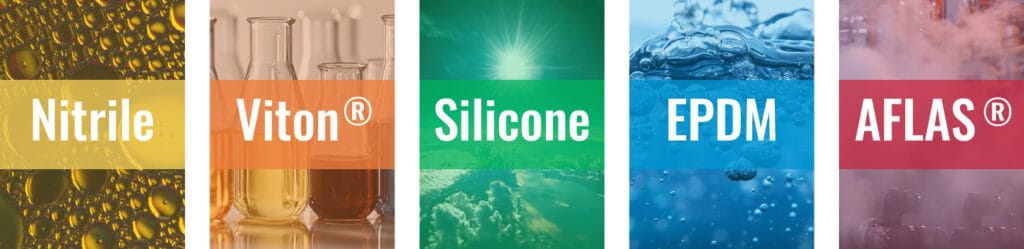
Different elastomers react differently:
| Material | Swell Resistance | Hardness Stability |
| NBR | Moderate | Medium |
| FKM | Excellent | High |
| EPDM | Poor in oils | Stable in water |
Impact on O-Ring Performance
Both properties directly influence:
- Sealing efficiency
- Compression set
- Service life
Warning: Ignoring swell and hardness changes can result in leaks, equipment damage, and costly downtime.
Testing Standards and Methods
Industry standards ensure consistency:
- ASTM D471 – Liquid immersion testing
- ASTM D2240 – Hardness measurement
- ISO 1817 – Rubber resistance testing
Best Practice: Always test elastomers under real application conditions rather than relying solely on datasheets.
Design Considerations for Engineers
When designing O-ring systems:
- Select materials with compatible chemical resistance
- Account for temperature fluctuations
- Allow for controlled swelling
- Avoid excessive compression
Engineering Tip: A properly selected elastomer reduces maintenance costs and extends equipment lifespan.
Common Mistakes in Material Selection
Frequent errors include:
- Ignoring chemical compatibility charts
- Overlooking temperature effects
- Assuming all elastomers behave similarly
How to Avoid These Mistakes
Use reliable data sources and consult technical guides like Elastomers.
Future Trends in Elastomer Technology
Advancements include:
- Improved chemical resistance formulations
- Nanocomposite elastomers
- Enhanced thermal stability materials
Trend Insight: Modern elastomers aim to minimize both swelling and hardness changes simultaneously.
Frequently Asked Questions
1. What is an acceptable level of volumetric swell?
Typically, a swell of 0–20% is acceptable depending on the application. Beyond that, performance risks increase.
2. Does hardness always decrease with swelling?
Not always, but in most cases, fluid absorption leads to softening of the elastomer.
3. Which elastomer has the best resistance?
FKM is widely regarded as having excellent resistance to both swelling and hardness changes.
4. Can hardness increase instead of decrease?
Yes, due to aging or oxidation, elastomers may harden over time.
5. How can I choose the right O-ring material?
Evaluate chemical exposure, temperature, and mechanical requirements, and consult detailed resources like Elastomers.