
Oil seals play a critical role in modern mechanical systems by preventing lubricant leakage and blocking contaminants from entering rotating or reciprocating assemblies. Among the many classifications of oil seals, SC, SA, SB, and SCJY types are commonly used in industrial and automotive applications. Although they may appear similar at first glance, each type has distinct structural and performance characteristics that determine its suitability for specific operating conditions.
Understanding the differences between these oil seal types is essential for engineers, maintenance professionals, and equipment designers aiming to achieve optimal sealing performance, durability, and system efficiency.
⚙️ Key Insight: SC, SA, SB, and SCJY oil seals differ mainly in structure, sealing lips, dust protection design, and pressure resistance capabilities.
Overview of Oil Seal Classification
Oil seals are generally classified based on their structural design, number of sealing lips, presence of dust lips, and reinforcement features. These classifications help match seals to specific operating environments such as high-speed rotation, heavy load conditions, or contaminated environments.
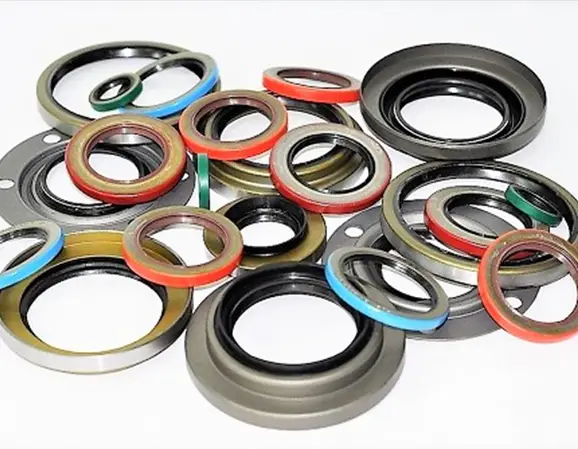
High-performance oil seals are essential for maintaining lubrication integrity and extending machinery lifespan.
SC Type Oil Seal
Structure
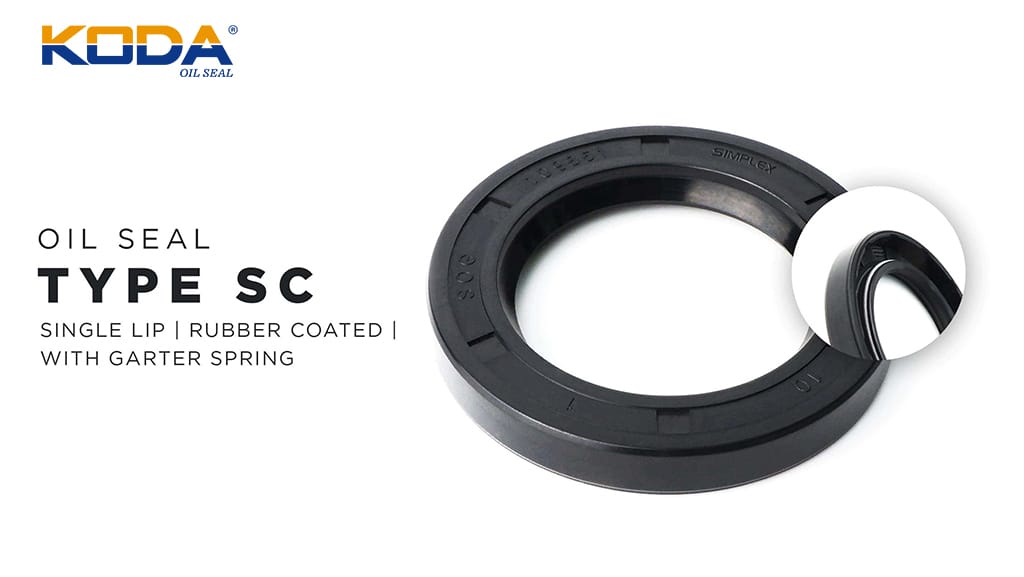
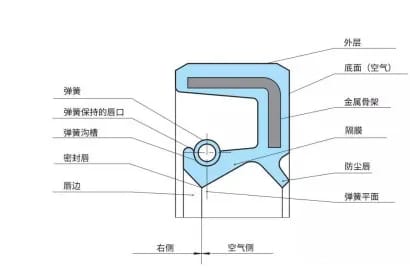
The SC type oil seal typically features a single sealing lip combined with a metal reinforcement shell. It is designed for standard rotary shaft applications where moderate sealing performance is required.
Characteristics
- Single sealing lip design
- Good oil retention capability
- Basic dust protection
- Cost-effective solution
Applications
SC seals are commonly used in general machinery, pumps, and light industrial equipment where operating conditions are not extreme.
🔧 Insight: SC oil seals are ideal for standard applications where cost efficiency is prioritized over extreme durability.
SA Type Oil Seal
Structure
SA oil seals are designed with a single lip but without a spring in most configurations. This makes them suitable for low-pressure or low-speed applications.
Characteristics
- No garter spring in many designs
- Lower friction resistance
- Suitable for light-duty sealing
- Simple structure
Applications
SA seals are often used in household appliances, low-load machinery, and non-critical rotating systems.
⚠️ Note: SA oil seals are not recommended for high-pressure or high-speed environments.
SB Type Oil Seal
Structure
SB oil seals feature a single sealing lip with a garter spring, providing improved sealing force compared to SA types.
Characteristics
- Single lip with spring reinforcement
- Better sealing under pressure
- Improved durability
- Balanced performance
Applications
SB seals are widely used in automotive systems, industrial gearboxes, and hydraulic equipment.
Reliable oil seals such as SB types are commonly chosen for medium-duty applications requiring stable sealing performance.
🧩 Design Advantage: The addition of a garter spring significantly improves sealing consistency in SB type oil seals.
SCJY Type Oil Seal
Structure
SCJY oil seals represent a more advanced design with dual sealing lips and enhanced dust protection features. They are engineered for harsh and contaminated environments.
Characteristics
- Double lip structure
- Enhanced dust and debris protection
- High durability
- Suitable for harsh environments
Applications
SCJY seals are commonly used in construction machinery, mining equipment, and heavy-duty industrial systems.
⭐ Performance Insight: SCJY oil seals offer the highest level of protection among SC, SA, SB, and SCJY types.
Key Differences Between SC, SA, SB, and SCJY Oil Seals
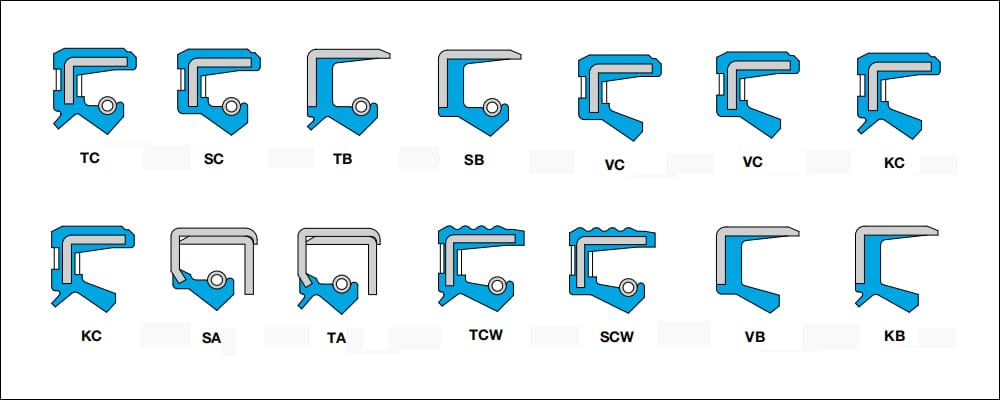
Although all four types serve the same fundamental purpose of preventing leakage and contamination, their structural differences define their performance levels.
Sealing Structure
- SA: Single lip, no spring
- SC: Single lip with basic reinforcement
- SB: Single lip with spring
- SCJY: Double lip with enhanced protection
Performance Level
- SA: Low
- SC: Medium
- SB: Medium to high
- SCJY: High
Environmental Suitability
- SA: Clean, low-load environments
- SC: General industrial use
- SB: Moderate pressure systems
- SCJY: Harsh, contaminated environments
Material Considerations
All four oil seal types can be manufactured using materials such as NBR, FKM, or ACM depending on application requirements.
Selecting the correct material ensures compatibility with temperature, pressure, and lubrication conditions.
High-quality oil seals rely on proper material selection to maximize service life and performance.
Common Applications Across Industries
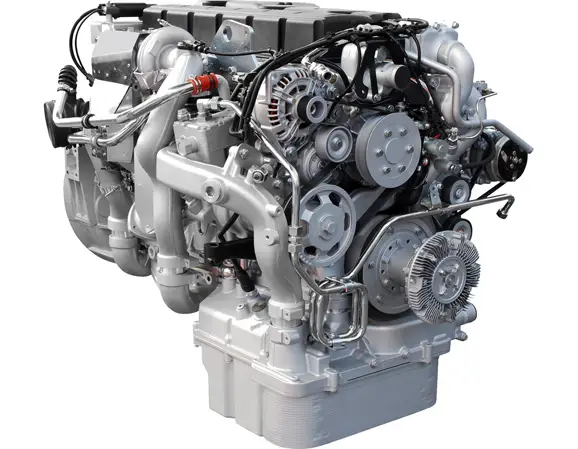
- Automotive engines and transmissions
- Industrial gear systems
- Agricultural machinery
- Hydraulic systems
- Construction and mining equipment
🔧 Engineering Insight: Choosing the correct oil seal type significantly improves machine reliability and reduces maintenance costs.
Selection Guidelines
- Consider operating speed and pressure
- Evaluate environmental conditions
- Choose appropriate sealing structure
- Select compatible materials
- Assess contamination risk
Conclusion
SC, SA, SB, and SCJY oil seals each serve distinct roles in mechanical systems. While SA and SC types are suitable for light-duty and general applications, SB offers improved performance with spring reinforcement, and SCJY provides the highest level of protection for harsh environments.
Understanding these differences allows engineers and technicians to select the most appropriate sealing solution for their specific needs. Proper selection, installation, and maintenance of oil seals ensures long-term reliability, reduced downtime, and improved system efficiency.
Frequently Asked Questions
1. What is the main difference between SC and SA oil seals?
SC seals have better structural reinforcement, while SA seals are simpler and used in low-load applications.
2. Why is SB oil seal more effective than SA type?
SB seals include a garter spring, which improves sealing pressure and performance.
3. What makes SCJY oil seals special?
SCJY seals feature double lips and enhanced dust protection for harsh environments.
4. Which oil seal type is best for heavy-duty applications?
SCJY is the most suitable due to its high durability and contamination resistance.
5. Can all these oil seals use the same materials?
Yes, but material selection depends on temperature, pressure, and chemical exposure conditions.