High-Pressure Seal Design Essentials

High-pressure seal design is a critical engineering process that directly impacts the reliability, safety, and efficiency of industrial systems operating under extreme pressure conditions. From hydraulic systems and oil and gas pipelines to high-pressure reactors and aerospace components, well-designed high-pressure seals prevent costly fluid leaks, protect equipment from damage, and ensure compliance with industry safety standards. Unlike standard seals, high-pressure seals must withstand extremely high pressure loads—typically exceeding 30 MPa (4350 psi), and in some specialized applications even reaching 200 MPa—while resisting extrusion, abrasion, and chemical corrosion.
High-Pressure Seal Design Essentials
A High-Pressure Seal is a specialized mechanical component designed to contain fluids (liquids or gases) in systems operating at elevated pressures—typically defined as pressures above 10 MPa (1450 psi), though the exact threshold varies by industry. Unlike low-pressure seals, which focus primarily on basic fluid retention, High-Pressure Seal must overcome unique challenges, including extrusion (where seal material is forced into gaps between mating surfaces), rapid wear, and thermal stress from pressure-induced friction. The core requirements of any High-Pressure Seal design include:
- Pressure Resistance: Ability to withstand continuous or cyclic high-pressure loads without deformation, leakage, or failure. For ultra-high-pressure applications (above 70 MPa), this often requires rigid materials or reinforced structures.
- Extrusion Resistance: Prevention of seal material being forced into the clearance gap between the shaft and housing—a common failure mode in high-pressure systems. This is particularly critical for dynamic High-Pressure Seal in reciprocating or rotating applications.
- Chemical Compatibility: Resistance to degradation from the fluid being sealed (e.g., hydraulic oil, fuels, acids, or industrial chemicals), which can cause swelling, hardening, or cracking of the seal material.
- Thermal Stability: Ability to maintain performance across wide temperature ranges, as high pressure often generates significant heat, and temperature fluctuations can alter seal material properties.
- Dimensional Stability: Consistent shape and size under pressure and temperature changes, ensuring a tight seal interface over time. Creep (cold flow) of seal material is a major concern in High-Pressure Seal design, especially for polymer-based seals.
Core Principles of High-Pressure Seal Design
Designing an effective High-Pressure Seal requires adherence to four core principles, each addressing a critical aspect of seal performance. These principles guide material selection, structural design, and interface optimization, ensuring the seal can withstand high-pressure conditions while delivering long service life.
1. Pressure Distribution: Minimize Stress Concentration
- Optimized Contact Geometry: Use rounded or beveled seal edges instead of sharp corners to prevent stress buildup. For example, wedge-shaped seal surfaces (3°-5° angle) create a self-tightening effect, where pressure pushes the seal into tighter contact with the mating surface—ideal for pressure-fluctuating applications.
- Multi-Lip or Multi-Stage Seals: Implementing 2-3 lip designs creates a “stepped” pressure distribution, where each lip absorbs a portion of the total pressure (typically 1/3 to 1/2 per lip). This reduces the load on individual lips and extends High-Pressure Seal life.
- Back-Up Rings: Install back-up rings (also called anti-extrusion rings) to support the seal and prevent extrusion into gaps. Back-up rings are essential for High-Pressure Seal operating above 10 MPa, as they distribute pressure across the seal’s cross-section and limit deformation.
2. Material Compatibility: Match Material to Operating Conditions
- Elastomers: Suitable for moderate high-pressure applications (10-30 MPa) and dynamic sealing. High-performance elastomers like Fluorocarbon (FKM/Viton®) and Perfluoroelastomer (FFKM) offer excellent chemical resistance and thermal stability, making them ideal for hydraulic systems, automotive transmissions, and chemical processing. Hydrogenated Nitrile Butadiene Rubber (HNBR) is preferred for oil-resistant applications, while Polyurethane (PU) excels in dynamic High-Pressure Seal due to its high wear resistance and mechanical strength.
- Polymers: Reinforced polymers like Polytetrafluoroethylene (PTFE) and Polyether Ether Ketone (PEEK) are used for high-pressure static and dynamic seals. PTFE, when filled with glass fiber, carbon, or bronze, gains enhanced extrusion resistance and dimensional stability—making it suitable for 30-100 MPa applications. PEEK offers superior high-temperature resistance (up to 250°C) and mechanical strength, ideal for ultra-high-pressure systems.
- Metals: For extreme high-pressure applications (above 70 MPa) or high-temperature environments (above 300°C), metal High-Pressure Seal (e.g., stainless steel, Inconel 718, Hastelloy) are required. Metal seals (such as C-rings, O-rings, or cone seals) achieve sealing through plastic deformation, providing exceptional pressure resistance. They are commonly used in aerospace, nuclear, and oil and gas wellhead applications.
3. Interface Design: Ensure Tight, Wear-Resistant Contact
- Surface Finish: Mating surfaces must be smooth to reduce friction and prevent damage to the High-Pressure Seal. For dynamic High-Pressure Seal, the shaft surface finish should be Ra ≤ 0.2-0.8 μm; for static seals, Ra ≤ 0.8 μm is acceptable. Rough surfaces can abrade the seal lip, creating leak paths and reducing service life.
- Clearance Control: The clearance gap between the shaft and housing must be minimized to prevent extrusion. For High-Pressure Seal, the gap should typically be ≤ 0.1 mm for pressures up to 30 MPa, and even smaller (≤ 0.05 mm) for ultra-high-pressure applications. Back-up rings are critical for larger gaps, as they block the extrusion path.
- Preload (Interference Fit): Static High-Pressure Seal require a slight interference fit (typically 5-10% compression) to ensure initial sealing before pressure is applied. For dynamic seals, the preload must be balanced—too much preload increases friction and wear, while too little preload leads to leakage.
4. Environmental Adaptation: Account for Temperature, Fluids, and Contaminants
- Temperature Fluctuations: High pressure generates heat, and temperature changes can cause seal materials to expand or contract. Design the High-Pressure Seal with thermal expansion in mind—for example, using materials with low thermal expansion coefficients (e.g., PEEK, metal) or incorporating thermal compensation structures.
- Fluid Properties: The fluid being sealed (viscosity, corrosiveness, lubricity) impacts seal design. For example, low-viscosity fluids (e.g., water, light oils) require tighter clearances and more aggressive preload, while high-viscosity fluids provide natural lubrication but may require larger seal cross-sections.
- Contaminants: Dust, debris, and particles can damage the High-Pressure Seal lip and mating surfaces. Incorporate wiper seals or dust lips to prevent contaminants from entering the seal interface—critical for dynamic High-Pressure Seal in industrial or off-road applications.
Common High-Pressure Seal Types and Their Design Considerations

High-Pressure Seal come in various types, each engineered for specific applications (static vs. dynamic, high vs. ultra-high pressure). Understanding the design nuances of each type is key to selecting the right High-Pressure Seal for your system. Below are the most widely used types and their design essentials:
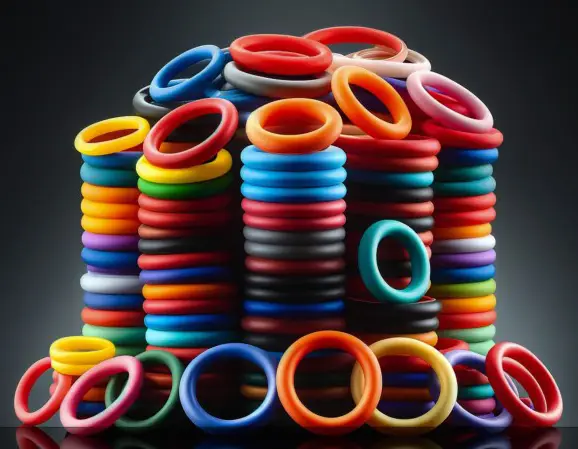
1. O-Ring High-Pressure Seals
- Design Tips:
- Use back-up rings for pressures above 10 MPa to prevent extrusion. For pressures above 30 MPa, use double back-up rings (one on each side of the O-Ring).
- Choose the correct cross-section size: Larger cross-sections provide better extrusion resistance but increase friction in dynamic applications.
- Opt for groove design with rounded edges (radius ≥ 0.2 mm) to prevent O-Ring damage during installation and operation.
- Ideal Applications: Hydraulic systems, valves, flanges, and static sealing in chemical processing. Elastomer O-Rings are suitable for 10-30 MPa, while metal O-Rings are used for ultra-high-pressure (≥ 70 MPa) applications.
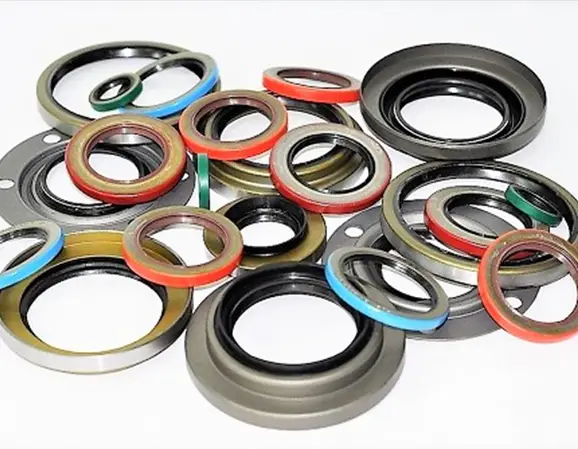
2. Lip Seals (Rotary and Reciprocating High-Pressure Seals)
- Design Tips:
- Incorporate a garter spring to maintain consistent lip contact with the shaft, especially in low-pressure or temperature-fluctuating environments.
- Design the lip angle (typically 30-45°) to optimize pressure distribution—steeper angles improve sealing at high pressures, while shallower angles reduce friction.
- Add a secondary dust lip to protect the primary sealing lip from contaminants, critical for industrial and off-road applications.
- Ideal Applications: Hydraulic cylinders, pumps, compressors, and rotating shafts in oil and gas equipment. Filled PTFE lip seals are suitable for 30-100 MPa, while PU lip seals excel in reciprocating applications up to 50 MPa.
3. Spring-Energized High-Pressure Seals
- Design Tips:
- Choose the spring type based on pressure: Helical springs are ideal for radial sealing, while wave springs work well for axial sealing.
- Use filled PTFE or PEEK for the sealing element to enhance extrusion resistance and wear resistance.
- Design the seal with a low-friction coating (e.g., MoS₂, DLC) to reduce wear in dynamic high-pressure applications.
- Ideal Applications: Cryogenic high-pressure systems, aerospace components, vacuum equipment, and semiconductor manufacturing. Suitable for pressures up to 150 MPa.
4. Metal High-Pressure Seals
- Design Tips:
- Select metal materials based on temperature and chemical compatibility: Inconel 718 for high-temperature applications, Hastelloy for corrosive environments, and stainless steel for general high-pressure use.
- Ensure precise machining of the seal and mating surfaces—metal seals require tight tolerances (±0.01 mm) to achieve effective sealing.
- Use a preload mechanism (e.g., bolts, clamps) to compress the metal seal and initiate plastic deformation, which creates a permanent seal.
- Ideal Applications: Oil and gas wellheads, nuclear reactors, aerospace engines, and ultra-high-pressure testing equipment. Can withstand pressures up to 200 MPa and beyond.
5. Gasket High-Pressure Seals
- Design Tips:
- Choose spiral-wound gaskets (metal + filler) for pressures up to 100 MPa—they combine the pressure resistance of metal with the flexibility of filler materials (e.g., graphite, PTFE).
- Ensure the gasket is sized to match the flange dimensions, with a compression rate of 10-20% to achieve a tight seal.
- Use anti-blowout rings for high-pressure flange applications to prevent gasket displacement under extreme pressure.
- Ideal Applications: Chemical processing vessels, oil and gas pipelines, and high-pressure flanges. Spiral-wound gaskets are suitable for 30-100 MPa, while metal ring gaskets are used for ultra-high-pressure (≥ 70 MPa) flanges.
Common High-Pressure Seal Design Mistakes and How to Avoid Them
Even experienced engineers make mistakes in High-Pressure Seal design, leading to premature failure, leakage, and costly downtime. Below are the most common mistakes and practical solutions to avoid them:
1. Underestimating Extrusion Risk
2. Poor Material Selection
3. Incorrect Groove or Interface Design
4. Ignoring Thermal Expansion
5. Overlooking Installation and Maintenance
High-Pressure Seal Installation Best Practices
- Pre-Installation Preparation:
- Inspect the High-Pressure Seal for defects (nicks, scratches, cracks) before installation—discard any damaged seals.
- Clean the mating surfaces (shaft, housing, groove) with a lint-free cloth and compatible solvent to remove debris, oil, or rust.
- Verify that the groove dimensions, surface finish, and clearance gap meet design specifications.
- Installation Techniques:
- Use non-metallic installation tools (e.g., plastic mandrels, wooden blocks) to avoid scratching or damaging the High-Pressure Seal lip.
- Lubricate the seal lip and mating surfaces with a compatible lubricant (e.g., hydraulic oil, silicone grease) to reduce friction during installation.
- Align the High-Pressure Seal correctly—for lip seals, ensure the lip faces the fluid being sealed; for O-Rings, ensure they are seated evenly in the groove without twists.
- Apply even pressure when installing the seal—avoid excessive force, which can cause deformation or damage.
- Post-Installation Checks:
- Inspect the installed High-Pressure Seal to ensure it is seated correctly, with no gaps, twists, or damage.
- Test the system at low pressure first, then gradually increase to operating pressure, checking for leaks.
- Monitor the High-Pressure Seal during initial operation for signs of wear, overheating, or leakage—address any issues immediately.
Troubleshooting Common High-Pressure Seal Failures
1. Leakage
2. Extrusion Damage
3. Premature Wear
4. Material Degradation
Conclusion
Designing high-pressure seals is a complex and critical process requiring a deep understanding of pressure dynamics, material properties, and interface engineering. By following the core principles outlined in this guide—pressure distribution, material compatibility, interface design, and environmental adaptability—you can design high-pressure seals that can withstand extreme conditions, prevent leaks, and have a long service life. Avoiding common design errors, adhering to proper installation specifications, and promptly troubleshooting will further ensure the reliable operation of your high-pressure seals, thereby reducing downtime and maintenance costs.
Remember: there is no “one-size-fits-all” high-pressure seal. Every application requires a customized solution to balance pressure, temperature, fluid, and motion requirements. By prioritizing material selection, structural optimization, and installation quality, you can create high-pressure seals that solve real-world problems and meet the needs of the most challenging industrial systems. For critical applications, consult us to validate your design and ensure optimal performance.
Q&A: High-Pressure Seal Design Essentials
What are the core essentials in high-pressure seal design?
The core essentials include material compatibility, pressure rating, temperature resistance, installation clearance, and leakage prevention. These factors ensure a high-pressure seal performs reliably under extreme working conditions.
Why is material selection critical for high-pressure seal design?
Material selection directly determines the durability and sealing effect. Suitable materials resist extrusion, wear, and chemical corrosion, helping the high-pressure seal maintain integrity under high pressure and fluctuating temperatures.
What failure risks should be avoided in high-pressure seal design?
Common failure risks include seal extrusion, gap leakage, material hardening, and improper installation. Following high-pressure seal design essentials helps eliminate these risks and extend service life.
How does pressure level affect high-pressure seal structure design?
Higher pressure requires stronger structural support, tighter fit tolerances, and anti-extrusion devices. Design essentials must match seal structure to operating pressure to prevent deformation or failure of the high-pressure seal.
What testing standards apply to high-pressure seal design essentials?
Typical tests include hydrostatic pressure testing, leakage rate detection, and thermal cycle testing. Compliance with industry standards verifies that the high-pressure seal meets safety and performance requirements in real working conditions.