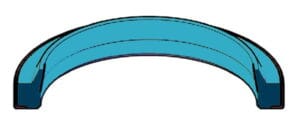
Combined oil seal:
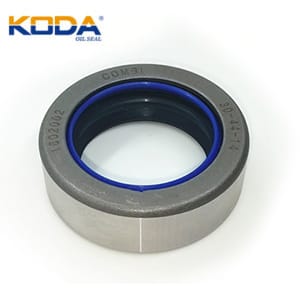
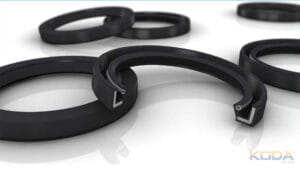
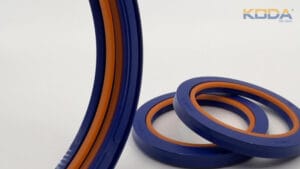
The combined oil seal (also known as a composite oil seal) is an industrial mechanical seal component with an integrated design. Its core function is to accurately block the leakage of lubricating media and working fluids inside the equipment while resisting the intrusion of external environmental pollutants. This type of seal is mostly made of synthetic rubber, metal skeleton and high-performance composite materials. It has excellent anti-wear and tear resistance and can be stably adapted to various harsh working conditions such as high temperature, high pressure and dust in the long term.
1. What exactly is a COMBI oil seal?
The COMBI oil seal is an integrated multi-lip composite sealing element. The core design logic is to integrate the functions of multiple independent components such as “main seal oil seal + dust ring + retaining ring + antifouling ring” in the traditional sealing solution into a single integrated structure. At the same time, special structural and material optimizations have been made for extreme working conditions such as heavy load, multiple impurities, high and low temperature alternating, and high-pressure impact.
Different from the limitations of traditional single-lip and double-lip oil seals that can only achieve a single medium seal, COMBI oil seals can simultaneously achieve five core functions: internal medium sealing, external impurity protection, installation and positioning enhancement, automatic wear compensation, and high-pressure impact buffering. It originated from the heavy-load wheel hub sealing scenario of mobile machinery and has now been extended to the two core sealing areas of rotational motion and reciprocating motion. It is one of the preferred solutions for high-reliability sealing of industrial equipment and complies with ISO 6194 and GB/T 9877. And other international and domestic seal standards and specifications.
2. Core structure and sealing technology principles of COMBI oil seal
The core technical advantage of COMBI oil seals comes from their modular structural design. Each structure is targeted at solving customers’ actual pain points, rather than simply stacking functions. The core structure of the mainstream heavy-duty COMBI oil seal is divided into five modules.
1. Progressive multi-lip sealing system
This is the core functional module of the COMBI oil seal and the core difference from traditional oil seals. The conventional heavy-duty COMBI oil seal adopts a 3-5 lip progressive design, with clear functional stratification from the outside to the inside, completely solving the core contradiction of traditional oil seals of “anti-fouling but not pressure-bearing, pressure-bearing but not anti-fouling”:
Outer anti-mud lip: It adopts a large interference and high tear resistance design. The lip is oriented opposite to the direction of impurity intrusion. It can directly block large particle impurities such as mud, sand and gravel, and sewage. It is the first line of defense of the sealing system and solves the pain point of rapid intrusion of impurities under outdoor wading and mud operation conditions;
Middle layer dust-proof buffer lip: adopts low friction and high elasticity design to intercept the fine dust leaked by the first line of defense, while buffering the radial runout and pressure impact of the shaft, preventing the main lip from being deformed by the impact of alternating loads, and solving the pain points of seal failure caused by eccentric wear of the lip caused by shaft runout and pressure impact;
The main pressure-bearing sealing lip of the inner layer: adopts mirror polishing treatment (lip roughness Ra≤0.2μm), and is designed with fluid dynamic pressure optimization, facing the sealing medium side. The core is responsible for sealing internal lubricating oil, hydraulic oil and other working media. It can withstand stable static and dynamic pressure and solve the core pain points of system leakage and internal leakage;
Some high-pressure products are equipped with a back-pressure support lip and a retaining ring to prevent the main lip from flipping and tearing under high pressure and solve the problem of seal failure under high-pressure impact conditions.
2. High-strength integrated skeleton structure
Traditional oil seals generally adopt a thin steel plate single-frame design, which is easy to deform under heavy load conditions and easy to tilt during installation, which is one of the core causes of seal failure. COMBI oil seals have made special enhancements to address this pain point:
It is made of thickened cold-rolled steel plate and is integrally stamped. Some heavy-duty models adopt an internal and external double-frame interlocking structure. The rigidity is more than 3 times higher than that of traditional oil seals. It can withstand even press-fitting force during installation, eliminating frame deformation and oil seal warping;
The outer diameter of the frame adopts a precision interference fit design, which fits the cavity wall more closely, can offset the thermal expansion and contraction deformation under alternating high and low temperatures, and can still maintain stable coaxiality after long-term use, solving the pain points of leakage at the cavity fitting and loose sealing after long-term use;
The skeleton and rubber body adopt a high-temperature vulcanization integrated molding process, with a bonding strength of ≥6 MPa, eliminating the risk of leakage caused by delamination of the rubber and skeleton.
3. Adaptive preload compensation system
After long-term use of traditional oil seals, lip wear will lead to a decrease in preload force, which is the core cause of leakage. The COMBI oil seal has a built-in dual-compound preload compensation system:
The main lip has a built-in corrosion-resistant stainless steel special-shaped spring, which can continuously provide a uniform radial preload force during the lip wear process, automatically compensate for the wear amount, maintain a stable fit between the lip and the shaft surface, and solve the pain points of preload force attenuation and leakage after long-term use;
The auxiliary lip adopts a self-tightening structure design, which can provide stable fitting pressure without the need for springs while avoiding the risk of spring rust and falling off, and is suitable for working conditions with lots of water and corrosion.
4. High-performance elastomer material formula system
The service life and working condition adaptability of COMBI oil seals mainly depend on the selection of rubber materials. According to the working condition requirements of different customers, mainstream products use four major categories of modified materials to completely solve the pain points of poor adaptability of traditional oil seal materials:
| Material type | Performance parameters | Adapt to working conditions | Solve customer pain points |
|---|---|---|---|
| Nitrile rubber (NBR) | Temperature resistance range - 40℃~120℃, resistant to mineral oil and wear, high cost performance | Equipment for general working conditions, normal temperature and pressure, and mineral oil media | Balance procurement costs and basic performance to solve general sealing needs under normal working conditions |
| Hydrogenated nitrile rubber (HNBR) | Temperature resistance range - 40℃~150℃, ozone resistance, tear resistance, and wear resistance are 3 times higher than NBR, resistant to synthetic oil and mild corrosion | Working conditions with heavy loads, alternating loads, and certain chemical corrosion, such as engineering machinery and agricultural machinery drive axles | It solves the pain points of early wear and short service life of oil seals under frequent starts and stops and heavy load conditions. The service life is 2-4 times longer than that of NBR. |
| Fluorine rubber (FKM/Viton) | Temperature resistance range - 20℃~200℃, resistant to strong acids and alkalis, special media, and excellent aging resistance | High temperature, strong corrosion, special medium working conditions, such as chemical equipment, metallurgical machinery | Solve the pain points of rapid aging and swelling failure of oil seals under high temperature and chemical corrosion conditions |
| Polyurethane (PU) | Ultra-high wear resistance, tear resistance, high hardness, excellent high pressure resistance, temperature resistance range - 30℃~80℃ | Hydraulic cylinder piston rod reciprocating motion seal, high pressure and high frequency working conditions | It solves the pain points of rapid oil seal wear, internal leakage, and insufficient system pressure under reciprocating motion conditions. The wear resistance is more than 5 times higher than that of rubber. |
5. Low-friction optimized design
Considering the pain points of traditional oil seals such as large lip friction coefficient, rapid operating temperature rise, and high-energy consumption, COMBI oil seals have made special optimizations: the lip adopts a hydrodynamic groove design, which can form a stable lubricating oil film during operation, reducing the friction coefficient by more than 30%, and the operating temperature rise by 15-20°C. This not only extends the service life of the oil seal and shaft but also reduces the power loss of the equipment, achieving energy saving and consumption reduction.

3. The core value of COMBI oil seal compared with traditional sealing solutions
Many customers will pay attention to: The purchase cost of a COMBI oil seal is higher than that of a traditional single-lip oil seal. Why can it reduce the overall cost? The core reason is that it solves the comprehensive cost of the entire life cycle of customer equipment rather than the simple purchase cost. The core advantages and values are as follows:
1. One-stop sealing solution, significantly reducing procurement, installation and management costs
The traditional sealing solution requires the purchase of multiple independent components such as the main oil seal, dust ring, back-up ring, and anti-fouling ring. It requires docking with multiple suppliers, and the cost of warehousing management and incoming material inspection is high. It requires multiple processes during installation and is prone to problems such as installation sequence errors, coaxiality deviations, and lip scratches. The installation defect rate is as high as more than 30%. COMBI oil seals adopt an integrated design. The entire seal layout can be completed in one purchase and installation. The installation defect rate is reduced by more than 90%, significantly reducing procurement management costs and installation labor costs. At the same time, it avoids the problem of tolerance accumulation in the cooperation of multiple components and reduces the risk of early failure caused by installation from the source.
2. Extreme protection in all working conditions to prevent sealing failure caused by impurities
Traditional oil seals can only cope with clean, impact-free conventional working conditions. In harsh environments such as mud, water, sand, and dust in the wild, impurities can easily enter the sealing surface and scratch the lip, causing leakage. This is the primary reason for oil seal failure in engineering machinery, agricultural machinery and other equipment (accounting for more than 60%). The progressive multi-lip design of the COMBI oil seal forms a layer-by-layer interception protection system, which can completely block the intrusion of mud, sand, dust and other impurities and protect the main seal lip from damage. Even under extreme working conditions of long-term water and mud operations, it can still maintain stable sealing performance, and its service life is 2-5 times longer than that of traditional oil seals, significantly reducing the frequency and cost of equipment shutdowns and maintenance.
3. High-pressure resistance, impact resistance, and stable sealing suitable for heavy load conditions
The rated pressure-bearing capacity of traditional single-lip oil seals generally does not exceed 0.5MPa. Under the conditions of pressure shock in the hydraulic system and shaft beating of heavy-load equipment, lip flipping, tearing, and leakage can easily occur, resulting in insufficient system pressure and failure of operation. The main lip of the COMBI oil seal adopts a pressure-bearing support structure. The high-pressure product can withstand dynamic pressures of 3-5 MPa, and the static pressure-bearing capacity can reach more than 10MPa. It can also adapt to working conditions with shaft radial runout ≤0.05 mm, cope with extreme scenarios such as heavy loads, alternating loads, and pressure shocks, and completely solve the problems of seal failure and system leakage under high-pressure conditions.
4. Wide temperature range, strong adaptability, covering all scene usage requirements
Traditional oil seals have a narrow temperature resistance range. The rubber hardens and loses elasticity at low temperatures and ages and cracks rapidly at high temperatures. It cannot adapt to scenarios such as the large temperature difference between north and south and the continuous operation of equipment with rising temperatures. COMBI oil seals can cover a wide temperature range working environment of -40°C to 200°C through optimized material formulas. At the same time, they can be adapted to materials for different media such as mineral oil, synthetic oil, water glycol, acid-base media, pesticides and fertilizers. Whether it is severe cold areas in the north, high temperature and humidity environments in the south, or chemical corrosion conditions, it can maintain stable sealing performance and solve the pain point of poor oil seal adaptability caused by complex working conditions.
5. Reduce the comprehensive cost of the entire life cycle and enhance the core competitiveness of equipment
For equipment manufacturers, the high reliability of COMBI oil seals can significantly reduce the after-sales failure rate of equipment and improve brand reputation; for end users, although the single purchase cost of COMBI oil seals is higher than traditional oil seals, the replacement cycle can be extended from 3-6 months to 12-24 months, reducing downtime losses, labor maintenance costs, and parts replacement costs. Based on comprehensive calculations, the entire life cycle cost can be reduced by more than 40%.
4. Core application scenarios of COMBI oil seals
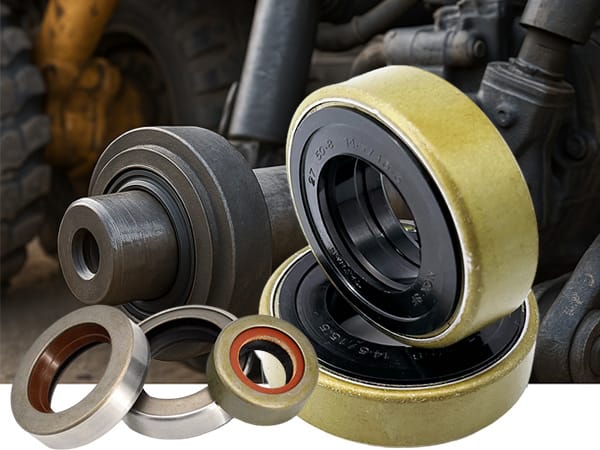
Based on its integration and high reliability characteristics, COMBI oil seals have covered almost all sealing scenarios under heavy loads and harsh working conditions. The core application areas and pain points solved are as follows:
1. Engineering machinery industry: wheel hubs, traveling motors, hydraulic cylinders, boom cylinders, and steering systems for excavators, loaders, bulldozers, road rollers, and cranes. It solves the pain points of frequent oil seal failure and equipment shutdown under muddy water, sand and gravel, and heavy-load impact conditions on the construction site and ensures the construction schedule.
2. Agricultural machinery industry: drive axles, gearboxes, hubs, and hydraulic systems of tractors, combine harvesters, rice transplanters, and plant protection machines. Solve the pain points of farmland mud, corrosion of pesticides and fertilizers, and inability to shut down seasonal operations, ensure zero-fault operation of equipment during busy farming seasons, and avoid huge losses caused by delays in farming.
3. Commercial vehicle and special vehicle industry: wheels, axles, gearboxes, and steering systems for heavy trucks, buses, mining dump trucks, sanitation trucks, and fire trucks. It solves the problem of oil seal failure caused by heavy-duty long-distance driving and complex road conditions, avoids safety accidents such as brake failure caused by oil leakage, and reduces maintenance costs.
4. Hydraulic and pneumatic industry: reciprocating and rotating seals of hydraulic cylinders, piston rods, hydraulic motors, and pump valves. It solves the pain points of rapid oil seal wear, system leakage, and insufficient pressure under high-pressure and high-frequency reciprocating motion conditions and ensures the stable operation of the hydraulic system.
5. General industrial industry: shaft and roller seals of mining machinery, metallurgical equipment, papermaking machinery, chemical equipment, and conveying equipment. It solves the pain points of rapid aging and short service life of oil seals under high temperature, corrosion, and dusty working conditions, extends the equipment maintenance cycle, and reduces production shutdown losses.
5. Precise selection guide for COMBI oil seals
80% of early oil seal failures are caused by incorrect selection. From the perspective of customer use, the core principle of selection is to give priority to matching working conditions rather than cost. The core selection steps and key parameters are as follows:
1. Confirm the core sports form and choose the right product category
COMBI oil seals are divided into two core categories. Wrong selection will directly lead to failure:
Rotary motion COMBI oil seal: suitable for rotational motion scenarios such as wheels, shafts, motors, etc., focusing on rotation speed, radial runout, and temperature parameters;
Reciprocating COMBI oil seal: adapted to reciprocating motion scenarios such as hydraulic cylinder piston rods, focusing on pressure, reciprocating frequency, and stroke parameters.
2. Match the core parameters of the working conditions and lock the product specifications
Working pressure: Select according to the highest dynamic working pressure of the system. The conventional type is suitable for working conditions of ≤0.5MPa, the medium-pressure type is suitable for 0.5-3MPa working conditions, and the high-pressure type is suitable for 3-5MPa working conditions. For ultra-high-pressure working conditions, a reinforced product with a retaining ring is required to avoid the flipping of the high-pressure lower lip.
Working temperature: Based on the minimum and maximum temperature of long-term operation of the equipment, give priority to products whose long-term operating temperature is in the middle range of the material’s temperature resistance range to avoid accelerated aging under long-term use at extreme temperatures.
Media compatibility: Confirm the type of sealing media (mineral oil, synthetic oil, water-based media, acid-base media, etc.), select materials that are fully compatible with the media, and eliminate the risk of material swelling, hardening, and cracking.
Linear speed of movement: The linear speed of the shaft needs to be calculated for rotational movement scenarios. The conventional type is suitable for working conditions of ≤8 m/s, and the high-speed type is suitable for working conditions of 8-15 m/s. Ultra-high-speed working conditions require customized products with optimized fluid dynamic pressure design to avoid lip heating and wear.
Environmental working conditions: For working conditions with a lot of muddy water and dust, you need to choose products with multiple lips to strengthen anti-fouling. For working conditions with corrosion, you have to choose chemical corrosion-resistant materials to avoid early failure caused by insufficient protection.
3. Match the installation dimensional accuracy to ensure the sealing effect
Dimensional tolerance: H8 is recommended for shaft diameter tolerance, and H8 is recommended for cavity hole diameter tolerance. The interference amount must be strictly implemented in accordance with the manufacturer’s sample. Insufficient interference amount will cause leakage of the outer diameter, and excessive interference amount will cause installation difficulties and frame deformation.
Surface roughness: The recommended roughness of the sealing mating surface of the shaft is Ra0.2-0.8μm, and the recommended roughness of the inner wall of the cavity hole is Ra1.6-3.2μm. Too high a roughness will accelerate lip wear, and too low a roughness will prevent the lip from forming a stable lubricating oil film.
Geometric tolerance: The radial circular runout of the rotating shaft needs to be controlled within 0.05 mm, and the coaxiality between the shaft and the cavity needs to be controlled within 0.1 mm to avoid eccentric lip wear caused by excessive geometric tolerance.
6. COMBI oil seal installation pit avoidance and operating specifications
Even if you choose the right product, improper installation operations will still cause more than 40% of early failures. From the customer’s on-site operation perspective, the core installation specifications and pitfall avoidance points are as follows:
1. Preparations before installation
Unpacking inspection: Confirm that the oil seal model matches, check whether the lip is scratched or deformed, whether the spring is detached, whether the frame is deformed, and whether the rubber body is cracked or aged, and installation of unqualified products is strictly prohibited.
Thorough cleaning: The installation mating surfaces of the shaft and cavity must be thoroughly cleaned to remove burrs, iron filings, oil, dust, and rust. Even tiny iron filings will scratch the lips and cause permanent leakage.
Chamfer processing: The installation end of the shaft and the installation end of the cavity hole must be processed with a 15°-30° lead-in chamfer to remove sharp corners and burrs to avoid scratching the lip during installation.
Pre-lubrication: Evenly apply clean lubricating oil compatible with the system medium on the main lip, auxiliary lip, and outer diameter mating surface of the oil seal. It is strictly prohibited to use grease containing solid particles to avoid dry friction and scratching the lips during installation.
2. Core specifications for installation and operation
Special tools: A special installation sleeve must be used. The inner diameter of the sleeve is 0.1-0.2mm larger than the outer diameter of the oil seal, and the outer diameter is 0.1-0.2mm smaller than the cavity aperture. It is strictly forbidden to hit the oil seal directly with a hammer or screwdriver; otherwise, it will cause frame deformation and lip damage.
Installation direction: The main sealing lip must face the sealing medium side, and the dust-proof and anti-fouling lip must face the external environment side. Reverse installation is strictly prohibited, as reverse installation will directly lead to sealing failure.
Pressing operation: Place the oil seal flat at the entrance of the cavity and keep it coaxial with the cavity. Use a press or special tool to press the oil seal smoothly into the cavity to the designed position. It is strictly forbidden to tilt the press installation to avoid warping of the oil seal and flipping of the lip.
Protective measures: Keyways, splines, threads and other sharp corners on the shaft must be wrapped with special sheaths during installation to avoid scratching the oil seal lip.
3. Post-installation inspection and trial operation
Static inspection: After the installation is completed, check whether the oil seal fits the cavity end face flatly, without warping or deformation, the spring does not fall off, and the lip does not flip.
Manual turning: Manually turn the shaft to confirm that there is no jamming, no abnormal noise, and smooth rotation to avoid running wear caused by lip flipping and jamming.
Trial operation: After the equipment is started, run it at low-pressure and low speed for 30 minutes. Check the oil seal for leakage and abnormal temperature rise. If there are no abnormalities, gradually increase it to the rated working condition. It is strictly prohibited to operate directly at full load.
7. Common faults and quick solutions of COMBI oil seals
For the most common fault problems encountered by customers at the site, we have sorted out the core fault phenomena, causes and quick solutions to help you quickly troubleshoot and solve the problem:
| Fault phenomenon | Core reasons | Solution |
|---|---|---|
| Oil leakage from oil seal lip | 1. The oil seal is reversed and the main lip is not facing the medium side. 2. There are scratches and burrs on the shaft surface, and the roughness exceeds the standard. 3. Foreign matter enters during installation and the lip is scratched. 4. The spring falls off and the preload force is insufficient. 5. Media and materials are incompatible, lip swelling/hardening | 1. Reinstall and confirm that the main lip is oriented correctly 2. Repair the shaft surface, polish it to standard roughness, and replace it with a new oil seal. 3. Thoroughly clean the shaft and cavity, replace the oil seal with a new one, and take protective measures during installation. 4. Replace the new oil seal and confirm that the spring is installed in place 5. Replace the oil seal with a material compatible with the medium |
| Leakage at the joint between the outer diameter of the oil seal and the cavity | 1. The cavity aperture tolerance exceeds the standard and the interference amount is insufficient. 2. The oil seal is tilted during installation and the frame is deformed. 3. There are scratches and burrs on the inner wall of the cavity and poor sealing. | 1. Repair the cavity aperture and replace the oil seal with matching size 2. Use special tools to reinstall it flatly and make sure the oil seal is flat and in place. 3. Repair the inner wall of the cavity and reinstall after cleaning. |
| Early wear of oil seals and abnormally shortened service life | 1. Poor lubrication, dry lips and mouth friction 2. External impurities invade and scratch the lips 3. Shaft runout and coaxiality exceed the standard, and the lip is eccentrically worn 4. Working conditions exceed the rated range (over temperature, over pressure, over speed) | 1. Ensure that the lip is effectively lubricated and replace the appropriate lubricating oil. 2. Check the dust-proof lip and replace it with a multi-lip anti-fouling oil seal. 3. Repair the shape and position tolerance of the shaft and control it within the standard range 4. Replace the oil seal that matches the working condition level |
| The oil seal lip turns over and cracks | 1. The system pressure exceeds the standard and exceeds the pressure bearing capacity of the oil seal. 2. Improper installation operation, scratched lips 3. Rubber becomes hard at low temperatures and lacks elasticity. 4. The shaft runout is too large and the lips and mouth become deformed. | 1. Replace the high-pressure reinforced oil seal and add a support retaining ring 2. Replace the new oil seal and install it with special tools in strict accordance with the specifications. 3. Replace the oil seal with low temperature resistant material 4. Repair the radial runout of the shaft and replace the anti-eccentric wear oil seal. |
Conclusion
The essence of the COMBI oil seal is not a simple sealing accessory but a set of full-scenario and full-life-cycle sealing solutions for heavy-load and harsh working conditions of industrial equipment. It solves the core pain points of traditional oil seals such as the inability to balance anti-fouling and pressure-bearing, short lifespan, cumbersome installation, and poor adaptability to working conditions from the perspective of structural design, material formula, and installation adaptation. It ultimately helps customers achieve the core goals of “reducing leakage failures, reducing downtime losses, controlling comprehensive costs, and improving equipment reliability.”
As industrial equipment develops towards heavy-duty, high efficiency and high reliability, COMBI oil seals are gradually replacing traditional multi-component sealing solutions and becoming the standard sealing configuration in engineering machinery, agricultural machinery, hydraulic systems, commercial vehicles and other fields. For equipment manufacturers and end users, choosing the right COMBI oil seals and making good use of COMBI oil seals will solve the core problem of equipment sealing from the source and achieve a double improvement in equipment operating efficiency and economic benefits.