
O-groove design is one of the most critical factors influencing the performance, reliability, and lifespan of O-ring sealing systems. While O-rings themselves are simple components, their effectiveness depends heavily on how the groove is engineered. A poorly designed groove can lead to leakage, premature wear, extrusion, or even catastrophic system failure.
This guide provides comprehensive guidelines and recommendations for O-groove design, helping engineers and designers optimize sealing performance across static and dynamic applications.
📐 Key Insight: The success of an O-ring seal is determined more by groove design than by the O-ring itself.
What Is an O-Groove?
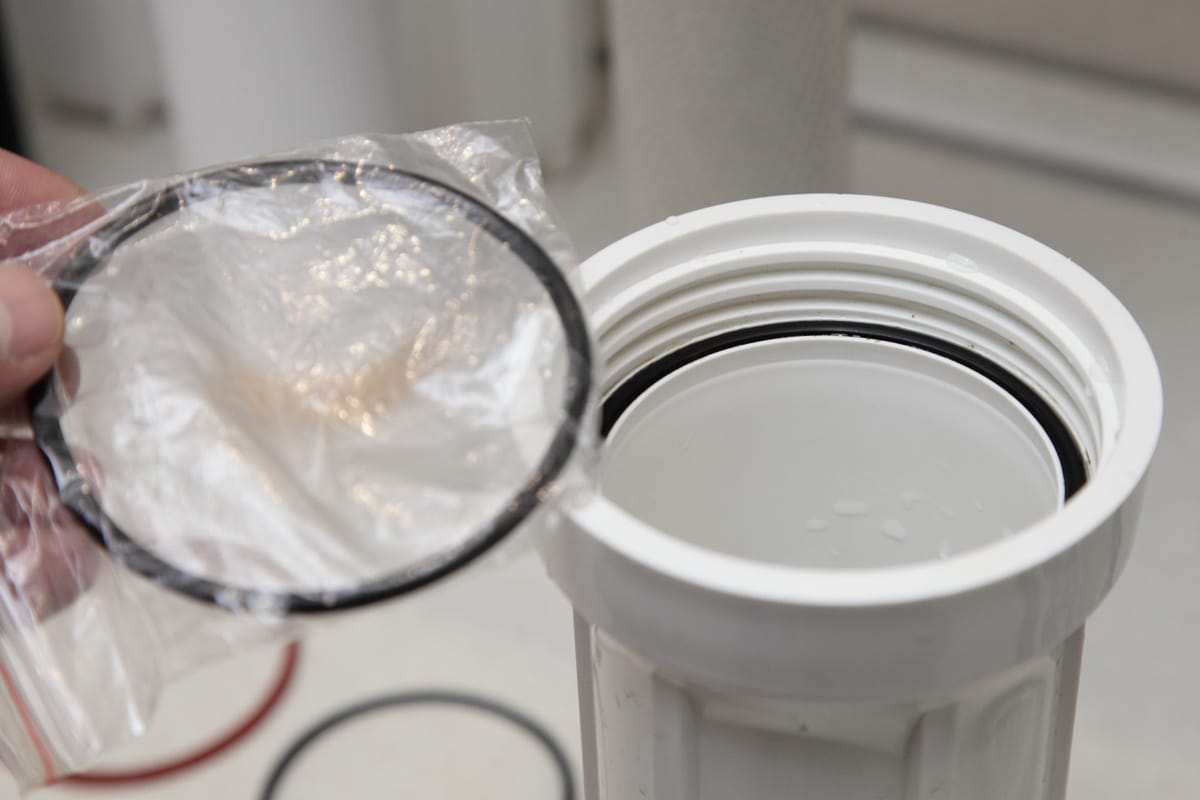
An O-groove is the cavity or channel machined into a component to house an O-ring. It provides the necessary space for compression, deformation, and sealing under pressure.
The design of the groove must accommodate the O-ring’s dimensions, material properties, and operating conditions.
Accurate O-groove Design ensures optimal sealing performance and long service life.
Key Functions of O-Groove Design
Proper Compression
The groove ensures the O-ring is compressed correctly to create an effective seal.
Retention
It holds the O-ring in place during installation and operation.
Deformation Space
Provides space for the O-ring to deform under pressure without damage.
Extrusion Control
Limits the movement of the O-ring to prevent extrusion into gaps.
⚙️ Engineering Insight: Groove geometry directly influences sealing efficiency and failure resistance.
Types of O-Groove Designs
Static Face Seal Groove
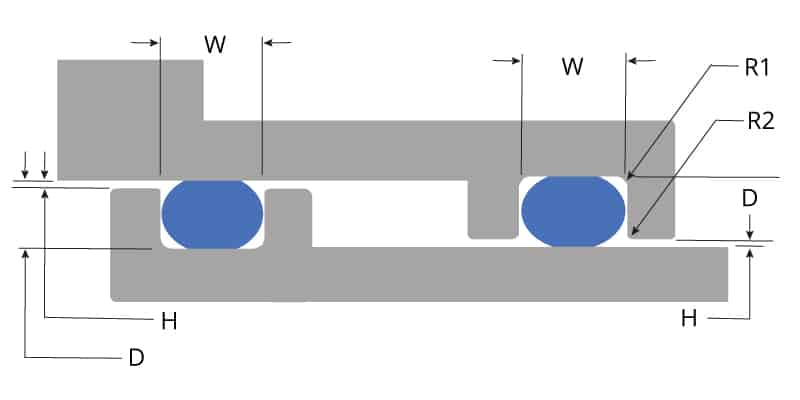
Used where two flat surfaces are pressed together, compressing the O-ring axially.
Radial Seal Groove
Designed for sealing between cylindrical surfaces, such as shafts and bores.
Dynamic Groove Design
Used in applications involving motion, requiring careful consideration of friction and wear.
Proper O-groove Design varies depending on the sealing configuration.
🔄 Design Tip: Always match groove type to the application (static vs dynamic) to avoid performance issues.
Key Design Parameters
Groove Width
The groove must be wide enough to allow for O-ring expansion but not so wide that it causes instability.
Groove Depth
Depth determines compression level. Too shallow causes over-compression; too deep results in leakage.
Compression Ratio
Typically ranges from 10% to 30% depending on the application.
Clearance Gap
The gap between components must be minimized to prevent extrusion.
📊 Design Insight: Precision in groove dimensions is critical for balancing sealing force and material stress.
Material Considerations
The choice of O-ring material directly impacts groove design requirements.
- NBR for general applications
- FKM for high temperature environments
- EPDM for water and steam resistance
- Silicone for low-temperature flexibility
Different materials require adjustments in compression and groove tolerances.
High-quality O-groove Design ensures compatibility with selected materials.
Surface Finish Requirements
Surface finish plays a crucial role in sealing performance.
- Smooth surfaces reduce wear
- Rough surfaces can damage O-rings
- Proper finishing improves sealing efficiency
✨ Surface Insight: A fine surface finish enhances sealing reliability and extends O-ring life.
Tolerance and Manufacturing Considerations
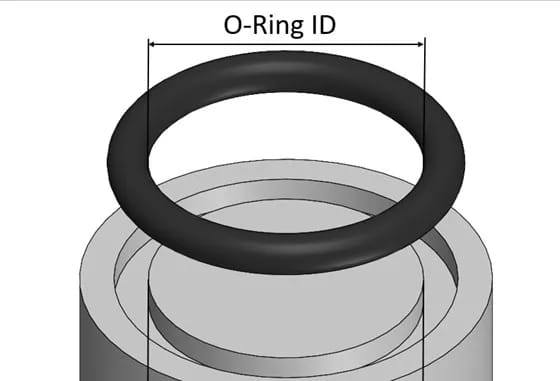
Manufacturing tolerances must be carefully controlled to ensure proper fit and function.
- Maintain tight dimensional tolerances
- Avoid sharp edges that can damage O-rings
- Ensure consistent groove geometry
🔧 Manufacturing Insight: Even minor deviations in groove dimensions can significantly affect sealing performance.
Common Design Mistakes
Over-Compression
Leads to excessive stress and reduced lifespan.
Under-Compression
Results in leakage and poor sealing.
Excessive Clearance
Increases the risk of extrusion.
Improper Material Selection
Causes incompatibility with operating conditions.
⚠️ Warning: Most sealing failures can be traced back to poor groove design rather than O-ring defects.
Best Practices for O-Groove Design
- Follow industry standards for groove dimensions
- Match compression ratio to application type
- Minimize clearance gaps
- Use backup rings for high-pressure systems
- Ensure proper lubrication during assembly
Reliable O-groove Design is essential for achieving optimal sealing performance.
✔️ Best Practice: Always validate groove design through testing under real operating conditions.
Applications of O-Groove Design
- Hydraulic systems
- Pneumatic systems
- Automotive engines
- Industrial machinery
- Aerospace equipment
Proper groove design ensures reliable sealing across these diverse applications.
Conclusion
O-groove design is a fundamental aspect of O-ring sealing systems, directly influencing performance, durability, and reliability. By carefully considering parameters such as groove dimensions, material compatibility, surface finish, and operating conditions, engineers can optimize sealing solutions for a wide range of applications.
Understanding and applying these guidelines ensures reduced failure rates, improved efficiency, and longer service life for sealing systems.
Investing in precise O-groove Design ultimately leads to superior sealing performance and cost savings.
Frequently Asked Questions
1. What is the purpose of an O-groove?
It holds and compresses the O-ring to create an effective seal.
2. What happens if the groove is too deep?
The O-ring will not compress properly, leading to leakage.
3. How does pressure affect groove design?
Higher pressure requires tighter tolerances and possibly backup rings.
4. Can one groove design fit all applications?
No, groove design must be tailored to specific operating conditions.
5. Why is surface finish important?
It affects friction, wear, and overall sealing performance.