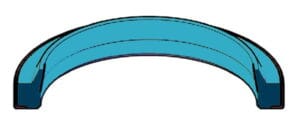

What is vulcanized rubber?
Vulcanized rubber refers to a stable polymer material formed by the vulcanization process of natural or synthetic rubber. Before the advent of vulcanization, raw rubber was directly extracted from the sap of rubber trees. It was sticky, soft, low in strength, and prone to aging and deformation. It was also sticky at high temperatures and brittle at low temperatures, failing to meet the needs of industrial applications. In 1839, Charles Goodyear accidentally achieved a cross-linking reaction of rubber molecules by heating a mixture of rubber and sulfur, thus creating vulcanized rubber. After vulcanization, a stable three-dimensional network structure forms inside the rubber, significantly improving its strength, elasticity, abrasion resistance, temperature resistance, and aging resistance. It transformed from a fragile raw material into a stable and durable industrial material, widely used in tires, seals, hoses, shock-absorbing products, and other fields, truly ushering in the development of the modern rubber industry.
What is sulfidation?
Rubber vulcanization is a key chemical processing technique that transforms natural and synthetic rubber into stable and durable polymer materials. This process involves heating a mixture of rubber and additives such as sulfur to create chemical cross-links between the rubber’s polymer chains. According to research published in ScienceDirect, this cross-linking significantly improves rubber’s elasticity, reduces surface tack, and enhances its resistance to environmental degradation. Vulcanized rubber exhibits excellent shape retention, compressive resilience, and good heat and chemical resistance.
Whether it’s natural rubber from the Brazilian rubber tree (Hevea brasiliensis) or synthetic rubbers like styrene-butadiene rubber (SBR), vulcanization ensures stable quality, dimensional accuracy, and superior performance under harsh operating conditions. These outstanding characteristics make vulcanized rubber an indispensable base material for various modern rubber products.
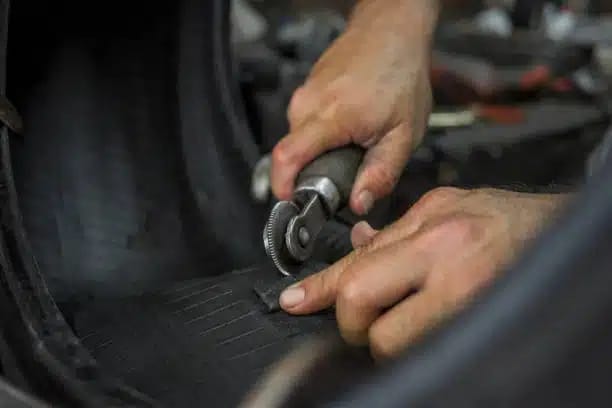
How is vulcanized rubber made?
Vulcanized rubber is produced by processing natural or synthetic rubber through a vulcanization process.
First, raw rubber is used as the raw material. Sulfur, accelerators, activators, antioxidants, reinforcing fillers, and other additives are added according to the formula. This mixture is thoroughly mixed through internal mixing or open milling to ensure that all materials are evenly dispersed in the rubber matrix. After uniform mixing, the rubber compound is placed in a mold or molding equipment and heated for vulcanization under specific temperature and pressure. Under heating conditions, sulfur reacts chemically with the rubber polymer chains, causing the originally linear molecular chains to interconnect and form a stable three-dimensional network cross-linked structure. After heat preservation vulcanization and cooling for setting, the originally soft and sticky rubber compound is transformed into vulcanized rubber with high strength, good elasticity, dimensional stability, and heat and aging resistance.
What are the uses of vulcanized rubber?
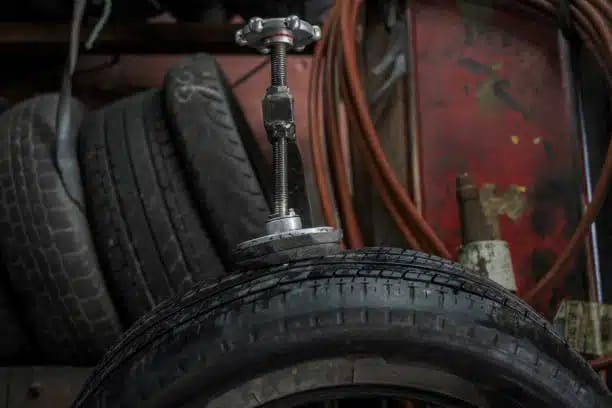
Vulcanized rubber is widely used in modern industrial products, with automobile tires being its most representative and largest-volume application. Carbon black reinforcing agents are typically added during production to enhance tire strength and durability. With global tire production exceeding one billion units annually, the tire industry is the most important downstream application sector for vulcanized rubber.
Other common uses of vulcanized rubber include:
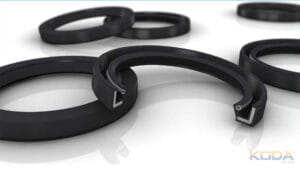
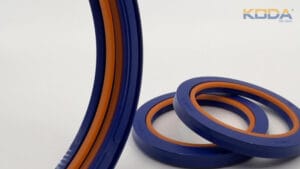
1. Industrial Sealing and Vibration Damping: Oil seals, O-rings, sealing rings, gaskets, rubber shock absorbers, buffer blocks, and dust covers.
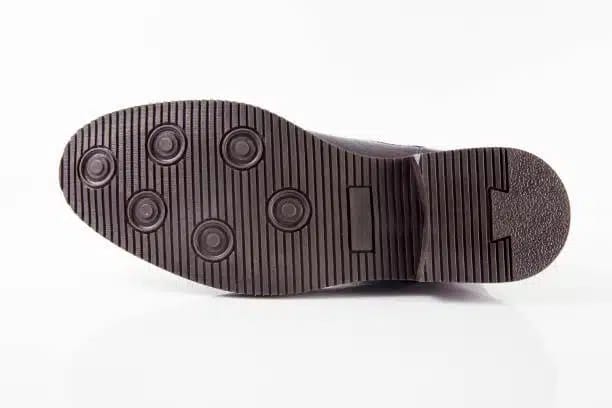
2. Daily Necessities: Shoe soles, heels, athletic shoe materials; rubber bands, rubber gloves, hot water bottles; erasers, yoga mats, anti-slip mats.
3. Transportation and Machinery Parts: Rubber hoses, belts, conveyor belts, rubber tracks, mudguards, sealing strips, rubber bushings, and dust covers.
4. Construction and Engineering: Waterproof membranes, waterstops; bridge bearings, shock absorber blocks; pipe sealing rings, anti-corrosion rubber linings.
5. Electrical and Electronic: Wire and cable insulation; buttons, plug sheaths, seals.
Advantages of vulcanized rubber
Some of the most valuable advantages of vulcanized rubber include:
1. Excellent elasticity and strong resilience: Quickly returns to its original shape after stretching and compression and is not prone to permanent deformation.
2. Excellent abrasion resistance: Not easily worn down by friction, resulting in a long service life, suitable for tires, seals, and shoe soles.
3. Strong aging and weather resistance: Resistant to sunlight, wind, rain, and ozone, and not prone to cracking or becoming sticky.
4. High and low-temperature resistance: Does not soften easily at high temperatures and does not harden or become brittle at low temperatures, making it suitable for a wide range of applications.
5. Oil and chemical corrosion resistance: Has good resistance to oils, weak acids, and weak alkalis, making it suitable for industrial sealing.
6. High strength and tear resistance: Tensile and tear resistance are far superior to uncured rubber, making it more robust and reliable.
7. Good insulation: Suitable for wire and cable insulation, electrical insulation, and sealing sheaths, etc.
Vulcanized rubber does not melt when heated.
Vulcanized rubber does not melt when heated; it only softens, carbonizes, or decomposes.
The reason is simple: after vulcanization, the rubber molecules form a three-dimensional cross-linked network structure, becoming a thermosetting material. This is fundamentally different from plastics, which can melt and be reshaped after heating.
This characteristic brings many practical advantages: it does not flow or deform at high temperatures; it is suitable for seals, oil seals, gaskets, tires, etc.; it has good dimensional stability and is heat and pressure resistant.
Abrasion resistance
This is one of its most valuable characteristics, making it an ideal material for manufacturing our various types of bearings. Its excellent wear resistance better resists friction, impact, and various types of wear, ensuring that the product is stable, reliable, and durable under complex working conditions.
Conclusion
The manufacturing process of vulcanized rubber differs from that of ordinary rubber. Thanks to its excellent physical properties, it is now widely used in numerous industries.
In short, vulcanized rubber is particularly important in the automotive sector, frequently used in the production of tires and various components to effectively improve vehicle performance and safety. It is also well-suited for making shoe soles, rain boots, and various durable outdoor products.
Vulcanized rubber possesses advantages such as abrasion resistance, good ductility, and resistance to aging, playing a vital role in various industries. From automobile manufacturing to everyday consumer goods, its wide application fully demonstrates its practicality and irreplaceable value. With increasing emphasis on environmental protection and sustainable development, vulcanized rubber will continue to play a significant role in the future.
FAQ
What are the differences between vulcanized rubber and regular rubber?
Vulcanized rubber has higher strength, better elasticity, is less prone to aging, and does not melt when heated; ordinary rubber is easily deformed, easily ages, and has poor heat resistance.
What makes vulcanized rubber so abrasion resistant?
It can withstand friction, impact and wear for a long time, with low loss and long service life, making it very suitable for seals, rings, transmission components, etc.
Are vulcanized rubber resistant to organic solvents?
Vulcanized rubber has strong chemical stability, is insoluble in most organic solvents, and has excellent resistance to oil and chemical corrosion.
Why is vulcanized rubber suitable for making sealing rings?
Because of its wear resistance, good elasticity, oil resistance, non-deformation, and high temperature resistance, it can work stably for a long time and is an ideal material for sealing rings.
How environmentally friendly is vulcanized rubber?
The production process is relatively clean, it is non-toxic and harmless during use, and it does not release harmful substances after disposal, making it a relatively environmentally friendly rubber choice for industrial and daily consumer goods.
How to determine if rubber has been vulcanized?
The core difference between vulcanized and non-vulcanized rubber lies primarily in their deformation recovery ability. Vulcanized rubber can quickly rebound and return to its original shape after being deformed by external force; while non-vulcanized rubber is difficult to recover and is prone to permanent deformation.
What is the difference between vulcanized rubber and molded rubber?
Vulcanized rubber is a material property (it undergoes vulcanization); molded rubber is a processing technique (it is formed by pressing with a mold).
These are not opposing concepts; many products are both molded and vulcanized.
Will vulcanized rubber melt when heated?
No. Vulcanized rubber will only soften or decompose when heated, it will not melt; it is a thermosetting material.