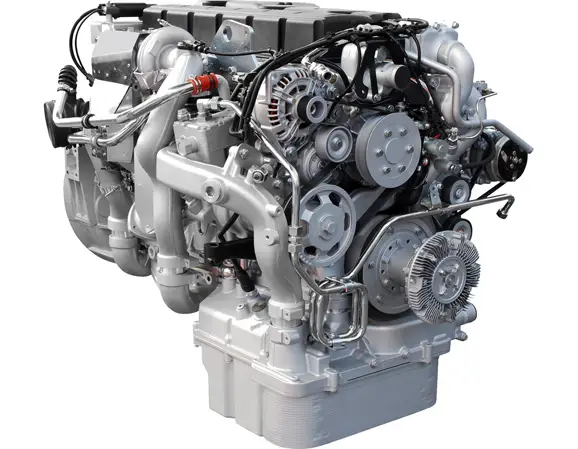
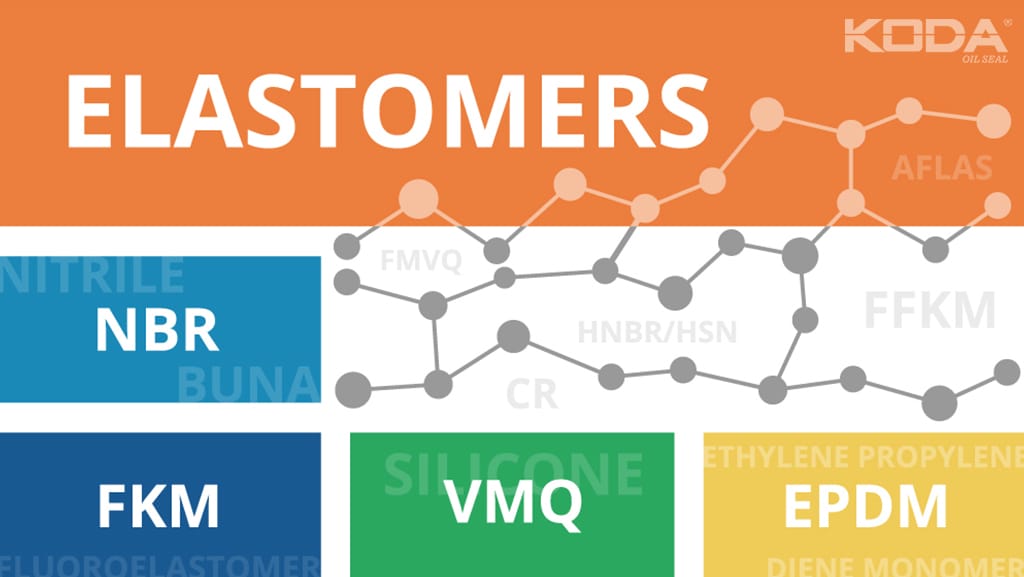
Elastomers play a critical role in modern industrial sealing systems, especially in the manufacturing and application of O-rings. From automotive engines and aerospace systems to food-grade processing equipment and hydraulic machinery, elastomer materials determine the reliability, durability, flexibility, and sealing performance of O-rings under various environmental conditions.
Understanding elastomer properties is essential for selecting the right sealing solution. Different elastomer compounds provide unique resistance to temperature, pressure, chemicals, abrasion, and aging. Choosing the wrong material may result in leakage, premature failure, costly downtime, or equipment damage.
📌 Important: The elastomer compound used in an O-ring directly affects sealing efficiency, service life, and operational safety in industrial systems.
What Is an Elastomer?
An elastomer is a polymer material with elastic properties that allow it to stretch under stress and return to its original shape once the stress is removed. These materials are commonly referred to as rubber materials and are widely used in sealing applications because of their flexibility and resilience.
In O-ring manufacturing, elastomers are engineered with additives, fillers, and curing agents to improve mechanical performance and environmental resistance.
The most common elastomer characteristics include:
- Excellent elasticity
- Compression recovery capability
- Chemical resistance
- Thermal stability
- Weather resistance
- Pressure sealing performance
High-quality O-Rings rely heavily on selecting the correct elastomer compound for specific operating environments.
Why Elastomers Are Important for O-Rings
O-rings function by compressing between two mating surfaces to block fluid or gas leakage. The elastomer material must maintain sealing integrity despite exposure to pressure fluctuations, chemicals, temperature changes, friction, and environmental aging.
If the elastomer lacks sufficient resistance properties, the O-ring may experience:
- Compression set
- Cracking
- Swelling
- Hardening
- Shrinkage
- Chemical degradation
- Thermal failure
⚠️ Seal Failure Risk: More than material hardness alone, elastomer compatibility with media and operating conditions is often the deciding factor in O-ring longevity.
Main Types of Elastomers Used in O-Rings

Nitrile Rubber (NBR)
Nitrile rubber, also called Buna-N, is one of the most commonly used elastomers in industrial sealing applications. It offers excellent resistance to petroleum-based oils and fuels while maintaining cost efficiency.
Key advantages include:
- Good oil resistance
- Excellent wear resistance
- Affordable material cost
- Wide industrial availability
Limitations include reduced resistance to ozone, sunlight, and extreme temperatures.
NBR O-Rings are commonly used in hydraulic systems, automotive engines, pumps, and pneumatic equipment.
Fluorocarbon Rubber (FKM / Viton®)
FKM elastomers are known for their exceptional chemical resistance and high-temperature stability. These materials are widely used in aerospace, automotive, and aggressive chemical environments.
Advantages include:
- Excellent heat resistance
- Outstanding chemical compatibility
- Low compression set
- Long service life
FKM materials generally perform well in temperatures above 200°C and are suitable for fuels, oils, and solvents.
🔥 High-Temperature Performance: FKM O-rings are among the best choices for demanding thermal environments requiring long-term sealing stability.
Silicone Rubber (VMQ)
Silicone elastomers offer excellent flexibility across wide temperature ranges. They are commonly used in medical, food-grade, and electronic applications.
Key properties include:
- Excellent low-temperature flexibility
- Good weather resistance
- Non-toxic formulations available
- Superior ozone resistance
However, silicone generally has lower abrasion and tear resistance compared to nitrile or fluorocarbon materials.
EPDM Rubber
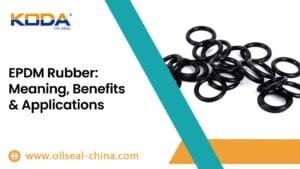
EPDM elastomers are widely used in water, steam, and outdoor sealing applications because of their excellent weather and ozone resistance.
Advantages include:
- Excellent water resistance
- Strong UV stability
- Good steam compatibility
- Outstanding outdoor durability
EPDM should not typically be used with petroleum oils or hydrocarbon-based fluids.
Hydrogenated Nitrile Rubber (HNBR)
HNBR is an enhanced version of nitrile rubber offering improved heat resistance, mechanical strength, and chemical durability.
It is commonly used in:
- Automotive timing systems
- Oilfield equipment
- Industrial hydraulic systems
- Refrigeration compressors
Key Elastomer Properties in O-Ring Performance
Compression Set Resistance
Compression set refers to the permanent deformation of an elastomer after prolonged compression. Low compression set is essential because O-rings must recover their original shape to maintain sealing pressure.
Poor compression set resistance may result in:
- Leakage
- Reduced sealing force
- Premature failure
- Pressure loss
Chemical Compatibility
Chemical exposure can cause swelling, cracking, softening, or hardening of elastomers. Selecting the proper elastomer ensures long-term sealing reliability in aggressive environments.
Chemical compatibility depends on:
- Fluid composition
- Operating temperature
- Pressure levels
- Exposure duration
🧪 Chemical Safety: Even high-quality elastomers can fail rapidly if exposed to incompatible chemicals for extended periods.
Temperature Resistance
Every elastomer has a minimum and maximum operating temperature range. Excessive temperatures may cause hardening, cracking, melting, or loss of elasticity.
Low temperatures can also reduce flexibility and increase brittleness.
Properly selected O-Rings must maintain sealing force throughout the entire operating temperature range.
Abrasion and Wear Resistance
Dynamic sealing systems expose O-rings to friction and movement. Elastomers with strong wear resistance help extend service life and reduce maintenance frequency.
NBR and HNBR generally provide better abrasion resistance than silicone materials.
How Elastomer Hardness Affects O-Rings
Elastomer hardness is commonly measured using the Shore A scale. Hardness affects sealing pressure, flexibility, and extrusion resistance.
Soft Elastomers
Lower hardness compounds provide:
- Better sealing at low pressure
- Improved surface conformity
- Enhanced flexibility
However, they may deform more easily under high pressure.
Hard Elastomers
Higher hardness compounds provide:
- Improved extrusion resistance
- Better high-pressure stability
- Enhanced wear resistance
The downside may include reduced flexibility and increased installation difficulty.
📏 Common Hardness Range: Most industrial O-rings are manufactured between 60 and 90 Shore A depending on application requirements.
Environmental Factors Affecting Elastomer Lifespan
Ozone and UV Exposure
Outdoor applications may expose elastomers to ozone and ultraviolet radiation. Materials like EPDM and silicone offer superior resistance compared to standard nitrile rubber.
Moisture and Steam Exposure
Steam systems require elastomers with strong hydrolysis resistance. EPDM is commonly selected for water and steam sealing applications.
Oxidation and Aging
Over time, oxygen and heat may gradually degrade elastomer structure. Proper storage and material selection help minimize aging-related failures.
Applications of Elastomer O-Rings
Elastomer O-rings are used in nearly every industrial sector because of their versatility and sealing efficiency.
Automotive Industry
- Fuel injectors
- Engine oil systems
- Air conditioning compressors
- Hydraulic braking systems
Aerospace Industry
- Fuel systems
- Hydraulic control systems
- Aircraft engines
- Environmental sealing systems
Food and Medical Equipment
- Sanitary pumps
- Medical fluid systems
- Food processing machinery
- Pharmaceutical equipment
Industrial Machinery
- Pumps and valves
- Hydraulic cylinders
- Pneumatic equipment
- Chemical processing systems
Selecting the proper elastomer-based O-Rings improves operational efficiency and reduces long-term maintenance costs.
How to Select the Right Elastomer for O-Rings
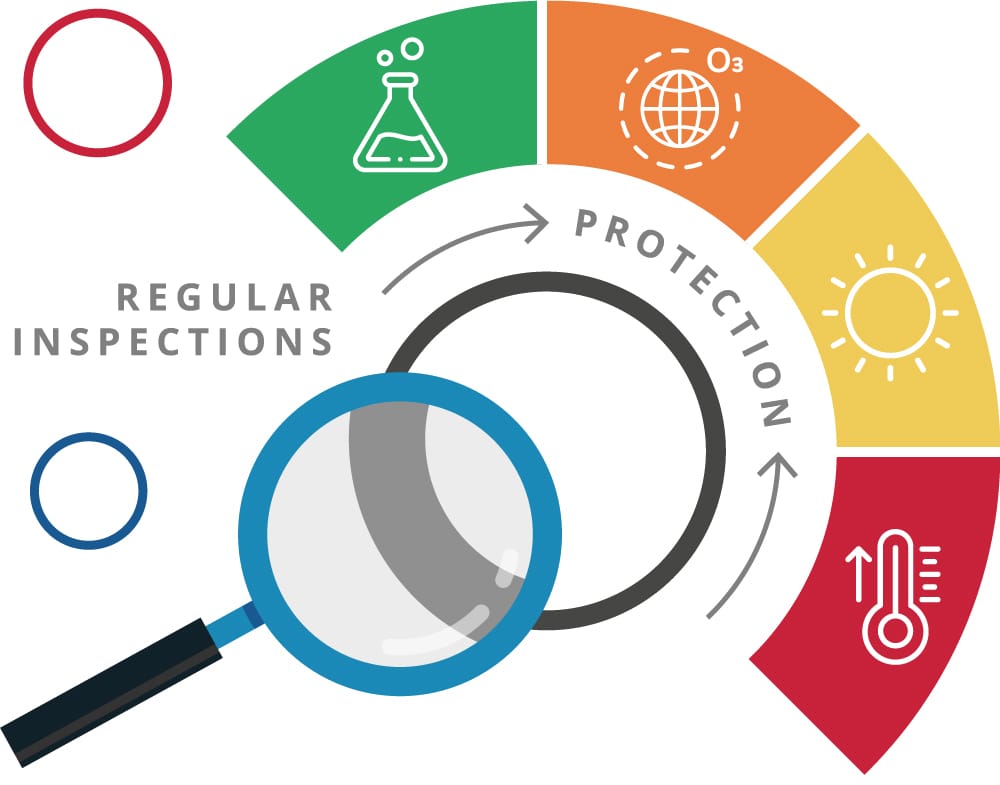
Proper material selection requires evaluating all operating conditions simultaneously.
Critical factors include:
- Operating temperature range
- Media compatibility
- Pressure levels
- Movement type
- Environmental exposure
- Regulatory requirements
- Expected service life
✔️ Engineering Recommendation: Always test elastomer compatibility under actual operating conditions before large-scale deployment in critical sealing systems.
Conclusion
Elastomers form the foundation of reliable O-ring sealing technology. Their elasticity, chemical resistance, temperature stability, and mechanical durability directly determine sealing performance across industrial applications.
Understanding elastomer behavior allows engineers and procurement teams to choose materials that maximize efficiency, reduce leakage risk, and extend operational lifespan. Whether using NBR for oil resistance, FKM for extreme temperatures, EPDM for water systems, or silicone for food-grade applications, selecting the right elastomer remains one of the most important factors in successful sealing system design.
High-performance O-Rings manufactured from properly selected elastomer compounds can significantly improve equipment reliability while minimizing downtime and maintenance expenses.
FAQ About Elastomer Comprehensive Guide
1. What is the most common elastomer used for O-rings?
Nitrile rubber (NBR) is one of the most commonly used elastomers because of its excellent oil resistance and affordable cost.
2. Which elastomer performs best at high temperatures?
FKM elastomers are widely recognized for excellent high-temperature and chemical resistance in demanding environments.
3. Why is chemical compatibility important for O-rings?
Incompatible chemicals can cause swelling, cracking, or hardening of elastomers, leading to seal failure and leakage.
4. What does compression set mean in elastomers?
Compression set refers to permanent deformation after prolonged compression, reducing an O-ring’s ability to maintain sealing pressure.
5. Which elastomer is best for water and steam applications?
EPDM elastomers are commonly preferred for water and steam systems because of their excellent moisture and weather resistance.