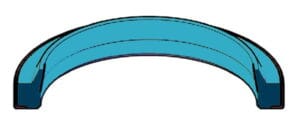
What is a TGR oil seal?
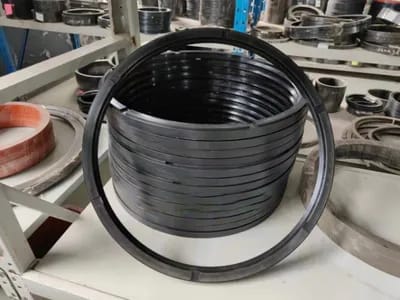
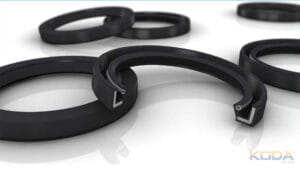
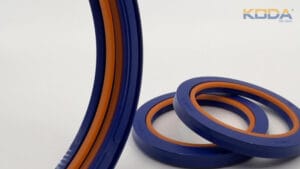
TGR oil seal are a type of textile rubber-reinforced rotary shaft oil seal with radial lubrication grooves. Their core design optimizes lip lubrication distribution through a single-sided radial groove, balancing sealing reliability and long service life. They are suitable for low-pressure, medium-to-high-speed shaft end sealing applications in industrial equipment. In their naming, “T” represents the textile rubber reinforcement structure, “G” represents the lubrication groove design, and “R” specifically indicates a radial-only lubrication groove layout, distinguishing them from the TGA model, which has both axial and radial grooves.
As a subcategory of industrial sealing, TGR oil seals have “precise lubrication + stable sealing” as their core advantages. They widely replace traditional grooveless oil seals, solving the problem of early leakage caused by dry lip friction and uneven lubrication. They are the preferred sealing solution for equipment such as motors, reducers, pumps, and agricultural machinery.
Core Structure and Working Principle of TGR Oil Seals
Key structural components
Structural Components | Core Function | Material & Design Details |
|---|---|---|
Textile Rubber Reinforced Backing | Provide rigid support, adapt to axial assembly, and resist housing deformation | Flexible composite structure, compatible with elastomers such as NBR, FKM, and HNBR |
Sealing Lip | Core sealing unit, forming a dynamic oil film seal with the shaft surface | Lathe-cut forming, with self-tightening force, suitable for shaft surface roughness Ra 0.3–0.5μm |
Radial Lubrication Grooves (Core Feature) | Guide uniform distribution of lubricating oil and reduce lip friction heat | Single-side radial layout only, accurately matching the lubrication and guiding needs of rotating shafts |
Stainless Steel Self-Tightening Spring | Maintain continuous preload between the lip and shaft surface, compensating for wear | AISI 302/316 material, anti-fall-off design, suitable for blind assembly scenarios |
Pressure Plate (Optional) | Achieve axial preload and enhance static sealing stability | Used with oil seals, requiring uniform tightening |
Working principle of TGR oil seal
TGR oil seals achieve sealing through a dual mechanism of “sealing lip preload + radial oil film lubrication”:
1. A self-tightening spring creates an interference fit between the lip and the shaft surface, establishing a basic sealing barrier to prevent media leakage;
2. The rotating shaft drives lubricating oil into the radial lubrication groove, which evenly distributes the oil to the lip contact surface, forming a stable hydrodynamic oil film. This reduces dry friction between the lip and the shaft surface, lowering heat generation and wear, while maintaining lubrication at the sealing interface and extending service life;
3. The textile rubber backing adapts to axial assembly, compensating for minor eccentricities between the housing and the shaft, improving equipment operational adaptability.
Advantages of TGR oil seal technology
1. Precise Lubrication, Eliminating Dry Friction and Early Leakage
Traditional grooveless oil seals are prone to localized lubrication deficiencies at the lip, leading to frictional heat buildup during high-speed operation, lip aging and cracking, and ultimately, oil leakage. The radial lubrication grooves of the TGR oil seal forcefully guide oil to evenly cover the lip, forming a stable oil film that reduces lip wear by more than 40%, significantly extending seal life.
2. Adaptable to a wide range of operating conditions, with enhanced compatibility
- Temperature range: -40℃ to +220℃ (adjusted according to elastomer material), covering both conventional industrial and extreme operating conditions;
- Speed limit: Up to 25 m/s, suitable for medium to high speed equipment (such as high-speed motors, precision pumps);
- Pressure range: 0–0.5 BAR (integral type), meeting low-pressure shaft end sealing requirements;
- Size coverage: Inner diameter 150 mm to 2000 mm (integral type), extra-large sizes can be achieved through hot vulcanization splicing.
3. Easy installation, adaptable to various assembly scenarios
Utilizing an axial assembly + flange fixing design, combined with the flexibility of the textile rubber backing, it can adapt to equipment with significant thermal expansion differences, such as aluminum housings. Installation efficiency is 30% higher than traditional oil seals. The matching pressure plate enables axial pre-tightening, preventing oil seal displacement, while the spring anti-drop design reduces the risk of blind installation and minimizes on-site assembly errors.
4. Customized materials, corrosion and aging resistant
Elastomers available include NBR (oil and wear resistant, for normal operating conditions), FKM (high temperature and chemical corrosion resistant, for extreme operating conditions), and HNBR (high strength and aging resistant). Precise selection can be made based on the type of medium (mineral oil, synthetic oil, acid and alkali solutions) to meet the media compatibility requirements of different industries such as chemical, food, and metallurgy.
TGR Oil Seal Application Scenarios and Selection Guide
1. Typical Application Scenarios
- Industrial Equipment: Motors, reducers, gearboxes, hydraulic pumps, air compressors;
- Transportation: Automobile engines, differentials, half shafts (HTGR series compatible);
- Agricultural Machinery: Harvesters, tractors, irrigation equipment;
- Special Working Conditions: Dusty environments, alternating high and low temperature scenarios, low-pressure media sealing.
2.Key parameters for selection
| Selection Dimension | Key Indicators | Selection Recommendations |
|---|---|---|
| Media Type | Lubricating oil / Hydraulic oil / Acid & alkaline liquid | NBR for mineral oil; FKM for high-temperature / chemical media; HNBR for strong corrosion |
| Operating Parameters | Speed (n), Temperature (T), Pressure (P) | TGR is preferred for speed ≤25 m/s, temperature -40~220℃, pressure ≤0.5 BAR |
| Shaft & Housing | Shaft diameter, housing material, eccentricity | Shaft diameter 150–2000 mm; textile rubber backing design fits aluminum housing |
| Installation Requirements | Assembly method, space limitation | Pressure plate type for axial assembly; ultra-thin custom type for compact space |
| Environmental Conditions | Dust, humidity, corrosion | Dust lip type for dusty environments; anti-corrosion spring encapsulated type for high humidity |
3.Compared with similar products
| Product Type | Core Differences | Applicable Scenarios |
|---|---|---|
| TGR Oil Seal | Single radial lubrication groove, axial assembly, textile rubber backing | Medium–high speed, low pressure, conventional working conditions requiring precise lubrication |
| TGA Oil Seal | Axial + radial dual lubrication grooves, suitable for back-to-back installation | High pressure (≤4 BAR), bidirectional rotation conditions |
| TC Oil Seal | Fully encapsulated rubber skeleton with self-tightening spring | Medium speed, general pressure, universal sealing applications |
| HTGR Oil Seal | Double lip structure, OD with concave–convex threads, clockwise oil groove | Fixed rotation direction applications such as automotive engines |
TGR Oil Seal Standardized Installation and Maintenance Guide
Pre-installation Preparation
1.Cleaning and Inspection: Thoroughly clean the journal and housing bore, ensuring no burrs, rust, or foreign objects are present; inspect the oil seal lip, spring, and lubrication groove for damage and deformation; confirm the model, size, and operating conditions are compatible.
2.Spindle Surface Pretreatment: Control the journal surface roughness to Ra 0.3–0.5μm, hardness 40–50 HRC, and ensure smooth, burr-free chamfers.
3.Lubrication Treatment: Apply a suitable grease (such as fluororubber with fluorinated grease) evenly to the lip, lubrication groove, and shaft surface. Do not use solvents that will swell the rubber.
Installation Steps
1. Guiding Assembly: Position the oil seal lip towards the medium side and use a dedicated guide sleeve for assistance during installation to prevent the lip from being scratched by burrs on the shaft end.
2. Uniform Pressing: Use a dedicated press sleeve/press machine to press in at a uniform speed, keeping the oil seal perpendicular to the shaft and hole. Do not directly strike the oil seal. The pressing depth should meet the drawing requirements.
3. Spring Confirmation: Check that the self-tightening spring is fully engaged in the slot, without any loosening or twisting.
4. Pressure Plate Fixing: Install the matching pressure plate and tighten the bolts evenly to ensure uniform axial preload on the oil seal.
5. Trial Run: Run the equipment at low speed for 5–10 minutes. After confirming there are no abnormal friction noises or leaks, gradually increase the load to normal operating conditions.
Routine maintenance and troubleshooting
Routine Maintenance (Extending Lifespan)
- Regular Inspection: Check the appearance of the oil seals, for leaks, and for the grease level every 3 months. Replace the grease promptly if it becomes cloudy or contains increased impurities.
- Cleaning and Maintenance: Avoid excessive dust in the equipment’s operating environment. Regularly clean dust from the shaft surface to prevent impurities from entering the lip.
- Operating Condition Monitoring: Prevent the equipment from operating under prolonged overload or speed. Address shaft runout and housing deformation issues promptly.
Common Faults and Solutions
| Failure Phenomenon | Root Causes | Solutions |
|---|---|---|
| Oil Leakage | 1. Lip wear / lubrication groove blockage; | 1. Replace oil seal and clean lubrication grooves; |
| Friction Noise | 1. Insufficient lubrication / wrong grease selection; | 1. Add special grease and replace with suitable type; |
| Premature Seal Failure | 1. Operating conditions exceed design range; | 1. Reselect model to match speed / temperature / pressure; |
Conclusion
With its three core advantages of radial lubrication optimization, wide working condition adaptation, and convenient installation, TGR oil seals have become a cost-effective choice for industrial rotating shaft seals. They can effectively solve the problems of traditional oil seals such as dry wear, oil leakage, and short service life.
Q&A: TGR Oil Seal Frequently Asked Questions
What is a TGR oil seal and what is its core feature?
A TGR oil seal is a type of radial shaft seal specifically designed for dynamic sealing scenarios. Its core feature is the single-side radial lubrication groove, which can guide the uniform distribution of lubricating oil, reduce friction heat between the sealing lip and the shaft surface, and ensure stable sealing performance. It is equipped with a textile rubber reinforced backing to provide rigid support and adapt to axial assembly.
What materials are commonly used for TGR oil seals, and how to choose them according to the medium?
The main materials of TGR oil seals include elastomers and structural materials. The elastomer options are NBR, FKM, and HNBR: NBR is suitable for mineral oil media; FKM is used for high-temperature or chemical media; HNBR is recommended for strong corrosion media. The backing adopts a textile rubber composite structure, and the self-tightening spring is made of AISI 302/316 stainless steel for anti-fall-off and anti-corrosion.
What operating conditions are TGR oil seals suitable for?
TGR oil seals are mainly suitable for conventional working conditions requiring precise lubrication. The recommended operating parameters are: speed ≤25 m/s, temperature range -40~220℃, pressure ≤0.5 BAR. They are widely used in rotating machinery such as engines, gearboxes, motors, and hydraulic systems, especially for medium and high-speed, low-pressure scenarios.
What are the common causes of TGR oil seal leakage, and how to solve them?
The main causes of leakage include three aspects: 1. Lip wear or lubrication groove blockage, which can be solved by replacing the oil seal and cleaning the lubrication groove; 2.Shaft surface scratches or excessive eccentricity (exceeding 1.5 mm), which requires repairing the shaft surface by polishing or replacing it, and controlling the eccentricity within the standard range; 3. Misinstallation or loose pressure plate, which needs to be reinstalled and the pressure plate tightened evenly.
How to distinguish TGR oil seals from other similar oil seals (such as TGA, TC oil seals)?
The key differences lie in structure and applicable scenarios: 1. TGR oil seal has only radial lubrication grooves, suitable for axial assembly and medium-high speed, low-pressure conventional conditions; 2. TGA oil seal has dual axial + radial lubrication grooves, suitable for back-to-back installation and high-pressure (≤4 BAR) bidirectional rotation; 3. TC oil seal has a fully encapsulated rubber skeleton, suitable for medium-speed, general-pressure universal sealing scenarios.