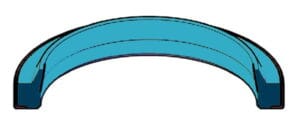
Detailed Explanation of the O-Ring Durometer Scales Method
Summary
O-rings are among the most widely used components in the sealing field. Their hardness directly determines their sealing performance, wear resistance, service life, and suitable application scenarios. Durometer Scales (hardness tester scale method) is the core method for accurately testing the hardness of O-rings. Many customers frequently encounter problems in actual testing, such as incorrect scale selection leading to data distortion, improper operation affecting results, and not knowing how to adapt the scale to different scenarios.
The essential function of the O-ring hardness tester scale method
The O-ring hardness tester scale method is essentially a standardized testing method that uses a standard indenter of a hardness tester to indent the O-ring material under a specified load. The hardness value of the O-ring is determined by the different scale graduations corresponding to the indentation depth. Its core function is to quantify the hardness of the O-ring material, and hardness directly relates to the key performance characteristics of the O-ring: excessive hardness results in insufficient elasticity, leading to leakage in the sealing gap and assembly difficulties; excessive hardness results in poor wear resistance, easy deformation, shortened service life, and even failure under high pressure and high temperature environments.
Unlike ordinary hardness testing methods, the O-ring hardness tester scale method is tailored to the characteristics of O-rings, which are mostly made of rubber/elastomer materials, have a small structure, and various wire diameters. It is compatible with O-rings of different hardness ranges and sizes, and is convenient to operate and highly efficient. It is the most commonly used O-ring hardness testing method in industrial production, quality acceptance, and on-site inspection, widely adhering to international and domestic standards such as ASTM D2240, ISO 48-4, and GB/T 531.1, ensuring the universality and authority of the test results.
Commonly Used O-ring Hardness Tester Scales and Their Applicable Scenarios
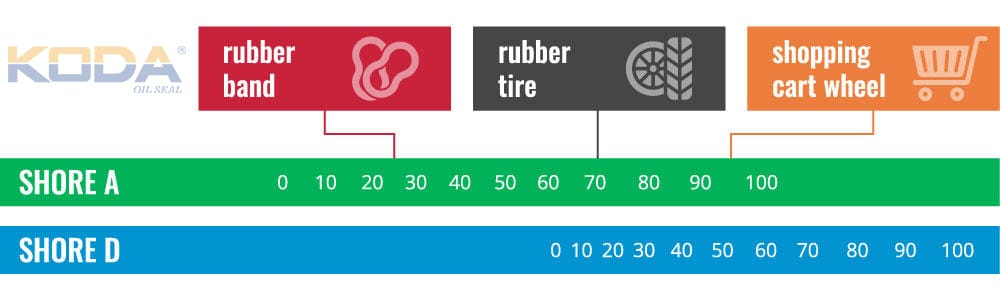
- One of the core challenges in O-ring hardness testing is selecting the correct scale. Different scales correspond to different hardness ranges, indenter types, and applicable materials. Choosing the wrong scale can directly lead to inaccurate test data or even prevent obtaining valid results. Based on commonly used O-ring materials (nitrile rubber, silicone rubber, fluororubber, polyurethane, etc.) and practical application scenarios, the following are the four most commonly used scale types, clearly defining their applicable ranges to help customers quickly match their needs:
1. Shore A Scale
This is the most commonly used scale for O-ring testing, suitable for most O-rings of common hardness, and is the most readily available scale type for customers.
- Hardness range: 20-90 HA. The lower the value, the softer the material; the higher the value, the harder the material. 70±5 HA is the most commonly used hardness range for industrial O-rings (balancing elasticity and wear resistance).
- Indenter characteristics: Conical indenter with a tip radius of 0.79mm, providing moderate load without causing excessive damage to the O-ring, accurately reflecting the hardness of the elastomer.
- Suitable applications: O-rings made of common materials such as nitrile rubber (NBR), silicone rubber (SR), and fluororubber (FKM), with a wire diameter ≥6mm (single layer thickness). Suitable for general sealing applications (such as hydraulic, pneumatic systems, and everyday waterproof sealing), and is also the reference scale for most customers when selecting O-rings.
- Note: If the O-ring hardness is below 20HA, the Shore A scale reading resolution will decrease, making accurate measurement impossible; if it is above 90HA, the reading will approach the upper limit, making it easy to misjudge the material hardness, and other scales need to be replaced.
2.Shore D Scale
For O-rings with high hardness, it solves the problem of the Shore A scale’s inability to accurately measure high hardness. It is commonly used in O-ring inspection in wear-resistant and high-pressure environments.
- Hardness range: 40-90HD, corresponding to a Shore A scale hardness of 90HA and above. Higher values indicate stronger material hardness and wear resistance, but poorer elasticity.
- Indenter characteristics: Conical indenter with a tip radius of 0.1mm. It has a larger load capacity than the Shore A scale and a shallower indentation depth, suitable for inspecting O-rings made of high-hardness elastomers or hard plastics.
- Suitable scenarios: O-rings made of polyurethane (PU), hard fluororubber, modified rubber, etc., suitable for high-pressure and high-wear scenarios (such as mechanical transmission seals, high-temperature and high-pressure pipeline seals). These O-rings need strong resistance to deformation, and their hardness is usually above 90HA, requiring inspection with the Shore D scale.
3. Shore AO Scale
Specifically designed to address the issue of “low-hardness O-rings being unable to be accurately measured using the Shore A scale, it is a supplementary type to the Shore A scale and is suitable for ultra-soft O-rings.
- Hardness range: 0-30HAO, corresponding to low hardness below 20HA on the Shore A scale, suitable for ultra-soft elastomer materials.
- Indenter characteristics: The indenter structure is similar to the Shore A scale, but with a smaller load, preventing excessive indentation into ultra-soft materials and ensuring accurate measurement data.
- Suitable scenarios: Ultra-soft silicone rubber and sponge-like elastomer O-rings, suitable for low-pressure, low-temperature sealing scenarios requiring high elasticity (such as precision instrument seals and medical equipment seals). These types of O-rings are soft, and using the Shore A scale will result in excessive indentation and distorted readings.
4. IRHD M Scale (International Rubber Hardness Scale)
Many customers encounter the problem of inaccurate measurements using the Shore A/D scale when the O-ring wire diameter is too small (<6mm). The IRHD M scale is designed to address this pain point, adhering to the ISO 48 standard and suitable for testing small-diameter O-rings.
- Hardness range: 10-100 IRHD, covering soft, medium, and hard hardness ranges. Its core advantage is its ability to measure small-sized O-rings with wire diameters ≥0.6mm.
- Indenter features: The indenter design is more refined, with adjustable load, adapting to the surface curvature of small-diameter O-rings, avoiding indentation offset and data deviation caused by the small size of the O-ring.
- Suitable scenarios: Small-diameter O-rings (e.g., 1-5mm), precision miniature O-rings, commonly used in electronic equipment, small valves, precision instruments, etc., solving the hardness testing challenges of small-sized O-rings.
Supplement: Quick Reference Table for Scale Selection
| Scale Type | Hardness Range | Compatible O-Ring Cord Diameter | Compatible Materials | Application Scenarios |
|---|---|---|---|---|
| Shore A | 20–90 HA | ≥6 mm (single layer) | NBR, Silicone, FKM (standard) | General hydraulic, pneumatic, waterproof sealing |
| Shore D | 40–90 HD | No strict limit (high hardness required) | PU, hard FKM, modified rubber | High-pressure, high-wear, mechanical transmission sealing |
| Shore AO | 0–30 HAO | ≥6 mm (single layer) | Ultra-soft silicone, sponge elastomers | Low-pressure, low-temperature, precision instrument sealing |
| IRHD M | 10–100 IRHD | ≥0.6 mm | All types of rubber (small sizes) | Micro O-rings, electronic devic |
Why is the hardness of O-rings important?
Impact on sealing performance:
Low hardness (≈50–60 Shore A): Softer, better fit, more stable seal under low pressure/irregular surfaces, but easily squeezed into gaps.
High hardness (≈80–90 Shore A): Better rigidity, resistant to extrusion and deformation under high pressure, but requires higher surface roughness and installation precision.
Determining Extrusion Resistance and Pressure Resistance:
Higher pressure requires higher hardness to prevent the O-ring from being squeezed into the mating gap and damaged or failing.
In low-pressure/vacuum scenarios, a more suitable hardness is preferable, making it easier to form a continuous sealing surface.
Impact on Installation and Friction
Soft O-rings: Easy to assemble, low friction, but prone to twisting and seizing.
Hard O-rings: Higher installation resistance, requiring greater compression force, but smoother movement and less prone to jamming.
Wear Resistance and Lifespan
Higher Hardness: Better wear resistance, tear resistance, and resistance to compression deformation, suitable for reciprocating/rotational motion.
Lower Hardness: Better impact resistance and low-temperature resistance, but prone to permanent deformation under long-term compression, resulting in a shorter lifespan.
Temperature and Medium Compatibility
At high temperatures, soft rubber is more prone to permanent deformation, so a harder material is usually chosen.
At extremely low temperatures, the material becomes hard and brittle, so a formula that maintains suitable hardness at low temperatures should be selected.
Why is the hardness of O-rings important?
Choosing the right hardness tester is crucial for ensuring accurate material testing, meeting product performance standards, and ultimately, successful application. Different materials and operating conditions have specific requirements for hardness scales and measurement methods. Only by matching the appropriate hardness tester can stable, repeatable, and industry-standard test data be obtained, avoiding material selection errors, distorted quality assessments, or product failures due to measurement errors. Accurate hardness testing directly affects a product’s wear resistance, sealing performance, structural strength, and service life, and also determines the authority of the test report and whether the product meets customer specifications and certification requirements. Selecting a hardness tester suitable for the application scenario improves testing efficiency and production stability, and reduces the risk of rework and failure from the source, forming a fundamental step in ensuring product quality and successful project application.
Appropriate selection of O-ring hardness in industrial applications
The working environments and operating conditions vary significantly across different industries, leading to diverse performance requirements for sealing materials. Selecting the appropriate O-ring hardness is crucial for ensuring the long-term stable and reliable operation of seals under complex conditions—including varying pressures, temperatures, motion states, and chemically corrosive environments—directly impacting the equipment’s sealing performance, service life, and operational safety.
Automotive System Applications
The automotive industry demand for O-rings covers multiple core systems, including engines, fuel systems, and hydraulic components. The operating conditions of these systems differ considerably; therefore, the hardness selection must precisely balance durability and flexibility, considering both sealing performance and compatibility. Engines, as core automotive components, face harsh environments of high temperature and high pressure during operation. To resist extrusion deformation and improve wear resistance, higher hardness O-rings are typically selected. Hydraulic systems, on the other hand, have higher requirements for sealing performance and flexibility, needing to ensure the O-rings can adapt to the movement trajectory of components; therefore, medium hardness O-rings are often used. In terms of material selection, nitrile rubber (Buna) has become a commonly used material for automotive system O-rings due to its wide range of applications, broad hardness range, and strong compatibility.
Food and Beverage Equipment Applications
Seals in food and beverage processing equipment must not only meet reliable sealing performance but also comply with stringent food contact safety regulations to eliminate the risk of contamination. Materials such as silicone are widely used in this field due to their excellent chemical stability, non-toxicity, odorlessness, and suitability for food contact environments. In these applications, silicone O-rings with lower hardness are typically chosen. Their good flexibility allows for a tight fit to the sealing surface, effectively preventing gaps while meeting the hygiene sealing standards for food processing and ensuring product safety.
Oil and Gas Operations Applications
Oil and gas operations operate in extremely complex environments. Seals must withstand high pressure, highly corrosive chemicals, and abrasive media over long periods. The choice of hardness must be precisely tailored to the specific operating scenario. In core equipment such as drilling and extraction, seals must resist severe compression and frequent wear; therefore, materials with higher hardness are typically chosen to ensure the stability of the sealing structure. However, in scenarios involving chemical handling and media storage, a balance between the flexibility and sealing integrity must be considered. Materials with slightly lower hardness can be used to avoid loose sealing due to excessive hardness. Aflas (FEPM) is the preferred material for seals in the oil and gas industry due to its excellent resistance to steam, chemical corrosion and harsh working conditions, and it can be adapted to various complex operating environments.
How to measure the hardness of an O-ring
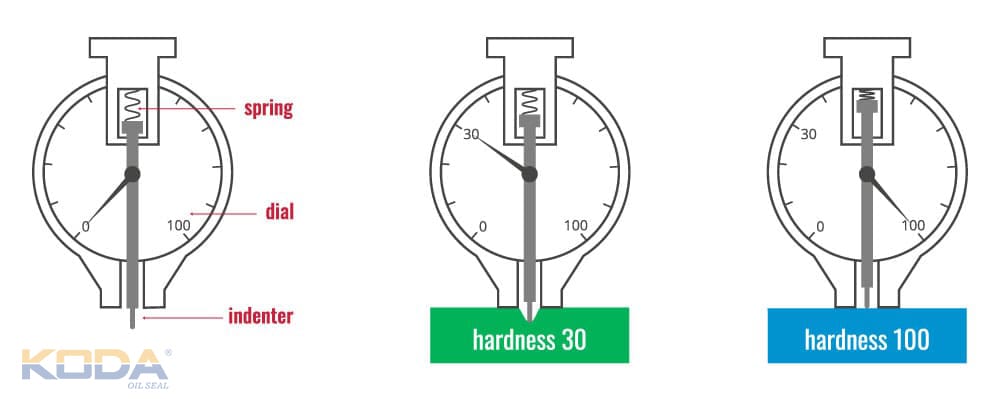
The core method for measuring O-ring hardness is the hardness tester scale method, following standards such as ASTM D2240 and GB/T 531.1. The core steps are as follows and can be directly applied:
1. Pre-measurement Preparation
1. Equipment Calibration: Calibrate the hardness tester using a standard hardness block with the corresponding scale, ensuring the reading deviation is within ±1HA/HD/IRHD. Check the indenter for wear and contamination.
2. Sample Preparation: Select representative samples that are undamaged and free of oil stains; for wire diameters <6mm, select the IRHD M scale; for diameters ≥6mm, select the Shore A/AO/D scale according to hardness. Samples with a single layer thickness less than 6mm can be stacked within the same batch (without gaps). Samples must be placed in an environment of 23℃±2℃ and 50%±10% humidity for at least 1 hour.
3. Environmental Preparation: Place the hardness tester in a stable, vibration-free, and dust-free environment, away from high-temperature and high-humidity areas.
2. Specific Measurement Steps
1. Select the correct scale: Based on the O-ring diameter, material, and estimated hardness, refer to the scale reference table to determine the appropriate scale.
2. Place the sample: Place the pre-treated O-ring stably on the worktable, ensuring the surface is perpendicular to the indenter, and the measuring point is away from the edge (Shore A/D/AO ≥ 12mm, IRHD M ≥ 4.5mm).
3. Indenter contact: Slowly lower the indenter, gently contacting it with the sample surface, ensuring no gaps or offset, and control the pressure at 30kPa ± 5kPa.
4. Hold pressure and read: Hold pressure for 3 seconds for Shore A/AO, 15 seconds for Shore D, and follow the instrument instructions for IRHD M; after the pointer stabilizes, read the value with your line of sight perpendicular to the pointer.
5. Repeat measurement: Measure 5 points (interval ≥ 6mm) at different locations on the same sample, calculate the average as the final hardness value, and repeat the measurement if the deviation exceeds 5%.
3. Post-Measurement Verification and Processing
1. Re-verify the equipment accuracy using a standard hardness block to ensure data reliability.
2. Clean the indenter and worktable, categorize and store samples and standard blocks, complete the test report, and record key information such as scale readings, environmental conditions, and measurement data.
Conclusion
The core of the O-ring hardness tester scale method is “selecting the correct scale, standardizing operation, and avoiding pitfalls.” Its accuracy directly determines the rationality of O-ring selection and the effectiveness of quality control. This article breaks down the scale classification and operating procedures in detail, specifically addressing practical problems encountered by customers such as “difficulty in selecting the correct scale, non-standard operation, data distortion, and difficulty in testing small wire diameters.” It also provides quick solutions and precautions for common problems, helping customers quickly master the correct testing method.
In actual testing, simply referring to the scale reference table to select the correct scale, strictly following the standard operating procedures, and ensuring proper equipment calibration and sample pretreatment can effectively avoid various errors and obtain accurate and reliable hardness data. This provides a scientific basis for O-ring selection, production quality control, and on-site acceptance, preventing problems such as seal failure and equipment malfunction due to unqualified hardness, thus reducing production costs and risks.
Q&A: O-ring hardness tester and hardness selection
Which hardness tester is most suitable for testing O-rings?
A Shore A hardness tester is preferred for testing O-rings, as it is suitable for elastic sealing materials such as rubber and silicone. A Shore D hardness tester can be used with hard modified rubber/fluororubber. For general sealing applications, Shore A is the primary choice.
What hardness should be selected for O-rings?
For general applications, Shore A 70±5° is the most commonly used. For low-pressure sealing, around 60° is suitable; for high-pressure and extrusion-resistant applications, 80°~90° is suitable; and for low-temperature soft sealing, 50°~60° is suitable.
Does a higher hardness O-ring mean better sealing performance?
No. Excessive hardness reduces fit, leading to leakage in low-pressure/rough surfaces; insufficient hardness results in poor pressure resistance and extrusion resistance. Appropriate hardness matching the operating conditions is crucial for ensuring a good seal.
How does O-ring hardness affect its service life?
Higher hardness: Better wear resistance, extrusion resistance, and shear resistance, suitable for high pressure and high speed, but prone to brittleness and poor resilience; Lower hardness: Good resilience and high sealing fit, suitable for low pressure and low temperature, but prone to wear, deformation, and extrusion.
What should be noted when testing O-rings with a hardness tester?
The test surface should be flat and free from deformation, and the thickness should meet the instrument requirements. Apply pressure vertically, avoiding tilted force. Avoid corners and seams, and take the average value for multiple tests. Environmental temperature should be stable to prevent temperature-induced interference with material hardness.
How to select the hardness of O-rings for different media and pressures?
Low pressure (30MPa), extrusion resistance requirements: 80°~90°A Weak acid/weak alkali, low temperature conditions: 60°~70°A