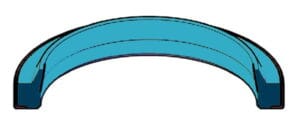
What are the differences between TGY oil seals and TGR oil seals?
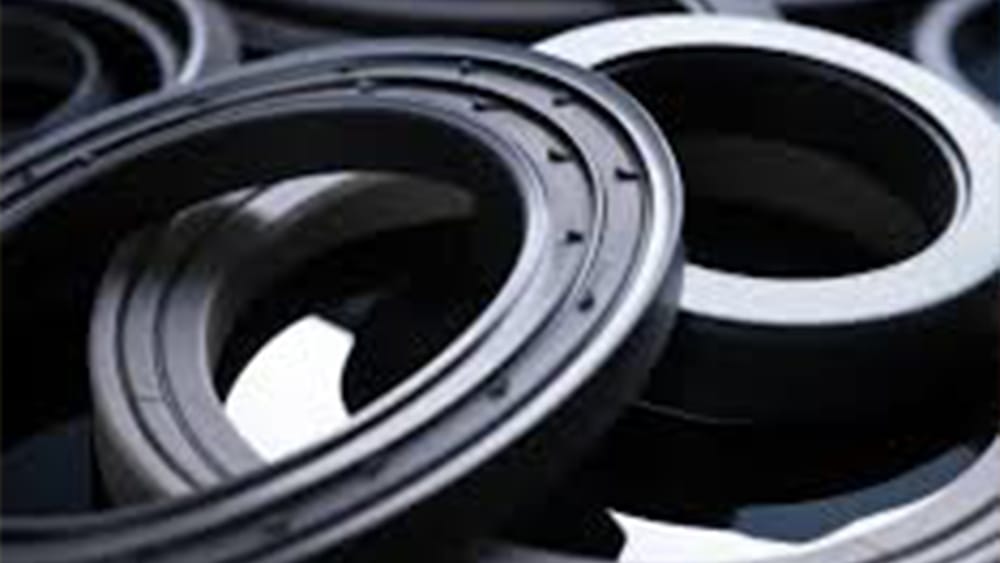
In the field of industrial rotary shaft seals, TGY oil seals and TGR oil seals both belong to the textile rubber reinforced oil seal series and are often used for shaft end sealing of equipment such as motors, reducers, and pumps. However, there are significant differences between the two in terms of core design, structural characteristics, and applicable working conditions. Many customers are easily confused when selecting them, which can lead to problems such as seal failure, equipment failure, and increased maintenance costs.
Core definition: The difference between two oil seals
Although TGY oil seals and TGR oil seals both belong to the “TG” series (textile rubber reinforced basic design), the difference between the suffixes “Y” and “R” determines their core positioning and design focus, which is also the key premise for distinguishing between the two.
TGR Oil Seal: Radial Lubrication Optimized Seal
The full name of the TGR oil seal is “Textile Rubber Reinforced Radial Lubrication Groove Rotary Shaft Oil Seal.” In its name, “T” represents the textile rubber reinforced backing, “G” represents the lubrication groove design, and “R” specifically indicates a radial lubrication groove layout—its core characteristic. Positioned around “precise lubrication + stable sealing,” it is specifically designed to solve the early leakage problems caused by dry friction and uneven lubrication at the lip of traditional grooveless oil seals. It is suitable for low-pressure, medium-to-high-speed conventional industrial sealing scenarios and is the preferred solution for general-purpose medium-to-high-speed seals. Its lubrication grooves are arranged radially on only one side, precisely guiding the lubricating oil to evenly cover the sealing lip, reducing frictional loss, extending service life, and making it widely used in shaft end seals of various general-purpose industrial equipment.
TGY Oil Seals: Low-Torque Dustproof Optimized Seals
TGY oil seals, short for “Textile Rubber Reinforced Low-Torque Dustproof Rotary Shaft Oil Seals,” feature a “Y” suffix indicating a “low-torque + dustproof optimized” design. Their core positioning is “low friction, strong dustproof, and suitable for precision/dusty environments.” Unlike TGR oil seals, which are lubrication-oriented, TGY oil seals focus on optimizing the sealing lip structure, employing a low-torque, small-section design, and are equipped with a reinforced dustproof lip. This reduces energy consumption during equipment operation and effectively prevents external dust and impurities from entering the sealing interface. Suitable for precision equipment with high torque control and dustproof requirements, or in dusty environments, they are commonly found in precision reducers, power tools, and small transmission equipment. Some models can replace traditional TC and TB general-purpose oil seals.
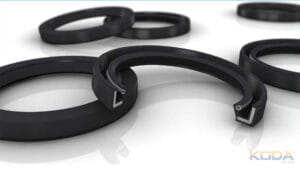
TGY oil seal and TGR oil seal structure and principle
The essential difference between the two oil seals lies in their design focus: the TGR emphasizes radial lubrication to address dry friction leakage, while the TGY prioritizes low torque and dust prevention to address energy consumption and impurity intrusion. A detailed comparison is provided below from three core dimensions: structure, working principle, and technical parameters.
Core structural differences
| Structural Component | TGR Oil Seal | TGY Oil Seal |
|---|---|---|
| Lubrication Groove Design (Core) | Single-sided radial lubrication grooves only; deep groove profile focuses on guiding lubricant evenly to the sealing lip for optimized lubrication. No axial lubrication grooves, ideal for rotary shaft lubrication guidance. | No dedicated radial lubrication grooves (or shallow grooves only). Lip optimized with low-torque profile to reduce friction against shaft surface, emphasizing lower running torque rather than active lubrication guidance. |
| Sealing Lip | Single or double lip design; thicker lip with moderate self-tension force, lathe-cut to fit shaft roughness Ra 0.3–0.5 μm, prioritizing sealing stability and lubrication compatibility. | Double lip design (main sealing lip + reinforced dust lip); thinner lip with lower self-tension force, low-torque profile. Dust lip offers improved sealing to block moderate dust and contaminants. |
| Backing Structure | Textile rubber reinforced backing with high rigidity, suitable for axial assembly, compensates for minor housing/shaft eccentricity. Compatible with aluminum housings (large thermal expansion difference), often used with pressure plate for axial preloading. | Lightweight textile rubber backing with higher flexibility, ideal for compact installation in precision equipment. No mandatory pressure plate required for easier installation, suitable for split housing and special mounting scenarios. |
| Auxiliary Structure | Stainless steel self-tightening spring (anti-drop design); no dedicated dust structure (dust lip optional). Spring material: AISI 302/316, suitable for blind assembly. | Built-in reinforced dust lip (springless); lightweight self-tightening spring to reduce torque loss. Some models feature simple external ribs for better housing fit and to prevent outer leakage. |
Differences in working principles
TGR Oil Seals: Lubrication First, Sealing Second
The core working principle of the TGR oil seal is a dual mechanism of “radial lubrication + dynamic sealing”: a self-tightening spring creates an interference fit between the lip and the shaft surface, establishing a basic sealing barrier to prevent media leakage; the rotating shaft drives lubricating oil into the radial lubrication grooves, which evenly distribute the oil to the lip contact surface, forming a stable hydrodynamic oil film. This oil film reduces dry friction between the lip and the shaft surface, lowering heat generation and wear, while maintaining the lubrication state of the sealing interface and extending the oil seal’s service life. Its design logic is to “fundamentally solve the leakage problem caused by lip wear through optimized lubrication,” adapting to long-term stable operation at medium to high speeds. The sealing principle relies on the dynamic balance of the oil film and the continuous preload of the spring.
TGY Oil Seals: Low Resistance First, Dust Protection Secondary
The core working principle of TGY oil seals is a dual mechanism of “low-torque sealing + dust protection”: A lightweight lip and low-torque profile design reduce the contact pressure between the lip and the shaft surface, lowering frictional resistance and operating torque, thereby reducing equipment energy consumption and lip heat generation, adapting to the precise operating requirements of precision equipment; enhanced collaboration between the dustproof lip and the main sealing lip is crucial. The main lip is responsible for preventing internal media leakage, while the dustproof lip specifically prevents external dust and impurities from intruding into the sealing interface, avoiding wear and tear on the lip and damage to the sealing effect. Its design logic is “prioritizing reduced torque and energy consumption while enhancing environmental adaptability, ensuring basic sealing.” The sealing principle emphasizes precise lip fit and the synergistic protection of the dustproof structure, eliminating the need for dedicated lubrication grooves to guide the oil.
Differences in key technical parameters
| Technical Parameter | TGR Oil Seal | TGY Oil Seal | Key Selection Tips |
|---|---|---|---|
| Speed Range | Up to 25 m/s (medium‑high speed). Suitable for high‑speed motors, precision pumps, etc. Capable of long‑term operation at medium‑high speeds without overheating or damage. | Up to 15 m/s (medium‑low speed). Higher speed accelerates lip wear. Better for low‑speed precision transmission. Dust‑lip versions allow only approx. 8 m/s. | For speed > 15 m/s, choose TGR. |
| Temperature Range | -40℃ ~ +220℃ (depends on elastomer). Suitable for general industrial and extreme high‑temperature applications. FKM offers wider high‑temp resistance. | -30℃ ~ +180℃ (depends on elastomer). Slightly weaker high‑temperature resistance, not for extreme heat. Standard NBR: -40℃ ~ +120℃ (short‑term only). | For temperature > 180℃, choose TGR. |
| Pressure Range | 0 ~ 0.5 BAR (one‑piece design). Meets low‑pressure shaft sealing; for normal conditions without high‑pressure shock. | 0 ~ 0.3 BAR. Lower pressure resistance, only for zero or micro‑pressure. Lip deformation and leakage may occur under higher pressure. Max: 0.05 MPa (0.5 bar). | For pressure > 0.3 BAR, TGR is required. |
| Material Options | Elastomers: NBR (general), FKM (high temp/chemical), HNBR (high strength/anti‑aging). Stronger material compatibility. Skeleton: carbon steel or stainless steel. Spring: carbon steel or stainless steel. | Mainly NBR and FKM, narrower material range, focused on low‑friction compounds. Skeleton: lightweight carbon steel. Rubber must match medium strictly. For synthetic oil, limit temp < 80℃. | For complex media (e.g., chemicals), choose TGR. |
| Shaft Requirements | Shaft roughness: Ra 0.3–0.5 μm | Shaft roughness: Ra 0.2–0.4 μm | For standard shaft precision, choose TGR. |
Applicable Scenarios
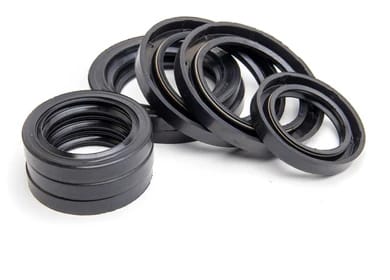
The core of selection is “operating condition adaptation”. Combining the design focus and technical parameters of the two oil seals, the following clarifies the applicable and unapplicable scenarios for each, helping customers fundamentally avoid the problem of “choosing the right model but not being suitable for the operating conditions”. At the same time, comparing similar products further clarifies the selection boundaries.
TGR oil seal application scenarios (3 situations where TGR is preferred):
Medium-to-high speed equipment:Such as high-speed motors, reducers, gearboxes, hydraulic pumps, air compressors, etc., with speeds >15 m/s, requiring long-term stable lubrication to avoid lip dry-friction leakage. Especially suitable for scenarios with high lubrication requirements for rotating shafts, effectively extending seal life.
Conventional industrial conditions:Medium is mineral oil or synthetic oil, with a wide temperature range (-40℃~+220℃), pressure ≤0.5 BAR, and no strong dust interference. Suitable for shaft end seals in ordinary machine tools and agricultural machinery (harvesters, tractors), and compatible with equipment with large thermal expansion differences such as aluminum housings.
Replacement of traditional grooveless oil seals:Existing oil seals frequently leak due to lip dry-friction and uneven lubrication, resulting in high maintenance costs. TGR oil seals can be directly replaced, typically extending seal life by more than 40% and reducing maintenance costs.
Not applicable scenarios: precision equipment (with strict torque requirements), dusty environments (without additional dust protection measures), high-pressure scenarios (pressure > 0.5 BAR), and equipment with poor axial surface accuracy (Ra > 0.5 μm).
TGY Oil Seal Application Scenarios (3 Preferred Scenarios for TGY):
Precision Transmission Equipment: Such as small harmonic reducers, RV precision reducers, power tools, robotic arms, etc., with strict requirements on operating torque and energy consumption, speed ≤15 m/s, requiring low friction and low loss, adapting to the precise operation needs of precision equipment, and improving equipment operating accuracy and lifespan.
Dusty Environment Equipment: Such as mining machinery (light dust), outdoor work equipment, construction machinery, etc., requiring enhanced dust protection to prevent dust from entering the sealing interface and causing lip wear. TGY’s reinforced dustproof lip can effectively block moderate levels of dust and impurities, protecting the sealing lip.
Low-Pressure/No-Pressure Scenarios: Such as small pumps, fans, household appliances, etc., without high-pressure impact, the medium is conventional mineral oil, the installation space is compact, requiring lightweight and easy-to-install oil seals. It can replace traditional TC, TB, and other general-purpose oil seals, and is suitable for special installation scenarios such as open housings.
Not applicable scenarios: medium and high speed equipment (speed > 15 m/s), high temperature scenarios (temperature > 180℃), high pressure scenarios (pressure > 0.3 BAR), and equipment with complex media (chemical media, strong corrosive media).
Compared with similar TG series oil seals
| Oil Seal Type | Core Features | Core Differences from TGR / TGY | Applicable Scenarios |
|---|---|---|---|
| TGR Oil Seal | Radial lubrication grooves, medium‑high speed, low pressure, textile rubber backing | Strong lubrication guidance; wider speed, temperature and pressure compatibility | General medium‑high speed, standard industrial sealing |
| TGY Oil Seal | Low torque, reinforced dust lip, medium‑low speed, lightweight backing | Excellent dust protection and low friction; suitable for precise and dusty conditions, but narrow speed & pressure range | Precision equipment, dusty environments, micro‑pressure sealing |
| TGA Oil Seal | Axial + radial dual lubrication grooves, high pressure (≤4 BAR) | Higher pressure resistance; dual lubrication grooves (adds axial grooves vs. TGR) | High pressure, bidirectional rotation conditions |
| TC Oil Seal | Fully encapsulated rubber skeleton with self‑tightening spring, universal type | No dedicated lubrication grooves or reinforced dust lip; balanced performance without outstanding advantages | General speed, general pressure, universal sealing |
Installation, maintenance, and troubleshooting: Extending oil seal life and resolving user pain points.
Installation Notes (Model-Specific Compatibility)
TGR Oil Seal Installation Points:
- Before installation, clean the journal and housing bore to ensure they are free of burrs, rust, and foreign objects. Check the radial lubrication grooves for blockages to prevent impurities from affecting lubrication.
- Apply a special grease compatible with the lubricant to the shaft surface, focusing on the lubrication grooves and lip. Do not use solvents that will swell rubber. Ensure the lubrication grooves can properly guide the oil.
- Use a special guide sleeve for auxiliary installation to prevent the lip from being scratched by burrs on the shaft end. Use a press to press in at a uniform speed, keeping the oil seal perpendicular to the shaft and bore. Do not strike directly. After pressing in, check that the self-tightening spring is not dislodged or twisted.
- Tighten the matching pressure plate evenly to ensure uniform axial preload and prevent oil seal displacement. When using an aluminum housing, allow for thermal expansion clearance to prevent housing deformation that could damage the oil seal.
TGY Oil Seal Installation Points:
- The shaft surface must be finely ground to Ra 0.2~0.4μm, free of burrs and scratches, to prevent rough surfaces from wearing down the low-torque lip. The shaft surface hardness must reach 45~60 HRC to ensure wear resistance.
- Handle with care during installation, avoiding pressure on the dust lip (which is thin and easily deformed). Apply a small amount of grease to the lip; excessive application is unnecessary (to avoid increasing torque).
- No pressure plate is required. During installation, ensure the oil seal is perpendicular to the shaft surface, and the insertion depth conforms to the drawing requirements. Avoid over-pressure, which can deform the lip and affect the low-torque performance.
- After installation, check the fit between the dust lip and the shaft surface to ensure there are no gaps, preventing dust from entering through gaps. Also check that the spring is properly installed and not loose.
Common Faults and Solutions
| Failure Phenomenon | Most Likely Oil Seal Type | Root Cause | Solution |
|---|---|---|---|
| Oil leakage & lip overheating at high speed | TGY Oil Seal | TGY has insufficient speed tolerance; no lubrication grooves lead to heavy dry friction; or insufficient shaft surface precision accelerates wear. | Replace with TGR oil seal, finely grind shaft to Ra 0.3–0.5 μm, apply compatible grease, limit speed ≤15 m/s. |
| Dust intrusion & rapid lip wear | TGR Oil Seal (without dust lip) | TGR lacks dedicated dust protection; contaminants enter the sealing interface in dusty environments, wearing the lip and breaking the oil film. | Replace with TGY oil seal, or add a dust cover to TGR; regularly clean dust around equipment to reduce contamination. |
| Premature seal failure (<6 months) | Both types | For TGR: speed/pressure exceeds rating, insufficient lubrication. | Recheck operating conditions and replace with correct model; add grease for TGR; regrind shaft and replace damaged dust lip for TGY; control operating temperature. |
| High equipment energy consumption | TGR Oil Seal | TGR has moderate lip self-tension and higher friction than TGY; not suitable for precision low-torque equipment, causing increased power consumption. | Replace with TGY if conditions allow (speed ≤15 m/s, pressure ≤0.3 BAR); or select low-friction material version of TGR. |
| Oil seal displacement & loose installation | TGR Oil Seal | No matching pressure plate installed, insufficient axial preload, or housing deformation leads to seal movement. | Install matching pressure plate and tighten bolts evenly; inspect housing for deformation, repair before reinstalling seal. |
Conclusion
The core difference between TGY and TGR oil seals lies in their different design focuses: TGR oil seals are designed with radial lubrication as their core function, solving the problem of dry friction leakage at medium and high speeds. They have a wider range of applications and stronger tolerance, making them the preferred choice for general-purpose medium and high speed seals. TGY oil seals, on the other hand, are designed with low torque and dust prevention as their core function, solving the problems of energy consumption and impurity intrusion in precision equipment. They are suitable for special scenarios involving medium and low speeds, dust, and precision.
Q&A: What are the differences between TGY oil seals and TGR oil seals?
What is the most obvious structural difference between TGR and TGY oil seals?
The core difference lies in the lubrication groove design and sealing lip structure. TGR features a single-sided radial lubrication groove that actively distributes lubricant to the lip, prioritizing lubrication efficiency. In contrast, TGY has no dedicated radial grooves (or only shallow grooves) and adopts a low-torque lip profile to reduce friction, focusing on minimizing running resistance rather than actively guiding lubrication.
What are the differences in their speed and torque capabilities?
TGR is designed for medium-high speed operations (up to 25 m/s) with moderate torque, offering strong line speed advantages. TGY is optimized for medium-low speed applications (up to 15 m/s). While TGY runs with lower torque, its speed tolerance is significantly lower—excessive speed will cause rapid lip wear.
How do their pressure tolerances and installation requirements differ?
TGR has a higher pressure rating (up to 0.5 BAR) and features a rigid textile rubber reinforced backing, typically requiring a pressure plate for axial preloading, making it suitable for axial assembly and compensating for shaft eccentricity. TGY has a lower pressure tolerance (up to 0.3 BAR) and uses a lightweight, flexible backing. It does not mandatory require a pressure plate, enabling easier installation in compact spaces.
In terms of dust protection and material selection, what sets them apart?
TGR usually comes without a built-in dust lip (requiring an optional add-on for dusty environments) and offers a wider material range (NBR, FKM, HNBR) for excellent compatibility with various media. TGY is equipped with a built-in reinforced dust lip as a standard feature for superior dust protection, but its material selection is relatively narrow, focusing on low-friction formulas for precision equipment.
Which one should I choose for specific applications?
Choose TGR if: Your application involves medium-high speeds (>15 m/s), moderate to high pressure (>0.3 BAR), or requires stable lubrication guidance. It is ideal for general industrial machinery, motors, and pumps. Choose TGY if: Your application is low-speed (<15 m/s), low-torque, or in a dusty environment. It is perfect for precision equipment where minimizing friction and preventing dust intrusion are critical.