How to choose the right O-ring size the first time
The selection of O-ring size mainly depends on four major factors: material, hardness, color, and size. Among them, the confirmation and accurate expression of size are often the most error-prone and troublesome aspects of the ordering process. Using the right method to select the correct size can not only save communication and trial-and-error time on the spot but also avoid additional costs and troubles such as leakage, rework, returns, and exchanges in the long term.
Read on to teach you how to choose the right O-ring size the first time.
If you need to know how to design a matching O-ring-mounted controller, you can click here to view it.
How to measure the CS and ID of an O-ring
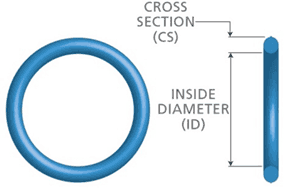
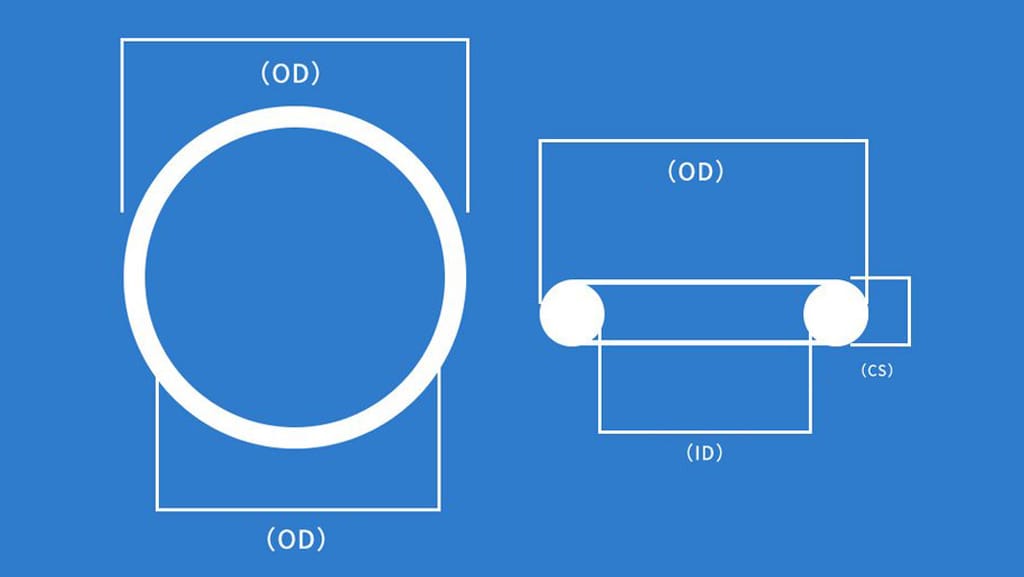
The most accurate way to measure the size of an O-ring is to measure the two key parameters of wire diameter (CS) and inner diameter (ID).
It is recommended to use a vernier caliper or micrometer to measure the wire diameter. If there is no special measuring tool, you can also use other tools to make a rough estimate.
When measuring small inner diameters, a vernier caliper is preferred; for large inner diameters greater than 6 inches, it is recommended to use an O-ring gauge or a flexible tape measure.
After you determine the wire diameter (CS) and inner diameter (ID), you can refer to the AS568 standard O-ring size table we provide to check whether it matches the corresponding standard model.
Metric and Imperial O-Ring Dimensions and Tolerances
O-ring dimensions are available in either metric (millimeters) or imperial (inches). If the product complies with the AS568 standard, it is safest to give priority to using this standard number – this is the most common and least error-prone marking method in the North American market. If it does not fall under the AS568 standard, national standard metric O-rings of the corresponding size can be used.
In the dimension confirmation process, tolerance is a key factor that must be paid attention to. Affected by the production process, there will be reasonable deviations in the size of the O-ring, and this allowable range is the tolerance. Standard tolerances can be found in the corresponding AS568 dimension table or metric O-ring tolerance table. For example, for the AS568 100 series O-ring, the standard wire diameter is 0.103 inches, and the tolerance is ±0.003 inches; that is, the actual wire diameter is between 0.100 and 0.106 inches.
O-ring standard (AS568) size
If the wire diameter CS is part of the AS568 standard series, such as 0.070, 0.103, 0.139, 0.210, or 0.275 inches, then you are essentially using a standard O-ring.
Just measure the inner diameter ID and check it against the size table: as long as the inner diameter is within the value listed in the table (or within the tolerance range), it can be confirmed as a standard size. Find the three-digit dash number corresponding to the size, and you can directly determine the corresponding O-ring specification.
Metric O-Ring Dimensions
If the wire diameter CS of the O-ring does not fall within the AS568 standard size, it is most likely a metric O-ring. At this point, just measure the CS and ID as before,e and you will find the corresponding specifications in our metric size chart.
At KODA, metric O-rings are uniformly identified using the CS × ID format, with the style #X# For example, an O-ring with a wire diameter of 1 mm and an inner diameter of 5 mm has a specification of 1X5.
Various tools for measuring O-ring sizes and their best applications
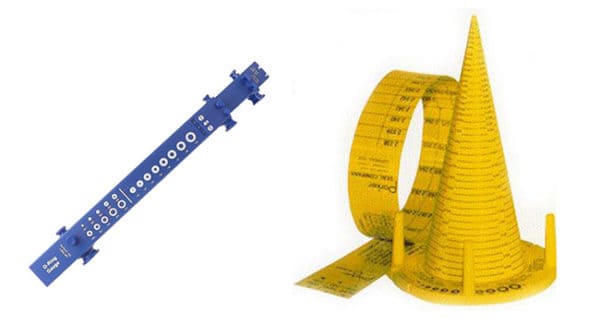
Many people will first measure with an ordinary ruler or tape measure, but these tools cannot meet the measurement accuracy required for seals. We recommend using the following professional tools for accurate measurements:
- The AS568 Size Comparison Chart (coated version) is a convenient reference chart that contains 239 commonly used O-ring standard sizes and outline comparisons.
- For standard-size measuring cones, just put the O-ring on the measuring cone, and you can quickly compare the 184 most commonly used specifications and determine the model.
- Dimension Gauge Sliding gauge for O-rings up to 13 inches in inner diameter.
- The vernier caliper is the most commonly used precision measurement tool, which can measure key dimensions such as inner diameter and wire diameter. Most calipers have a range of 6 inches, and other special tools are recommended for inner diameters greater than 6 inches.
- O‑Sizer Measuring Tapes Measuring tapes designed specifically for O-rings, available in 3 sizes, capable of measuring metric and AS568 standard O-ring inner diameters up to 26 inches.
- Pi‑Tape Precision Tape Measure: The most accurate professional tool for measuring O-ring inside diameters, made from precision metal and accurate to 0.001 inch. Common measuring ranges include: 2–12 inches, 12–24 inches, 24–36 inches, 36–48 inches, and 48–60 inches.
- The O-ring installation tool (PRO TOOL V) can smoothly roll the O-ring into the groove, making installation quick and safe. This ergonomic tool effectively protects grooves and seals, and extends their service life.
KODAO ring and seal size selection
KODA can provide a full range of AS568 standard O-rings and mainstream metric-size O-rings. If you need selection support, we can also provide you with professional size confirmation and selection guidance. You are welcome to call +8618730921709 to speak with our sealing technology experts.