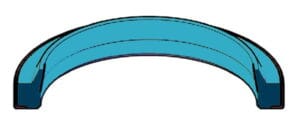
What is an HBY buffer seal?
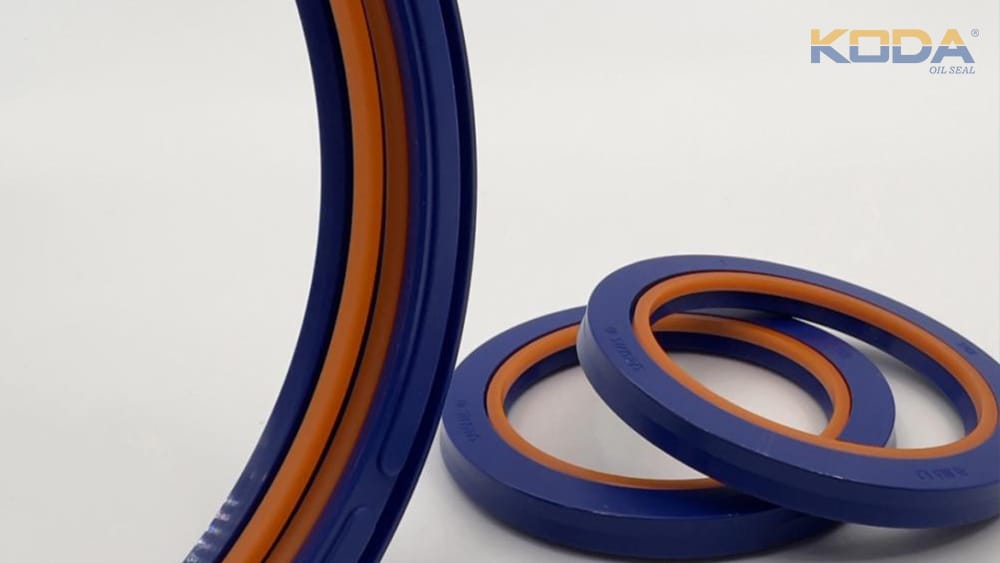
HBY buffer seal is a specialized hydraulic buffer ring designed to protect primary rod seals from pressure spikes, heat, and excessive wear in heavy-duty hydraulic systems. As a critical component for cylinder longevity, it solves common pain points like seal failure, leakage, and premature downtime—making it indispensable for excavators, loaders, and industrial hydraulic machinery.
What Is an HBY Buffer Seal & Core Purpose?
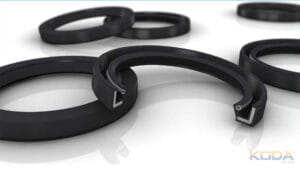
An HBY buffer seal (also called an HBY buffer ring) is a composite hydraulic sealing component installed on the pressure side of the primary rod seal (typically U-cup seals) in hydraulic cylinders. Unlike standard seals that focus solely on leakage prevention, the HBY buffer seal acts as a “protective shield” with three core functions:
1.Absorbs pressure spikes & shock loads: Filters sudden pressure surges (up to 50–690 bar) that would damage primary seals.
2.Eliminates trapped pressure: Features unique notched lips/radial slots to “pump back” trapped oil, preventing pressure buildup between the buffer seal and main seal.
3.Reduces heat & friction: Isolates high-temperature hydraulic fluid and lowers friction, extending the service life of primary sealing elements.
Key note: HBY buffer seals are not standalone seals—they must pair with primary rod seals (e.g., U-cup, UN seals) to deliver full system protection.
Structure & Material Composition of HBY Buffer Seal
The HBY buffer seal uses a two-part composite design optimized for strength, flexibility, and extrusion resistance:
1. Primary Seal Body (Dynamic Lip)
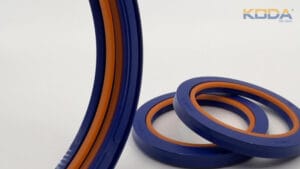
- Material: High-performance polyurethane (TPU/PU, 90–95 Shore A) — selected for exceptional wear resistance, elasticity, and oil compatibility.
- Design: Precision-machined dynamic lip with specialized radial slots/notches; static lip for stable groove fit. The slotted lip enables controlled back-pumping to release inter-stage pressure, a defining feature of HBY buffer seals.
2. Anti-Extrusion Backup Ring
- Material: Rigid POM (polyoxymethylene) or PA66 (nylon) — high mechanical strength to prevent seal extrusion under extreme pressure.
- Function: Reinforces the PU seal body, stopping deformation into gaps under high pressure (up to 50 MPa/7250 psi).
Standard Specifications
| Parameter | Typical Range |
|---|---|
| Pressure Resistance | ≤50 MPa (7250 psi), peaks up to 690 bar |
| Temperature Range | -55°C to +120°C (wide operational adaptability) |
| Max Sliding Speed | ≤1 m/s (suitable for standard to high-speed cylinders) |
| Compatible Media | Mineral hydraulic oils, water-glycol, flame-retardant fluids |
| Common Colors | Yellow, blue, purple (PU body); black/white (PO) |
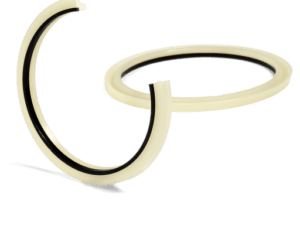
How Does an HBY Buffer Seal Work?
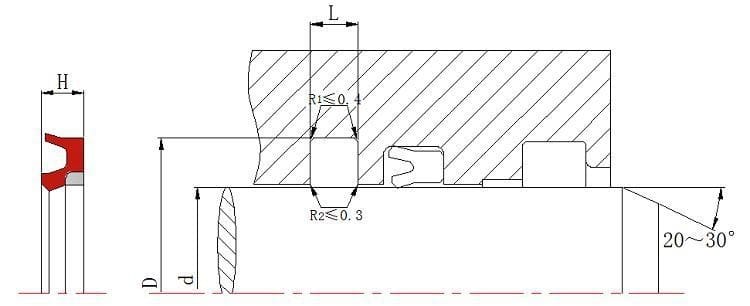
- Installation Position: Mounted in the cylinder rod groove, ahead of the primary rod seal (toward the pressure chamber).
- Dynamic Sealing: The flexible PU lip forms a tight barrier against the rod, blocking initial fluid leakage while adapting to minor surface irregularities.
- Pressure Buffering: When hydraulic pressure spikes (e.g., during heavy lifting or impact), the HBY seal absorbs the shock, preventing direct stress transfer to the primary seal.
- Back-Pumping Action: Trapped fluid between the HBY seal and main seal is channeled back to the pressure side via the radial slots—eliminating “pressure trap” effects that cause seal blow-by or deformation.
- Extrusion Resistance: The rigid POM backup ring supports the PU body, ensuring the seal does not extrude into gaps even under peak pressure.
Key Advantages of HBY Buffer Seal Over Standard Buffers
- Unmatched Pressure Spike Protection: Insensitive to pressure fluctuations, shielding primary seals from 80%+ of shock-related damage.
- Eliminates Pressure Trapping: Unique slotted design resolves a top cause of premature seal failure in high-pressure cylinders.
- Extended Seal Lifespan: Reduces heat transfer and friction, doubling or tripling the service life of primary rod seals.
- High Wear Resistance: Industrial-grade PU resists abrasion from contaminated fluids, ideal for construction/mining equipment.
- Wide Compatibility: Works with all standard hydraulic fluids and performs in extreme temperatures (-55°C to +120°C).
- Easy Installation: Compact, split-type design (optional) simplifies maintenance without full cylinder disassembly.
Top Applications of HBY Buffer Seal
- Construction Machinery: Excavators, bulldozers, loaders, cranes (boom/arm cylinders).
- Mobile Hydraulics: Agricultural tractors, forklifts, mining equipment, forestry machinery.
- Industrial Equipment: Hydraulic presses, injection molding machines, steel mill cylinders.
- Marine & Offshore: Ship deck machinery, offshore cranes, subsea hydraulic systems (corrosion-resistant variants).
- Material Handling: Lift tables, scissor lifts, hydraulic hoists (high-cycle applications).
Common Problems Solved by HBY Buffer Seal
- Premature Primary Seal Failure: Eliminates pressure spike damage, reducing seal replacement frequency by 50–70%.
- Hydraulic Leakage: Prevents seal extrusion and blow-by, eliminating unplanned downtime from leaks.
- High Maintenance Costs: Extends service intervals, cutting labor and replacement seal expenses.
- Heat-Related Seal Deterioration: Isolates high-temperature fluid, preventing hardening/cracking of primary seals.
- Pressure Trap Issues: Resolves stuck cylinders, erratic movement, and reduced efficiency caused by trapped pressure.
How to Select & Install HBY Buffer Seal
Selection Criteria
- Cylinder Parameters: Match rod diameter (d), groove diameter (D), and height (H) to standard HBY sizes (e.g., HBY 40×55.5×6, HBY 60×75.5×6).
- Operating Conditions: Choose PU/POM blend for standard pressure (≤50 MPa); high-modulus PU for extreme pressure peaks.
- Fluid Compatibility: Confirm material compatibility with your hydraulic fluid (mineral oil, synthetic, etc.).
Installation Best Practices
- Clean the rod and groove thoroughly—remove all dirt, old seal debris, and burrs.
- Lubricate the HBY buffer seal and rod with compatible hydraulic oil before installation.
- Install the PU seal first (dynamic lip facing the pressure side), then the POM backup ring.
- Avoid twisting or damaging the seal lips; use installation tools to prevent nicks.
- Pair with a high-quality primary rod seal (U-cup/UN type) for optimal performance.
HBY Buffer Seal vs. Other Buffer Seals: Quick Comparison
| Feature | HBY Buffer Seal | Standard Buffer Ring | O-Ring Buffer |
|---|---|---|---|
| Pressure Spike Protection | Excellent (filters peaks) | Good (limited) | Poor |
| Pressure Trapping Solution | Yes (slotted lip) | No | No |
| Wear Resistance | Industrial-grade PU | Medium (rubber) | Low |
| Extrusion Resistance | Excellent (POM backup) | Medium | Poor |
| Service Life | 2–3x longer | Standard | Short |
| Ideal Use | Heavy-duty, high-shock systems | Low-pressure systems | Static/low-dynamic use |
Conclusion
The HBY buffer seal is more than a sealing component—it’s a critical upgrade for hydraulic systems seeking reliability, longevity, and reduced maintenance. By absorbing pressure spikes, eliminating trapped pressure, and protecting primary seals, the HBY buffer seal solves the most common failure points in heavy-duty cylinders, making it a staple in construction, mining, agriculture, and industrial hydraulics.
For equipment owners, selecting the right HBY buffer seal (matched to cylinder specs and operating conditions) directly translates to fewer breakdowns, lower costs, and longer equipment life. Always pair with high-quality primary seals and follow proper installation to maximize performance.