History of the Vulcanization of Rubber
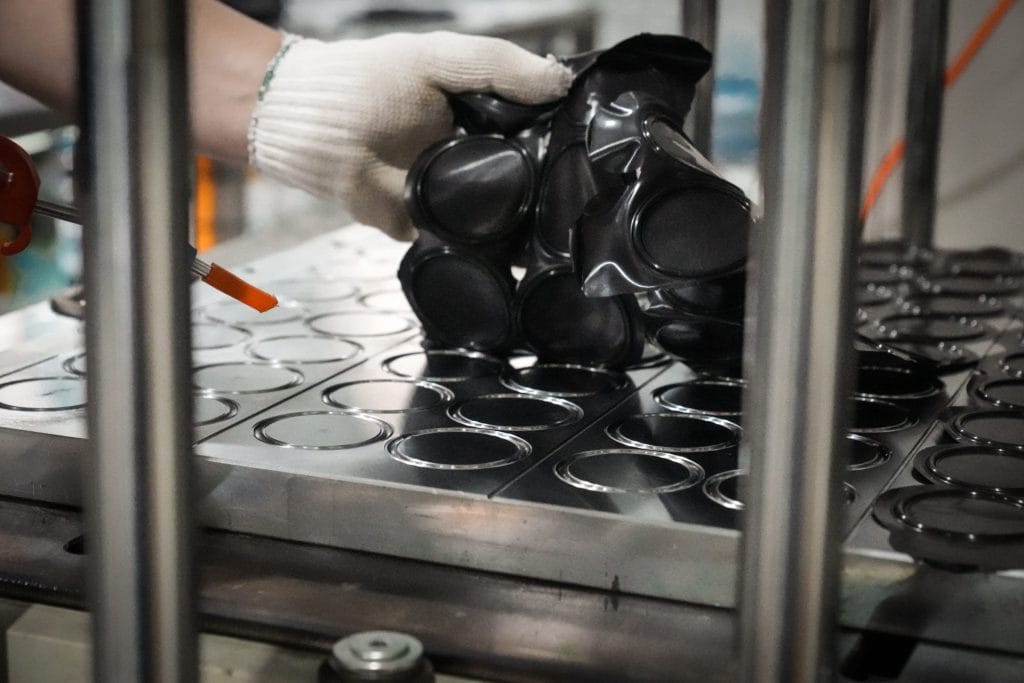
Rubber is one of the most versatile materials in modern industry, powering products ranging from car tires and industrial seals to medical devices and consumer products. But none of this would be possible without the vulcanization process—a revolutionary chemical breakthrough that turns unstable raw rubber into a durable, resilient material that can withstand harsh conditions. The history of rubber vulcanization is a story of experimentation, serendipity and technological innovation that spans more than two centuries and has reshaped countless industries.
Pre-Vulcanization: The Limitations of Raw Rubber
To appreciate the significance of the vulcanization process, we must first understand the challenges of raw (unvulcanized) rubber. Natural rubber, derived from the sap of the Hevea brasiliensis tree, was first discovered by indigenous peoples in South America over 3,000 years ago. They used it to make waterproof containers, footwear, and balls, but its inherent flaws made it impractical for widespread use.
Raw rubber is soft, sticky, and highly temperature-sensitive: it becomes brittle in cold weather (below 10°C) and melts or degrades in heat (above 50°C). It also has poor mechanical strength, tears easily, and breaks down when exposed to oils, solvents, or even air over time. For centuries, these limitations prevented rubber from being used in industrial or heavy-duty applications—until the vulcanization process revolutionized its properties.
By the late 18th century, European explorers and scientists began studying rubber, but early attempts to improve its stability failed. In the early 1800s, rubber manufacturers tried mixing raw rubber with other materials (such as sulfur, lead, and resin) to reduce stickiness, but these experiments were inconsistent and produced low-quality products. It wasn’t until the 1830s that a series of breakthroughs would lead to the formal discovery of the vulcanization process.
The Birth of Vulcanization: Key Discoveries and Inventors
The history of rubber vulcanization is often linked to a few pivotal inventors, whose work laid the foundation for the vulcanization process we use today. While the most famous name associated with vulcanization is Charles Goodyear, his discovery was built on the work of earlier scientists and tinkerers.
1. Early Experiments (1800–1839)
In 1818, the Scottish chemist Thomas Hancock began experimenting with raw rubber, seeking to make it more durable. He developed a machine called a “masticator” to mix rubber with other materials, which helped reduce its stickiness but did not solve its temperature sensitivity. Hancock later noted that mixing rubber with sulfur improved its properties, but he failed to recognize the critical role of heat in the process.
Around the same time, the German chemist Friedrich Ludersdorf and the French inventor Nathaniel Hayward independently discovered that adding sulfur to rubber made it less sticky. Hayward, in particular, patented a process for mixing rubber with sulfur in 1837, but he also did not realize that heating the mixture would trigger the full vulcanization reaction. These early experiments set the stage for the breakthrough that would come two years later.
2. Charles Goodyear’s Serendipitous Discovery (1839)
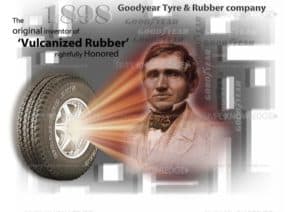
The most famous moment in rubber vulcanization history came in 1839, when the American self-taught chemist and manufacturing engineer Charles Goodyear made a serendipitous discovery. After five years of struggling to improve rubber’s properties—during which he faced financial ruin and poor health—Goodyear accidentally dropped a mixture of raw rubber, sulfur, and lead onto a hot stove. To his surprise, the rubber did not melt; instead, it became hard, elastic, and resistant to temperature changes. This was the first successful demonstration of thevulcanization process.
Goodyear spent the next five years refining the process, experimenting with different ratios of sulfur, heat, and additives to optimize rubber’s properties. He discovered that heating rubber with sulfur at temperatures between 120–150°C (248–302°F) created cross-links between the rubber’s polymer chains—transforming its molecular structure from a loose, linear arrangement to a tight, three-dimensional network. This cross-linking is the core of the vulcanization process, and it is what gives vulcanized rubber its superior durability and elasticity.
3. Patenting and Commercialization (1844–1850s)
In 1844, Goodyear was granted U.S. Patent No. 3633 for his perfected vulcanization process, formally establishing the method for producing vulcanized rubber on a commercial scale. Around the same time, Thomas Hancock—who had been working independently—patented a similar process in the United Kingdom, leading to a long legal dispute over priority. Despite this, Goodyear’s work became the foundation for modern vulcanization, and his name would later be immortalized by the Goodyear Tire and Rubber Company (which was named after him, though not founded by him).
By the 1850s, vulcanized rubber began to be mass-produced, finding its first major applications in footwear, waterproof clothing, and industrial gaskets. For the first time, rubber was a reliable material that could withstand the demands of industrial use—thanks to the vulcanization process.
Evolution of the Vulcanization Process: From Early Methods to Modern Techniques
The vulcanization process has evolved significantly since Goodyear’s early experiments, with advancements in chemistry and engineering making it more efficient, consistent, and adaptable to different types of rubber. Below is a timeline of key developments in the history of rubber vulcanization, highlighting how the process has improved over time:
1. 1850s–1890s: Early Industrial Vulcanization
In the decades following Goodyear’s patent, manufacturers used simple methods to vulcanize rubber: mixing raw rubber with sulfur (and later other additives) and heating it in open molds or ovens. This process was labor-intensive and inconsistent, as temperature control was difficult. However, it was a major improvement over raw rubber, and vulcanized rubber quickly became a staple in industries like mining, transportation, and agriculture.
During this period, scientists began to understand the chemistry behind vulcanization better. They discovered that sulfur acts as a “cross-linking agent,” forming bonds between the long polymer chains of rubber. The more cross-links formed, the harder and more durable the rubber became—though excessive cross-linking could make it brittle (a material known as ebonite).
2. 1900s–1950s: Accelerators and Modern Vulcanization Systems
A major breakthrough in the vulcanization process came in the early 1900s with the invention of vulcanization accelerators—chemical additives that speed up the cross-linking reaction, reduce the required temperature and time, and improve the consistency of vulcanized rubber. The first accelerator, aniline, was used in 1906, followed by more effective compounds like thiurams and sulfenamides.
These accelerators revolutionized the vulcanization process, making it faster and more efficient. They also allowed manufacturers to tailor rubber’s properties (hardness, elasticity, heat resistance) by adjusting the type and amount of accelerator used. During this period, synthetic rubbers (such as styrene-butadiene rubber, SBR) were also developed, and the vulcanization process was adapted to work with these materials—expanding rubber’s applications even further.
By the 1950s, the vulcanization process had become standardized, with three key variables: temperature (140–180°C), pressure (0.5–2.0MPa), and time (minutes to hours), which were carefully controlled to ensure consistent results. This era also saw the development of specialized vulcanization methods, such as steam vulcanization and autoclave vulcanization, which improved heat distribution and product quality.
3. 1960s–2000s: Automation and Specialized Formulations
With the rise of automation in manufacturing, the vulcanization process became more precise and scalable. Computer-controlled vulcanization machines allowed for exact temperature and pressure control, reducing waste and improving product consistency. New vulcanization techniques, such as microwave vulcanization and continuous vulcanization (for long products like hoses and cables), were developed to meet the growing demand for high-volume, high-quality rubber products.
During this period, manufacturers also developed specialized vulcanization formulations for specific applications. For example, peroxide vulcanization was introduced for synthetic rubbers like EPDM, offering better heat resistance than sulfur vulcanization. Flame-retardant and chemical-resistant vulcanized rubber was also developed for use in harsh industrial environments, such as the petrochemical and aerospace industries.
4. 2000s–Present: Green Vulcanization and Smart Technology
Today, the vulcanization process is evolving to meet the demands of sustainability and advanced manufacturing. Green vulcanization methods—using eco-friendly additives, reducing energy consumption, and developing recyclable vulcanized rubber—are becoming increasingly important as industries seek to reduce their environmental footprint. For example, bio-based vulcanization accelerators and nano-composite vulcanizing agents have been developed to lower carbon emissions and reduce the use of heavy metals.
Smart technology is also transforming the vulcanization process, with IoT-enabled machines that monitor and adjust temperature, pressure, and time in real time. These systems use data analytics to optimize the vulcanization process, reducing waste and ensuring consistent product quality. Additionally, 3D printing with vulcanized rubber has emerged, allowing for the production of complex, custom rubber parts with precise vulcanization control.
The Science of Vulcanization: How It Works
To solve practical problems with rubber products, it’s critical to understand the science behind thevulcanization process. At its core, vulcanization is a chemical reaction that forms cross-links between the polymer chains of rubber—transforming its physical properties. Here’s a simplified, practical breakdown of how the process works:
1. Key Components of the Vulcanization Process
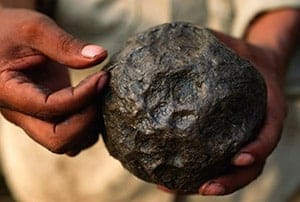
- Rubber Polymer: The base material (natural or synthetic rubber), which consists of long, linear polymer chains that can slide past each other (explaining raw rubber’s soft, sticky nature).
- Cross-Linking Agent: Most commonly sulfur (the original agent used by Goodyear), but also peroxides, metal oxides, or other chemicals. Sulfur is still the most widely used due to its cost-effectiveness and versatility.
- Accelerators: Chemicals that speed up the cross-linking reaction, reducing the required temperature and time. Common accelerators include MBTS, CBS, and thiurams.
- Activators: Additives (such as zinc oxide and stearic acid) that enhance the effectiveness of accelerators, ensuring a uniform reaction.
- Heat and Pressure: Heat (140–180°C) triggers the cross-linking reaction, while pressure (0.5–2.0MPa) ensures the rubber maintains its shape and prevents air bubbles from forming during vulcanization.
2. The Vulcanization Reaction
- Elastic: Can stretch and return to its original shape (critical for seals, tires, and gaskets).
- Durable: Resistant to wear, tearing, and mechanical stress.
- Temperature-Stable: Does not become brittle in cold or melt in heat (typical operating range: -50°C to 250°C, depending on formulation).
- Chemical-Resistant: Withstands oils, solvents, and environmental factors (e.g., UV radiation, ozone) better than raw rubber.
3. Key Variables That Impact Vulcanization Quality
- Temperature: Too low, and the reaction is incomplete (under-vulcanized rubber is soft and sticky); too high, and the rubber becomes brittle (over-vulcanized). Most formulations require 140–180°C, with precise control within ±0.5°C for optimal results.
- Time: The “cure time” (typically 5–30 minutes) must be long enough to complete cross-linking but not so long that the rubber degrades. The optimal cure time (t’c90) is measured using a vulcanometer, which tracks the reaction progress.
- Sulfur/Accelerator Ratio: Too much sulfur leads to brittle rubber; too little results in poor cross-linking. The ratio depends on the desired hardness and application (e.g., soft seals require less sulfur than hard tires).
- Pressure: Insufficient pressure causes air bubbles, which weaken the rubber and lead to leaks. Pressure is especially critical for thick rubber parts, which require uniform heat distribution.
Practical Applications: How Vulcanization History Shapes Modern Rubber Use
The history of rubber vulcanization is not just a historical curiosity—it directly impacts how we use rubber today. Each advancement in the vulcanization process expanded rubber’s applications, and understanding this history helps us choose the right vulcanized rubber for specific needs. Below are key applications shaped by vulcanization, along with practical tips for optimizing performance:
1. Automotive Industry
2. Industrial Seals and Gaskets
3. Consumer Goods
4. Medical Devices
Common Vulcanization Problems
Even with modern technology, issues can arise during the vulcanization process—many of which are rooted in the lessons learned from the history of rubber vulcanization. Below are the most common problems and practical solutions to help you avoid costly mistakes:

1. Under-Vulcanization
2. Over-Vulcanization
3. Air Bubbles in Vulcanized Rubber
4. Poor Adhesion to Other Materials
Conclusion
The history of the vulcanization of rubber is a testament to the power of experimentation and innovation. From Charles Goodyear’s serendipitous discovery in 1839 to today’s smart, sustainable vulcanization techniques, the vulcanization process has transformed rubber from a niche material into a cornerstone of modern industry. Understanding this history not only helps us appreciate the evolution of rubber technology but also provides practical insights to optimize the performance of rubber products, avoid common pitfalls, and choose the right vulcanization method for specific applications.
Today, the vulcanization process continues to evolve, with a focus on sustainability, efficiency, and customization. Whether you’re working with automotive tires, industrial seals, or medical devices, the lessons from rubber vulcanization history remain relevant—helping you leverage this transformative process to create durable, high-performance rubber products.
FAQs About the History and Vulcanization Process of Rubber
Q1: Who invented the vulcanization process?
While early experiments with sulfur and rubber were conducted by Thomas Hancock, Friedrich Ludersdorf, and Nathaniel Hayward, Charles Goodyear is credited with discovering the full vulcanization process in 1839 and patenting it in 1844. He refined the process to produce consistent, durable vulcanized rubber for commercial use.
Q2: What is the difference between vulcanized and unvulcanized rubber?
Unvulcanized (raw) rubber is soft, sticky, and temperature-sensitive, with no cross-links between polymer chains. Vulcanized rubber undergoes the vulcanization process, which forms cross-links between polymer chains—making it elastic, durable, temperature-stable, and resistant to wear and chemicals. Vulcanized rubber is suitable for industrial use, while unvulcanized rubber is only used in limited, low-stress applications.
Q3: What is the most common cross-linking agent in vulcanization?
Sulfur is the most common cross-linking agent, used in over 90% of vulcanization processes. It is cost-effective, versatile, and works well with both natural and synthetic rubbers. Peroxides and metal oxides are used for specialized applications (e.g., high-temperature or medical-grade rubber).
Q4: How has the vulcanization process changed over time?
The vulcanization process has evolved from simple open-heat methods (Goodyear’s original process) to modern, automated systems with precise temperature, pressure, and time control. Key advancements include the invention of accelerators (1900s), synthetic rubber compatibility (1950s), continuous vulcanization (1960s), and green, smart vulcanization techniques (2000s–present).
Q5: How can I optimize the vulcanization process for my application?
To optimize vulcanization, control the three key variables: temperature (140–180°C), time (based on t’c90), and pressure (0.5–2.0MPa). Choose the right cross-linking agent (sulfur for standard applications, peroxides for high-temperature/medical use) and accelerator ratio. Use a vulcanometer to measure cure progress, and ensure the rubber compound is dry and free of contaminants. For specific applications, consult a rubber manufacturer to tailor the vulcanization process to your needs.