
Rapid Gas Decompression O-Rings
Rapid Gas Decompression (RGD) O-Rings
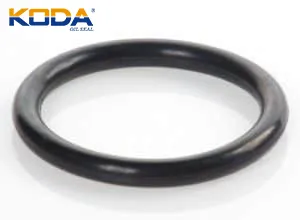
Rapid Gas Decompression (RGD), also known as Explosive Decompression (ED) or Anti-Explosive Decompression (AED), is one of the leading causes of elastomer seal failure in high-pressure gas systems. When compressed gas is released too quickly, gas trapped inside the rubber expands rapidly, creating internal cracks, blisters, or complete seal rupture.RGD-resistant O-rings are specially engineered with optimized elastomer formulations and high mechanical strength to withstand these pressure cycles, making them the preferred sealing solution for oil & gas, hydrogen, offshore, and high-pressure process equipment.
What Causes Rapid Gas Decompression?
During operation, high-pressure gases such as natural gas, CO₂, methane, or hydrogen permeate into the elastomer structure. If system pressure drops faster than the gas can diffuse out of the seal, microscopic gas bubbles expand internally.
This internal expansion can lead to:
- Blistering inside the elastomer
- Internal cracking
- Surface rupture
- Loss of sealing force
- Premature O-ring failure
Unlike chemical degradation, RGD damage often begins inside the seal and may not be visible until the O-ring is cut open after failure.
Why Choose RGD-Resistant O-Rings?
Standard O-rings may perform well under static pressure but fail after repeated rapid decompression cycles. RGD compounds are formulated to improve:
- Resistance to internal crack propagation
- Compression set performance
- High-pressure extrusion resistance
- Mechanical strength and tear resistance
- Long-term sealing reliability in gas environments
These characteristics help reduce unplanned maintenance, improve equipment uptime, and extend seal service life in demanding applications.
Common Materials for RGD O-Rings
Different elastomers are selected based on operating pressure, temperature, and media compatibility.
| Material | Typical Advantages | Recommended Applications |
|---|---|---|
| FKM | Excellent oil, gas, and high-temperature resistance | Oil & gas, compressors, valves |
| HNBR | High mechanical strength and abrasion resistance | Natural gas, hydraulic equipment |
| FEPM (AFLAS®) | Excellent resistance to steam, sour gas, and aggressive chemicals | Chemical processing, sour gas service |
| FFKM | Outstanding chemical resistance with extreme temperature capability | Critical process equipment and aggressive chemicals |
FKM remains the most widely specified material for certified RGD applications, while HNBR and FEPM are often selected when sour gas, steam, or hydrogen sulfide exposure is present.
How to Select the Right RGD O-Ring
Before selecting an RGD compound, evaluate the following operating conditions:
Gas Composition
Different gases diffuse into elastomers at different rates. Natural gas, hydrogen, carbon dioxide, and sour gas may require different material formulations.
Operating Pressure
Higher pressures increase gas permeation into the seal, making certified RGD compounds essential for long-term reliability.
Temperature
High temperatures accelerate gas diffusion and elastomer aging. Choose a material that maintains mechanical properties throughout the operating range.
Pressure Cycling Frequency
Applications with frequent decompression cycles require compounds specifically designed to resist repeated internal stress rather than occasional pressure release.
RGD Testing Standards
Selecting an RGD seal should involve more than choosing the right material. Verified performance under recognized industry standards is equally important.
Common qualification standards include:
- NORSOK M-710 – Widely accepted qualification for explosive decompression resistance in offshore and petroleum applications.
- API 6A – Performance requirements for sealing components used in wellhead and pressure-control equipment.
- NACE TM0297 – Evaluation of elastomer materials for sour gas environments.
Materials that successfully pass these tests demonstrate improved resistance to blistering and internal cracking during rapid pressure release.
Recommended usage environment for RGD O-rings
| Rating | Description |
|---|---|
| 0 | No internal cracks, holes or blisters of any size. |
| 1 | Less than 4 internal cracks, each shorter than 50% of the cross section, with a total crack length less than the cross section. |
| 2 | Less than 6 internal cracks, each shorter than 50% of the cross section, with a total crack length of less than 2.5 times the cross section. |
| 3 | Less than 9 internal cracks of which max. 2 cracks can have a length between 50% and 80% of the cross section. |
| 4* | More than 8 internal cracks or one or more cracks longer than 80% of the cross section. |
| 5* | Crack(s) going through the cross section or complete separation of the seal into fragments. |
Performs Well In:
- Synthetic Lubricants / Mineral Lubricants
- Petroleum Products
- Fuels (including methanol/ethanol blends)
- Diesel (including biodiesel blends)
- Mineral Oils and Mineral Greases
- Silicone Oils and Silicone Greases
- High Vacuum Environments
- Ozone, Weathering, and High-Temperature Air Environments
- Strong Acid Media
Doesn't Perform Well In:
Ketones
Low molecular weight organic acids (formic acid and acetic acid),
Superheated steam,
Low molecular weight esters and ethers,
Phosphate ester-based hydraulic fluids.
RGD O-ring compounds (FKM materials)
| Compound | V90RGD | V95RGD | V90RGD/LT | V90RGD/XLT | V90RGD/VLT | V95RGD/VLT | V90RGD/BFR |
|---|---|---|---|---|---|---|---|
| Polymer | FKM | FKM | FKM | FKM | FKM | FKM | FKM |
| Durometer | 90 | 95 | 90 | 90 | 90 | 95 | 90 |
| NORSOK M-710 | Passed | Passed | Passed | Passed | Passed | Passed | Passed |
| NACE TM0297 | Passed | ||||||
| Total GS EP PVV 142 | Passed | Passed | |||||
| API 6A Sour Fluid Resistance | Passed | Passed | Passed | Passed | |||
| Compound Features | General purpose for RGD | General purpose for RGD | Low-temp Excellent performance in RGD Excellent oil and natural gas resistance | Extreme low-temp | Very low-temp | Very low-temp Recommended for low-temp or high pressure environments | Fluorine content: 70% Excellent biofuel resistance |
| Dynamic Service Temperature | -15º to 220ºC | -15º to 220ºC | -30º to 220ºC | -45º to 220ºC | -40º to 220ºC | -30º to 220ºC | -5º to 220ºC |
| Static Service Temperature | -20º to 250ºC | -20º to 250ºC | -35º to 250ºC | -50º to 250ºC | -45º to 250ºC | -35º to 250ºC | -10º to 250ºC |
| Synthetic/Mineral Lubricants Resistance | Excellent | Excellent | Excellent | Excellent | Excellent | Excellent | Excellent |
| Aliphatic Hydrocarbons | Excellent | Excellent | Excellent | Excellent | Excellent | Excellent | Excellent |
| Aromatic Hydrocarbons | Excellent | Excellent | Excellent | Excellent | Excellent | Excellent | Excellent |
| Chemical Resistance | Good | Good | Good | Good | Good | Good | Good |
Other RGD O-ring compounds (non-FKM materials)
| Compound | V90RGD | H90RGD/LT | P9021A | A90RGD/SGR |
|---|---|---|---|---|
| Polymer | HNBR | HNBR | FFKM | FEPM |
| Durometer | 90 | 90 | 90 | 90 |
| NORSOK M-710 | Passed | Passed | Passed | |
| NACE TM0297 | Passed | Passed | ||
| Total GS EP PVV 142 | Passed | |||
| AP I6A Sour Fluid Resistance | Passed | |||
| Compound Features | General purpose for RGD Good hydrogen sulfide and abrasion resistance | Low-temp | Broad chemical resistance Steam resistant w/ excellent compression set at high temperatures | Sour gas resistant |
| Dynamic Service Temperature | -15º to 130ºC | -35º to 250ºC | 0º to 280ºC | -5º to 220ºC |
| Static Service Temperature | -25º to 150ºC | -40º to 150ºC | -10º to 300ºC | -10º to 250ºC |
| Synthetic/Mineral Lubricants Resistance | Excellent | Excellent | Excellent | Excellent |
| Aliphatic Hydrocarbons | Excellent | Excellent | Excellent | Excellent |
| Aromatic Hydrocarbons | Excellent | Good | Good | Excellent |
| Chemical Resistance | Fair | Fair | Fair | Excellent |