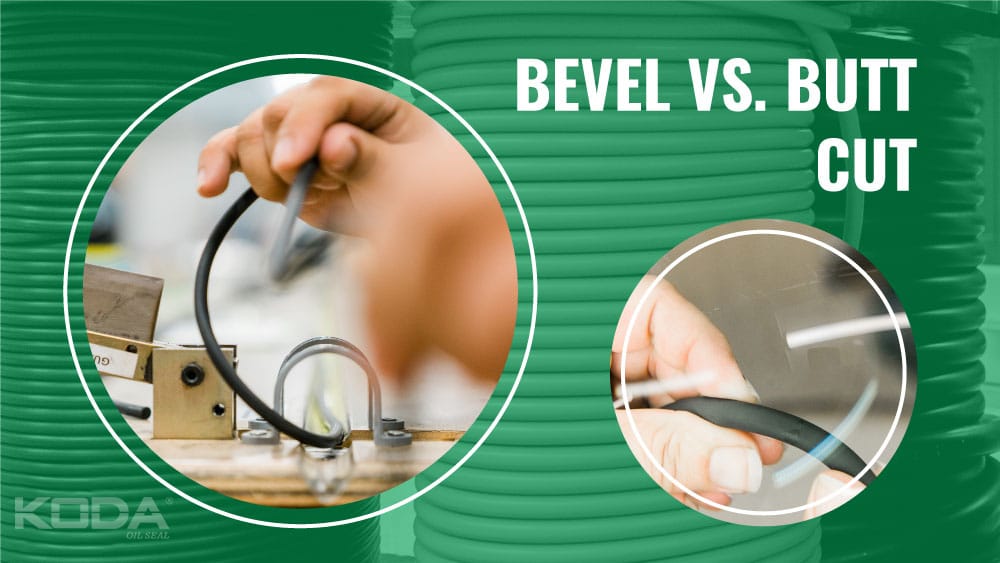
In industrial sealing systems, the cutting method used for an O-ring cord can significantly influence sealing reliability, durability, and long-term operational performance. Among the most widely used splice configurations are Bevel Cut and Butt Cut. While both methods aim to create a continuous sealing loop, their structural differences can directly affect pressure resistance, compression behavior, leakage prevention, and installation stability.
Understanding how these splice styles perform under different conditions helps engineers, maintenance teams, and procurement specialists choose the right sealing solution for hydraulic systems, pneumatic applications, food processing equipment, automotive assemblies, and industrial machinery.
⚠️ Important: The splice area is often the weakest point of a custom cord O-ring. Choosing the correct cut style can dramatically reduce leakage risks and extend service life.
What Are Bevel Cut and Butt Cut O-Rings?
A splice O-ring is manufactured by cutting elastomer cord stock and bonding the two ends together using adhesives, vulcanization, or heat fusion. The shape of the cut determines the splice geometry and sealing characteristics.
Butt Cut O-Rings

A butt cut splice uses two straight 90-degree cuts joined directly together. The cord ends meet face-to-face, creating a simple and cost-effective splice structure. Butt cut O-rings are common in low-pressure and static sealing environments where installation simplicity is more important than extreme sealing performance.
Industries often use butt cut seals in:
- Low-pressure air systems
- Dust protection applications
- Static enclosure sealing
- General industrial equipment
- Large diameter custom seals
You can explore additional sealing solutions and custom O-Rings for industrial applications.
Bevel Cut O-Rings

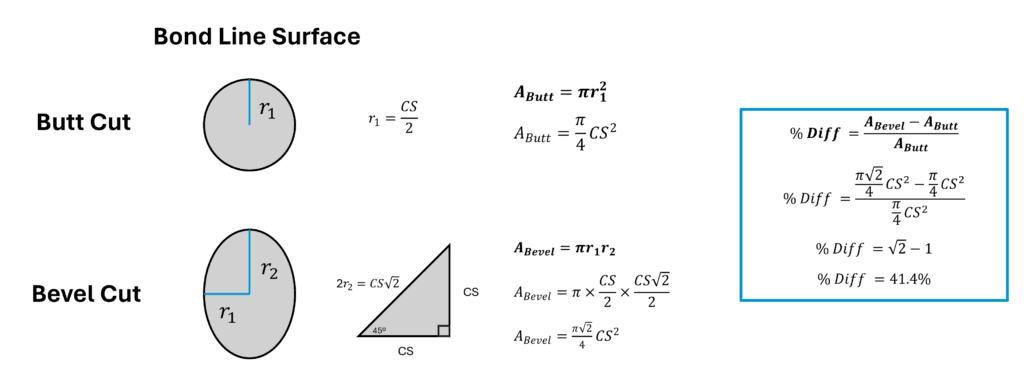
A bevel cut splice uses angled cuts instead of perpendicular cuts. The angled surfaces increase bonding area and improve splice strength. This design creates a smoother transition across the joint, helping distribute stress more evenly during compression.
Bevel cut splices are preferred in demanding applications involving:
- Pressure fluctuations
- Dynamic movement
- Vacuum systems
- Chemical exposure
- Frequent thermal cycling
✔️ Engineering Insight: The larger bonding surface in bevel cut splices improves tensile strength and lowers the chance of splice separation during repeated compression cycles.
Structural Differences Between Bevel and Butt Cut Splices
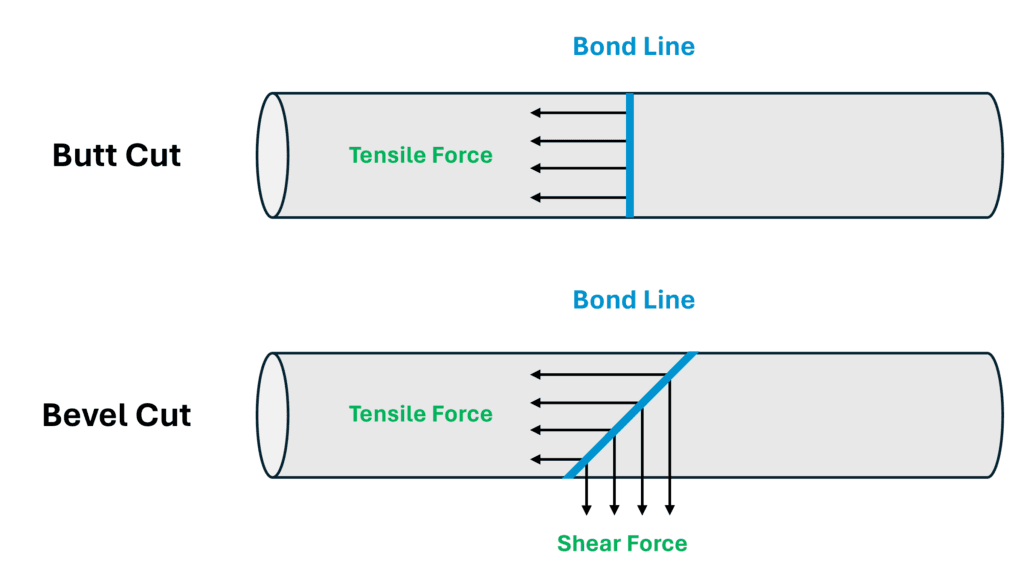
The structural geometry of the splice determines how sealing forces are transferred across the O-ring cross-section.
Butt Cut Structure
The butt cut design creates a direct joint line across the entire cross-section. While this structure is easy to manufacture, it concentrates stress at the splice interface. Under pressure or repeated movement, the joint may experience separation or uneven compression.
Key characteristics include:
- Straight 90-degree splice
- Minimal bonding surface area
- Fast manufacturing process
- Lower production cost
- Simplified assembly
Bevel Cut Structure
The bevel splice forms an angled overlap that distributes mechanical loads more gradually. Because the bonding area is larger, adhesive or vulcanized connections typically achieve better structural integrity.
Key characteristics include:
- Angled splice geometry
- Expanded bonding surface
- Improved stress distribution
- Higher tensile resistance
- Better sealing continuity
📌 Key Difference: Butt cut splices prioritize simplicity and cost efficiency, while bevel cut splices prioritize sealing performance and durability.
Performance Impact in Static Sealing Applications
Static sealing applications involve little or no relative movement between mating surfaces. In these environments, both splice styles may perform adequately depending on system pressure and environmental conditions.
Butt Cut Performance in Static Seals
Butt cut O-rings can provide acceptable sealing in low-pressure systems where compression forces remain stable. However, imperfections at the splice interface may create microscopic leakage paths if compression is inconsistent.
Potential challenges include:
- Localized stress concentration
- Reduced splice integrity over time
- Higher risk of leakage under thermal expansion
- Possible gap formation at the joint
Bevel Cut Performance in Static Seals
Bevel cut splices generally offer better compression uniformity. The angled transition minimizes discontinuities in the sealing line, improving leak resistance and pressure retention.
Benefits include:
- Improved sealing contact
- Enhanced pressure retention
- Lower leakage probability
- Better long-term compression stability
For demanding industrial systems requiring long-term sealing reliability, high-quality O-Rings with optimized splice construction are often preferred.
Performance Under Dynamic Conditions
Dynamic applications introduce repeated movement, vibration, friction, and pressure cycling. These conditions place significantly greater stress on the splice area.
Dynamic Limitations of Butt Cut Splices
In dynamic sealing systems, butt cut splices may experience accelerated wear because the abrupt splice geometry creates uneven stress distribution. Repeated motion can gradually weaken the adhesive bond and initiate crack formation.
Common risks include:
- Splice separation
- Fatigue cracking
- Premature leakage
- Compression set at the splice
- Reduced operational lifespan
Advantages of Bevel Cut Splices in Dynamic Systems
Bevel cut O-rings are better suited for dynamic motion because the angled splice reduces sudden stress concentration. Mechanical loads are distributed across a larger area, improving fatigue resistance and operational reliability.
🔧 Recommended Practice: Dynamic hydraulic and pneumatic systems should prioritize bevel cut splices whenever possible to minimize splice-related failures.
Pressure Resistance Comparison
Pressure resistance is one of the most important performance criteria when evaluating splice quality.
Butt Cut Pressure Characteristics
Because the bonding surface is relatively small, butt cut splices may become vulnerable under elevated pressure. Internal media pressure can force the splice apart if bonding strength is insufficient.
This is particularly problematic in:
- Hydraulic systems
- Vacuum chambers
- Steam applications
- Gas sealing environments
Bevel Cut Pressure Characteristics
The angled overlap in bevel splices improves joint stability and reduces the chance of separation under pressure loading. This makes bevel cuts more suitable for moderate and high-pressure systems.
Pressure-related advantages include:
- Stronger splice adhesion
- Better pressure containment
- Lower extrusion risk
- Improved structural stability
Many industrial buyers selecting custom O-Rings specifically request bevel splice construction for pressure-sensitive equipment.
Chemical and Temperature Resistance Factors
Environmental exposure also influences splice performance. Chemical attack and thermal cycling can weaken adhesive bonds and accelerate material degradation.
Chemical Exposure Effects
Aggressive chemicals may attack splice adhesives faster than the base elastomer material. Since butt cut splices have smaller bonding areas, they may fail earlier when exposed to solvents, oils, acids, or cleaning agents.
Bevel cut splices generally provide:
- Higher adhesive stability
- Better chemical resistance retention
- Improved bond durability
- Greater environmental reliability
Thermal Cycling Effects
Repeated heating and cooling cause elastomers to expand and contract. Butt cut joints may develop stress concentration during thermal expansion, while bevel cuts distribute thermal stress more evenly.
🌡️ Temperature Note: Bevel cut splices typically maintain better sealing integrity during repeated thermal cycling and fluctuating operating temperatures.
Manufacturing Complexity and Cost Differences
Manufacturing efficiency often influences splice selection, especially for high-volume production.
Butt Cut Manufacturing Advantages
Butt cut splices are easier and faster to produce. The simple cutting geometry allows efficient mass production with minimal setup requirements.
Advantages include:
- Lower manufacturing cost
- Faster production speed
- Simplified tooling
- Reduced labor requirements
Bevel Cut Manufacturing Considerations
Bevel cuts require more precise cutting angles and tighter splice alignment control. Production may involve additional labor and quality inspection procedures.
Although costs are slightly higher, the improved reliability often justifies the investment in critical systems.
Selecting the correct splice design depends on multiple operating factors.
Choose Butt Cut O-Rings When:
- Operating pressure is low
- The seal is static
- Cost reduction is important
- Leakage risk is minimal
- Large-diameter seals are needed economically
Choose Bevel Cut O-Rings When:
- Pressure levels are moderate or high
- Dynamic movement exists
- Long-term reliability is required
- Chemical exposure is aggressive
- Thermal cycling is frequent
- Leak prevention is critical
⭐ Best Practice: For mission-critical industrial applications, bevel cut splices are generally considered the safer and more reliable engineering choice.
Conclusion
The difference between bevel cut and butt cut O-rings extends far beyond manufacturing style. Splice geometry directly impacts sealing efficiency, pressure resistance, fatigue durability, thermal stability, and operational lifespan.
Butt cut splices remain a practical and economical solution for low-pressure static systems. However, bevel cut splices consistently deliver superior performance in demanding industrial environments where reliability and leak prevention are essential.
Engineers and procurement professionals evaluating sealing solutions should carefully consider operating pressure, movement conditions, chemical exposure, and long-term maintenance requirements before selecting a splice configuration.
High-performance custom O-Rings with optimized splice technology can significantly improve equipment reliability, reduce downtime, and extend maintenance intervals across industrial systems.
FAQ O-rings Bevel vs. Butt Cut: Performance Impact
1. Which splice type is stronger, bevel cut or butt cut?
Bevel cut splices are generally stronger because the angled design increases bonding surface area and distributes stress more evenly across the splice.
2. Are butt cut O-rings suitable for hydraulic systems?
Butt cut O-rings are usually not recommended for high-pressure hydraulic systems because the splice may separate under pressure cycling.
3. Why are bevel cut splices better for dynamic applications?
Bevel cuts reduce stress concentration and improve fatigue resistance, making them more durable under repeated movement and vibration.
4. Do splice designs affect leakage performance?
Yes. Splice geometry directly affects compression uniformity and sealing continuity, which influence leakage prevention capability.
5. Are bevel cut O-rings more expensive?
Yes. Bevel cut O-rings typically cost slightly more due to additional manufacturing precision and splice alignment requirements, but they often provide better long-term reliability.