Skip to content
What is a DB oil seal?
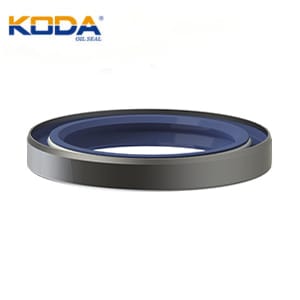
In the sealing systems of mechanical equipment, DB oil seals, as a two-way sealing solution, are widely used in scenarios requiring the separation of two media or two-way leak prevention due to their unique structural design. However, many customers are often troubled by questions such as "What is the difference between DB oil seals and ordinary oil seals?", "How to determine the selection parameters?", and "How to solve oil leakage problems?" when purchasing and using them.
What exactly is a DB oil seal? What are the essential differences between it and common oil seals?
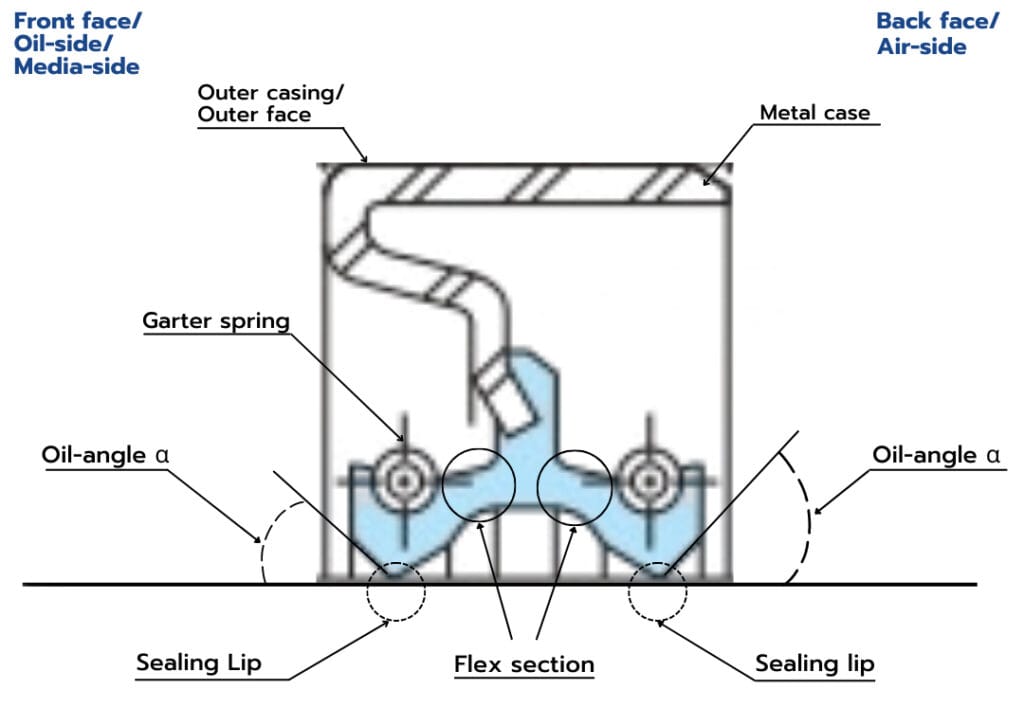
The DB oil seal is a bidirectional, double-lip, double-spring rotary skeleton oil seal. Its core structure is “opposed double lips + double clamping springs + metal shell”. It is specially designed for scenarios that require bidirectional sealing or separation of two media. It can simultaneously prevent internal media leakage and external contaminant intrusion and can also achieve the isolation of two different oils.
Compared to single-lip oil seals (such as the TB type) and ordinary double-lip oil seals (such as the TC type), the core differences lie in the sealing direction, structural design, and adaptability to operating conditions:
TB Oil Seal: Single lip + single spring, provides unidirectional leak prevention only, no dustproof function, suitable for simple low-pressure, dust-free conditions, such as small fans;
TC Oil Seal: Double lip (main lip + dustproof lip) + single spring provides unidirectional sealing + unidirectional dustproofing, suitable for medium- to low-pressure, single-medium scenarios, such as ordinary motor gearboxes;
DB Oil Seal: Opposed double lips (bidirectional main lip) + double springs provide bidirectional sealing + bidirectional dustproofing, can separate two media, and are suitable for multi-media, bidirectional leak prevention scenarios, such as the connection between gearbox and differential, and dual-media cavities in hydraulic systems.
We have a case study of one of our clients: an automotive parts factory that manufactures transmissions, which needs to seal both gear oil and hydraulic oil simultaneously. Initially, due to the use of TC-type oil seals, the two oils mixed, resulting in a failure rate as high as 30%. After replacing them with DB-type oil seals, the two oils were completely isolated, the failure rate dropped to below 2%, and production efficiency was significantly improved.
What are the core structural components of a DB oil seal? What is the function of each component?
DB oil seals offer superior performance due to their precise structural design; each component directly impacts the sealing effect. A detailed breakdown follows:
1. Opposed Double Lips: Two sealing lips are installed opposite each other, forming a bidirectional sealing barrier. The inner lip prevents leakage of the first medium, while the outer lip prevents the intrusion of the second medium or external dust and moisture. Both lips are made of wear-resistant rubber to ensure a tight seal.
2. Double Clamping Springs: An independent ring spring is embedded inside each lip. By continuously providing radial clamping force, it ensures that both lips are tightly fitted to the shaft surface. Even if there is slight wear or eccentricity on the shaft surface, the springs can dynamically compensate for the gap, maintaining the bidirectional sealing effect.
3. Metal Housing: Made of high-quality steel through stamping, it provides stable support for the lips and springs, preventing deformation of the sealing lips under high-speed rotation or pressure. The outer side of the housing usually has anti-slip textures, ensuring a tight fit with the cavity wall after installation and preventing loosening or displacement.
4. Rubber Coating: The inner side of the metal housing, where it connects to the lips, is coated with rubber to reduce frictional wear between the lips and the housing, while also buffering vibrations during equipment operation and improving sealing stability.
How do I read the model and specifications of DB oil seals? How can I quickly match them to my equipment?
DB oil seal specifications follow industry standards, with core parameters being “inner diameter (ID) × outer diameter (OD) × thickness (THK)”, in millimeters (mm). Some models will also indicate the material and temperature range. For example, “DB 75×100×15 NBR” indicates a DB oil seal with an inner diameter of 75 mm, an outer diameter of 100 mm, a thickness of 15 mm, and a lip material of nitrile rubber.
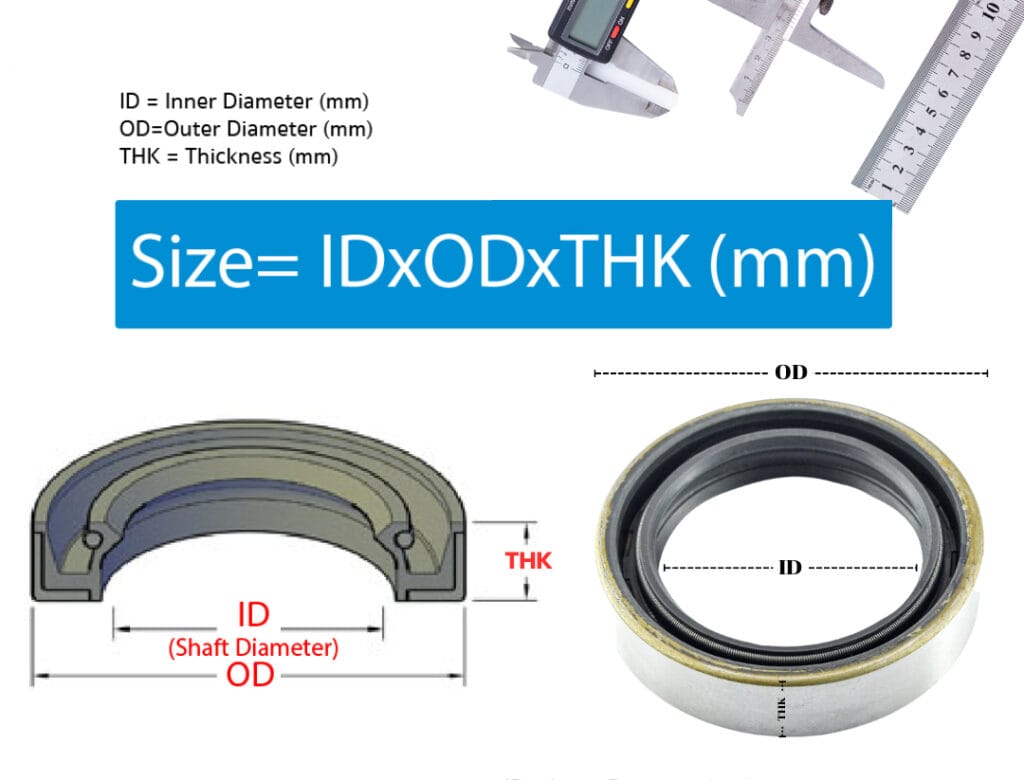
Inner Diameter (ID): Precisely matches the diameter of the rotating shaft, with a tolerance controlled within ±0.05 mm. Too large and it will fail to seal; too small and it will compress the lip, causing excessive wear.
Outer Diameter (OD): An interference fit is used with the diameter of the equipment mounting hole, with a tolerance of -0.02~-0.05 mm, ensuring no loosening after installation.
Thickness (THK): Matches the depth of the mounting hole, requiring a 0.5~1mm installation allowance. Excessive thickness will cause the oil seal to deform under pressure; insufficient thickness will prevent it from being securely fixed.
What are the differences between DB oil seals made of different materials? How to choose the right one?
The core material differences between DB oil seals lie in the lip rubber and the skeleton steel. Different materials are suitable for different working conditions. Specific comparisons and selection suggestions are as follows:
1. Rubber material for the lip
Nitrile butadiene rubber (NBR): Offers the best cost-performance ratio, with excellent oil and wear resistance. It has a working temperature range of -10℃ to 100℃ and is suitable for mineral oil, hydraulic oil, gear oil, and other media and general operating conditions. It accounts for over 60% of the DB oil seal market.
Fluororubber (FKM): High temperature and corrosion resistance, with a working temperature range of -20℃ to 200℃. It can withstand synthetic oil, high-temperature oil, and corrosive media, making it suitable for harsh conditions such as compressors and high-temperature hydraulic systems. Its price is 2-3 times that of nitrile butadiene rubber.
Hydrogenated nitrile butadiene rubber (HNBR): Combines the oil resistance of nitrile butadiene rubber with the high-temperature resistance of fluororubber. It has a working temperature range of -40℃ to 130℃ and wear resistance twice that of nitrile butadiene rubber. It is suitable for high-speed, high-temperature, and high-pressure applications, such as high-end automotive transmissions.
Veinglass (VMQ): Low-temperature resistant and non-toxic, with a working temperature range of … It has a temperature range of 60℃ to 120℃ and is suitable for food-grade equipment and low-temperature operating conditions, such as refrigeration compressors and food machinery. However, it has poor oil resistance and is not suitable for mineral oil media.
2. Frame steel material
Ordinary carbon steel: Low cost, rigidity meets normal working conditions, suitable for indoor equipment and other non-corrosive environments.
Stainless steel: Strong corrosion resistance and rust prevention, suitable for marine equipment and chemical machinery in humid, outdoor, and corrosive environments. The price is slightly higher than that of ordinary carbon steel.
Recommended selection: When choosing the lip material, priority should be given to the sealing medium and temperature. Nitrile rubber is recommended for normal operating conditions, fluororubber for high-temperature and corrosive operating conditions, and hydrogenated nitrile rubber for high-speed and high-temperature operating conditions. The selection of the skeleton material should consider environmental humidity and corrosivity. Stainless steel is recommended for use in humid outdoor environments.
Q. Can a DB oil seal be used instead of a TC oil seal?
Not recommended unless necessary.
Reason 1 (Higher Cost): DB oil seals have two springs, making their structure more complex and more expensive than TC seals.
Reason 2 (Lack of Dust Protection): The secondary lip (dust lip) of the TC oil seal is designed to be very soft, specifically for scraping away dust, while both lips of the DB oil seal are very hard (for sealing the oil). If used in a dusty environment, dust can easily wear down the lips, leading to seal failure.
Q. What precautions should be taken when installing DB oil seals?
The biggest problem is forgetting to lubricate.
Because both lips are oil-sealed, the friction is greater than when using TC oil seals. During installation, lubricant must be applied to the inside of both lips.
If only one side is lubricated while the other side rubs dry, high temperatures will build up within minutes, causing the rubber to burn and leak oil.
Q. What is the typical lifespan of a DB oil seal?
Under ideal operating conditions (no impurities, stable pressure, and no shaft wear), the lifespan is typically 10,000 to 20,000 hours (approximately 1-2 years).
How to extend lifespan: Ensuring media cleanliness is crucial. DB oil seals are most vulnerable to particulate impurities in the media. Once these impurities enter the lip, it’s like “sharpening” the shaft, reducing its lifespan by more than half.
Looking to improve your system performance with KODA’s DB oil seals? Contact us today! For more information or a quote, please submit a product inquiry or call +86 18730921709.