Skip to content
What are cassette seals?
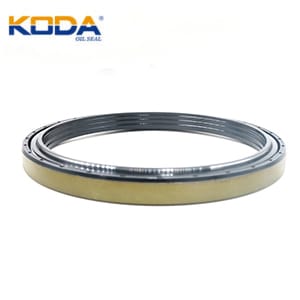
Cartridge seals (also known as cassette seals or integrated seals) are pre-assembled modular mechanical seals that integrate the sealing surface, spring, auxiliary seals, bushings, and other components into a single housing, allowing for direct installation without complex on-site assembly. Compared to traditional split seals, they offer advantages such as convenient installation, reliable sealing, and low maintenance costs, making them a core sealing solution for rotating equipment in industries such as chemical engineering, construction machinery, automotive, and shipbuilding.
Cassette seals: structure, principle, and core advantages
Understanding the basic structure and working logic of cassette seals is key to avoiding selection errors and maximizing their performance while also clearly distinguishing them from traditional seals.
1. Core Structure and Working Principle
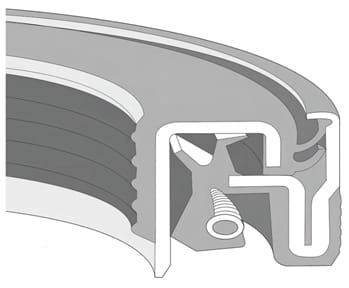
The cassette seal features an integrated design, with core components including a rotating sealing surface, a stationary sealing surface, an elastic compensating element (spring), auxiliary seals (O-rings/bellows), a bushing, and a housing. Its working logic is simple and efficient: the housing is bolted to the equipment cavity; the rotating sealing surface rotates synchronously with the equipment shaft; the stationary sealing surface, provided with constant pressure by the spring, adheres tightly to the rotating surface, forming a precision sealing interface to prevent fluid or gas leakage; the auxiliary seals manage the clearance between the sealing components and the shaft and housing; and the bushing protects the equipment shaft from wear, forming a closed-loop sealing system.
Unlike traditional mechanical seals that require on-site assembly and calibration of each component, the cassette seal is pre-positioned and tested before leaving the factory. During installation, it only needs to be inserted into the pre-designated position on the equipment and tightened, significantly reducing human error.
2. Irreplaceable core advantages
Easy installation, reduced downtime: The pre-assembled design shortens installation time by over 60%, requiring no specialized technicians. This is particularly suitable for emergency equipment repairs and batch installations, effectively reducing production downtime and lowering maintenance costs.
Reliable sealing, low failure rate: Rigorous pressure and sealing tests are conducted before shipment, avoiding issues like misalignment of sealing surfaces and uneven spring stress caused by on-site assembly. The leakage rate is significantly lower than that of traditional seals, maintaining stable performance even under high-pressure and vibration conditions.
Protecting shafts, extending equipment lifespan: Integrated bushings isolate sealing surface wear and media corrosion, preventing direct damage to equipment shafts and reducing the high costs of shaft repair or replacement. This is especially suitable for unplated, low-hardness shafts.
Simple maintenance, efficient replacement: The modular structure allows for complete disassembly and replacement without disassembling the main equipment. Routine inspections only require observing sealing surface wear and leakage, significantly reducing maintenance difficulty and labor intensity.
3. Common Types and Applicable Boundaries
Based on operating conditions, cassette seals are mainly divided into two categories, requiring precise matching to the application scenario to avoid performance waste:
Balanced cassette seals: Pressure is evenly distributed on both sides of the sealing surface, resulting in low frictional heat and minimal wear. Suitable for high-pressure (>10 MPa), high-temperature (>120℃), and corrosive media conditions, they are widely used in chemical pumps, reactors, and other equipment.
Unbalanced cassette seals: Pressure is distributed on one side of the sealing surface. Simpler structure and lower cost: they are suitable for low-pressure (<10 MPa), low-temperature (<120℃), and clean media applications, such as ordinary gearboxes and small water pumps.
Note: Casing seals are mostly used for static sealing of rotating equipment or low-frequency dynamic sealing. They are not suitable for ultra-high speed (surface linear velocity > 20 m/s) and high-wear (medium containing many hard particles) conditions. For such scenarios, it is recommended to choose a customized, wear-resistant sealing solution.
Application areas of cassette seals
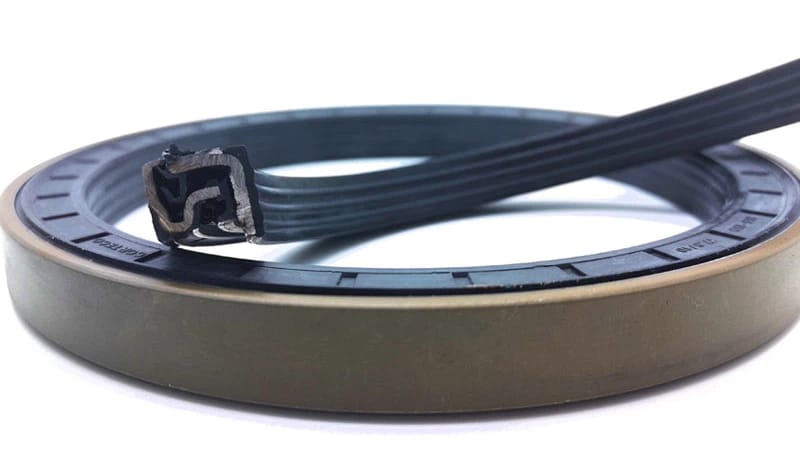
1. Construction and Agricultural Machinery: The Top Choice for Stain and Wear Resistance
Excavators, bulldozers, tractors, combine harvesters, and other equipment often operate in harsh environments with dust, mud, and sludge. Traditional seals are prone to failure and shaft wear due to impurities. The multi-lip structure (including a dust lip) and integrated design of cartridge seals effectively prevent contaminants from entering, while the pre-lubricated cavity reduces friction and wear, and it is suitable for a wide temperature range of -40℃ to 150℃. Addressing the pain points of “high maintenance difficulty and high downtime costs” in construction machinery, cartridge seals allow for quick and complete replacement, significantly improving equipment uptime.
2. Chemical and Petroleum Equipment: Corrosion-Resistant Sealing
Chemical pumps, reactors, storage tanks, and other equipment need to be sealed against corrosive media such as acids, alkalis, and solvents, requiring extremely high compatibility and reliability of the sealing materials. Casing seals can be made of corrosion-resistant materials such as fluororubber (FKM) and silicon carbide (in the original), combined with a balanced structure, maintaining long-term sealing stability under high-pressure and corrosive conditions, preventing safety accidents and environmental risks caused by media leakage. Simultaneously, their pre-assembled nature reduces the risk of media contact during on-site assembly, improving operational safety.
3. Automotive and Heavy-Duty Trucks: Core Components for Shaft Sealing
Heavy-duty truck wheel hubs, axles, gearboxes, and automotive air conditioning compressors must withstand vibration, high- and low-temperature cycles, and corrosion from lubricating oil. Casing seals effectively prevent lubricating oil leakage and resist corrosion from road salt and rainwater, protecting the shaft system and bearings for normal operation. Compared to traditional oil seals, their service life is extended by 2-3 times, reducing the frequency and cost of automotive aftermarket maintenance.
4. Marine and Port Equipment: Weather-Resistant Sealing Solutions
Port cranes, ship gearboxes, propeller shafts, and other equipment are exposed to humid and salt spray environments for extended periods, making them prone to corrosion and seal failure. The corrosion-resistant material and sealed structure of the cartridge seal can effectively resist salt spray corrosion, prevent seawater and moisture from entering the equipment, ensure the normal operation of core components such as gears and bearings, and adapt to complex maritime working conditions.
Cassette seals avoid common user pain points and extend service life
Most customer reports of cassette seal failure stem from improper selection, incorrect installation, or lack of maintenance. The following solutions address frequently encountered problems to help you mitigate these risks.
1. Problem: Leakage persists after installing the cassette seal?
Solution: First, check three points:
1. Is the selected model suitable for the operating conditions? Confirm whether the pressure, temperature, and medium exceed the rated range of the seal. For example, if an unbalanced seal is used under high pressure, a balanced model must be replaced.;
2. Is the installation correct? Check whether the housing bolts are tight and whether the seal fits snugly against the equipment cavity to avoid leakage due to installation gaps.
3. Does the medium contain impurities? If hard particles are present, a filter device must be installed to prevent wear and scratches on the sealing surface.
2. Problem: Short seal life and frequent wear?
Solution: The core cause is often insufficient lubrication or material incompatibility.
1. Ensure adequate lubrication of sealing components. Regularly check the lubrication system for blockages and ensure the lubricating oil meets standards to prevent dry friction from burning the sealing surface.
2. Verify the compatibility of materials with the medium. For example, if ordinary rubber is used with corrosive media, replace it with corrosion-resistant materials such as fluororubber or hydrogenated nitrile rubber.
3. If the environment contains many impurities, select a sealing surface model with a wear-resistant coating (such as tungsten carbide).
3. Problem: Abnormal noise and overheating during equipment operation after installation?
Solution: This is often due to misalignment or dimensional mismatch.
1. Check the coaxiality of the sealing ring and shaft. If there is eccentricity, recalibrate the installation position.**
2. Confirm the clearance between the bushing and the equipment shaft. Excessive or insufficient clearance will cause frictional overheating. Select a model that conforms to the equipment specifications.
3. Check if the spring is under uneven force. Replace the sealing ring assembly if necessary.
4. Problem: Performance degrades after storing the sealing ring unused.
Solution: Three conditions must be met for storage:
1. Keep the environment cool and dry, with a temperature controlled between 0-25℃ and a relative humidity of 50%-70%. Keep away from heat sources and ozone sources (such as high-voltage electrical appliances);
2. Avoid stretching or squeezing the sealing ring. It is recommended to store it flat or hanging to prevent deformation.
3. Keep away from corrosive chemicals and sharp objects. The shelf life is usually 12-18 months. After the expiration date, the sealing performance should be tested before use.
How to choose the right cassette seal?
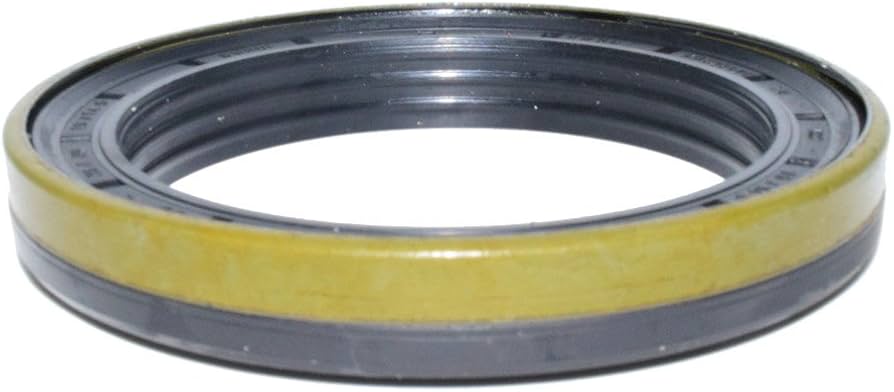
By combining operating parameters and quality standards, pay close attention to the following four points during procurement to avoid pitfalls and improve the sealing reliability of equipment.
1. Define Core Operating Parameters
Provide three key parameters precisely:
1. Temperature Range: Determine the highest and lowest operating temperatures of the equipment and select the corresponding temperature-resistant material (e.g., nitrile rubber for low-temperature conditions, fluororubber for high-temperature conditions);
2. Pressure and Speed: For high-pressure conditions, prioritize balanced sealing; for low-pressure conditions, unbalanced sealing can be selected. Simultaneously, confirm the shaft surface linear velocity to avoid exceeding the rated speed of the seal ring.
3. Media Type: Provide the composition of the sealing media (e.g., acid, alkali, lubricating oil, seawater, etc.) to ensure material compatibility. If necessary, request a compatibility test report from the manufacturer.
2. Focus on Material and Process Quality
Materials directly determine seal life: For sealing surfaces, prioritize hard materials such as silicon carbide (In the original) and tungsten carbide (WC), combined with soft materials such as carbon and ceramics to improve wear resistance; auxiliary seals should be selected based on the media, such as fluororubber, nitrile rubber, and perfluoroether rubber; the outer shell and bushing should be made of corrosion-resistant materials such as stainless-steel and carbon steel to prevent rust and deformation. Simultaneously, prioritize manufacturers certified by the ISO 9001 quality system to ensure pre-assembly accuracy and sealing performance meet standards.
3. Match Equipment Installation Specifications
Provide parameters such as equipment cavity dimensions and shaft diameter to ensure that the outer diameter, inner diameter, and thickness of the sealing ring accurately match the equipment’s pre-reserved positions. For non-standard equipment, choose a manufacturer that supports customization to optimize the sealing ring design according to the equipment structure, avoiding installation difficulties or seal failure due to dimensional deviations.
4. Consider Cost and After-Sales Support
When purchasing, comprehensively evaluate “purchase cost + maintenance cost,” not just the unit price. Although high-quality cartridge sealing rings have a higher initial purchase cost, they have a long service life and low failure rate, significantly reducing subsequent maintenance and downtime losses. At the same time, confirm whether the manufacturer provides after-sales technical support (such as installation guidance and troubleshooting) and warranty service to avoid problems that cannot be resolved promptly.
Casing seals, with their integrated design and stable performance, have become the mainstream choice for modern industrial sealing, especially suitable for scenarios with high requirements for installation efficiency and sealing reliability. Through precise selection, standardized installation, and scientific maintenance, their performance can be maximized, reducing equipment operation and maintenance costs. If you need a customized casing seal solution based on specific operating conditions (temperature, pressure, media), or if you would like to obtain material compatibility testing services, please contact us for cost-effective products and professional technical support.