In the automotive and industrial sealing industry, quality is not simply a competitive advantage—it is a mandatory requirement. When manufacturers supply critical components such as oil seals and O-rings to OEMs, Tier 1 suppliers, or global industrial equipment producers, they must demonstrate that every product consistently meets engineering specifications. This is where the Production Part Approval Process (PPAP) becomes essential. PPAP serves as a structured quality validation system designed to ensure manufacturing processes can repeatedly produce parts that satisfy customer requirements.
For manufacturers of sealing products, PPAP is particularly important because even the smallest dimensional variation in an oil seal or O-ring can lead to leakage, equipment failure, warranty claims, and costly downtime. Understanding PPAP requirements enables suppliers to improve product quality, strengthen customer confidence, and gain access to global automotive and industrial supply chains.
Companies specializing in high-performance oil seals and O-rings increasingly rely on PPAP methodologies to demonstrate manufacturing excellence and compliance with international quality standards.
What Is PPAP and Why Does It Matter?
PPAP stands for Production Part Approval Process. It is a standardized quality management procedure originally developed by the automotive industry through the Automotive Industry Action Group (AIAG). The primary objective of PPAP is to verify that suppliers fully understand customer engineering requirements and can consistently manufacture conforming products during mass production.
For oil seal and O-ring manufacturers, PPAP provides documented evidence that materials, tooling, manufacturing processes, inspection methods, and production controls are capable of delivering reliable sealing products.
Core Goals of PPAP:
✔ Verify product design compliance
✔ Validate manufacturing capability
✔ Reduce production risks
✔ Improve supplier quality consistency
✔ Prevent defects before mass production
✔ Build long-term customer confidence
Why PPAP Is Critical for Oil Seals and O-Rings

Unlike many mechanical components, sealing products operate at the intersection of pressure, temperature, friction, lubrication, and chemical exposure. A dimensional deviation measured in microns can affect sealing performance.
Automotive engines, transmissions, hydraulic cylinders, industrial pumps, and heavy equipment all depend on precision-engineered sealing systems.
Potential consequences of poor seal quality include:
• Oil leakage
• Hydraulic failure
• Equipment downtime
• Environmental contamination
• Increased warranty costs
• Safety risks
This is why OEM customers often require comprehensive PPAP documentation before approving suppliers of oil seals and O-rings.
The Evolution of PPAP in Modern Manufacturing
PPAP originated within the automotive industry but has expanded into aerospace, industrial machinery, energy systems, medical devices, agricultural equipment, and electronics manufacturing.
Today, global manufacturers expect suppliers to demonstrate process capability, traceability, risk management, and continuous improvement.
For sealing manufacturers, PPAP has evolved from a customer requirement into a strategic business tool that improves quality performance and market competitiveness.
Industries Commonly Using PPAP:
✔ Automotive
✔ Aerospace
✔ Industrial automation
✔ Hydraulic systems
✔ Renewable energy
✔ Medical equipment
✔ Heavy machinery
Understanding the 18 PPAP Elements
PPAP typically consists of eighteen core elements that collectively demonstrate product and process readiness.
1. Design Records
Engineering drawings define dimensions, tolerances, materials, and customer requirements.
2. Engineering Change Documents
Any approved modifications must be documented and controlled.
3. Customer Engineering Approval
Evidence showing customer acceptance of prototype or validation testing.
4. Design Failure Mode and Effects Analysis (DFMEA)
Evaluates potential product risks and failure mechanisms.
5. Process Flow Diagram
Documents every manufacturing step from raw material receipt to final packaging.
6. Process Failure Mode and Effects Analysis (PFMEA)
Identifies manufacturing risks and preventive actions.
7. Control Plan
Defines inspection methods, measurement frequencies, and quality controls.
8. Measurement System Analysis (MSA)
Verifies inspection equipment accuracy and repeatability.
9. Dimensional Results
Confirms production samples meet engineering specifications.
10. Material Test Results
Validates compound formulation and physical properties.
11. Process Capability Studies
Measures production consistency through statistical analysis.
12. Qualified Laboratory Documentation
Ensures testing facilities meet required standards.
13. Appearance Approval Report
Applies when visual appearance affects customer acceptance.
14. Sample Production Parts
Representative samples submitted for customer evaluation.
15. Master Sample
Approved reference sample used for future comparisons.
16. Checking Aids
Verification tools used for dimensional inspections.
17. Customer-Specific Requirements
Additional requirements unique to individual OEM customers.
18. Part Submission Warrant (PSW)
Formal declaration confirming PPAP compliance.
How PPAP Improves Oil Seal Manufacturing
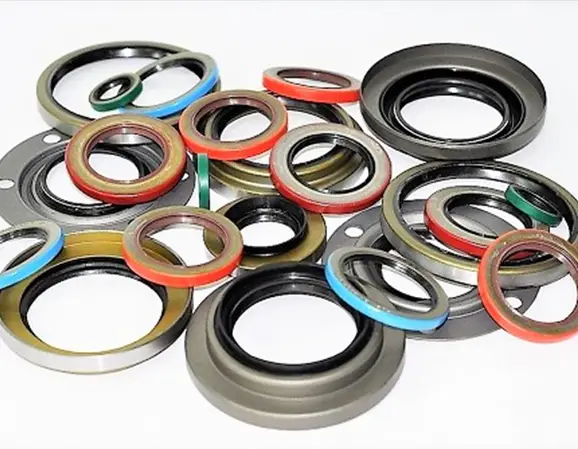
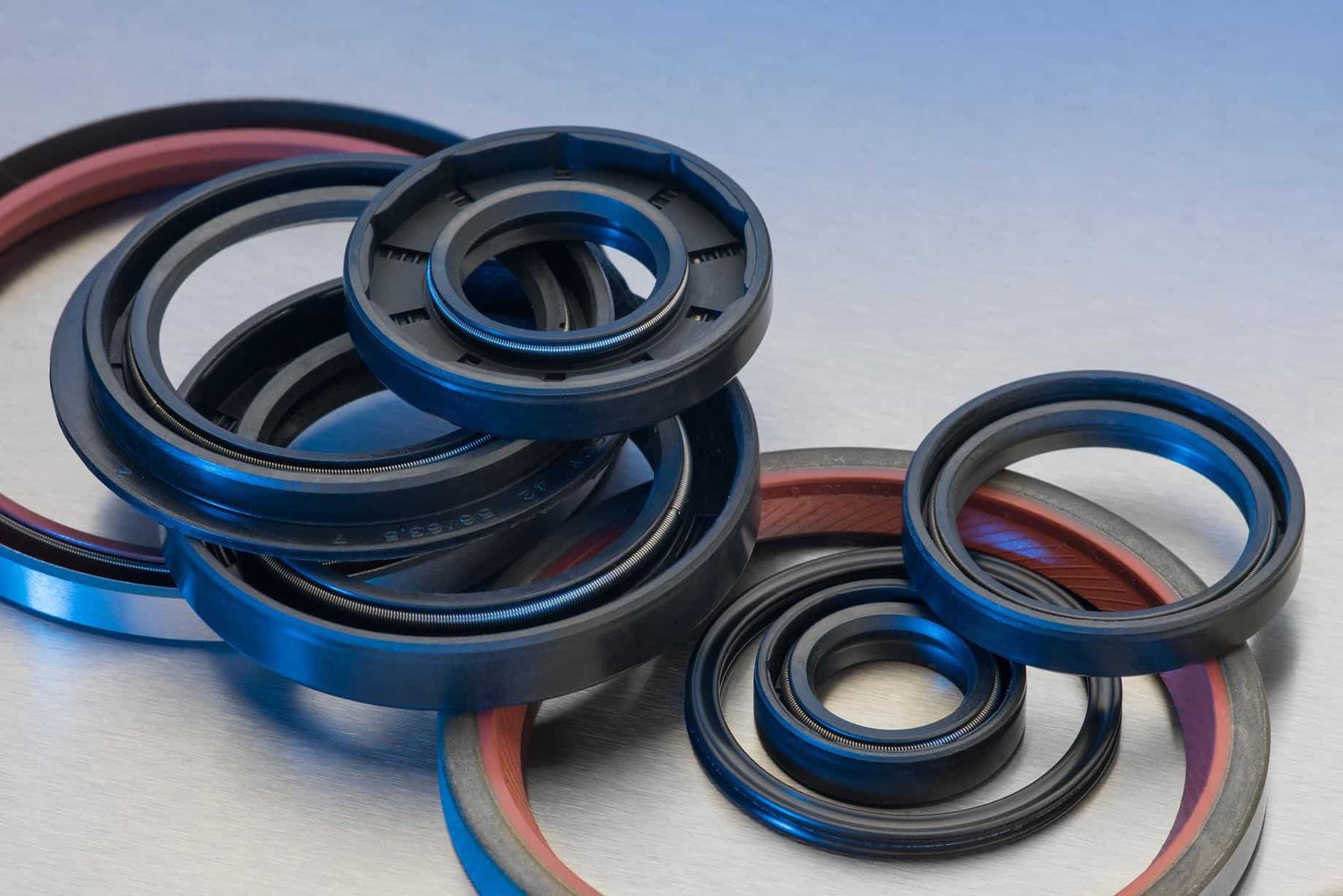
Oil seals require precision control of dimensions, lip geometry, spring tension, rubber bonding, and material performance.
PPAP helps manufacturers validate:
• Seal lip dimensions
• Outer diameter tolerances
• Rubber hardness
• Bonding strength
• Material composition
• Leakage performance
This structured validation process significantly reduces the likelihood of field failures.
Global suppliers of oil seals and O-rings frequently use PPAP documentation to support OEM qualification programs.
How PPAP Supports O-Ring Quality Assurance
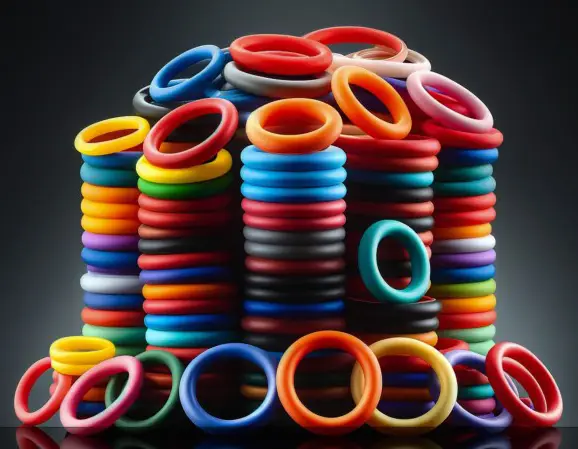
Although O-rings appear simple, they require strict control over dimensions, material properties, and manufacturing consistency.
Key quality parameters include:
• Cross-section tolerance
• Inner diameter accuracy
• Compression set resistance
• Tensile strength
• Elongation performance
• Chemical compatibility
PPAP ensures these characteristics remain stable throughout production.
Benefits for O-Ring Manufacturers:
✔ Improved process stability
✔ Lower defect rates
✔ Better traceability
✔ Faster customer approvals
✔ Reduced warranty claims
Material Validation in PPAP for Sealing Products
Material quality directly impacts seal performance. During PPAP approval, manufacturers often perform extensive laboratory testing.
Common tests include:
• Hardness testing
• Tensile strength testing
• Elongation testing
• Compression set testing
• Oil resistance testing
• Heat aging evaluation
These tests verify that the elastomer compound satisfies customer performance requirements.
Process Capability and Statistical Validation
One of the most valuable aspects of PPAP is statistical process capability analysis.
Instead of evaluating only individual parts, PPAP examines whether the manufacturing process itself can consistently produce acceptable components.
Important capability indicators:
• Cp (Process Capability)
• Cpk (Process Capability Index)
• Pp (Performance Capability)
• Ppk (Performance Capability Index)
High capability values indicate stable and predictable manufacturing performance.
PPAP Challenges Faced by Oil Seal and O-Ring Suppliers
Although PPAP offers substantial benefits, implementation can be challenging.
Common difficulties include:
• Material variation control
• Complex customer requirements
• Documentation management
• Process validation costs
• Supplier traceability issues
Successful organizations overcome these challenges through digital quality systems, employee training, and continuous improvement initiatives.
How PPAP Supports Global Supply Chains
In today’s international marketplace, manufacturers source components from suppliers located around the world. PPAP creates a universal quality language that helps customers evaluate suppliers objectively.
For sealing manufacturers, PPAP approval demonstrates:
• Manufacturing competence
• Technical expertise
• Quality commitment
• Process repeatability
• Regulatory compliance
These advantages help suppliers expand into new markets and strengthen long-term business relationships.
Leading producers of oil seals and O-rings often use PPAP as a foundation for building trust with automotive OEMs and industrial customers worldwide.
The Future of PPAP in Sealing Manufacturing
The next generation of PPAP is becoming increasingly digital. Manufacturers are integrating real-time quality monitoring, automated inspection systems, predictive analytics, and cloud-based documentation platforms.
Emerging technologies include:
• AI-driven quality analysis
• Smart factory integration
• Automated dimensional inspection
• Digital traceability systems
• Real-time process monitoring
These innovations help improve efficiency while maintaining the rigorous quality standards required by global customers.
Key Takeaway:
PPAP is far more than a paperwork requirement. For oil seals and O-rings, it is a proven framework that reduces risk, improves consistency, enhances customer confidence, and supports long-term manufacturing excellence.
Frequently Asked Questions
1. What is PPAP in the sealing industry?
PPAP is a structured approval process that verifies oil seals and O-rings can be consistently manufactured according to customer specifications and quality requirements.
2. Why do automotive customers require PPAP?
PPAP helps ensure suppliers have validated their products and manufacturing processes before mass production begins.
3. Does PPAP apply to O-rings and oil seals?
Yes. Many automotive, industrial, and OEM customers require PPAP approval for critical sealing components.
4. What is the most important PPAP document?
The Part Submission Warrant (PSW) is the formal document confirming that all PPAP requirements have been completed and approved.
5. How does PPAP improve sealing product quality?
PPAP validates materials, dimensions, manufacturing processes, inspection systems, and process capability to ensure consistent product performance and reliability.