
Viton® ETP O-Rings
Viton ETP O-Rings for Extreme Chemical and High-Temperature Sealing
When Standard FKM O-Rings Reach Their Limits
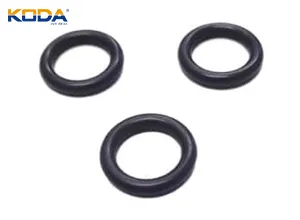
Many engineers choose standard FKM (Viton®) O-rings because of their excellent resistance to oils, fuels, and elevated temperatures. However, some applications expose seals to aggressive chemicals, rapid temperature fluctuations, or highly oxidative environments where conventional FKM compounds may experience premature hardening, swelling, or compression set.Viton ETP (Extreme Performance) O-rings are designed to bridge the gap between standard FKM materials and significantly more expensive perfluoroelastomers (FFKM), providing enhanced chemical compatibility while maintaining reliable sealing performance.
What Makes Viton ETP Different?
Unlike general-purpose FKM compounds, Viton ETP formulations are engineered for environments involving:
- Aggressive process chemicals
- Organic and inorganic acids
- Aromatic hydrocarbons
- Oxygen-rich systems
- High-temperature industrial fluids
- Harsh petrochemical processes
This improved resistance helps reduce seal degradation, extending maintenance intervals and minimizing unexpected leakage issues. In many industrial systems, replacing a failed seal often costs far more than the seal itself, making material selection a critical engineering decision.
Common Problems Solved by Viton ETP O-Rings
Chemical Attack
Standard elastomers may soften or swell when exposed to aggressive solvents and chemical mixtures. Viton ETP materials are designed to maintain dimensional stability under more demanding chemical conditions.
High Temperature Aging
Heat accelerates elastomer degradation. Viton ETP compounds offer improved resistance to thermal aging, helping seals maintain elasticity during prolonged exposure to elevated temperatures.
Compression Set Failure
When an O-ring loses its ability to rebound after compression, leakage can occur. Viton ETP materials are formulated to provide improved long-term sealing reliability under continuous compression.
Industries That Commonly Use Viton ETP O-Rings
Chemical Processing Plants
Used in pumps, valves, reactors, and fluid handling systems where exposure to aggressive chemicals is routine.
Oil & Gas Equipment
Suitable for sealing applications involving fuels, lubricants, hydrocarbons, and elevated operating temperatures.
Aerospace Systems
Selected for critical sealing points requiring dependable performance under severe environmental conditions.
Semiconductor Manufacturing
Often used in process equipment where chemical purity and material stability are important.
Industrial Automation
Provides longer service life in systems that operate continuously under demanding thermal and chemical loads.
Viton ETP vs Standard FKM O-Rings
| Property | Standard FKM | Viton ETP |
|---|---|---|
| Oil Resistance | Excellent | Excellent |
| Fuel Resistance | Excellent | Excellent |
| Chemical Resistance | Good | Enhanced |
| High Temperature Stability | Very Good | Superior |
| Compression Set Resistance | Good | Improved |
| Service Life in Harsh Media | Moderate | Extended |
| Cost | Lower | Higher |
For standard hydraulic systems and general industrial equipment, traditional FKM remains a cost-effective choice. However, when seal failure can result in costly downtime, Viton ETP often delivers better long-term value.
How to Determine Whether Viton ETP Is Necessary
A Viton ETP O-ring may be worth considering if your application experiences:
✔ Temperatures above conventional FKM comfort zones
✔ Exposure to aggressive chemicals or mixed media
✔ Frequent seal replacement cycles
✔ High maintenance costs caused by leakage
✔ Critical process equipment where reliability is essential
If the application only involves mineral oils, common fuels, and moderate temperatures, a standard FKM O-ring may provide sufficient performance at a lower cost.
Choosing the Right Viton ETP O-Ring
Before selecting a Viton ETP seal, engineers should evaluate:
- Operating temperature range
- Chemical exposure profile
- Pressure conditions
- Groove design
- Required service life
- Industry compliance requirements
Proper gland design and material selection remain just as important as the O-ring compound itself. Even the highest-performance elastomer cannot compensate for incorrect groove dimensions or installation damage.
Why Viton ETP O-Rings Are Used in Critical Applications
Viton ETP O-rings are engineered for sealing environments where conventional elastomers approach their performance limits. By offering enhanced resistance to aggressive chemicals, elevated temperatures, and long-term compression, they help improve equipment reliability while reducing maintenance frequency.
For chemical processing, energy production, aerospace systems, and other demanding industrial applications, Viton ETP O-rings provide a practical solution when standard FKM materials are no longer sufficient.
Recommended usage environment for KODA® ETP O-rings
Performs Well In:
- Low molecular weight esters, ketones, aldehydes
- High pH liquids and base materials
- Synthetic/mineral
- lubricants
- Petroleum products
- Fuels (including methanol/ethanol blends)
- Diesel (including biodiesel blends)
- Mineral oils and greases
- Silicone oils and greases
- High vacuum environments
- Ozone, weather-resistant and extremely high temperature air environments
- Strong acid media
Doesn't Perform Well In:
- Low molecular weight organic acids (formic acid and acetic acid)
- Superheated steam
- Phosphate ester-based hydraulic oil