Skip to content
Elastomer Comprehensive Guide
Summary
In industrial sealing, O-rings are among the most widely used elastomer seals thanks to their simple structure, low cost, reliable performance, and broad applicability.
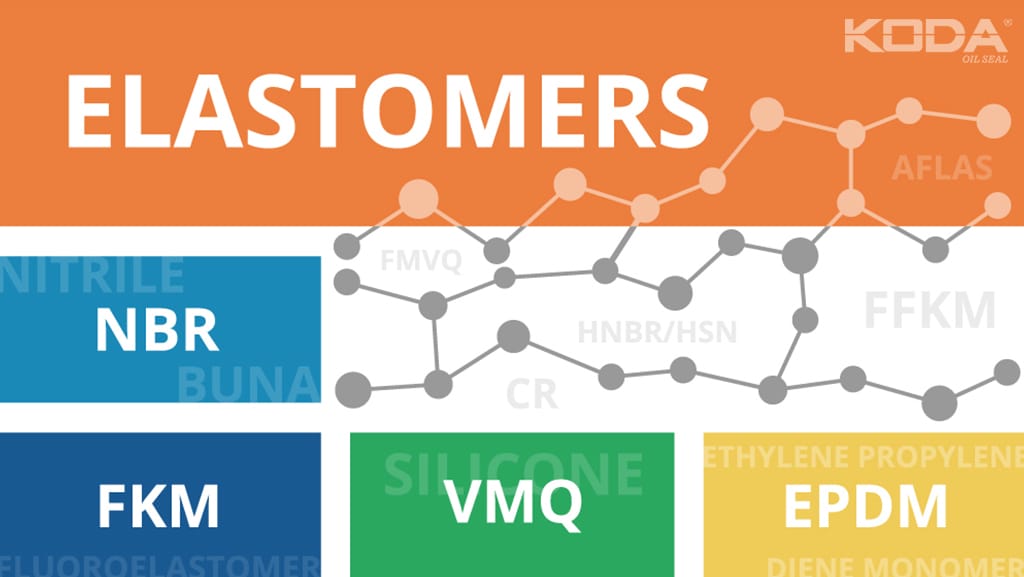
Common elastomer materials include nitrile rubber (NBR), fluororubber (FKM), silicone rubber (VMQ), and ethylene propylene rubber (EPDM), each with unique properties and targeted applications.
Overview
Elastomers are polymeric materials that can deform significantly under external force and rapidly return to their original shape once the force is removed. They combine the high elasticity of rubber with the processability of plastics, making them essential basic materials in modern industry and daily life.
Key advantages include high resilience, low compression set, fatigue resistance, weather resistance, chemical resistance, and excellent shock absorption and sealing performance. Hardness, mechanical strength, and temperature resistance can be tuned through formulation and processing to meet harsh operating conditions and complex structural demands.
Common categories cover thermoset elastomers (rubber), thermoplastic elastomers (TPE/TPR/TPU/TPV), silicone rubber, fluororubber, and specialty elastomers, which support flexible processing and are environmentally friendly and recyclable.
Elastomer O-rings are produced from materials such as NBR, FKM, VMQ, EPDM, and polyurethane through formulation mixing, preforming, compression molding and vulcanization, deflashing, and dimensional inspection.
Common Types of Elastomers
Nitrile butadiene rubber (NBR) is oil-resistant, cost-effective, and the first choice for general-purpose seals.
Fluororubber(FKM/Viton) is resistant to high temperatures, chemicals, and oils, making it suitable for harsh working conditions.
Silicone rubber (VMQ) is resistant to high and low temperatures, is food and medical-grade, and has good insulation properties.
Ethylene propylene diene monomer (EPDM) is water-resistant, steam-resistant, weather-resistant, and aging-resistant
Fluorosilicone rubber (FMVQ) is resistant to low temperatures, oil, and high and low temperatures, and is commonly used in aerospace and special working conditions.
Perfluoroelastomer (FFKM) Ultra-high chemical and high temperature resistance, specially designed for extreme corrosive conditions, top-grade sealing material.
Hydrogenated nitrile butadiene rubber(HNBR) is resistant to high temperatures.
Chloroprene rubber (CR) is weather-resistant, ozone-resistant, and moderately oil-resistant, and its performance is superior to NBR.

Factors Affecting Elastomer Performance
Elastomers maintain high toughness and stability even in extreme environments, including high and low temperatures and strong chemical exposure, ensuring consistent sealing and mechanical integrity.
When selecting O-rings, focus on three key performance factors:
- Operating temperature range
- Chemical media compatibility
- Material hardness
Each elastomer has a specific operating temperature range, and the appropriate material must be selected based on the actual application temperature. For example, fluororubber (FKM) has excellent high-temperature resistance, while nitrile rubber (NBR) is more suitable for medium-temperature conditions. Details can be found on our “Materials and Compounds” page. It is also important to understand the elastomer’s resistance to various chemicals and fluids. Fluororubber (FKM) has good resistance to oils, fuels, and many chemicals. Media compatibility selection guidance can be obtained through our interactive chemical compatibility tool. Hardness directly affects the elastomer’s compression set and sealing pressure resistance. Softer materials such as silicone rubber are suitable for low-pressure sealing, while harder materials such as fluororubber are more suitable for high-pressure environments. Information on hardness measurement units can be found on our “What is a Hardness Tester?” page.
Unique Properties of Elastomers
Elastomers offer several distinctive characteristics:
- Excellent resilience and flexibility, recovering quickly after deformation
- Reliable sealing performance, effectively blocking gases and liquids
- Strong shock absorption, cushioning, and noise reduction
- Tunable resistance to temperature, oil, chemicals, and aging through material formulation
They maintain stable mechanical properties and structural integrity under extreme temperatures and demanding conditions, serving as irreplaceable materials in sealing, damping, and isolation systems.
How Elastomer O-Rings Are Manufactured
Elastomer O-rings are typically produced through these key steps:
- Mixing
- Raw rubber, vulcanizing agents, reinforcing fillers, and additives are mixed in internal or open mixers. This creates a uniform compound.
- Preforming
- The compound is extruded and cut into strips or preforms.
- Compression Molding & Vulcanization
- Preforms are placed in molds and cured under controlled temperature and pressure to achieve full cross-linking.
- Trimming & Deflashing
- Excess flash is removed for a clean, precise shape.
- Inspection
- Dimensional and visual checks ensure accuracy and sealing performance.
Applications of Elastomers
Elastomer O-rings are widely used in various industries, including:
- Automotive: Assists in sealing engine components to prevent fluid leaks and ensure stable and efficient powertrain operation.
- Oil & Gas: Seals pipelines and various equipment interfaces to prevent media leakage, protect environmental safety, and improve operational efficiency.
- Medical Industry: Used in various medical devices to maintain a sterile working environment and prevent contamination of surgical instruments and fluid handling systems.
Beyond O-rings, elastomers are used in gaskets, hoses, belts, dampers, and components for electronics, construction, food processing, and pharmaceuticals, demonstrating exceptional versatility.
Maintenance and Storage of Elastomers
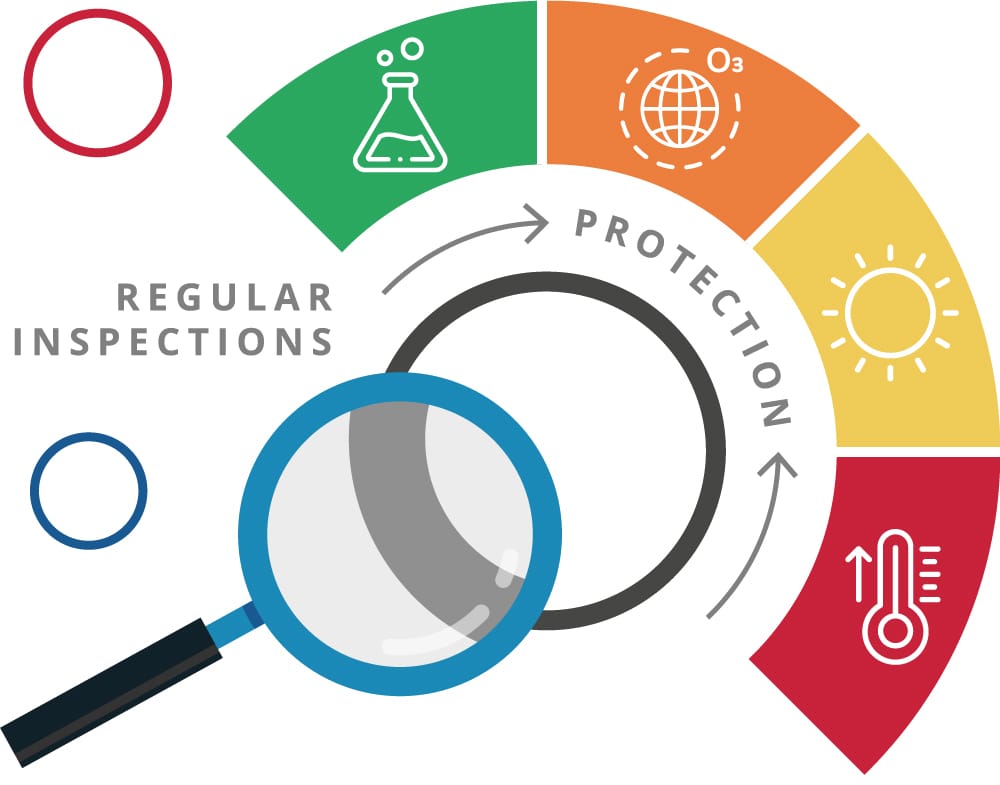
Elastomers should be stored in a cool, dry, and well-ventilated environment, avoiding direct sunlight, high temperatures, ozone, and contact with oils, solvents, acids, alkalis, and other chemicals. Store them in a relaxed, natural state to prevent permanent deformation caused by compression, stretching, or bending. Following the first-in, first-out (FIFO) principle and regularly inspecting the appearance can effectively delay aging and ensure sealing performance and service life. Click here to view O-ring shelf-life recommendations and more storage information.
Conclusion
Elastomer O-rings combine simple design, dependable sealing, excellent elasticity, and wide adaptability, making them indispensable in modern industrial sealing. They are widely used in automotive, oil and gas, machinery, medical, electronics, and many other fields. They provide critical protection against leaks, contamination, and vibration.
Proper material selection, standard installation, and reasonable storage greatly extend service life and improve equipment stability and safety.
As a manufacturer of sealing components, KODA has an expert team. They are ready to help you choose the best elastomer for your application. For inquiries, please contact us via our online form or call +8618730921709.