Skip to content
What is a DC oil seal?
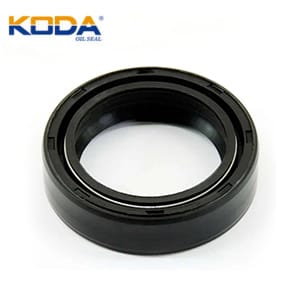
The DC oil seal is a shaft seal with a double-lip spring built-in structure and double lips with a single clamping spring. It is mainly used for sealing protection of the rotating shaft and has the dual function of preventing oil leakage and dirt intrusion. Its structural design is significantly different from its inner-structure oil seal (such as the TC type), and its core features lie in its structural form and sealing layout.
What are the models and specifications of DC oil seals?
The model specifications of DC oil seals follow common industry standards. The core parameters are “inner diameter (d) × outer diameter (D) × thickness (B)”, in millimeters (mm). Some models will be marked with rubber material, temperature range, and adapted speed. For example, “DC 20×32×10 NBR” means a DC oil seal with an inner diameter of 20 mm, an outer diameter of 32 mm, a thickness of 10 mm, and the lip material is nitrile rubber.
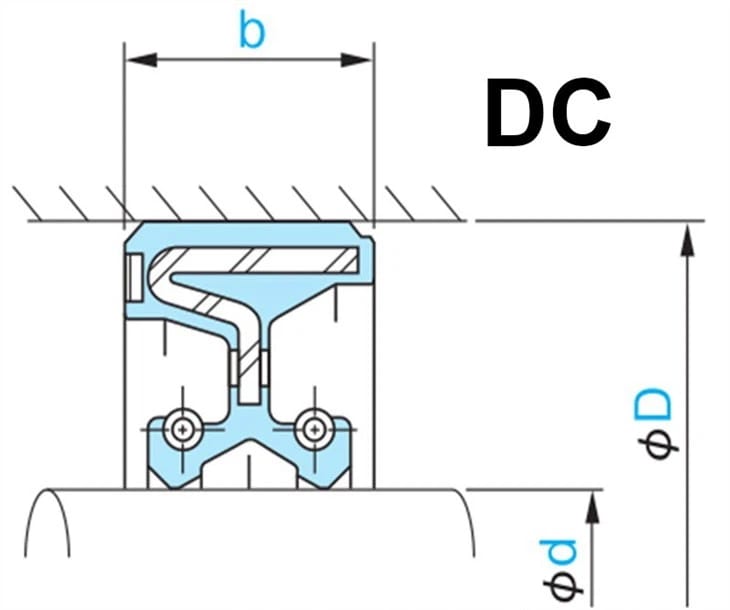
Inner diameter (d): accurately matches the diameter of the rotating shaft, and the tolerance is controlled within ±0.05 mm. If it is too large, it cannot be sealed. If it is too small, it will squeeze the lip and cause excessive wear, and it may not even be installed.
Outer diameter (D): Use an interference fit with the diameter of the equipment mounting hole (tolerance is -0.02~-0.05 mm). Since the DC oil seal is fixed by the skeleton, the outer diameter tolerance needs to be strictly controlled; otherwise, there will be loose installation or deformation of the skeleton.
Thickness (B): Suitable for the depth of the installation hole. An installation margin of 0.5~1 mm needs to be reserved to avoid the oil seal being deformed due to pressure if the thickness is too rough. If the thickness is too small, the oil seal cannot be stably fixed.
Note: It is recommended that after disassembling the old oil seal, you use a caliper to directly measure the inner diameter, outer diameter, and thickness, and then compare and select the model. If the equipment is in inch size, you can choose the corresponding inch-size DC oil seal or convert it to a close metric size and confirm whether the mounting hole accuracy meets the standard.
What is the main function of a DC oil seal?
The core function of the DC oil seal is “double protection + precise sealing”, which not only prevents the leakage of internal media but also blocks the intrusion of external contaminants. Its value is directly reflected in the reduction of equipment operation and maintenance costs and the improvement of operational stability. It is divided into three major functions:
1. Prevent leakage and save media costs: The main lip is close to the shaft surface through the spring holding force, which can effectively prevent the leakage of lubricating oil, hydraulic oil, and other media, especially suitable for medium and low speed and slight vibration conditions. Taking agricultural machinery gearboxes as an example, the use of DC oil seals can control the oil leakage rate below 5%, avoid lubricating oil waste, and prevent oil from polluting the environment.
2. Strong dust-proofing and extended equipment life: The dust-proof lip design of the DC oil seal is thicker, and the dust-proof performance is better than that of the ordinary TC oil seal. It can effectively isolate dust, sand, moisture, and other impurities, prevent them from entering core components such as bearings and gears, and reduce wear and jamming failures. In dusty working conditions, the service life of bearings can be extended by 2 to 3 times, and the frequency of equipment shutdowns and maintenance can be reduced.
3. Stable installation, adaptable to complex scenarios: The exposed metal frame has strong rigidity, accurate positioning during installation, can withstand slight vibrations and coaxiality deviations, and is suitable for medium and low speed (≤8 m/s) and normal temperature (-30℃~100℃, depending on the material) working conditions. Compared with TC oil seals, it is more suitable for equipment with a lot of dust and up-to-standard installation hole accuracy.
Characteristics of DC oil seal
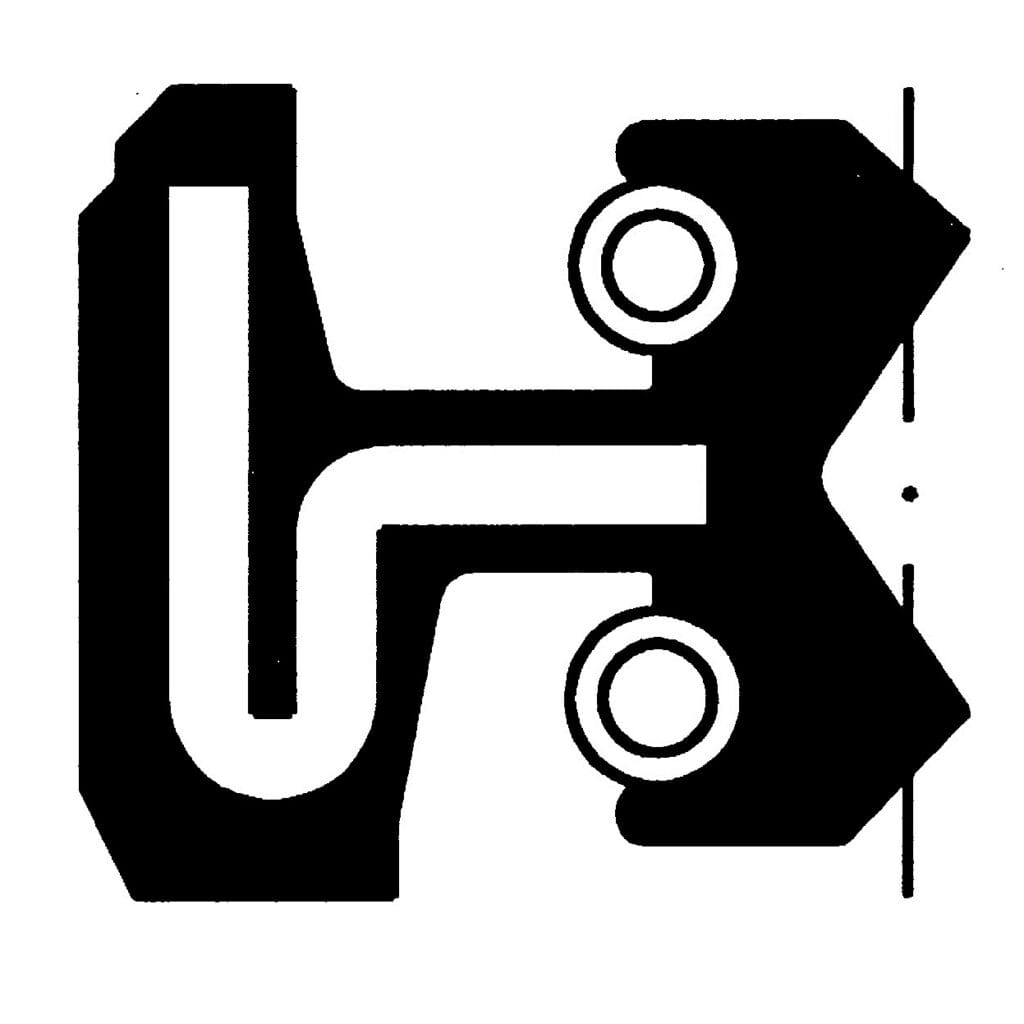
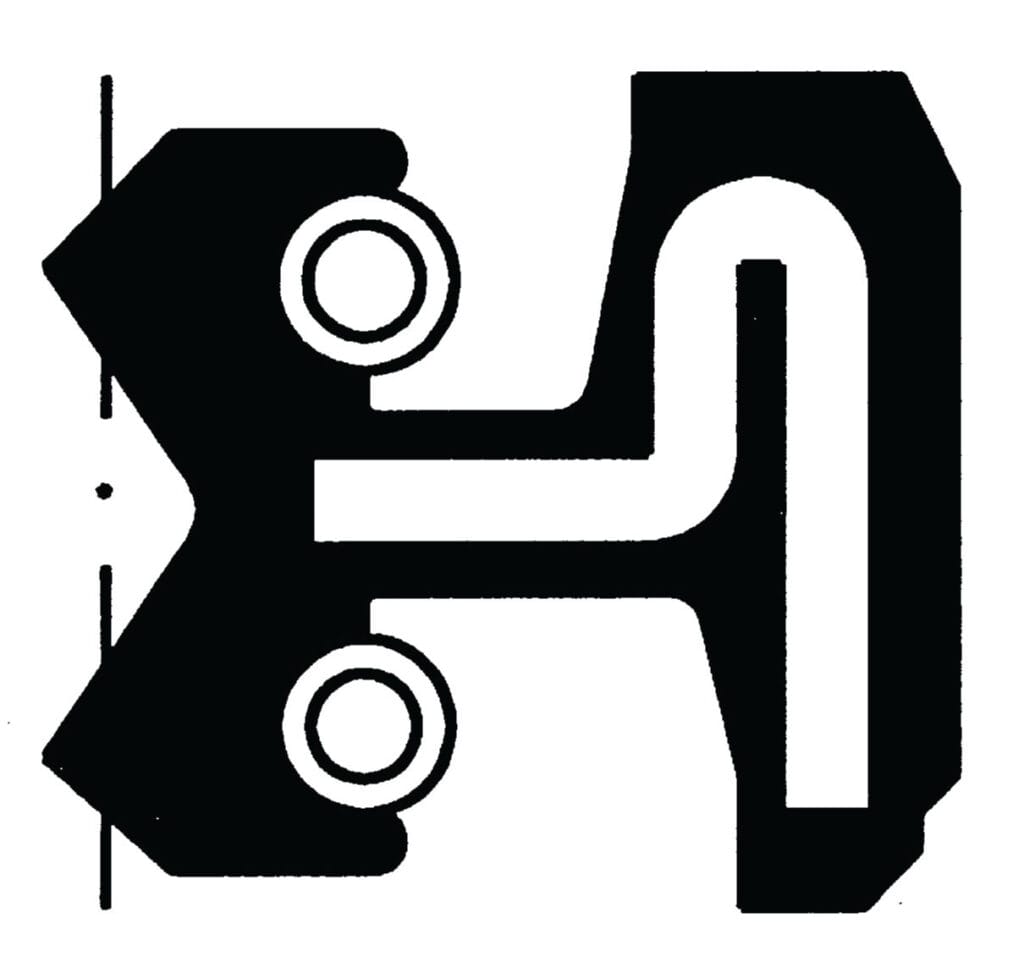
Dual-media sealing capability: Designed specifically for multi-media environments to ensure excellent sealing performance under various working conditions.
Compact groove design: Optimized cross-sectional size achieves compact design and maximizes space utilization.
Double spring-loaded sealing lips:
Main sealing lip: Responsible for core sealing responsibilities to ensure zero leakage of media.
Spring-type dust-proof lip: Active defense, effectively blocking the intrusion of medium and light dust and impurities.
High-reliability outer edge seal:
Rough surface adaptability: Even if the surface roughness of the inner wall of the cavity is high, an excellent sealing effect can still be maintained.
Thermal expansion compensation: It has good dimensional stability and maintains sealing integrity even when extreme temperature differences cause thermal expansion.
Split housing compatibility: The unique structural design allows efficient operation even when the housing is split or deformed.
Application scenarios of DC oil seal
1. Power equipment:
As the core sealing component of various types of electric power equipment, DC oil seals are an essential component for the stable operation of the equipment. Its core function is dual protection. On the one hand, it accurately blocks internal lubricating oil leakage to avoid oil waste and environmental pollution; on the other hand, it effectively blocks external dust and impurities from intruding into the internal core components of the equipment, reducing wear and failure risks, ensuring long-term smooth operation of power equipment, and maintaining stable output performance.
2. Gearbox:
It is widely adapted to key transmission components such as gearboxes and gearboxes of various types of machinery. These components are the core hub of equipment power transmission and have extremely high requirements for sealing performance. The DC oil seal ensures sufficient lubrication of the gear meshing parts by firmly locking the internal lubricating medium, and at the same time, effectively blocks external dirt and debris from entering the inside of the box, avoiding gear wear and jamming, continuously maintaining the transmission efficiency and operational stability of the gearbox, and extending the service life of core components.
3. Construction machinery:
It is deeply adapted to the transmission components, axles, and other key parts of construction machinery and perfectly fits the dusty, high-vibration, and harsh working conditions of the construction site. Relying on the strong rigidity of the exposed frame and the thick dust-proof lip design, it provides reliable and long-lasting sealing protection, effectively preventing lubricating oil leakage and the intrusion of external pollutants, ensuring that construction machinery can still operate efficiently under complex and harsh working conditions, and reducing the maintenance frequency and cost of outdoor operations.
4. Agricultural machinery:
It is specially adapted to the transmission parts, axles, and other parts of agricultural machinery to fully cope with the complex working conditions of dusty outdoor fields, large temperature differences, and easy exposure to water vapor. Its core function is to seal the internal lubricating oil to ensure sufficient lubrication when the machinery is running. It also effectively blocks the intrusion of field dust, soil, and moisture; avoids corrosion and wear of components; and ensures the smooth operation of agricultural machinery in high-intensity outdoor operations. This is crucial to maintaining the outdoor adaptability and structural solidity of agricultural machinery.
5. Textile machinery:
It is suitable for roller shafts, gearboxes, and other components of textile machines and printing and dyeing machines. For scenarios where there is a lot of lint and dust in the textile workshop, the DC oil seal can effectively prevent lint and dust from entering the core transmission parts, prevent equipment from jamming and wearing, ensure the continuous and stable operation of textile machinery, and improve production efficiency and product qualification rate.
Q: Which of the two lips is the main lip?
The one with a spring is the main lip (facing inward, preventing oil leakage); the one without a spring is the auxiliary lip (facing outward, blocking dust).
Q: What will happen if the installation direction is reversed?
It must not be installed backwards. If the auxiliary lip faces inward, it will cause oil leakage; if the main lip faces outward, a large amount of dust will enter and damage the equipment.
Q: Under what circumstances must a DC oil seal be selected?
When the equipment works in harsh environments with large amounts of dust and sediment, such as outdoors, construction sites, mines, or farmland, it is recommended to give priority to DC oil seals.
Looking to improve the performance of your system with DC oil seals from KODA? Contact us today! For more information or a quote, please submit a product inquiry or call +86 18730921709.