 Skip to content
Rapid Gas Decompression O-Rings
Material properties of nitrile rubber O-rings
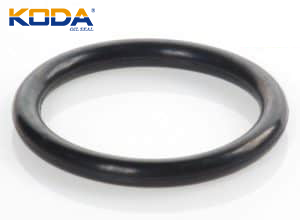
Rapid gas decompression (RGD), also known as explosive decompression (ED), is common in high-pressure operations in the energy and oil and gas industries. This occurs when high-pressure gas is released rapidly, easily damaging rubber seals in equipment. This damage is often invisible to the naked eye because tiny air bubbles form inside the rubber, eventually leading to seal failure. There are specially formulated high-temperature, high-pressure O-rings that resist this failure; these are called RGD, ED-resistant decompression, or AED (explosion-proof decompression) O-rings. The most commonly used material for these O-rings is Viton® (fluororubber/FKM), but they can also be made from materials such as HNBR, AFLAS®, and FFKM.
KODA has various models of FKM rapid gas decompression O-rings available, but we can also supply many other compounds if needed.
V1238 O-ring
V1238-95 is one of the most widely used materials for RGD O-rings. This fluorocarbon rubber, with a Shore A hardness of 95, is specifically designed to mitigate explosive decompression (ED) and extrusion damage common in the energy and oil and gas (EOG) industries.
V1238-95 fluorocarbon material combines excellent physical and mechanical properties with chemical stability, and also possesses outstanding resistance to compression set. Based on these core performance advantages, this material has successfully passed the stringent testing and certification standards of the EOG industry, including NORSOK M-710 and API 6A.
KODA V95RGD and V90RGD O-rings
KODA V95RGD is a fluororubber (FKM) compound with a Shore A hardness of 95 and a dynamic operating temperature range covering -5°C to 220°C (23°F to 428°F). It exhibits excellent resistance to both synthetic and mineral lubricants. KODA also supplies a derivative model of the same material—V90RGD (Shore A hardness 90), whose core performance is identical to V95RGD. In the NORSOK M710 standard test, V95RGD scored close to the maximum score of 1000 points, while V90RGD achieved a perfect score. This test requires O-rings made from the materials to be placed in a rapid gas decompression environment and then cut into four sections; after cutting, O-rings made from both compounds showed almost no cracks or blistering, fully verifying their superior resistance to rapid gas decompression.
Specifications: RGD 95 Hardness Tester
Specifications: RGD 90 Hardness Tester
KODA O-Ring's AFLAS® A90RGD O-ring
AFLAS®/FEPM tetrafluoropropylene rubber (FFLAS®/FEPM) is now available as a new material option for RGD O-rings with a Shore A hardness of 90. This material has passed equally stringent rapid gas decompression testing certification and fully complies with industry application standards.
AFLAS® RGD O-rings operate in a temperature range of -5°C to 220°C (23℉ to 428℉), making them particularly suitable for high-temperature applications. Compared to fluororubber (Viton®/FKM), AFLAS® offers superior chemical resistance, withstanding various corrosive media such as acidic gases, superheated steam, and acetic acid.
Rapid decompression standards and testing methods
NORSOK, the Norwegian petroleum industry standards body, has developed a widely recognized method for testing O-rings against explosive decompression (ED). NORSOK standard M-CR-710 (Section 8.3, Appendix B) clearly specifies the ED test requirements for O-rings and similar seals. The test procedure involves placing the O-ring under rapid gas decompression (RGD) conditions, followed by cutting it into four equal parts to expose the internal cross-section—this is because damage to seals under RGD conditions typically progresses from the inside out. Any internal cracks discovered during the test must be graded according to the chart on the right.
Recommended usage environment for RGD O-rings
| Rating | Description |
|---|---|
| 0 | No internal cracks, holes or blisters of any size. |
| 1 | Less than 4 internal cracks, each shorter than 50% of the cross section, with a total crack length less than the cross section. |
| 2 | Less than 6 internal cracks, each shorter than 50% of the cross section, with a total crack length of less than 2.5 times the cross section. |
| 3 | Less than 9 internal cracks of which max. 2 cracks can have a length between 50% and 80% of the cross section. |
| 4* | More than 8 internal cracks or one or more cracks longer than 80% of the cross section. |
| 5* | Crack(s) going through the cross section or complete separation of the seal into fragments. |
Performs Well In:
- Synthetic Lubricants / Mineral Lubricants
- Petroleum Products
- Fuels (including methanol/ethanol blends)
- Diesel (including biodiesel blends)
- Mineral Oils and Mineral Greases
- Silicone Oils and Silicone Greases
- High Vacuum Environments
- Ozone, Weathering, and High-Temperature Air Environments
- Strong Acid Media
Doesn't Perform Well In:
Ketones
Low molecular weight organic acids (formic acid and acetic acid),
Superheated steam,
Low molecular weight esters and ethers,
Phosphate ester-based hydraulic fluids.
RGD O-ring compounds (FKM materials)
| Compound | V90RGD | V95RGD | V90RGD/LT | V90RGD/XLT | V90RGD/VLT | V95RGD/VLT | V90RGD/BFR |
|---|---|---|---|---|---|---|---|
| Polymer | FKM | FKM | FKM | FKM | FKM | FKM | FKM |
| Durometer | 90 | 95 | 90 | 90 | 90 | 95 | 90 |
| NORSOK M-710 | Passed | Passed | Passed | Passed | Passed | Passed | Passed |
| NACE TM0297 | Passed | ||||||
| Total GS EP PVV 142 | Passed | Passed | |||||
| API 6A Sour Fluid Resistance | Passed | Passed | Passed | Passed | |||
| Compound Features | General purpose for RGD | General purpose for RGD | Low-temp Excellent performance in RGD Excellent oil and natural gas resistance | Extreme low-temp | Very low-temp | Very low-temp Recommended for low-temp or high pressure environments | Fluorine content: 70% Excellent biofuel resistance |
| Dynamic Service Temperature | -15º to 220ºC | -15º to 220ºC | -30º to 220ºC | -45º to 220ºC | -40º to 220ºC | -30º to 220ºC | -5º to 220ºC |
| Static Service Temperature | -20º to 250ºC | -20º to 250ºC | -35º to 250ºC | -50º to 250ºC | -45º to 250ºC | -35º to 250ºC | -10º to 250ºC |
| Synthetic/Mineral Lubricants Resistance | Excellent | Excellent | Excellent | Excellent | Excellent | Excellent | Excellent |
| Aliphatic Hydrocarbons | Excellent | Excellent | Excellent | Excellent | Excellent | Excellent | Excellent |
| Aromatic Hydrocarbons | Excellent | Excellent | Excellent | Excellent | Excellent | Excellent | Excellent |
| Chemical Resistance | Good | Good | Good | Good | Good | Good | Good |
Other RGD O-ring compounds (non-FKM materials)
| Compound | V90RGD | H90RGD/LT | P9021A | A90RGD/SGR |
|---|---|---|---|---|
| Polymer | HNBR | HNBR | FFKM | FEPM |
| Durometer | 90 | 90 | 90 | 90 |
| NORSOK M-710 | Passed | Passed | Passed | |
| NACE TM0297 | Passed | Passed | ||
| Total GS EP PVV 142 | Passed | |||
| AP I6A Sour Fluid Resistance | Passed | |||
| Compound Features | General purpose for RGD Good hydrogen sulfide and abrasion resistance | Low-temp | Broad chemical resistance Steam resistant w/ excellent compression set at high temperatures | Sour gas resistant |
| Dynamic Service Temperature | -15º to 130ºC | -35º to 250ºC | 0º to 280ºC | -5º to 220ºC |
| Static Service Temperature | -25º to 150ºC | -40º to 150ºC | -10º to 300ºC | -10º to 250ºC |
| Synthetic/Mineral Lubricants Resistance | Excellent | Excellent | Excellent | Excellent |
| Aliphatic Hydrocarbons | Excellent | Excellent | Excellent | Excellent |
| Aromatic Hydrocarbons | Excellent | Good | Good | Excellent |
| Chemical Resistance | Fair | Fair | Fair | Excellent |