Skip to content
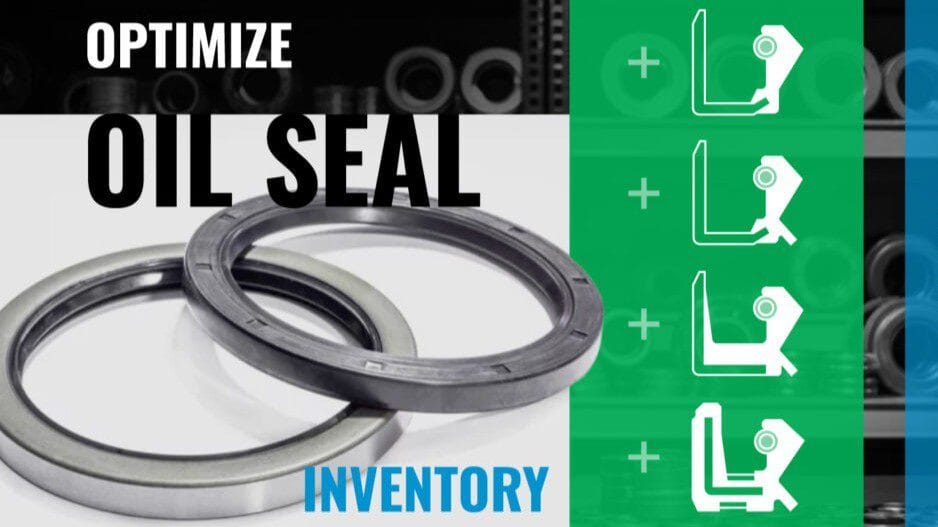
KODA Seals’ replacement solution boosts the durability, reliability, and compatibility of oil seals. It adds springs, dust lips, and reinforced housings. The original mating dimensions stay the same. This provides a superior solution for equipment sealing needs.
This solution offers a stronger, more versatile sealing experience for customers. It also provides many benefits for distributors.
Reduces the number of SKUs, improving inventory management.
Enhances supply stability, preventing stockouts from complex specifications.
Boosts customer satisfaction and repurchase rates with better sealing performance and service.
KODA Seals offers high-performance upgrades and standard products that match original specs exactly. We offer clear, professional advice to help customers pinpoint their upgrade needs. This way, they can upgrade seals with assurance for better performance. They won’t worry about compatibility problems. They can also optimize their sealing systems with great efficiency.
Optimal substitution and direct substitution
Industrial distributors are speeding up the use of “best-in-class seal alternatives.” This is key for choosing oil seals. It focuses on improved performance through better design. These equal products outperform traditional cross-reference solutions in durability and reliability. They also offer wider application compatibility, adapting to various equipment needs.
For distributors, this solution offers key benefits:
It simplifies SKUs and optimizes inventory. This reduces warehousing costs and improves inventory turnover.
Its strong sealing and adaptability help meet customer needs with great effectiveness. This leads to better service and greater customer loyalty.
The solution gives end users stable and reliable sealing for their machinery. This reduces equipment leaks at the source. As a result, it boosts the distributor’s reputation and competitiveness. It also helps achieve goals like cost reduction, efficiency improvement, and quality assurance.
Key components of oil seal design
To see if one oil seal is better than another, you need to understand its structure well. Among the key structures of an oil seal, the lip design and the shell design are two decisive factors. They determine the type of oil seal. This choice impacts sealing performance. It determines where users can apply it and influences the results.
Lip design
The lip design is the main sealing part of an oil seal. Its structure affects how well the seal works. This includes stopping fluid leaks and keeping out dirt and other contaminants. When picking oil seals, focus on two key points: the design—single lip or double lip—and whether the lip has a spring.
A single-lip seal has one main job: to stop fluid from leaking out of the system. It does this with its single lip. This works well in places with simple conditions and low contaminants. A double-lip seal adds an auxiliary dustproof lip to the single-lip design. This extra lip helps keep dust, impurities, and other contaminants out of the sealing area. It provides strong protection for the main sealing lip. This reduces the chances of the main lip failing due to wear by a large margin. It also extends the oil seal’s service life and works better in dusty and tough conditions.
The presence or absence of a spring affects the stability of the lip’s contact with the shaft. Spring-loaded lip seals provide consistent radial pressure to the shaft. They do this through the spring’s steady elasticity. They ensure a tight seal between the lip and the shaft, even with slight shaft eccentricity or wear. This guarantees reliable sealing performance. Springless lip seals use the natural flexibility of elastomers to stay in contact with the shaft. Elastomer aging and temperature changes can affect their sealing performance. So, they work best in low-speed, stable environments.
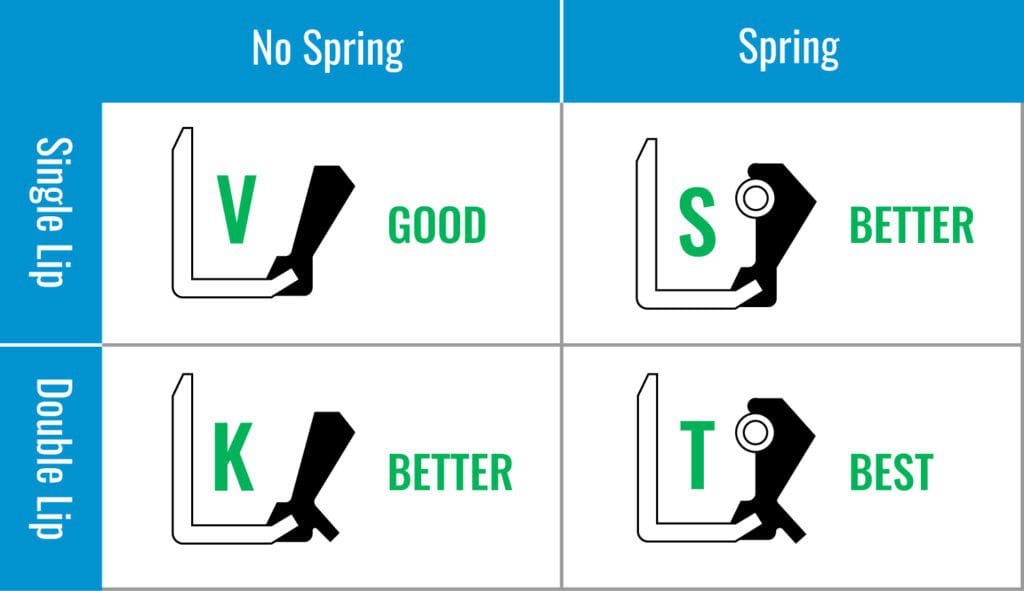
Upgrades in lip design often mean better adaptability to tougher operating conditions. Upgrading from a simple V-shaped lip to a T-shaped lip means adding a built-in spring and a dustproof lip. This helps the oil seal keep stable radial pressure at high speeds. It also resists external contaminants. As a result, it improves sealing performance and durability. This meets the complex needs of equipment.
Case Design
The housing design forms the base of an oil seal. Its performance impacts three main factors:
First, the fit with the mounting cavity affects how easy and stable it is to install.
Second, the sealing against the bore wall relates to its leak-proof ability.
Third, how well the oil seal resists erosion from inside and outside impacts its lifespan.
When choosing oil seals, understand the differences between:
Metal housings
Rubber-coated housings
Reinforced housings
This is the key need for proper installation. It ensures long-lasting durability and good sealing performance.
Different housing types have their own advantages and applicable scenarios. Metal outer diameter housings offer a key advantage: high dimensional accuracy. This allows for a precise fit with the cavity. But they have big drawbacks. First, they can’t fit cavities with rifling defects. This creates easy gaps in the seal. Second, they lack corrosion resistance. This makes them struggle against erosion from internal media. They work best only in simple conditions with defect-free cavities and mild media.
Rubber-coated housings solve the issues of metal housings. The inner rubber coating protects the metal from corrosion, which extends its lifespan. Full rubber-coated housings provide even more benefits. They are elastic, adapting to rifling defects and sealing gaps. Plus, they keep internal media completely separate from the metal casing. This improves sealing reliability and lowers maintenance costs. This is suitable for scenarios with minor cavity defects or corrosive media.
Reinforced housings focus on improving structural strength and durability. Internal reinforcing plates boost the sealing structure’s strength. They stop housing deformation during installation, pressing, or equipment vibration. This keeps the seal stable. Some seals have internal rubber coatings. They also feature a rubber layer at the front end. This further optimizes the seal at the installation inlet. This prevents leakage even in tough conditions with high pressure and vibration. So, they work well in complex situations that need strong structures.
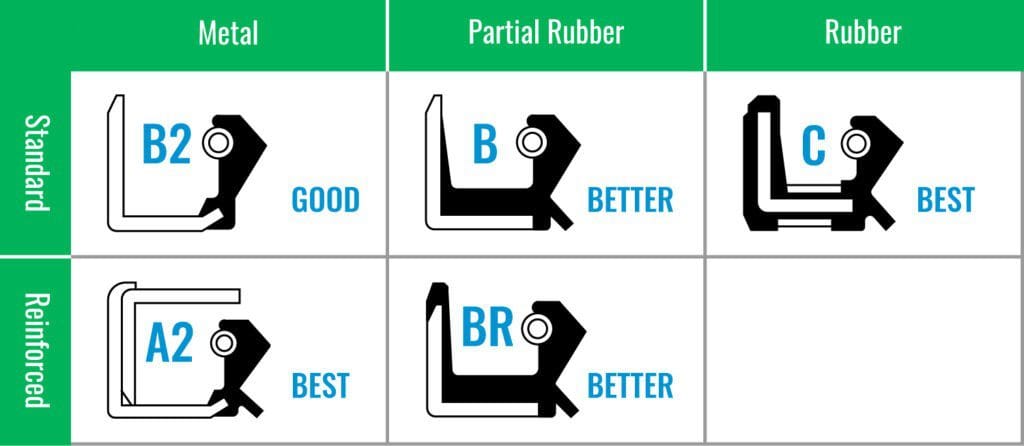
Upgrading the housing type doesn’t change the core seal dimensions. This leads to better performance and a longer lifespan. Upgrading from a B2 metal housing to an A2 reinforced housing can make a big difference. By using built-in reinforcing plates, the housing becomes much stronger. This change improves resistance to deformation and boosts structural strength. Changing the outer diameter from metal to full rubber fixes bore size issues and hides rifling flaws. It also provides extra corrosion protection. This helps the oil seal perform better in tough conditions. These upgrades provide better sealing for equipment. They do this without changing the original installation sizes.
What are the best alternatives for seals?
“Optimal seal replacement” means more than swapping the old seal for a new one. Choose a seal that meets basic compatibility. It should also have a better design and improved performance. This replacement completely assumes the original seal’s role and enhances its performance. In this replacement logic, “functional equivalence” has three key criteria. You must meet all these.
First, dimensional compatibility. The new seal must match the original in key sizes: shaft diameter, bore diameter, and width. This integrates without any disruption into the current setup. It removes the need to change the equipment cavity or shaft. This ensures easy installation and a strong base for sealing. It prevents problems or seal failures caused by size differences.
Second, material consistency or superiority. The new seal needs to use materials that match the original seal’s performance. This ensures it works well with sealing media like oil, water, and chemicals. It also has to meet the equipment’s required temperature range. Using better materials can make a seal last longer. These materials resist heat, corrosion, and wear. We must also ensure basic compatibility. This approach enhances the seal’s adaptability and sets the stage for improved performance. The designers have made significant improvements to the design features. The key difference between “best replacement” and regular replacement is design improvements. The new seal should add features that the original lacked. This has a dust lip, an internal spring, a new lip design, and tougher housing protection. These design upgrades enhance the seal’s performance across various conditions. It works well in dusty or vibrating environments. It also performs well in tough situations. This includes high speed, high pressure, and extreme temperature changes. It covers the original seal’s range and meets complex needs that the original can’t. This statement means that “replacement is upgrading.”
Tiered upgrade strategy
Replacing an oil seal isn’t a quick swap. It’s a step-by-step upgrade. Many oil seal makers provide various lip shapes and housing types for the same size. They create three tiers: “Good,” “Better,” and “Best.” This gives you options for performance upgrades when replacing seals.
Manufacturers usually ship machinery with “Good” grade oil seals. The main reason for choosing these products is to balance cost and basic needs. We aim to meet the least equipment specifications and keep manufacturing costs low. Distributors can choose any grade for replacement and maintenance, not the original. They can upgrade to “Better” or “Best” grade oil seals. These seals are the same size but offer superior performance. This choice depends on the equipment’s operating conditions and customer needs. It leads to better sealing performance.
Let’s look at common shaft seals to see how their quality varies:
The VB2 shaft seal has a V-shaped single lip and a B2 metal housing. It meets basic sealing needs and is a solid “good” choice.
The KB2 seal upgrades this design with a K-shaped lip and an extra dust-proof lip. This improves its ability to block contaminants, placing it in the “better” category.
Next, the TB2 seal features a T-shaped lip and a spring ring. This design improves oil control. It adapts to small misalignments and manages some pressure, which enhances performance.
The TC shaft seal combines the benefits of a T-shaped lip and a rubber-encased C-shaped housing. This boosts its corrosion resistance and ability to handle defects. It is ideal for harsh conditions like high heat, dust, and vibration.
The main differences among KB2, TB2, and TC are their design and performance. But their dimensions are the same. Distributors can help customers improve equipment protection. They can do this by upgrading oil seals by one or two grades. This small cost increase leads to more durable sealing solutions and better performance.
The main benefit of this tiered model is its flexibility. If the customer’s lower-grade model is out of stock, they can easily upgrade to a higher-grade model. This guarantees a perfect fit, prevents installation problems, and improves sealing performance. It’s a win-win! Distributors usually stock high-end seals that are “better” or “best” grade. They sell these at competitive prices. High-end seals can replace lower-grade products in emergencies, helping to avoid stockouts. Customers see longer service life and stable performance. So, they are more likely to adopt these seals as the new standard. This creates a lasting partnership.
When you search for an oil seal on KODA, the system shows your model. It also recommends similar models with the same functions but extra features. This clear “good-better-best”classification helps you move beyond “replacing without upgrading.” You can choose better oil seals based on your needs with little difficulty. Each replacement becomes a chance to boost your equipment’s sealing reliability.
Distributor’s revenue
A good seal replacement strategy can give distributors a strong edge over competitors. This strategy focuses on upgrading seals with functional equality. These seals match the basic functions of the original ones. They also include added value, like design improvements and better performance. Distributors can simplify their operations a lot. They won’t need to stock complex specifications as individual items. They also won’t have to adjust procurement and inventory plans many times. This leads to much better operational efficiency.
Inventory consolidation and SKU reduction
For distributors, the key is to avoid the burden of stocking inventory for every type of seal. Focus on choosing high-performance, multi-functional seals for different scenarios. These seals meet basic sealing needs and allow for easy replacement.
Distributors can combine many SKUs that used to need their own inventory into one main model. This core model has a multi-functional design. Its lip shapes adapt to different conditions, and its housings fit various scenarios. This makes it a complete replacement for other models. This “multi-SKU consolidation” approach simplifies inventory and cuts warehousing space. It also reduces capital tied up. It also eliminates the hassle of managing similar-looking seals with slight style differences. This makes inventory checks, replenishment planning, and customer allocation easier and more efficient.
Better usability and customer service
When distributors optimize their seal inventory, they can focus on top products. This ensures a steady supply of these key seals. This increase in availability prevents order delays that stockouts cause. It also shortens delivery times, helping customers receive what they need without delay. This leads to higher customer satisfaction.
Distributors can find top products by looking for “preferred” and “best” level seals. This way, if a customer can’t find their model or if the company discontinues it, they won’t have to wait long. This smart inventory model and high-quality seals improve service quality for distributors. It also assures end users by reducing equipment downtime from seal shortages. This helps users reduce production losses and maintain efficient equipment operation. In the end, everyone—distributors, customers, and end users—wins.
Simplify product selection
The best alternative also simplifies the selection and sales process. Sales teams and customers save time by avoiding dozens of similar choices. It helps buyers pick the product that best fits their needs. The result is fewer ordering mistakes and an easier way to find the “right” seal.
A forward-thinking approach that goes beyond traditional models
The best seal replacement solution looks ahead. It focuses on maintenance efficiency and inventory management. This approach is very different from traditional aftermarket replacements. Traditional solutions often focus on cost control or quick supply. The best replacement solution looks at these factors. It also focuses on long-term seal performance. It shifts from “passive replacement” to “proactive optimization.”
This concept is superior to traditional methods in four key dimensions:
First, an upgrade from “passive repair” to “proactive prevention.” Traditional replacement is a passive approach. After a seal fails, replacing it with a new one restores basic function. But it has the same lifespan as the original and doesn’t stop future failures. The best solution is a proactive upgrade. A better seal can boost reliability. Adding a dust lip or upgrading the housing material helps a lot. This helps stop future leaks, wear, and other issues. It also cuts down on the problems caused by repeated failures.
Next, we move from “focusing on unit price” to “emphasizing total cost.” Upgraded high-performance seals may have a higher initial cost. But, they provide better value over time. Although basic seals have a lower unit price, they can lead to costs from seal failures. This includes downtime losses, labor for replacements, and damage from leaks. So, in the long run, high-performance seals save money. Proactive distributors will share this idea with customers. They’ll shift from asking “how cheap can seals be?” to “how can we improve equipment reliability in a cost-effective manner?” This helps customers focus on long-term cost awareness.
A third point is the change from “simple sales” to “quality partnership.” By promoting high-quality seals, distributors become more than “simple sellers.” They turn into quality-focused partners. They don’t deliver products. They provide solutions that solve sealing problems and improve equipment efficiency. In today’s industrial market, “reliability” and “efficiency” are key. Distributors who provide more than traditional products often build customer trust faster. This helps them stand out from competitors.
Fourth, risk avoidance from “vague substitution” to “precise compliance.” The “alternatives” in traditional product catalogs can be misleading. Some products use cheap elastomers. They also skip key features like springs and dust lips. They might look similar in size, but their performance often doesn’t meet standards. Products in the optimal seal replacement solution undergo thorough pre-screening. All key indicators—material temperature resistance, sealing pressure, and fit dimensions—meet or exceed OEM standards. This ensures reliable replacements and avoids risks from inferior options.
The best seal replacement strategy is a change in thinking. Shift from “quick, simple one-to-one replacement” to “long-term improvement of sealing system performance.” For industrial distributors, this means better products. It also means simpler inventory management and a more modern business model. For end customers, this means fewer equipment failures, less downtime, and improved efficiency. This creates a win-win for both distributors and customers.
conclusion
The best seal alternative is changing how distributors manage seals and serve customers. The focus is on choosing alternative products with “better functions than original ones.” This choice ensures high-quality, reliable seals. It also simplifies inventory by reducing “many specifications, low turnover” issues. This approach balances “quality and efficiency.”
This strategy offers clear benefits:
It streamlines inventory.
It reduces capital and warehousing pressure.
Customer demand response improves.
Service levels get better.
Optimizing inventory and procurement costs boosts profits for distributors.
Distributors can better meet the needs of today’s machinery. With optimal seal replacement solutions, they can provide high-reliability, long-life seals. This proactive upgrade service goes beyond replacing parts when they break. Now, it addresses customers’ basic sealing issues with efficiency. It also prevents potential failures through performance upgrades. This helps customers lower their operation and maintenance costs. Distributors are now “customer-trusted problem solvers and technical advisors,” not “product sellers.” They use their skills to form strong partnerships with customers. This helps create a solid base for lasting industry cooperation.