Skip to content
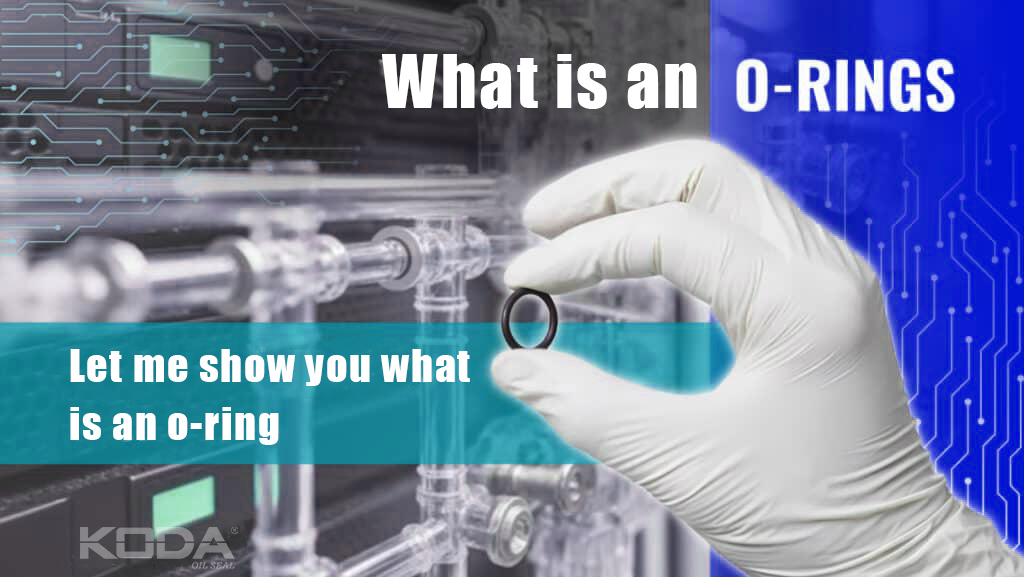
What is an o-ring
Imagine a rubber ring shaped like a donut—that’s an O-ring. It’s currently the most popular product in the mechanical seal industry for a simple reason: it’s inexpensive, easy to use, robust, and easy to install.
Most O-rings are made of elastomers (what we commonly call rubber), but as technology advances, their “skin” is also evolving. Besides ordinary rubber, there are now O-rings made of liquid silicone rubber (LSR), fluororubber (FKM/Viton), and various metals to meet challenges ranging from food processing to aerospace. Want to know how to choose the right seal? Read this complete O-ring guide.
O-rings: What materials are they made of?
Our KODA O-rings, or rubber rings, can be made from various materials. For example:
Nitrile butadiene rubber (NBR/Buna-N)—Industry Standard
Fluororubber (FKM/Viton®)—High-performance choice
Ethylene propylene diene monomer (EPDM) – Water and steam expert
Silicone rubber (VMQ) – Extreme temperatures and hygiene
Polytetrafluoroethylene (PTFE / Teflon®) – King of chemical inertness
Hydrogenated nitrile butadiene rubber (HNBR) – Abrasion-resistant and dynamic sealing
Please select the most suitable O-ring material based on your specific application. You are welcome to browse our website to shop for products. If you are unsure which material fits best, don’t worry—KODA’s experts are happy to provide you with free selection advice.
Standard O-rings are not a one-size-fits-all solution. When facing large tolerances, complex assembly requirements, strict low-friction demands, or non-circular (special-shaped) geometries, standard parts often fall short.
For these challenges, KODA offers inventory analysis and optimization, along with custom-engineered special seals tailored to your needs. We advocate for early involvement in the new equipment R&D phase, leveraging our expertise to secure the optimal sealing solution from the very beginning.
Working principle of O-rings
O-rings are placed in grooves within mechanical parts. When compressed, they deform to fill all microscopic gaps on the surface, sealing the two components tightly together. If a standard round O-ring isn’t effective, a flat rubber ring can be used instead. While often used for stationary parts, they can also handle movement. Crucially, their flexibility allows them to easily adapt to any size variations (tolerances) in the manufacturing process.
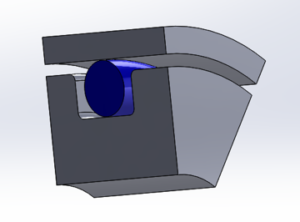
In the construction industry, rubber O-rings play an unsung hero role. You rarely see them, but they are crucial for ensuring buildings are leakproof and airtight. Whether you need standard metric sizes or imperial sizes commonly used in European projects, we can meet your needs. Of course, if round O-rings don’t fit, custom-made O-rings are also a suitable option.
Other properties
Don’t just look at the size! 4 hidden attributes that determine the lifespan of O-rings
1. How “rigid” is it? (Hardness)
Don’t assume that the harder the O-ring, the better. An O-ring that’s too stiff can’t fill tiny scratches on a metal surface and is prone to leakage; an O-ring that’s too soft is easily crushed under high pressure. 70 Shore A is usually the most common choice, but adjustments may be needed for special operating conditions.
2. How “resentful” is it? (Compression set)
Imagine a flattened sponge that can never spring back. The same applies to O-rings. If its compression set is high, it will become a flat rubber sheet after a few years, completely failing. This is why high-performance materials like fluororubber (Viton) must be chosen for high-temperature applications.
3. How “tough” is it? (Tear strength)
If the groove edges are sharp during O-ring installation, the fragile O-ring can be torn before it even starts working. Checking the material’s tear strength can avoid costly rework.
4. Will it “fatten up”? (Resistance to Media / Expansion)
When you immerse an O-ring in your working medium, will it maintain its size or expand like a balloon? If the wrong material is chosen, the O-ring may expand to twice its original size, causing the equipment to seize up.
Static and dynamic O-rings
1. Static Conditions
Under no relative motion, O-rings exhibit extremely high-pressure resistance.
Normal Pressure: Up to 10 MPa (1500 PSI).
Ultimate Pressure: With proper groove design and retaining ring, it can withstand pressures up to 40 MPa (6000 PSI) or even higher.
2. Dynamic Conditions
Under reciprocating or rotary motion, pressure is limited by frictional heat and material strength.
Reciprocating motion (e.g., hydraulic cylinders):
Typically limited to below 7 MPa (1000 PSI). Excessive pressure can cause O-rings to overheat, wear, or even “twistress.”
Rotary motion (e.g., motor shafts): Lowest pressure resistance, typically not exceeding 3 MPa (450 PSI).
All the advantages of O-rings
Excellent environmental adaptability: Provides reliable seals across a wide range of pressures, temperatures, and tolerances.
Easy installation: Simple structure, easy to install and maintain.
Standardized design: Conforms to globally recognized standard dimensions and groove designs, ensuring high interchangeability.
Lightweight and compact: Compact size and light weight, saving valuable installation space.
Extra-long service life: Excellent fatigue resistance, significantly reducing replacement frequency.
Automatic tolerance compensation: Possesses extremely high elastic deformation capacity, effectively absorbing vibration and compensating for component tolerances.
FAQ about O-rings
Why has my O-ring swollen or become soft?
This is usually due to the wrong material being selected. O-rings must be compatible with the liquid or gas (medium) they come into contact with.
If you are using oil or hydraulic oil, check if you have mistakenly used EPDM (ethylene propylene diene monomer) material, as it will dissolve in oil.
If you are using water or steam, check if you have mistakenly used NBR (nitrile butadiene rubber) material.
Please refer to our material compatibility guide, or tell us what your medium is, and our experts will recommend a suitable material (such as fluoropolymer FKM or silicone VMQ).
Why is my O-ring nicked or cut?
This is usually caused by improper installation or extrusion.
Installation problem: The O-ring was scratched by sharp threads or edges during installation.
Extrusion failure: Excessive system pressure caused the O-ring to be squeezed into the gaps in the metal parts and cut off like a “cookie cutter”.
If the problem is with the installation, please use an installation tool or chamfer; if it is caused by high pressure, please be sure to install a backup ring to protect the O-ring.
Why has my O-ring hardened and cracked?
This is a typical aging or overheating phenomenon.
Thermal aging: The operating temperature exceeds the material’s tolerance limit, causing the rubber to harden and lose its elasticity.
Oxidation/Ozone: Long-term exposure to air or direct sunlight (especially for NBR materials) can cause surface cracking.
Please confirm your operating temperature. If the temperature is high, we recommend upgrading to fluoropolymer (Viton/FKM), which can withstand higher temperatures and has excellent anti-aging properties.
How do I measure an O-ring?
O-rings are mainly judged by two dimensions:
Inner Diameter (ID): The distance through the center of the ring.
Cross-Section (CS): The thickness of the rubber strip.
Note: If it is American standard (AS568), it will usually have a number (e.g., #214); if it is metric, the size will be marked directly (e.g., 20×2.4mm).
If you are unsure about the dimensions, please contact us directly. We can provide a precise match based on your old sample or equipment drawings.
Why does my O-ring wear out quickly in dynamic applications?
Dynamic seals (seals in motion) have higher requirements than static seals. Rapid wear is usually due to:
Insufficient lubrication: Friction generates heat, causing rubber wear.
Rough surface: A metal surface that is too rough can damage the O-ring like sandpaper.
Incorrect hardness: Rubber that is too hard has high friction, while rubber that is too soft has poor wear resistance.
It is recommended to choose polyurethane (PU) or hydrogenated nitrile butadiene rubber (HNBR) materials with specific formulations and ensure that the metal surface is polished (Ra value meets the standard).
Why choose KODA O-rings?
KODA offers O-rings in both imperial and metric units. If you are interested in rubber O-rings, please feel free to contact us. KODA focuses on the research, development, and production of rubber seals, silicone, and plastic products, and is particularly skilled in the field of sealing technology.