
X-Rings
X-Rings (Quad Rings)
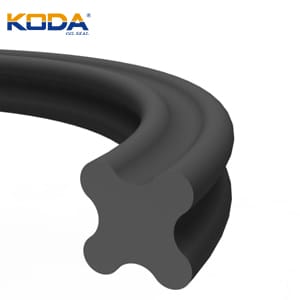
X-Rings, also known as Quad Rings or four-lobed seals, are advanced elastomer sealing elements designed with an X-shaped cross-section. Compared with conventional O-rings, X-rings create four sealing lips instead of two, resulting in lower friction, improved sealing stability, and longer service life in dynamic applications. They are widely used in hydraulic systems, pneumatic equipment, rotating shafts, and reciprocating cylinders where standard O-rings may experience twisting or premature wear.
Why Choose X-Rings Instead of O-Rings?
While O-rings remain the industry standard for many static seals, X-rings offer distinct advantages when equipment operates under continuous movement.
Lower Friction
The unique four-lobe profile reduces the contact area against sealing surfaces, lowering running friction and minimizing wear during reciprocating or rotary motion.
Anti-Twist Design
Unlike traditional O-rings, X-rings are less likely to roll or spiral inside the groove. This greatly reduces seal failure in dynamic applications and improves long-term reliability.
Better Lubrication Retention
The recesses between the sealing lips act as lubricant reservoirs, helping maintain lubrication during operation and reducing start-up friction.
Improved Sealing Performance
Four sealing points distribute pressure more evenly, providing better sealing efficiency with lower compression force.
Available Materials
Different operating environments require different elastomer compounds.
| Material | Features | Typical Applications |
|---|---|---|
| NBR (Buna-N) | Excellent oil resistance and wear performance | Hydraulic and pneumatic equipment |
| FKM (Viton®) | High temperature and chemical resistance | Chemical processing, automotive, oil & gas |
| EPDM | Excellent water, steam and ozone resistance | Water treatment, food equipment |
| HNBR | Enhanced abrasion and pressure resistance | Heavy-duty hydraulic systems |
| Silicone (VMQ) | Wide operating temperature range | Medical devices, electronics |
Selecting the correct material based on media compatibility and operating temperature is critical for maximizing seal life.
How to Select the Right X-Ring
Choosing an X-ring involves more than matching dimensions.
Evaluate Motion Type
X-rings perform best in:
- Reciprocating motion
- Rotary motion
- Oscillating movement
- Dynamic hydraulic sealing
For purely static sealing, a standard O-ring may provide a more economical solution.
Match the Material to the Fluid
Always verify compatibility with:
- Hydraulic oil
- Fuel
- Water
- Steam
- Chemicals
- Cleaning agents
Incorrect material selection is one of the leading causes of premature seal failure.
Check Groove Design
Although many X-rings fit standard O-ring grooves, groove geometry should always be verified. Proper squeeze and gland dimensions ensure optimal sealing performance and prevent excessive friction.
Common Problems X-Rings Help Solve
Replacing an O-ring with an X-ring can improve performance in applications suffering from:
- Seal twisting or rolling
- High running friction
- Frequent leakage during reciprocating motion
- Rapid seal wear
- Poor lubrication retention
- Short maintenance intervals
For dynamic sealing systems, upgrading to an X-ring often extends service life without requiring major equipment modifications.
High-Performance Sealing for Dynamic Systems
When equipment operates under continuous motion, seal geometry becomes just as important as material selection. X-rings offer a practical upgrade over conventional O-rings by reducing friction, preventing seal rotation, and improving lubrication retention. The result is more reliable sealing performance, longer maintenance intervals, and lower operating costs across demanding industrial applications.